

By Andre Quina in Portugal
This Sunday (18 May) , Portugal heads to the polls for the third general election in four years. This election was triggered by a motion of no confidence tabled by the four elected PCP (Portuguese Communist Party) MPs.
The reason for the motion was a scandal involving Partido Social Democratica (PSD) which is actually a right wing party. Their Prime Minister, Luís Montenegro, and his family’s consultancy firm, Spinumviva, had been receiving payments from private companies benefiting from state contracts while he was in office.
Montenegro claimed to have sold his shares to his wife—an obviously absurd excuse, even if it were legal. But it’s not: Portuguese law prohibits transfers between spouses, leaving him still legally tied to the business. While all the parties made noise about the revelations, only the PCP tabled the emergency no-confidence motion.
It was a bold move by the PCP, a party that has been suffering the fallout of being one of the smaller partners in the ‘geringonça’ coalition from 2015 to 2019. This problem keeps rearing its head for both the PCP and Bloco de Esquerda (BE – Left Bloc).
Portugal has a Proportional Representation system, which results in many parties with MPs and makes it very hard for one party to achieve an absolute majority. In 2015, the two left-wing parties had 36 MPs between them and held considerable power in the Assembleia da República.
However, after entering a coalition with the Partido Socialista (similar to the UK’s Labour) to block a right-wing government, their vote share dropped dramatically. It’s a situation reminiscent of the Lib Dems after their coalition with the Tories, though the two Portuguese parties weren’t nearly as spineless. Still, it’s challenging to campaign on the housing crisis and wage stagnation when both issues emerged during their time in power.
Far-right propaganda
Like everywhere else in the West, one of the main topics of this election is immigration. Chega, the far-right party akin to Trump’s Republicans or Nigel Farage’s Reform, has campaigned hard on this issue. Their propaganda is shocking—every day on my way to work, I see massive billboards proclaiming “50 years of corruption—give us a chance” (a direct attack on the Carnation Revolution of 1974, which brough down the previous fascist regime) and “Clean Portugal” (their slogan targeting corruption and immigration). It’s surreal to witness Chega’s approach—imagine what Reform would look like if they had 50 MPs and an even more arrogant leader.
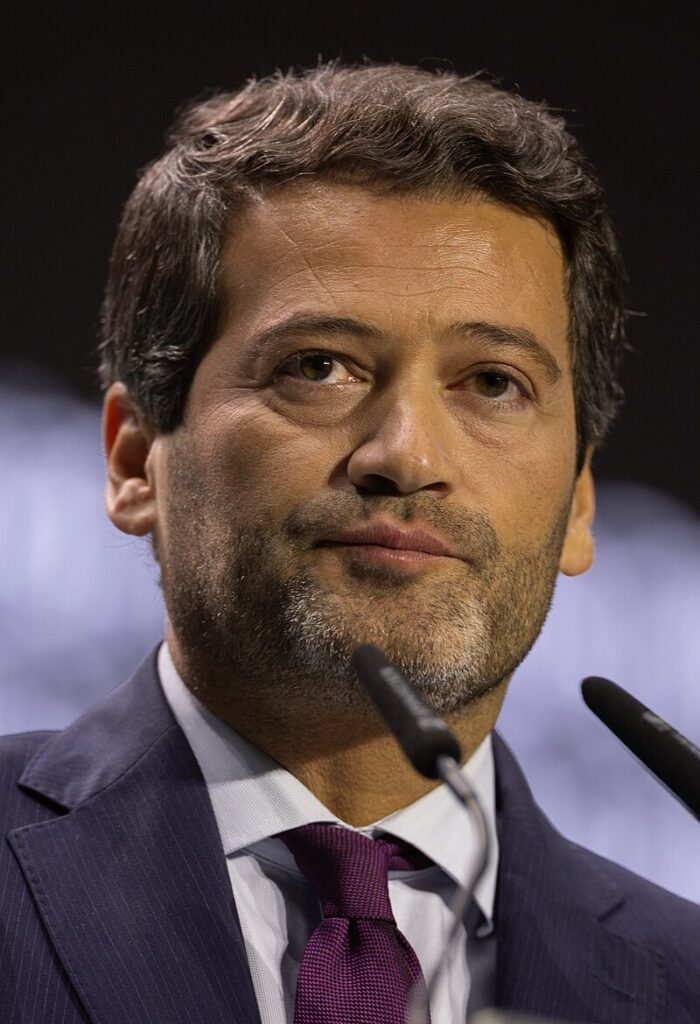
far-right ‘Chega’ party
[photo – Wiki commons – here]
Every year, during the parliamentary celebration of the Carnation Revolution, when the anthem ‘Grândola, Vila Morena’ is played, Chega MPs walk out of the chamber. This blatant anti-democratic behaviour has fuelled their rise, but whether they can become the leading party remains uncertain. Their polarising approach earns both fervent support and fierce opposition.
However, immigration was overshadowed by two significant events during the election period. First, on April 28, a massive blackout struck the entire country from around 11 am to 10 pm. That morning, PCP leader Paulo Raimundo was on the radio advocating for energy sovereignty and renationalization, and just hours later, the country ground to a halt. The blackout stranded people on the Lisbon metro for hours, made fuel almost impossible to find, and forced hospitals and schools to rely on backup generators. Rumours swirled about a potential Russian attack, and fears grew that the outage might last a week.
Secondly, on May 13, Chega leader Andre Ventura collapsed on stage during a rally, clutching his chest. Reports indicate he’s in stable condition, but media speculation points to a heart issue. It’s unclear whether this will boost or hurt their vote share, given that Chega, like the Republicans and Reform, heavily relies on the charisma of their leader, and no clear successor is in sight.
One positive aspect of the PR system is that despite three right-wing parties pushing anti-immigrant rhetoric, there are also three left-wing parties opposing it. The PCP, BE, and Livre (a newer left party akin to the Green Party) have all defended immigration and called for better wages and pensions. As a PCP member living in the countryside, I find it significant that the PCP remains strong throughout the country, while BE and Livre mostly garner urban support.
Right-wing coalition inevitable?
The polls aren’t promising for the left—they fluctuate daily, but the common trend shows PS, PSD, and Chega as the top three parties, with IL (Iniciativa Liberal—Chega’s softer counterpart) in fourth place. A right-wing coalition government seems almost inevitable. The left’s best hope is a modest increase in vote share. Some polls put each left-wing party at around 2%, while others show PCP leading with 5%.
Realistically, the PCP aims to maintain its four MPs (two from Lisbon, one from Seixal, and one from Porto) and regain a seat in Beja, South Alentejo. The party has chosen its best orator, Bernardino Soares, to run in Beja, a seat lost to Chega last time. A prominent political commentator on CNN Portugal, Soares has been vocal about the threat posed by the far right, calling a vote for Chega a vote for violence.
Bloco de Esquerda is struggling despite a robust social media presence and consistent online support. They’re polling at just 2%. While I’m not a member, I support much of their platform and believe their presence in parliament, particularly on social issues like trans rights, is valuable.
Whatever happens, it should be obvious to all socialists that the right and the far right offer no real solutions to the problems Portugal is facing. If they do win, as we expect, we must maintain our campaigning momentum from day one. The housing crisis, wage stagnation, degradation of the SNS (Portugal’s NHS), and the collapse of the postal service are all consequences of increased privatisation benefiting the wealthy at the expense of workers.
I’m confident that this far-right wave will eventually break, and people will once again turn to the left for solutions. We must be prepared with a sober analysis and a long-term strategy when that time comes. I would argue for a more long-term approach, avoiding coalitions with parties willing to betray the working class, and instead focusing on propaganda that highlights how only a majority for left-wing parties, committed to a bold socialist programme, can address workers’ needs.
[featured photo – PCP rally – Left Horizons]