
Comment by Gray Allan, Falkirk CLP member
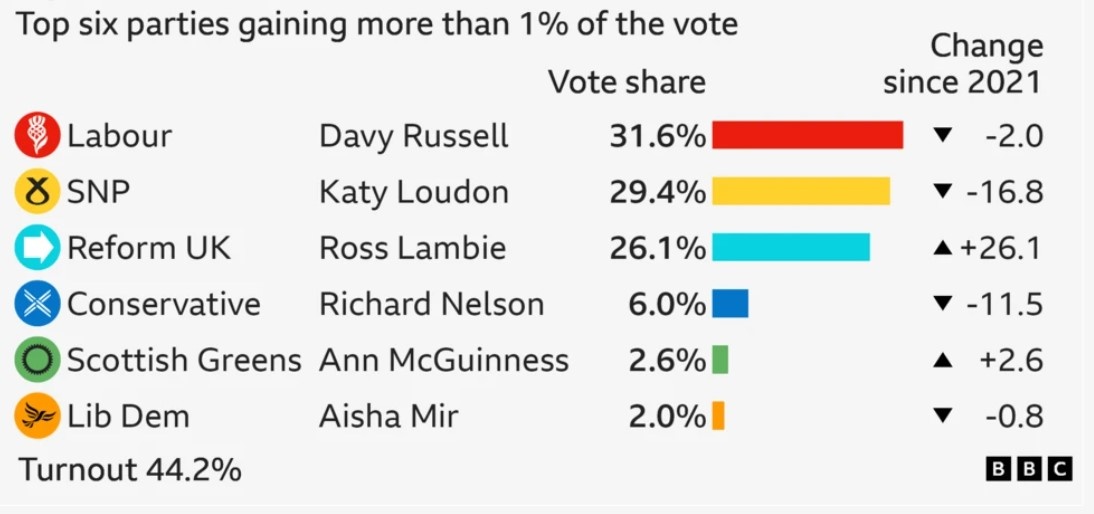
The Labour Party in Scotland has confounded expectations by winning the Hamilton Larkhall and Stonehouse seat in the by-election for the Scottish Parliament. Pollsters and bookies had the SNP winning, with Reform second. The SNP had even claimed the election was a ‘two-horse race’ between SNP and Reform. “The only way to beat Reform”, claimed First Minister John Swinney, “is to vote SNP”.
The town of Hamilton has a special place in Scottish political history. It was here in 1967 that Winnie Ewing of the SNP won a by-election becoming the Nationalist’s second MP. Since that time, the SNP has always had MPs in Westminster. Once again, Hamilton has seen a political upheaval with Scottish Labour’s unexpected victory, though not quite on the same scale as 1967.
At time of writing the pollsters have offered no explanation as to why they called the result so badly wrong. The result and the actual votes cast are revealing. They were was a big surprise to many, not least Labour Party members who had been bracing themselves for a catastrophic defeat.
Only 1,471 votes separated the top three candidates. Very small changes either way would have transformed the result (see BBC graphic above). The Tory vote collapsed into Reform. Some anti-Labour protest votes that would have gone to the SNP in former days seem to have switched to Reform.
An indeterminate number of voters seem to have bought the SNP line of a ‘two-horse race’ between Reform and SNP…but voted Reform to defeat the SNP! Working class ‘Orange’ voters might have seen in the Rangers-supporting Labour candidate Davy Russell a man after their own heart.
There is nothing exceptional in the Hamilton Larkhall and Stonehouse constituency. It lies in the Clyde Valley to the southeast of Glasgow, and is a former mining community and once an area of heavy industry. Hamilton is separated across the valley from Motherwell by the Strathclyde Country Park, created from derelict industrial land. Motherwell was, of course, the home of the Ravenscraig steelworks.
Today, the area has a number of small to medium businesses in the engineering and pharmaceutical branches, as well as some larger factories. Well-known names are GlaxoSmithKline, Terex Trucks and J&D Pierce structural steel. The town is also the base for the coach company Parks of Hamilton, whose coaches can be seen all over the UK and abroad. Parks made their money during the miners’ strike 1984-85, through contracts to bus scab labour into pits.
The west of the constituency is mainly rural, with arable and livestock farming and a scattering of small former pit villages, and one of these, Quarter, is home to Davy Russell, the successful Labour candidate.
Hamilton Larkhall and Stonehouse is similar to many non-urban constituencies in Central Scotland. There are no local issues that set the constituency apart and that can explain the result of the by-election.
The old orange-green loyalist-nationalist divide is still quite marked here, as it is in many areas of West-Central Scotland. But there are contradictions. One of the strongest unionist areas in the constituency is the town of Larkhall, but a contingent of men left this town to fight with the International Brigade in the Spanish Civil War.
While strongly orange, the community has, or had when I lived in nearby Strathaven, a strong sense of class-consciousness. Their opposition to the SNP was expressed in a vote for Labour, irrespective of how awful Labour was in power. Which takes us to the new MSP Davy Russell.
Scottish Labour strategy is to identify people active as “community champions”, well-known and active in their areas to recruit as candidates. If they are Party members, all well and good. If not, ways are found to get them signed up! Davy Russell was at least a member, albeit not an active one.
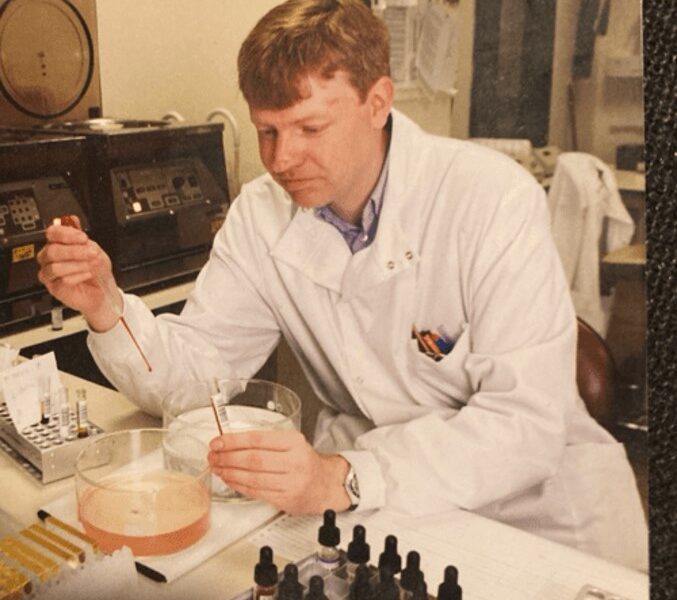
According to a local trade union activist, Russell worked as a senior manager in Glasgow City Building, an arm’s length management organisation set up by the City of Glasgow. In this role he fostered relationships with senior Glasgow councillors, attending Rangers matches at Ibrox with them. He has had a business relationship with Barry Ferguson, the former Rangers player.
Russell speaks with a Lanarkshire accent. He looks like the working-class man in his early sixties that he is, or once was. He is not a New Labour clone and nor does he look like any of the group around Starmer.
He looks as if he belongs to the community he now represents. It is as though he was deliberately selected by Jackie Baillie, deputy leader of Scottish Labour, to appeal to a particular section of the electorate. And he was kept away from the media by Party minders.
When Russell did speak, he appeared out of his depth, concentrating on the SNP failures in their eighteen years in power. When asked by Colin McKay, STV political editor, whether he supported the cutting of the Winter Fuel Allowance, he ducked the question by simply repeating that “hard decisions” had to be made.
The SNP are now licking their wounds. They seem not to have benefitted from any sympathy vote, given that the by-election was caused by the tragic early death from cancer of the SNP MSP and minister Christina McKelvie. John Swinney’s leadership of the SNP is again under scrutiny.
The entire SNP campaign focussed on Reform, saying the fight was between them and Reform, and that he only way to stop Reform was to vote SNP. Their 14% lead in the polls over Labour nationally lead to complacency. They behaved as if they are Teflon-coated!
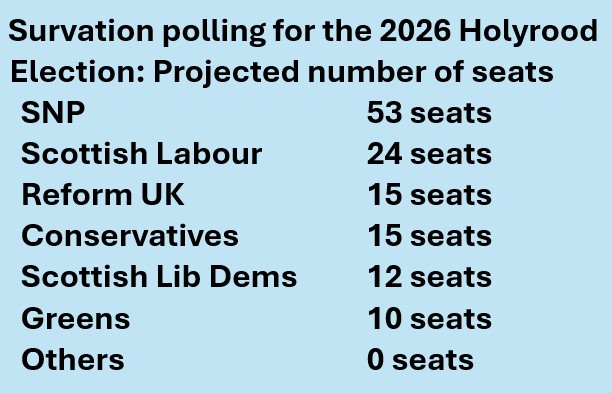
But eighteen years in Government are now beginning to weigh heavily on the SNP, with failures in transport, infrastructure, health and education building up. Their strategy of convincing the Scots of the value of independence through their example, as excellent administrators, is in seriously frayed, although pollsters still have them leading (so far) in the 2026 Holyrood election (see insert below).
The Tory vote in the constituency collapsed to a miserable 6%. The right-wing vote clearly preferring the hard right Reform UK to Badenoch’s obsession with ‘woke’ politics. However, the Reform vote cannot be accounted for by defecting Tories alone. They clearly took votes from the SNP too.
There always was an element of SNP support that was anti-Labour, as opposed to pro-independence, less so after the 2014 Referendum, but more marked beforehand. These voters went to the SNP because it was NOT the Tories. This protest vote switched to Reform in the Hamilton by-election, either oblivious to or ignoring Reform’s hard-right social and economic agenda, but focusing solely on their dog-whistle populist slogans.
In a vox-pop on the streets of Hamilton, one young working-class man told he reporter that he was voting Reform “because he didn’t like all this illegal immigration” although it is hardly an issue affecting the big majority of Hamilton workers.
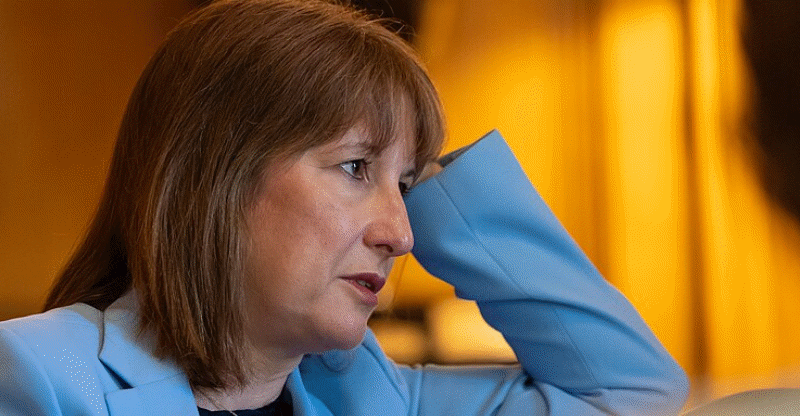
The working-class unionist vote that went to Labour is to some extent now being peeled off by Reform UK, aided and abetted by Starmer and Reeve’s decisions on the Winter Fuel Allowance, welfare cuts to the disabled and failure to tackle child poverty.
Reform will continue to eat into this working class vote until they are exposed by implementing their policies locally and nationally. That is the only thing that will expose what they are, and undermine the perceptions of those tempted to vote for them.
Reform to some extent shot itself in the foot in Hamilton by its racist attack on Anas Sarwar, Scottish Labour Leader. They ran an advert purportedly showing Sarwar saying he would see that people of Pakistani heritage would receive preferential treatment. In fact, he said no such thing, and Farage was roundly condemned by all other parties for refusing to take the advert down.
The size of the vote for Reform in Hamilton, even though they came third, challenges the idea of “Scottish exceptionalism”, that the Scots are inherently more tolerant, internationalist and open to progressive ideas than the English.
Scottish Labour are cock-a-hoop about their victory and see it as a springboard to victory in the Scottish parliament elections in 2026, but this is premature. The SNP still have a large lead in the polls and Labour’s victory was wafer-thin and it was based on a 44% turnout, down from 60%.
Voters are sick and fed up with political double-speak and are anxious about their finances and about the international situation, particularly Gaza. Reform UK hangs like a wrecking ball over politics, it is pressing the populist buttons and getting a response from people who would normally never consider voting for such an appalling outfit.
Scottish Labour must stop acting as the little Sir Echo for Keir Starmer and boldly challenge the disgraceful decisions of the UK Labour Government on living standards, on welfare benefits and on Gaza. If they put forward a socialist programme for Holyrood, with consistency and conviction, they would turn things around and be a springboard for desperately-needed change in the Labour Party in Britain as a whole.











The view from the Labour establishment:
https://labourlist.org/2025/06/labour-holyrood-by-election-victory-six-take-aways/?source=email-labour-list&link_id=30&can_id=4c796cbf31ac525d2c88ac3252a1dd1e&email_referrer=email_2767564___subject_3266011&email_subject=spending-review-is-keir-still-a-man-on-five-missions