Report by Andy Ford, Chair Unite NW Health Committee
The Socialist Health Association (SHA) meeting on June 3, in the venerable Mechanics Hall in Manchester, was a great success, gathering 50 people from a broad range of campaigns and unions, together with 30 attendees on Zoom.
The meeting came against the background of the Labour government’s failure to deal with the big problems facing the NHS (see our articles, for example, on adult social care and weight loss drugs). The government is claiming a “laser focus on waiting lists” – whilst simultaneously cutting thousands of NHS jobs and leaving fully equipped wards idle, to save money.
Andy Burnham was the guest speaker at this SHA meeting. As elected mayor of Greater Manchester and co-chair of the city’s ‘Integrated Care Partnership’ (ICP), he is one of the most powerful politicians outside Westminster and is in a key position to comment on the NHS in Manchester and the surrounding boroughs. And he is one to watch as opposition to Keir Starmer develops.
He has a history of tacking left at certain points, but always, it has to be said, ‘within the system’. He is not going to get himself expelled or suspended at any point soon. He made his name by challenging Tony Blair and Alan Milburn’s policy of ‘Any Qualified Provider’ in the NHS towards the end of the last Labour government. This was really about creating a total free market in health provision. Burnham changed the policy to the NHS as the “Preferred provider”, which did not outlaw privatisation but established NHS provision as the default.
Burnham signed off privatisation
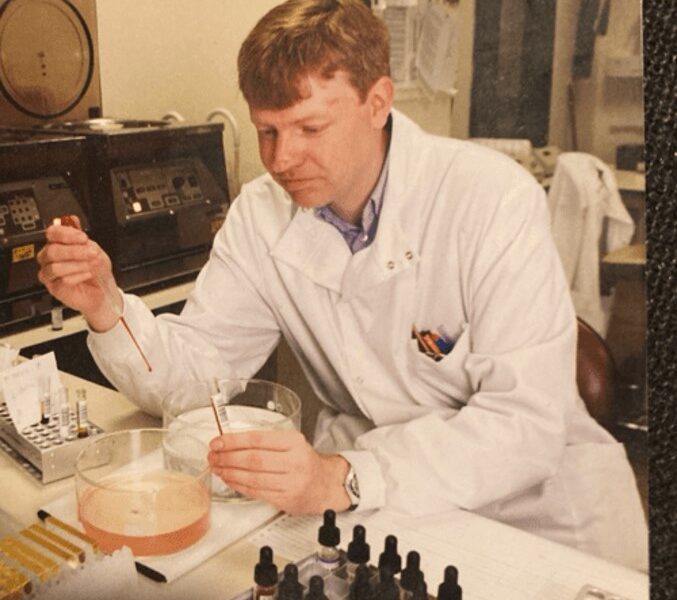
Of course, we in Unite said the NHS should be THE provider; and, we remember how he signed off the privatisation of the NHS labs at King’s College hospital to Serco, when it had £2 million-worth of contracts and £2 million-worth of brand-new equipment paid for and installed by the NHS. As I told him at the time, my cat could run a business like that! It could just sit on a leather chair and watch the money roll in.
He won backing in Liverpool for setting up the enquiry into the Hillsborough disaster and subsequent cover up and in lockdown he created a huge surge of support in Manchester when he stood out against Boris Johnson’s flip-flop Covid lockdowns and grossly inadequate financial support for workers in the city. There was a perception among workers that he was standing up for Manchester. As a skilled speaker, he is often spoken of as a future Labour leader – if he plays his cards very, very carefully.
At the SHA meeting, Burnham began by acknowledging the mistakes of the Blair government, but also standing up for its record on the NHS. “When I was Health Secretary” he said, “we didn’t get everything right, but overall, we left the NHS in a good place on waiting times, A&E and public satisfaction. It has been heartbreaking to see the slow destruction of what we built.”
Quite rightly he lambasted the Tory reforms pushed through by Andrew Lansley, pointing out that “Reorganisation never delivers and you lose people and skills”. Also, he pointed out, the Lansley reforms were not in the Tory manifesto (“no-one voted for them”). The Tories moved money and focus from patients to reorganising management, and it was really about distancing the NHS from ministerial accountability. It was the Lansley reforms that abolished the duty of the Secretary of State to provide a health service for British citizens, which dated from Nye Bevan and the introduction of the NHS in 1948.
Greater Manchester Integrated Care Board
The result was that the NHS was not ready for Covid and it also exposed the failure on social care: “I always said failing to invest in social care means that social care could drag the NHS down with it. Nursing homes were not ready for Covid. The failure to fund social care weakened the NHS. The first lockdown was lifted too early in Manchester. And followed by tough financial targets and no recognition of our higher Covid case and death rate.”
He defended his record in health in Greater Manchester and distanced himself from the Integrated Care Board (ICB) model, and by implication, from Wes Streeting: “Prevention has been cut for financial reasons as has mental health. It’s all top down. In the middle of that we got regional devolution. The Lancet found we had made progress in Manchester on population health, especially rough sleeping and homelessness. Setting up the ICB is top down, not devolution. The government has issued the ICB blueprint. It gives me cause for concern. It is too NHS-centric. And this alongside the target for big cuts in the ICB running costs. Which I had not expected.”
Instead, Burnham pointed to the need for an integrated approach across housing, employment, benefits and healthcare, saying “We want to stick with place-based neighbourhood teams, working in integrated teams. If housing benefits, housing, and youth services are cut how can the NHS pick up the pieces? Our response to the ICB consultation is to argue for what we have done with place-based services like our powers over benefits and employment conditions. We have found it best to work towards health in all policies, looking at all systems, especially housing. You cannot have good health without housing. Housing plus employment charter plus good public transport plus employment support has a chance to deliver health. You cannot improve health simply in the health system. If you don’t recognise the mental health effects of poor housing and debt you cannot make progress. Place based prevention can relieve pressure on the NHS.”
How can it be financed without socialist policies?
All very true, but can it be delivered without money? And how can the money be found without socialist economic policies? Andy Burnham acknowledged the first question, but not the second, saying, “We are tasked with a 39% cut in the ICB. I have raised my concern s nationally.”
It most certainly cannot be delivered with a 39% cut in the authority that leads health in Manchester; and it certainly will not get funded if the issue is just raised behind closed doors with government. So, Burnham will be left administering a system in crisis, while trying to divert people’s justified anger elsewhere.
The questions from the audience reflected this anger:
- Why can we not get the NHS as the Preferred Provider again?
- Why do we allow private providers to bid for work they cannot do and then use the money to build their infrastructure at tax payers expense?
- Can you control the private companies who, according to Private Eye are taking an “eye watering” profit rate of 28% for cataract operations?
- (From Patients not Passports) Do you oppose NHS charges for migrants?
- I am a service user of mental health services. I wrote to you three times and got no reply. Greater Manchester Mental Health (GMMH) do not provide a service. There are suicides and re-admissions. So we set up our own group, but all we have to help us is one retired CPN.
- Why are we getting Palantir in for the NHS computer systems when a lot of their claimed capabilities are not there, and they are up to their necks in killing people in Gaza?
Trade unionists from Unite also thanked Andy Burnham for his help in the recent strike at GMMH, which secured another £1 million in resources for mental health services, but also why The Christie hospital had had its balances raided to cover deficits elsewhere as the ICB has decided to pool all the hospitals debts across the region to try and balance the books.
Andy Burnham’s response was a good answer in the circumstances, addressing the points raised (but maybe dodging the difficult ones like pooling deficits), establishing different priorities to the Starmer leadership (but without taking risks), and apologising to the lady who had not had a reply.
Deregulation creates costs and fragmentation
“As Health Secretary I did reverse ‘Any Qualified Provider’ and I was not supported by some in my own party. Deregulation creates cost and fragmentation. My priority in a spending review would be housing – green council houses – because decent housing is the biggest thing that can improve health outcomes and mental health. Right to Buy has been so destructive. Councils are still losing more homes than they build every year. I accept mental health services are not right. I apologise for not getting back to you, I don’t know why that was – I will meet you and your group. Profiteering – we will look at it where it happens. Migrant charges – there is varying practice. I opposed their introduction. But yes – migrant charges cause harm. The Christie – I need to find out why deficits are being pooled. Palantir- we are the only ICB to defer adopting it.”
Andy Burnham is quite right to point to the desperate need to rebuild council housing as a key measure for health – physical and mental. Around 1.7 million council houses have been sold way below their value since 1980 at a huge loss to local authorities, and almost half have ended up as private rentals. Far from a ‘property-owning democracy’ Margaret Thatcher’s flagship policy has created a ‘slumocracy’ and wrecked the British housing market, with huge waiting lists and spiralling prices and rents. To this day, 24,000 properties exit from council ownership every year. In a somewhat unsung achievement, Angela Rayner’s department is proposing major restrictions on the Right to Buy, which may at least stop the position getting worse.
And Burham was quite right to say that the NHS cannot pick up the pieces from the health effects of mass poverty. That requires a complete change of policy and wealth distribution in this country. Although at present far from calling for such measures, we can expect that as Starmer’s march to electoral oblivion continues he (and others) will increasingly be putting an alternative policy platform forward to the Labour Party and trade unions.
The Socialist Health Association are to be congratulated for having created this forum for discussion in Manchester. To join the SHA, click here.