By Maureen Wade, chair, Birmingham UNISON retired members section
The government has launched its 10-year plan for the NHS, which includes a heavy reliance on Artificial Intelligence (AI) and digital technology. This is despite research commissioned by the charity Age UK, which warns that millions of elderly people in the UK do not have a smartphone or access to a computer and the internet.
Elderly people are becoming the ‘left behind’ in what has become an increasingly digital world. The Age UK research found that:
- 1 in 5 (or 2.4 million) older people have limited use of the internet, and use it less than once a month – or not all.
- 12 percent of older people (or 1.6 million) do not use a mobile phone at all and the equivalent of 4.3 million don’t use a smartphone.
- 2.9 percent said that lack of trust in the internet was one of the reasons for them not going on line.
- It is estimated that 4 million older people lack the IT skills and knowledge needed to access the internet.
In July, Age UK presented a petition of 173,949 signatures to Downing Street, calling on the Government to ensure that the alternative of a guaranteed offline public service continues, particularly for the NHS.
The response to the 10-year plan has been mixed, with organisations like the Kings Fund Centre welcoming the shift to community health care and prevention, but is critical of the plan’s reliance on digital tools to reduce waiting times and delays in accessing care. There are not only fears about older people being digitally excluded, but also people with learning disabilities and those who are visually impaired.
We all know how difficult it can be to access a GP – it can take weeks to get an appointment, and to get a face-to-face consultation is even more difficult. The evidence of digital isolation, therefore, is all the more worrying, when you then start to look at the proposals being put forward by the Secretary of State for Health, Wes Streeting, in his 168-page document, Build an NHS fit for the future, the 10 Year Plan for the NHS.
The key point from the plan is the emphasis on AI and IT technology in delivering health care, and that the plan is for the NHS App to become the ‘Doctor in your Pocket’.
The plan includes:
- A proposed NHS App that will use AI to ‘help’ people navigate the health service better, noting patients’ symptoms, asking questions and providing guidance.
- Patients will be encouraged to use the App to book remote or face-to-face appointments, manage prescriptions, manage their vaccines and ensure they are up-to-date.
- Patients will supposedly also be able to book urgent appointments, rather than wait for hours in A&E (which we will believe when we see it).
- All medical records will be integrated and digitalised – the aim being for a ‘Single Patient Record’ which patients and professionals can access on the NHS App
The government claim that allowing patients to access services digitally, will end the ‘8 am scramble’ for GP appointments, and will save them £200mn over three years.
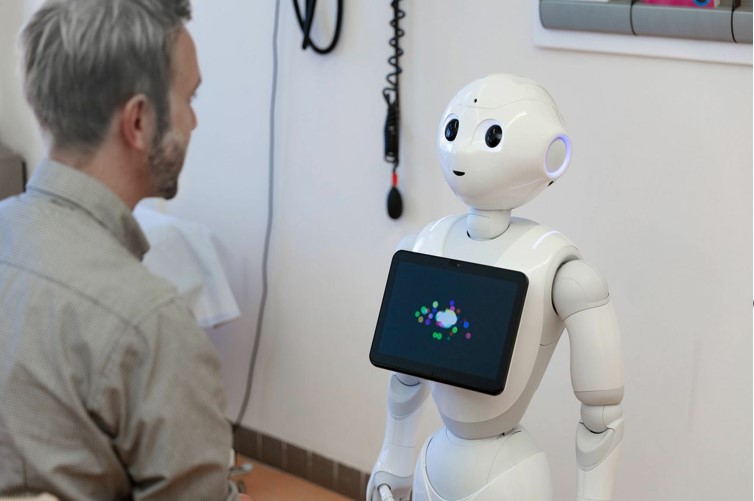
But this ‘Brave New World of the NHS’ will see the end of GP referrals for musculo-skeletal conditions, podiatry, audiology and mental health issues – all conditions which are significantly over-represented in the elderly population, who will be expected to self-refer on the App.
The plan also includes for one million people, to be offered personal health budgets by 2030, with people being able to use this to buy in their own care, like buying private physiotherapy and OT aids and equipment, which will then remove the need for the NHS to provide this currently statutory service.
The experience of the Spanish health service
And how resilient will these new digitalised services be? There was chaos in the Spanish health service, which has been heavily digitised, when the country faced a massive power outage in the Spring.
The problem was that pharmacies and doctors’ surgeries have become over reliant on digital automation. They could not access patients’ records, they had to move to manual work-arounds for critical medicines, and had to move to hand-written notes and prescriptions, returning to the ‘dark days’ of the past, like spending time trying to decipher a doctor’s scribble.
Nicolás Villaneuva, vice president of the Spanish Society of Hospital Pharmacists, said that if the energy outage had lasted for several days, they wouldn’t have known which patients were prescribed which medicines, because most of that information is stored on an electronic medical record that would be unavailable. “There are a lot of robots”, he said, “This situation lets us know it is important to establish contingency plans. At this moment we depend so much on energy” (Euro News, April 29, 2025)
Artificial Intelligence can’t empty a bedpan
The new workforce plan for the NHS, which is to be released later this year, envisages the need for less staffing because of the digital tools. But ultimately, it is people not plans that deliver care. As the saying goes, “AI can’t empty a bedpan”.
The Labour government also needs to be transparent about the monies to be invested, and what the ‘jobs vs technology’ trade-offs will occur as a result of this digitally-focused and AI-driven model.
The BMA, meanwhile, expresses real concern about the proposed ‘neighbourhood health service’. A further emphasis in the plan is to move the Acute Health Care settings, now provided by hospitals, into the community, with ‘Community Health Hubs’ providing a one-stop-shop for integrated care across England: 250-300 of these hubs are to be established .
These will provide a six-day, 12-hour service (not 24 hours), and will be staffed by GPs, nurses, physiotherapists, care workers, and mental health workers. The aim, Wes Streeting says, is to “end hospital outpatients as we know it” by 2035. The aim is to prevent acute hospital admissions, with urgent treatment centres and same-day care services being expanded.
But as the BMA ask, who will staff these additional community services? How will they be funded? What will be the impact of these neighbourhood health services on existing local General Practices? And what will be the role of the private sector in providing these neighbourhood health services?
Meanwhile Healthwatch UK – the currently publicly-funded health and social care watchdog – has already expressed concern at the withdrawal of funding for their role, and asks who will now provide an independent patient advocacy service?
The biggest omission of the plan however, is that it does not address the provision of health and social care. As usual, this can had been kicked further down the road, despite delayed discharges because of lack of social care being acknowledged as having the biggest impact on NHS waiting lists.
It seems clear that the long-awaited NHS 10 year plan does not resolve or even begin to address the crisis in our NHS in 2025 – with too few beds, too few and underpaid staff, flat capital budgets, no financial boost to community services, record waiting lists, worsening health inequalities and a work force on the brink. Crucially, the plan includes no increase in capital investment.
The crisis in our health care system continues, and now for whole sections of society, accessing care is going to be all the harder in this proposed AI and App-driven NHS.
[See also, the text of the emergency motion on this issue passed at the Unite policy conference in July]
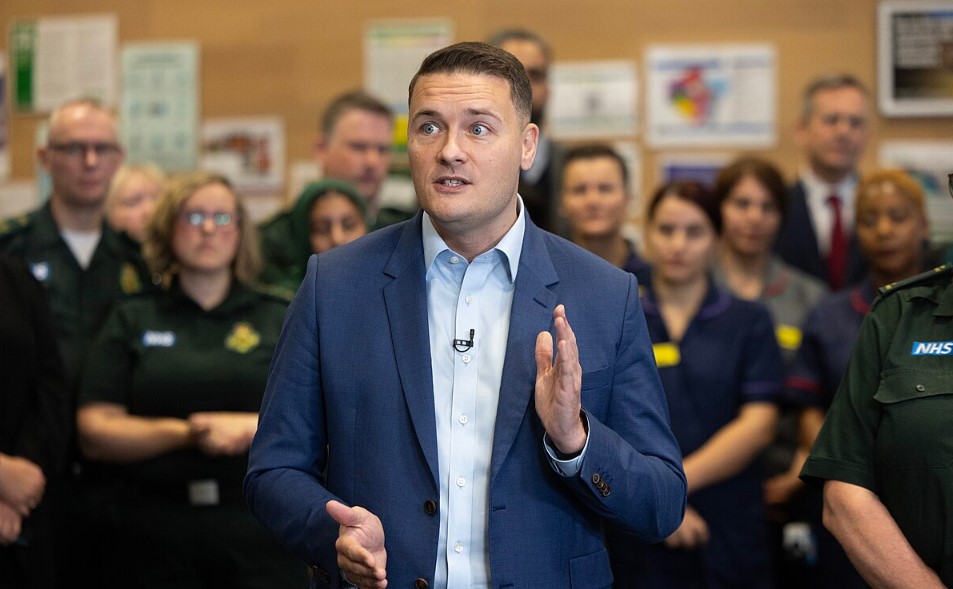
Feature picture: launch of the 10-year plan, from Wikimedia Commons, here.