
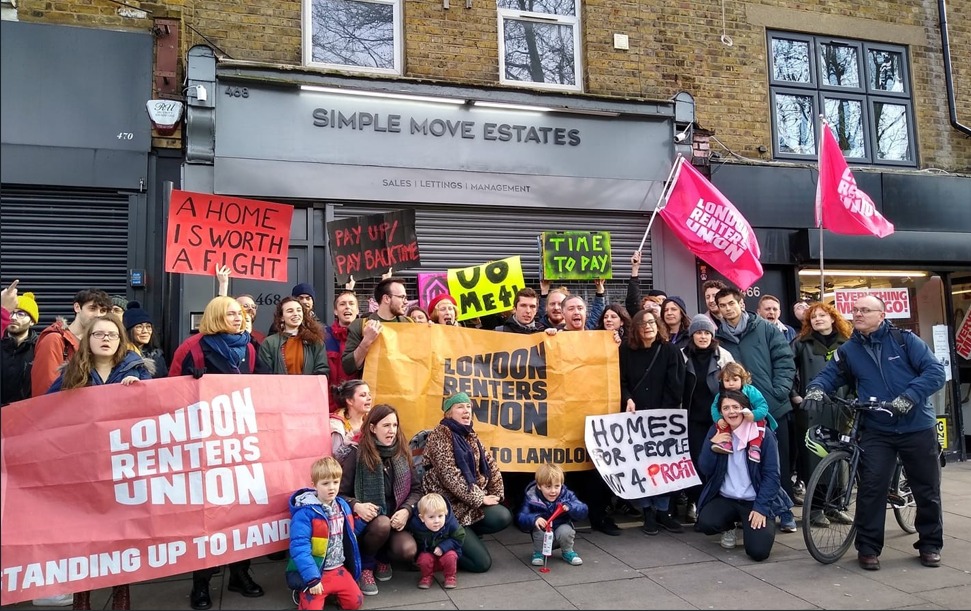
In a recent Financial Times article, published on 18th August, it was reported that households renting privately spent on average over a third of their gross income on housing last year. Much of that increase was driven by a 7.9 per cent rise in average rents to a staggering £1,232 a month, while incomes for the average renting household fell by 1.5 per cent. This stagnation in wages has left people feeling the full weight of their housing costs.
What was once seen as a problem mainly confined to London, where rents long outpaced wages, has now spread across the rest of England. The West Midlands recorded the sharpest rise in income spent on rent, followed closely by the South West. For many, particularly young people, buying a home has become impossible unless they have family wealth to rely on. Compounding the crisis is Thatcher’s disastrous right-to-buy scheme, which depleted the stock of social housing to the point where it has almost disappeared.
But it also meant that the building of new homes collapsed. A 2022 report from the Resolution Foundation found that new builds fell dramatically in the early 1980s and never truly recovered. With so few new public homes constructed, overall housing stock has plummeted, while private sector building has remained at roughly the same level it was before Thatcher.
She succeeded in wiping social housing off the map, but her legacy also ensured that younger generations would have little prospect of ever buying a home. Worse still, for renters, because of the tiny pool of available housing, competition in the private sector is so fierce that rents were always bound to spiral to unaffordable levels.
Thatcher’s legacy and the failure of any successive Labour government to reverse the Right To Buy policy, continues to affect available public housing stock today. A recent detailed investigation by Common Wealth found that English councils are set to sell eight more times as many houses in 2025-26 as they built the year before.
According to the Brookings Institute, home ownership is in decline, with social renting at an all-time low and private rental housing continuing to expand. Their data also shows that more than half of young people aged 25–34 do not own a home, with many forced either into the private rental sector or back into their parents’ houses. Among renters, those with the lowest incomes make up the largest share. Young, working-class people in low-paid jobs with poor conditions are now barely able to keep a roof over their heads amid the cost-of-living crisis. They are suffering further still from the failed housing policies of the past.
Labour’s false promises to renters
With young, poorer workers increasingly unable to afford their rent—let alone being able to dream of owning a home—the current Labour Government has introduced a Renter’s Rights Bill. Ministers proudly defend it during their morning media rounds, often as a shield against criticism of their abysmal policy record.
On the surface, the bill appears to contain some positive measures. It abolishes Section 21, meaning landlords must now provide a legal reason to evict tenants, whereas previously no justification was required – so-called “no-fault” evictions. It also grants tenants more time to resolve rent arrears, though only by a matter of a few additional weeks.
One of the more controversial elements of the bill is the temporary halt on rent increases. Yet, in a report by Generation Rent, a group campaigning for private renters, this measure is unlikely to work. Landlords can still issue a Section 13 notice once a year, allowing them to dramatically raise rents annually; costing tenants as much as if the rises had been introduced incrementally. This offers only a fleeting reprieve before rents climb beyond affordability.
The same loophole undermines eviction reforms: landlords can use Section 13 to price tenants out, effectively forcing them to leave, thereby nullifying the point of scrapping Section 21 altogether.
In many respects, instead of outlawing exploitative landlord practices and punishing them under the law, Labour has created a web of loopholes. At best, these leave tenants bogged down in tribunals for months—often while already evicted for refusing to pay hiked rents.
At worst, the bill amounts to little more than a performative act, offering no real protection to renters while extending leeway to the landlord class – a class defined by greed, which has become ever more exploitative since the pandemic, and is now openly defended by the political establishment.
A political class of landlords
What is worse is that some Labour MPs now belong to the landlord class themselves, defending their own interests by lobbying for the protection of landlords’ rights. Take Labour MP, Jas Athwal, who recently stepped down as a councillor in Redbridge after it was revealed that his rental properties were in such poor condition that they were deemed uninhabitable due to rampant mould. In an article for the website Landlord Zone, Athwal is listed as the biggest landlord MP, surpassing even the Tories in the scale of his property holdings. In fact, Labour MPs now own more properties than the Conservatives.
Then there is the recent resignation of Homelessness Minister Rushanara Ali – an irony not lost on many – after it emerged that she had increased the rent on her East London property by £700 a month, shortly after three tenants had been asked to leave because she claimed that she wanted to sell the property. To be clear, this is not just a personal attack on Athwal or Ali. Rather, it highlights the wider class character of our politics. Much like the Conservatives, who have long been the political representatives and beneficiaries of landlords, the Parliamentary Labour Party has now taken on the same mantle.
A socialist response
So how should socialists respond to the crisis of renting? Whilst we don’t yet see a full policy platform from Your Party, we do know that in their founding statement they called for “investing in a massive council-house building programme”. We agree with this demand. With the mass sell-off of council homes, people have been forced into dependence on the private rental sector, with councils only able to house the most vulnerable in society, that is if you can even get through the years-long waiting lists. We must build more homes, and they must be council homes. But as Left Horizons, we would go further as outlined in the Charter for Young Workers and Students we published last year, and we would urge all socialists to call for similar demands.
A review of the Left Horizons Charter for Young Workers and Students can be found here on our website (it includes a downloadable copy). In that charter, we called for rent controls on private properties, security of tenure for both council and private renters, a transition to council housing through the municipalisation of big landlords and empty properties, the enforcement of decent housing standards, the abolition of ‘right-to-buy’, and the creation of a public corporation made up of the nationalised ‘big six’ building companies, together with housing development land.
If Your Party is serious about tackling the housing crisis, it cannot just call for investment in new council houses. It must also defend those still renting in the private sector, while bringing the major building firms into public ownership, since they control both the housing stock and much of the land for development. Only under democratic ownership can quality council housing be built, instead of money being funnelled to greedy property developers outsourced to do a poor job on homes that are desperately needed.
And while Your Party has given good soundbites about being a democratic, grassroots-led organisation rather than a top-down structure, it must also confront how MPs operate inside and outside parliament. MPs should be paid a skilled worker’s wage, not the inflated £90,000-plus they currently receive. They should be barred from holding second jobs as a means of making extra money. This must also include landlordism: no MP should be allowed to rent out properties to tenants, as it creates a blatant conflict of interest. If Your Party is serious about addressing the crisis in our political class, it must root out the causes of corruption—and those causes lie in money and greed.
Left Horizons will encourage all socialists – in whatever party they are active – to push for socialist demandslike these, as they are the only genuine solution to the renting crisis today.
The featured image at the top of the article shows action by the London Renters Union (credit: LRU)