
By Greg Oxley, from the French website – La Riposte
In France, the next two weeks will see three important events in the social and political life of the country. On the 10 September, a massive popular protest is due to take place. The initial call for this protest came not from the trade union organisations, but from a video message on a TikTok account calling on the “people” to move into actions around the slogan “Bloquons tout” (Shut down everything). From TikTok it migrated onto other networks, like X and Facebook, and found a massive audience.
By the 2 September, the video had been watched 42000 times, but a later appeal (18 July), with an image in the form of a poster, has now been opened 1.5 million times! Aside from the appeal for “resistance”, for a general boycott of the economy, and phrases such as “Enough of suffering in silence, of profits on our backs, of empty promises”, the political coloration of this movement is hard to define.
Some extreme right-wing, nationalist elements are present, but in the main, the ideological and social content of the campaign has shifted markedly to the left, attracting the support of many of the most militant trade-union organisations and the left parties. In this respect, the movement towards the 10 September is reminiscent of the Gilets Jaunes which emerged in the latter months of 2018, and clearly, has the ruling class and all “respectable” proponents of capitalism and “law and order” deeply worried.
They fear – and not without reason – that France may be entering a period of profound social and political instability. The fact that this movement is emerging, like the Gilets Jaunes, from outside the structures of the traditional workers’ organisations is further proof of generalised and potentially uncontrollable anger and revolt.
Trade union strikes and protests
Unlike the 10 September mobilisation, the 18 September day of strikes and protests is called for by the trade union organisations, spearheaded by France’s largest and most militant union, the CGT (Confédération Générale du Travail), which has also called for workers to mobilise on the 10th.
Both of these protests are a response to the budget proposals of the Bayrou government, which include doing away with two bank holidays, drastically cutting sick pay, cutting public sector services and employment, and a whole raft of deeply unpopular measures, all of which come on top of years of declining living standards and working conditions, while big enterprises and investors have been raking in record levels of profits.
Macron and Bayrou want to make cuts in public expenditure amounting to about 42 billion euros. They say this is the only way to reduce the public debt. They forget to mention, of course, that every year, 211 billion euros are paid in subsidies to private businesses, without any conditions attached in terms of investment or employment. 211 billion euros is equivalent to 2.5 times the national budget for education in France. The government also wants to increase military expenditure by 100 billion euros over the next four years.
Will the government fall?
As it happens – and here we come to the third import date over the coming weeks – in all likelihood, the Bayrou government, which does not have a parliamentary majority, will cease to exist after 8 September, given that the left parties – La France Insoumise (led by Jean-Luc Mélenchon), the Communist Party, and, although not so clearly, the Socialist Party, have pledged to vote against the government’s budget on that day. Together with the votes of the nationalist right (the Rassemblement National), that will be enough for the government to fall.
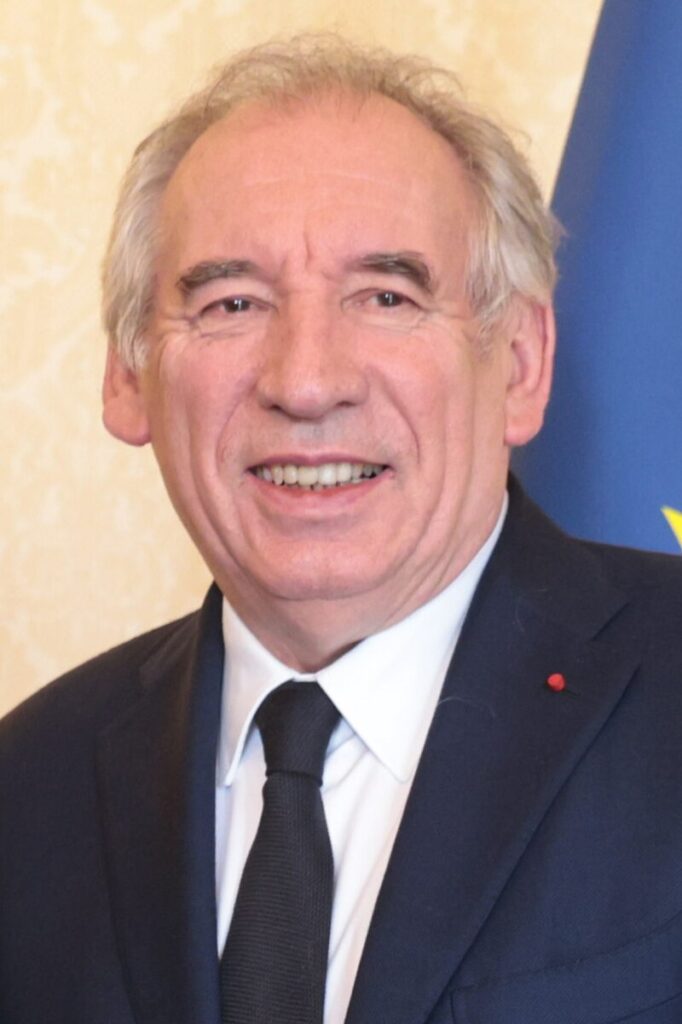
[see below for photo credit]
The position of the Socialist Party leadership is ambiguous because, in stark contrast to the party membership, it seems to be willing to work with president Emmanuel Macron after the fall of Bayrou. Olivier Faure, the SP leader, has said the socialists are ready to form a government, should Macron choose to nominate a socialist Prime Minister to replace Bayrou.
But what would this mean, in practice? A government led by socialists would be unviable from day one, unless it was a coalition government with the right parties and assorted “Macronists”, charged with carrying out policies identical in all essential respects to those of the Bayrou government.
And how would it be possible to field credible socialist candidates in future elections, if the Socialist Party had been in Macron’s government in the preceding period? The conciliatory attitude of the socialist leadership has enraged a majority of the party membership, as shown by the protests coming out of the general assemblies of the party branches at the present time.
There is growing pressure on the left – and from the nationalist right – for Macron to resign. But that scenario would also pose major challenges for the left and the workers’ movement as a whole. Over recent years, like practically all the other countries in Europe, France has seen a widening of the social basis of nationalist and racist ideas and a steady growth in support for the Rassemblement National. This is essentially a reaction to the consequences of capitalist “globalisation” and free trade. It goes together with support for “strong” government, unfettered by political conventions, the media and the “élites”. In the UK, Reform is surging forward on this same undercurrent.
Past failure of left parties
In France, new presidential and legislative elections could well lead to a victory for Le Pen’s Rassemblement National. But there is another side to the causes of this surge in nationalist populism, namely the complete failure, in the living memory of most workers, of the left parties to do what they are supposed to do and what they promise to do in election campaigns.
Instead of mobilising working people around a policy of wide-ranging and much-needed social reforms, instead of taking on the capitalists of industry, commerce, banking and finance, in an effort to break their hold over the economy and the state, they have contented themselves with occupying cushy positions in “honourable institutions”, while allowing the machinery of capitalism to run its course, at the expense of the people they are supposed to protect.
This situation has enormously weakened the left and complicated the task of those engaged in the struggle against capitalism. It means, concretely, that the practical struggle to defend living standards and reduce social inequality must go hand in hand with a struggle to win over the working people – starting with their most militant and active layers – to a fighting socialist programme.
The left needs a programme that is not only of a defensive character – trying to maintain and improve wages and pensions, resisting public expenditure cuts, opposing racism and other forms of discrimination – but which also faces up to the need to break the power of the capitalist class and transfer control and management of the economy to elected, trustworthy and recallable representatives of the people.
This can only be done by a policy of taking the giant banks and enterprises which dominate the economy into public ownership, thus providing the basis for a rational economic plan, attributing resources to meet the needs of the population, rather than the insatiable greed of the capitalist class.
On the basis of this program, and with leaders who are prepared to carry it out, the working people can start to build a movement towards putting an end to capitalism. This will not be an easy task. But it must be undertaken.
[La Riposte is a French Marxist website and it can be found here.]
[Featured photo – top – By Unknown author – https://indignonsnous.fr/local/_visuels.html, Public Domain, https://commons.wikimedia.org/w/index.php?curid=173724799]
[Photo of Byrou – Nicolas Kovarik – European Commission – https://audiovisual.ec.europa.eu/en/photo/P-066472~2F00-18, CC BY 4.0, https://commons.wikimedia.org/w/index.php?curid=169970730]