
By Mark C. Rosenzweig in Pennsylvania
In recent years, Pennsylvania has seen a sharp rise in immigration enforcement activity, with the Lehigh Valley standing out as a focal point of ICE operations and community resistance. Across the state, dozens of police and sheriff’s departments have entered into or sought to join what are called 287(g) agreements, partnerships that allow local law enforcement to function as extensions of ICE by questioning, detaining, and arresting people on immigration grounds.
This quiet expansion of local-federal collaboration has blurred the line between municipal policing and immigration enforcement, creating a climate of fear among immigrant communities. The American Civil Liberties Union (ACLU) of Pennsylvania has documented widespread abuses under these arrangements, including racial profiling, family separation, and the targeting of Latin American men working in low-wage industries.
These patterns are not abstract; they have produced a steady drumbeat of raids and arrests across the state, with the Lehigh Valley among the hardest hit. In June 2025, ICE agents from the Philadelphia–Allentown office carried out a worksite raid at the Five10 Flats construction site in Bethlehem, detaining seventeen workers from Venezuela, Mexico, Ecuador, and Nicaragua. The raid came without warning and left an unfinished building, frightened co-workers, and families scrambling for news. It also triggered mass protests.
Hundreds marched, chanting in English and Spanish
Hundreds marched across Bethlehem in the days that followed, chanting in English and Spanish, carrying signs denouncing ICE’s actions, and demanding that local officials take a stand.
The Bethlehem Police Department felt compelled to issue a public clarification that it had not participated in the raid, emphasising that its role had been limited to providing medical assistance. Even so, many residents viewed the incident as a wake-up call: if ICE could appear in the middle of a work day at a job site in the heart of the Lehigh Valley, no immigrant worker could feel safe.
The Bethlehem raid was not an isolated event. Similar ICE operations have occurred in Norristown, Reading, and other Pennsylvania cities, with agents detaining food-market workers, construction crews, and even courthouse visitors.
The ACLU report described these tactics as cruel and racist, noting that they have corroded trust between immigrant residents and local institutions. Families have begun keeping their children home from school; people avoid hospitals, libraries, and government offices; witnesses to crimes hesitate to come forward for fear that cooperation might expose them to deportation.
Chilling effect on community life
The chilling effect on community life has been profound. It is not only immigrants who suffer. When large numbers of workers are arrested or forced into hiding, small businesses lose employees, projects stall, and local economies falter. The Bethlehem raid, for instance, interrupted reconstruction of a building destroyed by fire, an effort meant to revitalise the city’s downtown.
In response, the Lehigh Valley’s immigrant rights network has mobilised. Activists and community groups launched a rapid-response hotline to report ICE activity and connect affected families with legal and material support.
At county commissioners’ meetings, residents have testified about detentions at courthouses and in neighborhoods, describing a spreading sense of insecurity that touches every aspect of daily life. The public pressure has pushed some local officials to distance themselves from ICE, yet others continue to cooperate quietly or provide logistical assistance when federal agents operate in their jurisdictions.
The state as a whole remains far from the “sanctuary” model adopted in places such as New Jersey or California. Without statewide limits on local cooperation, enforcement practices vary widely from one municipality to the next, leaving immigrant residents uncertain where they are safe.
This uneven landscape is precisely what makes Councilwoman Taiba Sultana’s proposed resolution revision for Easton so significant. Her three new “whereas” clauses speak directly to the realities of these raids and to the dangers of allowing city employees to participate, even indirectly, in the federal immigration dragnet.
Public services for the people, not Washington’s machinery
By prohibiting officials from collecting or disclosing immigration status information, and from using city resources to assist ICE except when explicitly required by law, the resolution would draw a bright, necessary line between municipal service and federal enforcement. It would ensure that Easton’s public servants serve the people of Easton — not the deportation machinery of Washington.
In a moment when ICE raids have torn through nearby communities, Sultana’s proposal offers a way to restore trust, reaffirm due process, and make the term “welcoming city” mean something tangible.
The struggle unfolding in Easton is not merely symbolic. It is part of a larger battle over what kind of communities Pennsylvanians are willing to build: those ruled by fear and surveillance, or those held together by solidarity, safety, and mutual care.
Mark C Rosenzweig’s FB profile is here.
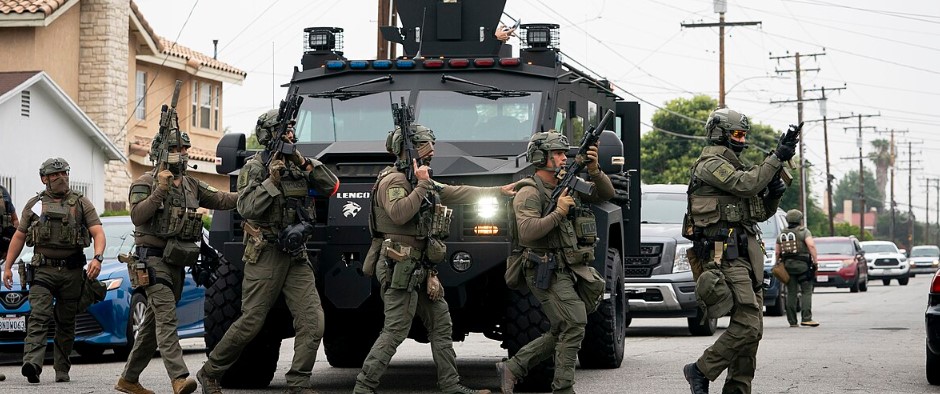
[Feature picture shows ICE activity, although in Los Angeles, from Wikimedia Commons, here]