
By Joe Langabeer
Nigel Farage recently gave a speech outlining his economic policies should Reform UK form a government. While he has previously hinted, during the last general election and party conferences, at the direction he would prefer to follow – with talk of welfare cuts and major tax reductions for big business – this marks the first detailed account of how Farage intends to defend the interests of the capitalist class.
This speech marks a shift in his economic stance and in his tone. Once he postured as a friend of the working class; now he has made clear his allegiance lies solely with the capitalist class. He remains committed to slashing welfare and reducing taxes for corporations, but he is now turning his back on workers by abandoning plans for income tax cuts.
This transformation was already visible before the speech, when Reform UK began inviting corporate sponsors and offering VIP packages at its conferences to court the ultra-wealthy. This speech merely cemented that relationship, signalling to the markets and financiers that Farage is serious about defending their interests, while leaving workers and the poorest with nothing but broken promises.
In a similar fashion to the current Labour government, which claimed, before the general election, that it could make no substantial promises before taking office, Farage has backtracked on his pledge to raise the income tax threshold from £12,570 to £20,000.
The Institute for Fiscal Studies estimated, when Farage first proposed the policy in late May, that it would cost the Treasury between £50 and £80 billion a year. Farage seems to have taken that advice on board. In his speech, he described raising the threshold as merely an “aspiration”, confirming that the pledge would now be dropped, with no replacement policy offered.
This position closely mirrors that of the Labour government’s decision to continue freezing income tax thresholds, a policy first introduced by the former Tory Chancellor, Rishi Sunak and extended by Jeremy Hunt. The freeze at £12,570 means more low-paid workers are being dragged into paying tax.
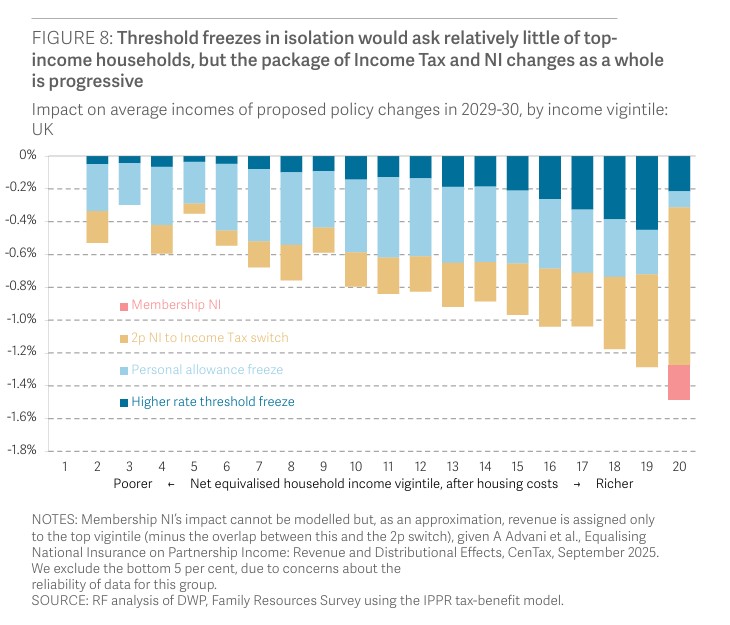
Poorest hit by tax allowance freeze
A June 2025 report from the Resolution Foundation found that if these freezes were maintained, the poorest households would face the largest falls in average incomes by around 0.2-0.4%. By contrast, reforms affecting the richest, such as a 2p shift from National Insurance Contributions to income tax, would have far less impact on living standards for the poorest.
A recent report from The Guardian found that the number of people paying the higher rate of income tax is expected to rise by 500,000 this year, bringing the total to more than seven million across the UK.
With around 30 million people now paying income tax and more being pulled into the basic 20% rate, coupled with soaring food and energy prices, Farage has once again shown little concern for supporting workers through the cost of living crisis. His speech made no mention of spiralling energy bills, rising food costs, or the financial strain on ordinary households, other than suggesting migration had something to do with it, without offering any evidence to this claim.
Though he has previously railed against the political establishment for raising taxes excessively, his latest proposals prove he is no different. Workers will continue to see the same amount of money leave their pockets, with nothing in return to ease their financial burden.
Attacking Poor and Young People
While Farage offered nothing for Britain’s working class, he appears eager to target the poorest in society. Earlier in the week, at a Reform UK press conference led by Lee Anderson, he argued that a potential Reform government could save £9 billion a year by tightening eligibility criteria for Personal Independence Payments (PIP).
Farage has also partially backtracked on the two-child benefit cap, insisting he would only scrap the cap in cases where both parents and the child were UK nationals and both parents were in work, echoing his usual racist dog whistles while shaming those unable to work.
During Anderson’s press conference, he claimed that the PIP system was being exploited by people “gaming the system”. Reform proposes forcing claimants to attend face-to-face assessments, even when their disability makes this difficult, and cutting payments for those with “less severe” psychological conditions such as anxiety or depression.
Currently, eligibility for PIP already depends on strict criteria: the claimant must have a long-term medical condition that affects daily life inside and outside the home and is expected to last at least 12 months. According to the charity Benefits and Work, the success rate for PIP claims related to anxiety is around 45%, meaning more than half are rejected.
The charity also reports that, as of October 2024, the overall average success rate for PIP claims stands at 51.63%. For conditions such as Type 1 diabetes, which can be debilitating and lead to serious complications if poorly managed, the success rate is just 27%.
The Office for Budget Responsibility found in 2019 that when PIP replaced Disability Living Allowance in 2013, intended to save taxpayer money through tighter eligibility rules, spending actually increased by 15% to 20% as a result of the redesign.
Culture war on anxiety and depression
The PIP system is already harsh and dehumanising, yet Reform seeks to make it even more punitive, weaponising it in the ongoing “culture wars” by dismissing psychological conditions like anxiety and depression as little more than myths.
While Reform, Labour, the Conservatives, and the right-wing press continue to act hysterically over the rise in benefits spending, the figure currently stands at £22 billion according to the government’s own website, and is expected to rise to just over £30 billion by 2030. This is just half the £60 billion spent annually on defence, as stated in a defence spending briefing released in early October, which is predicted to rise to £73.5 billion in 2028/29.
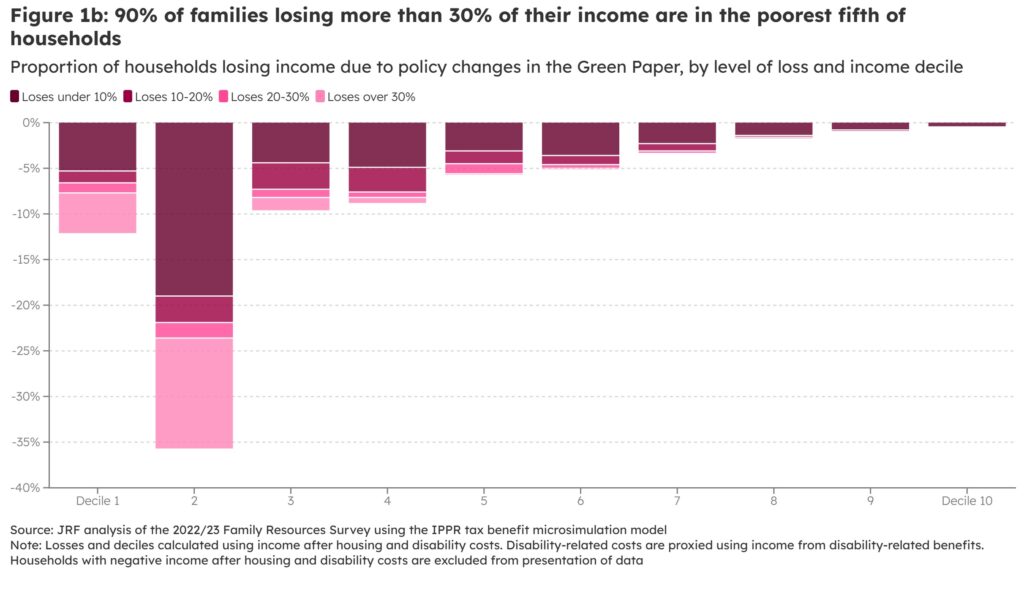
The country could easily afford PIP if defence spending were reduced over the next five years. According to the Joseph Rowntree Foundation, if Reform were to cut PIP in the same way that Labour attempted to in its welfare bill, before the U-turn forced by Labour MPs, 90% of families in the poorest fifth of households would lose over 30% of their income. It is a cruel and predictable policy that all establishment parties, including Reform, are pursuing, and it is shameful that Farage has chosen to attack welfare yet again.
Rates of anxiety are indeed rising, driven by declining living standards and the cost-of-living crisis, with many, particularly young people, struggling to afford rent or even food. Anderson claimed in his press conference that new PIP claimants under 25 for mental health had tripled in the past five years. This was false. According to the same charity mentioned earlier, Benefits and Work, DWP data shows the number had risen by around 80%, not 300%.
Anderson frames work as a “patriotic duty”, yet there is nothing patriotic about dismantling an already battered welfare state that millions depend on when they are sick or unable to work.
Reform has offered no solutions to the causes of worsening mental health, nor any funding or incentive to improve support services. A report from the Royal College of Psychiatrists in March 2025 criticised the current Health Secretary, Wes Streeting, for cutting mental health spending by 0.16% from the previous year, despite rising levels of anxiety and depression among young people.
Young people “paid too much!”
Farage’s hostility towards younger generations does not end there. Speaking to the press after his speech, he suggested cutting the minimum wage for young workers, claiming they are currently “paid too much”. As ever, this argument is unsupported by evidence.
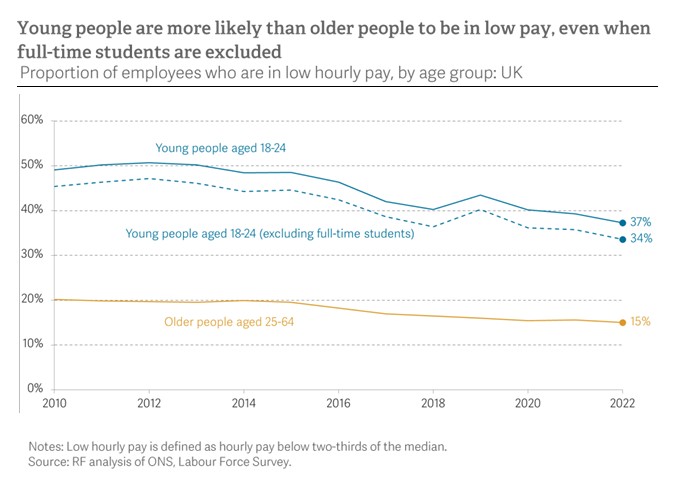
A report co-authored by the Resolution Foundation and the Health Foundation found that young people have historically been stuck in low pay far more than older workers, 37% compared to 15%. Although low pay has declined, it has failed to keep up with rising food and energy prices, leaving young people with the least progress in real earnings.
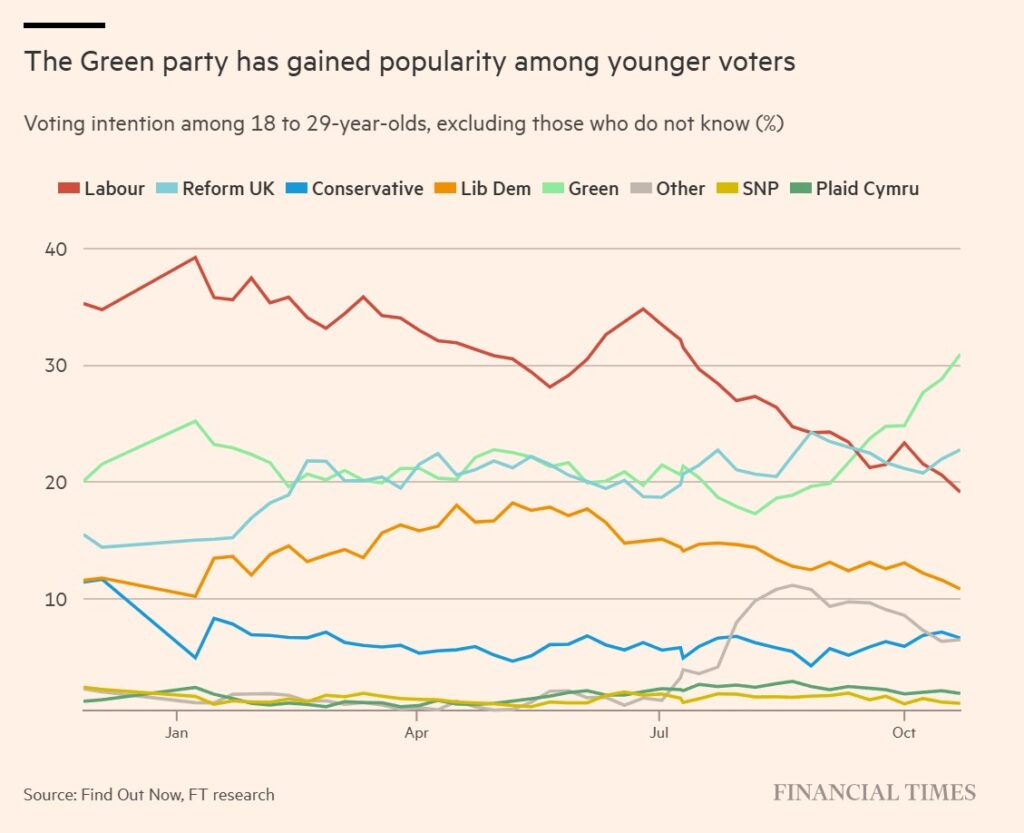
Farage and Reform are not seeking to appeal to young people, despite attempts by sections of the right-wing press to suggest otherwise. In reality, younger generations are turning towards the left, first to Labour and now increasingly to the Green Party under Zack Polanski.
Support for the Greens among 18–29-year-olds has surged to over 30%, with Reform trailing at 20% and Labour at 19%, according to a poll by Find Out Now in partnership with The Financial Times. Policies like these will only cement that shift to the left, as Farage and his establishment allies continue to punish young people for crises they themselves have created.
Benefiting Big Business
In cutting wages for young workers, slashing welfare, and increasing taxes on the poorest, who truly benefits? Farage made that perfectly clear – big business. He claimed there has been an “exodus” of wealthy individuals and young entrepreneurs leaving the UK due to Labour’s policies, yet he offered no plans to reverse them, apart from scrapping inheritance tax on farmland.
What he did attack, however, was Labour’s decision to target “non-doms”, ironically, wealthy foreigners who pay less tax in the UK than ordinary citizens. Farage argued this policy caused the supposed exodus, a claim not supported by evidence. The Guardian, citing HMRC data, reported that the number of non-doms has been in steady decline and largely stagnant since 2017, with no dramatic fall since Labour took office.
Whilst Farage has been railing against Tata Steel and calling for British-made steel in a populist appeal to workers, he happily defends the very same class of wealthy foreign investors who exploit them. For Farage, it seems, being a “wealthy foreigner” is acceptable if it aligns with his political and financial interests.
Then there is his stance on inheritance tax for farmland. Farage claims farmers are being destroyed by this so-called “threat” to their livelihoods. As discussed in my previous article on rising food costs, the issue lies elsewhere. The real reason inheritance tax has become a concern for farmers is because agricultural land is increasingly being bought for non-farming purposes, and that has made land value for farmers skyrocket.
According to the Get Fair About Farming campaign, the majority of farmers, around 75%, are not primarily worried about inheritance tax, but about supermarkets refusing to pay fair prices for their produce.
In the same spirit as the Tories, Farage clings to the discredited notion that attracting more wealthy individuals will boost investment and generate tax revenue, even as he pledges to cut those very taxes. Corporation tax, by definition, ensures that companies pay a share of their profits back into the public purse.
Falling Corporation Tax
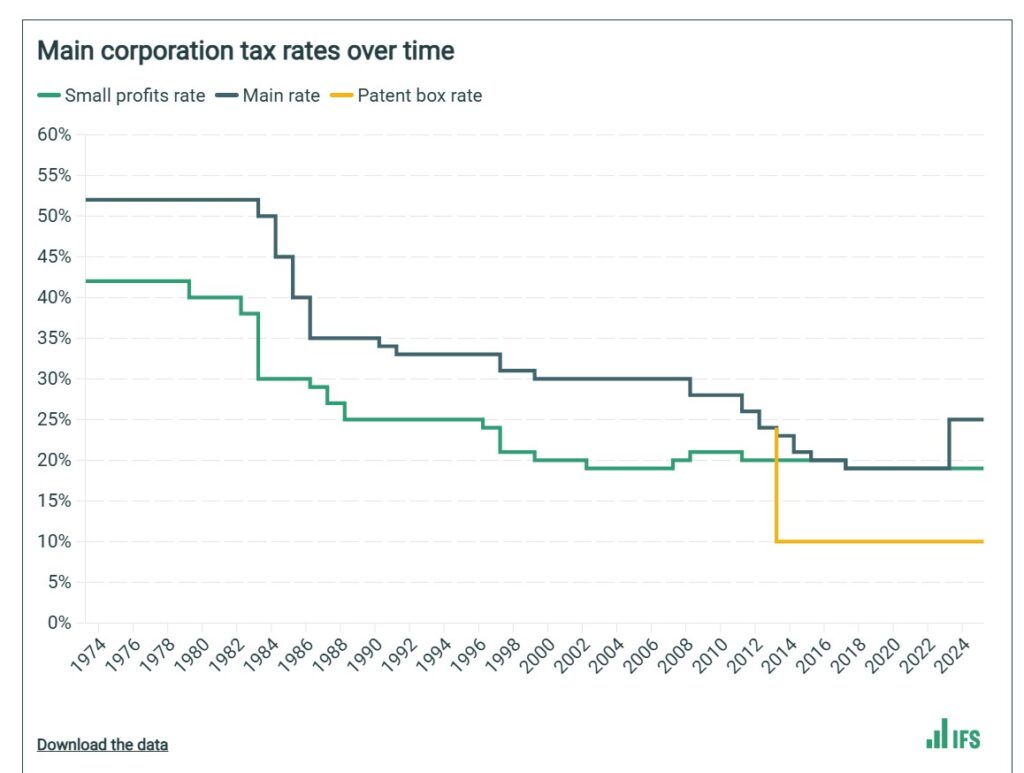
Yet over the past half-century, that share has been consistently eroded. According to a report by the Institute for Fiscal Studies, corporation tax fell under Thatcher to 35%, remained at around 30% under Blair, and was then slashed further by the Conservative–Liberal Democrat coalition from 28% to 20%.
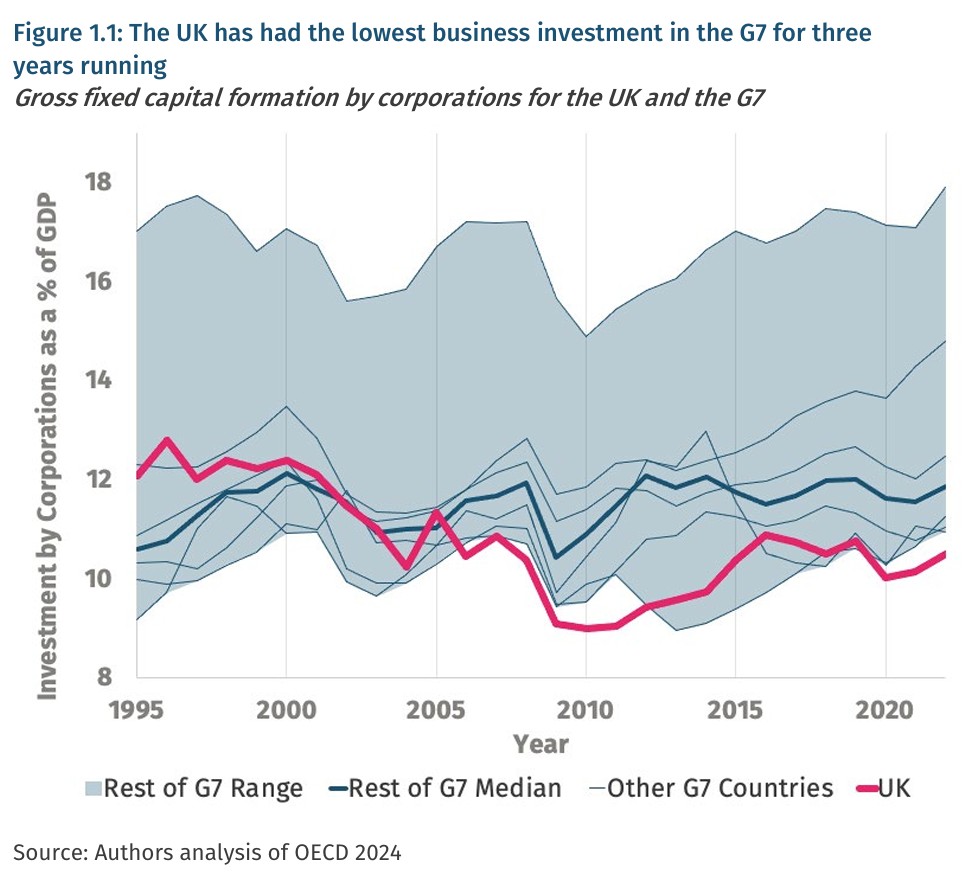
Yet even after years of generous tax cuts, the wealthy have failed to invest in Britain. A 2024 report by the Institute for Public Policy Research found that the UK has recorded the lowest level of business investment in the G7 for three consecutive years, with only marginal growth throughout the 2010s. Tax cuts for corporations and the rich do not guarantee reinvestment into the economy; Britain has shown that it remains “uninvestable” even when big business is handed greater profits through reduced taxation.
When it comes to individual wealth and taxation, the story is no different. A 2020 report from the London School of Economics found that one in ten people earning more than £1 million a year paid a lower effective tax rate than someone earning just £15,000!
Many of these high earners benefit from extensive tax relief schemes, including Entrepreneurs’ Relief, taxed at just 10% and capped at £1 million of qualifying gains, allowing them to amass significant wealth while contributing proportionally less to the public purse.
Capital gains tax, too, has long been stacked in favour of the rich. Only the wealthiest 0.001% of Britons pay it at the top rate, while the rest of the top 1% continue to benefit from lower rates.
Across Britain, and much of the Western world, tax systems have been deliberately designed to be kind to the wealthy and ultra-wealthy. Yet Farage continues to peddle the falsehood that millionaires and billionaires are somehow overtaxed. In truth, they remain the most protected class in the economy.
Farage as the New Thatcher
While it has been the Conservatives who have traditionally stood as defenders of big business, and continue to do so through their policies, Farage is now seeking to replace them and, in his view, become the true heir to Thatcherism. He has spoken of plans to deregulate the banks by stripping powers from the Financial Conduct Authority, the very body established to protect consumers and keep the banking system in check after the 2008 financial crash.
He has also previously called for the privatisation of the NHS, advocating an insurance-based model, but, recognising how deeply unpopular this would be with the public, Farage and Reform have since backtracked, suggesting it is unlikely they would pursue such a system if they ever came to power.
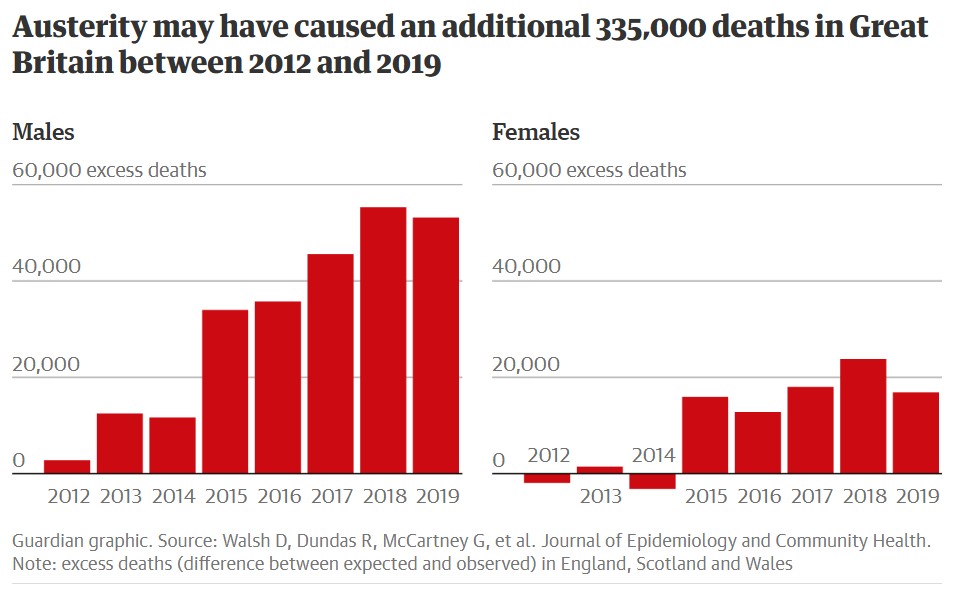
What is clear, however, is that Farage’s vision mirrors the politics of Thatcher, Cameron, and Osborne, a renewed era of austerity at a time when the country and its workers cannot endure another round. A study published in the Journal of Epidemiology and Community Health, reported by The Guardian, found that austerity contributed to an additional 335,000 deaths in Great Britain between 2012 and 2019.
Austerity will deepen capitalist crisis
The country has not recovered from that legacy, which has been compounded by the chaos of Brexit, the COVID-19 pandemic, and Liz Truss’s economic meltdown. Another wave of austerity, while handing tax cuts to big business, will only deepen the crisis of British capitalism.
This was, in many ways, the most honest speech Farage has ever given. Yet it was not a speech of victory or hope, but of resignation. He has never been one to offer genuine optimism, but he once at least pretended to care for ordinary people. That pretence is now gone.
Labour, meanwhile, has failed to provide any meaningful challenge to Reform, mirroring the same agenda by cutting welfare and extending the freeze on income tax thresholds. There are whispers of modest reforms, such as revising council tax bands for expensive properties and increasing income tax for those earning above £45,000. But these are token gestures. For the poorest and lowest-paid, it remains a kick in the teeth, one that will only worsen should Farage ever reach power.
The trade union leadership has also been too slow to condemn the economic policies of both Labour and Reform. As Farage’s “worker-friendly” mask slips, to reveal his true loyalty to big business, unions must take up the fight, both by challenging Reform’s programme and by forcing a change in direction within the Labour Party itself.
Union leaders have rightly called out Farage’s racism, but they must also attack his economic vision with equal force. The only way forward is to demand a bold, socialist alternative and stop Labour’s leadership from drifting further to the right. The unions have the membership and the strength to do it, so they must. To stop Farage, they must first stop the rotten politics of Starmer and his cronies.
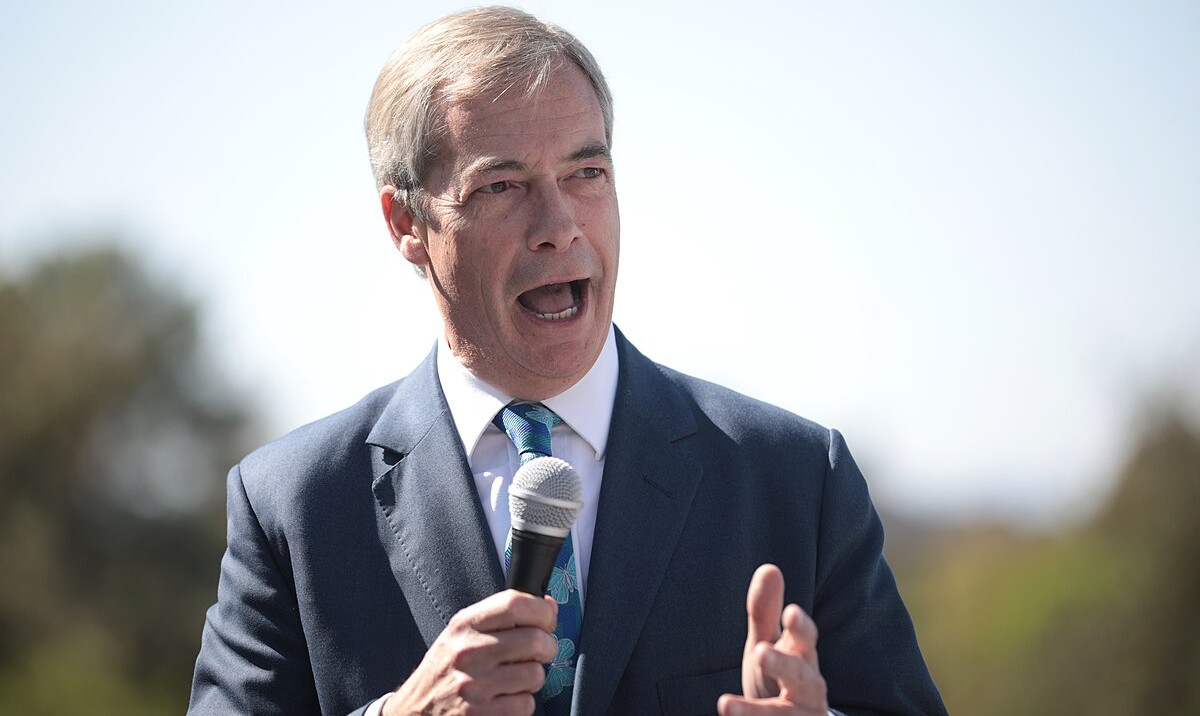
[Featured photo – Farage speaking in Arizona, USA at a “Liberty for Trump” event. Photo – Gage Skidmore (via Wiki Commons – credit here]











.jpg)