By John Pickard
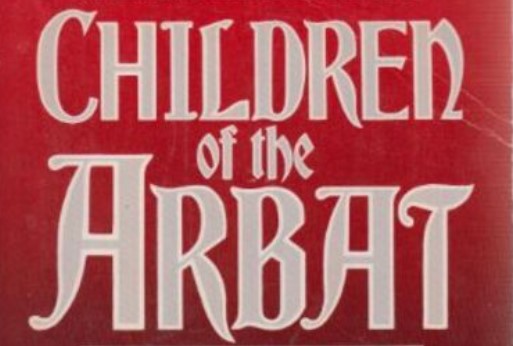
I have just started reading the third book in the Arbat trilogy by Anatoli Rybakov (1911-1998). If it is half as good as the first two, it makes Rybakov in my opinion the finest Russian novelist dealing specifically with the period of the rise and consolidation of Stalinism.
The trilogy is named from the first and most popular book in the series, The Children of the Arbat. This was originally written and distributed via samizdat – an informal system of self-publication, often hand-written – in the 1960s, but it was not published officially in Russia until 1987.
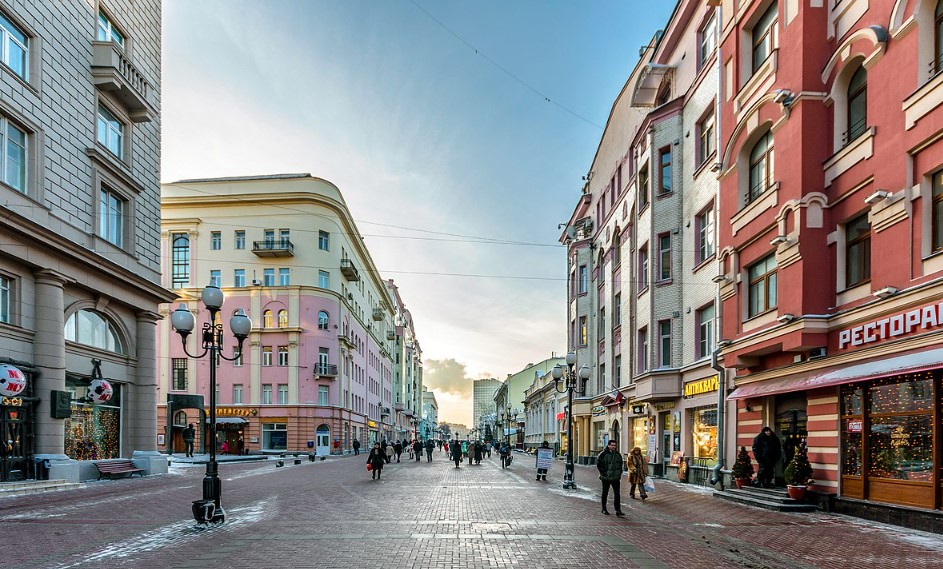
The Arbat is a long street in Moscow – changed, but still famous today – which is where Rybakov grew up, at number 51. The books deal with the fortunes of a group of school and, later, college students, all known to each other, in the early years of the consolidation of the Stalinist bureaucracy, beginning around 1933.
Most of these friends were members of good standing in the Komsomol (the Communist Party youth wing) and their older family members were full Communist Party members, but that had little impact on their later fortunes.
More than any other author I have met, Rybokov portrays the daily lives of a range of ‘ordinary’ workers and their families – and authentically, because it was his own living experience – as they struggled to survive against a range of post civil war privations. Most of the families lived in what we would consider today to be extremely cramped accommodation, where it was not unusual for a family to have only two rooms in a block of flats.
But despite the hardships of everyday life, most of the young characters in the book were earnest and honest communists, having absorbed the traditions of the revolution and civil war, and seeing the need to work hard to “build socialism”.
However, even at the starting point of the Children of the Arbat, in the early 1930s, people were learning to look over their shoulders and to be careful about what they said and who they said it to. Those who did not, suffered the consequences.
Stalin himself features as a central character. But although his streams of consciousness and the conversations he has are works of fiction, they are absolutely plausible and believable. Rybakov portrays Stalin as a man fiercely guarding his personal power against all perceived rivals – including the leader of the Leningrad Communist Party, Kirov – and manoeuvring to ‘eliminate’ them, as required. Rybakov portrays Stalin as a man of self-delusion, ‘justifying’ his personal absolute rule as an historic necessity.
Throughout the first book, it is as if there is a chill affecting the whole of society, and one that is over time intensifying its icy grip. We seen the outline of the future lives of the central characters – some end up in the West, others in internal exile, yet others in the military or the secret police, the NKVD. But all of them, in different ways, are profoundly affected by the pall of gloom that descends on Russian life in the form of Stalinist totalitarianism.
The second book, Fear, is aptly named
The first book ends with the assassination of Kirov, and although it was a terrorist act engineered by Stalin himself, it becomes the pretext for a series of purges right throughout society, but especially in the Communist Party. The second book is aptly entitled Fear, because the dread of denunciation percolates right through the party.
In fact, it sometimes seems that the best way to avoid being denounced, is to denounce someone else before it gets to you. Everyone knows that the arrests are arbitrary and unjustified, but the only ‘safe’ thing to do is to look away and hope you’re not noticed, or else finger someone else.
This is the period of the great show trials of the former leaders of the Bolshevik Party, notably Zinoviev, Kamenev and Bukharin, none of whom were allowed to survive. Party members are denounced left, right and centre, and Stalin draws a line – in blood – between the revolutionary traditions and the membership of the old Bolshevik Party and the party he now commands as sole dictator.
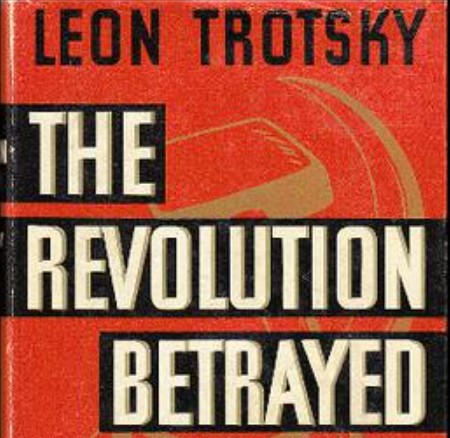
In his book The Revolution Betrayed, Leon Trotsky compared Stalin’s Soviet Union to Hitler’s Germany. He made the point that although the economic foundations of the two states were polar opposites – one based on capitalism, the other on a state-owned economy – the political superstructures that rested above them were identical. They had the same repressive apparatus of secret police, informers, prisons, torture chambers and firing squads.
If you want a scientific and analytical description of the origins, rise and consolidation of Stalinism, there is no better writer than Trotsky. But if you want to picture everyday life in this period, in all of its grim reality, there is no better writer than Rybokov. As one of the characters says, trying to see an image of her own future prospects, “There was no happiness. There was life and the struggle for life, and ahead there was nothing but that struggle.”
On the fringes of the labour movement today, there has been something of a revival of ‘Stalinism’ and attempts to justify his rule – a system of government that is thought to have killed directly or indirectly as many as six million people – because ‘firm leadership was required’. Members of today’s Communist Party and many around the Morning Star, are still apt to refer to Eastern Europe (up to 1989) as ‘socialist’, when it was nothing of the sort.
But a notable feature of Fear is that it ends with the shadow of war hanging over the Soviet Union, and this is the main theme of the third book, Ashes and Dust. It is worth reminding latter-day Stalinists how the ‘great man’ prepared for the coming war with Nazi Germany. Having ‘renewed’ the Communist Party by huge waves of purges, Stalin shifted his attention to the armed forces, which, he believed still had the potential to overthrow him. Stalin’s purge of the Red Army almost destroyed the Red Army prior to the war.
Beginning with isolated officers, the military purge gradually increased in scope, until eventually it closed in on the popular Red Army leader, Tukhachevsky, still seen as a hero of the Civil War, and therefore a potential rival to Stalin. Tukhachevsky was eventually tried by a ‘Military Council’ and then shot, naturally on ludicrous trumped-up charges. Rybokov frequently adds short historic notes at the end of chapters, and this is what he wrote after the chapter on Tukhachevsky’s killing:
Of the seven commanders who had tried Tukhachevsky, five were soon shot – Blukher, Belov, Dybenko, Kashirin and Alksnis. Only Shaposhnikov and Budyonny survived.
Of the one hundred and eight members of the Military Council, only ten remained among the living. They included Voroshilov, Shaposhnikov and Budyonny.
Of the forty-two men who spoke in favour of execution at the Military Council, thirty-four were shot. Eight survived. Among them were Voroshilov, Shaposhnikov and Budyonny.
A year and a half later, on November 29, 1938, the People’s Commissar of Defence, Comrade Voroshilov, announced with pride, “During all of 1937 and 1938, we had to clean our ranks ruthlessly…the purge was radical and all-encompassing…From the very top to the very bottom…We cleaned out over forty thousand people…”
That is over forty thousand people with the most education, experience and talent, who made up over half of the senior command of the Red Army.
That is how Comrade Stalin prepared the Soviet Union for the coming war.
Something worth quoting to every modern would-be Stalinist. The big drawback about the Arbat trilogy is that the three books are no longer in print. If you are lucky, however, you can find them second-hand on line. I found Fear thanks to the help of my local library service (it was the only copy in London and Essex) and the third volume, Dust and Ashes, I found online for only £15. You might be lucky.