
By John Pickard
In his press conference, justifying the bombing of Caracas and the abduction of Venezuelan President Nicolas Maduro and his wife Cilia Flores, Donald Trump cited the Monroe Doctrine. This was a policy promulgated just over two hundred years ago by the then US president, James Monroe, which, in effect, declared the Americas as an exclusive US sphere of influence.
While British imperialism was plundering Africa and the Indian subcontinent, James Monroe was telling the Brits that the Americas were theirs. Monroe has been used numerous times since to justify US interference across Latin America.
Even excluding a long list of invasions, bombings and engineered regime changes in Africa, the Middle East and Asia, just in Latin America alone there have been dozens of US military interventions. A historian at Columbia University, John Coatsworth, counted “at least 41 successful US interventions to change governments in Latin America between 1898 and 1994”. (Financial Times, January 3).
The history of the Americas is littered with US military aggressions, bullying and intimidation. Several important US states, including California, New Mexico, Arizona, Texas, Nevada and Utah were simply seized by the USA in its wars against a far weaker Mexican state during the 1840s.
US is pre-eminent world military power
There is a huge change between 1823 and now, however. Then, the US was a rising imperialist state; today it is the pre-eminent world military power and Trump’s aggression against Venezuela was an expression of that, showing off raw military strength.
The United States might be experiencing a relative economic decline in comparison to China, but it still remains the dominant military power on the planet, with well over a third of the world’s total spending on arms. The USA spends more than the next nine countries put together, three times more than China and six times more than Russia, even with the latter’s war on Ukraine.
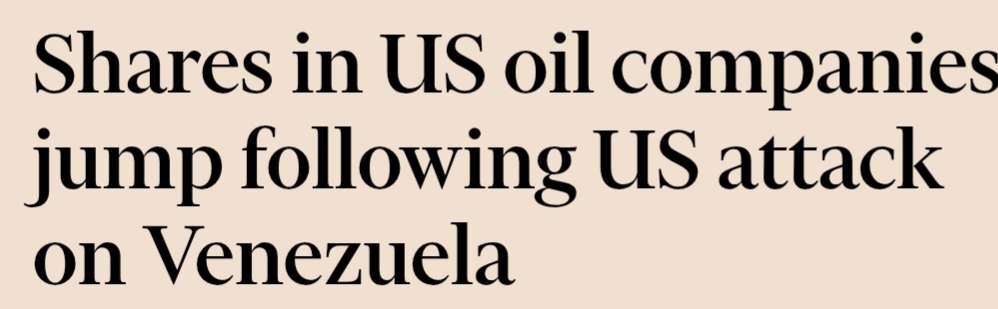
The assault on Venezuela shows that the USA is prepared to wield that armed might in the interests of the US and above all of its big corporations. In his press conference, it was quite evident: neither Trump nor his acolytes gave a fig for ‘democracy’ in Venezuela. It is no accident that US oil company shares jumped after the attack on Caracas. They have removed the ‘narco-terrorist’ Maduro, but are happy to work with the vice-president and other ministers that he appointed. The condition, of course, is that she bows to US demands.
A few platitudes about the needs of the Venezuelan population cannot hide the fact that this military assault was about naked plunder, particularly oil, backed by warships and bombs.
Utter contempt shown to US ‘allies’ in Europe
All the appeals of world-wide politicians to “international law” – and some from within the labour movement (although well-meant) – are pointless. Socialists should have no confidence in what is purported to be “international law”, because in the real world, as the US has shown here and as Israel has shown in Gaza, might is right. Ask the population of Gaza what they think about “international law”.
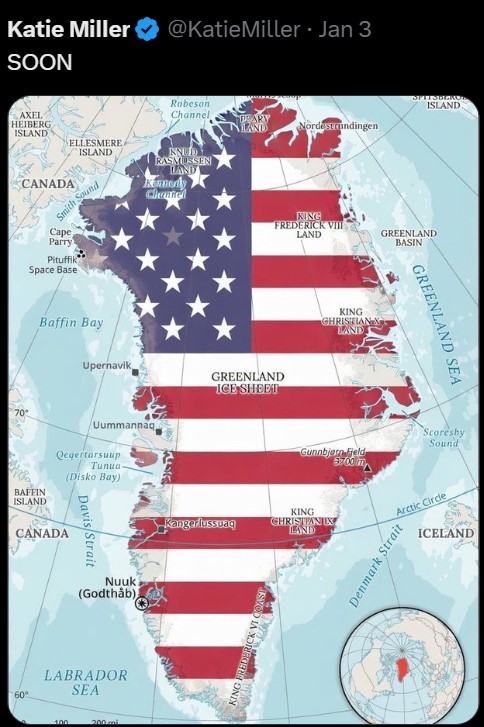
The utter contempt that this US administration shows to its ‘allies’ in Europe, and its naked aggression against Venezuela even raises the startling possibility of the USA taking over Greenland. Katie Miller, the wife of Trump’s deputy chief of staff, posted a social media picture of Greenland painted in the colours of the US flag, and the word “SOON”, eliciting protests from Denmark’s Prime Minister.
On Sunday, Trump said that the US may intervene in other countries as well. He has stated in the past that the USA wants Greenland – from a military point of view, occupying the island would be easy for them. Jennifer Cavanagh, the director of military analysis at the think-tank Defence Priorities, told the Guardian that “she had long dismissed Trump’s sabre-rattling towards Greenland”. Now, she said, “I’m not so sure”. (Guardian, January 5)
As an aside, we should also be clear that socialists are opposed the notion of “spheres of influence”, which means that a strong state can dictate policies to smaller states in a given area. The Russian invasion of Ukraine nearly four years ago, is, in effect, based on a Russian version of the same doctrine. Because Ukraine has a historic link with Russia and was previously a part of the USSR, therefore, Putin is saying, the Ukrainian people have no right to determine their own political and economic future – no right to indepedence. Ukraine is in Russia’s “back yard.”
It is no accident that some commentators are now describing Trump’s adventure in Venezuela as the “Putinization” of US foreign policy. Socialists are opposed to the US bombing of Venezuela, but we condemn it, not on the finer points of “international law”, but on its own terms, as the blatant intimidation and plundering of a weaker state by a huge imperialist power.
At his press conference, Donald Trump and Secretary of State Marco Rubio, suggested that the Venezuelan vice-president, Delcy Rodríguez, hurriedly sworn in as president, will play ball with the White House. “She’s essentially willing to do what we think is necessary to make Venezuela great again,” Trump said at his press conference.
But hours later, at another press conference in Caracas, she condemned the US and pledged her loyalty to Nicolás Maduro. “What is being done to Venezuela is an atrocity that violates international law”, she said. “There is only one president in Venezuela and his name is Nicolás Maduro”.
However, it now looks from reports that what Delcy Rodríguez said in Caracas may have been only for Venezuelan consumption. It seems that she is prepared to work with the US administration and meet its demands. She is the chosen proxy for the USA precisely because she has the credentials of a former Maduro minister, which may give her some ‘legitimacy’. Besides, if she were to be obstructive, the US has threatened further military action against Venezuela.
Despite the threats of deploying unbeatable military power, ruling Venezuela through a proxy, from outside, is likely to be more complex than it sounds. It raises the possibility of splits within the Venezuelan military and in society. The forty killed in the US raid – casualties barely mentioned in the mainstream western media – will not be easily forgotten. Political instability is not the best scenario for US oil companies being encouraged to get back into Venezuela (although Chevron never left).
We should not minimise the significance of the Venezuela adventure. It is an indication of a US willingness not only to assert its right to key interests in the Middle East and East Asia, but also to be more baldly assertive elsewhere. In doing this, Trump and the White House show complete disdain towards its so-called ‘allies’ in NATO. The sword is out of its scabbard, and it would seem that Trump is prepared to wield it far more vigorously than even Monroe was capable of doing in the nineteenth century.
Much greater social weight of working class
On the other hand, another important difference between 1823 and now is that the working class is immeasurably more powerful today and as an indirect result of the social weight of the working class – at least for the moment – the workers’ movement and democratic processes are able to assert themselves. Trump has opened a Pandora’s box, which has political as well as military implications.
It is too early to predict the outcomes of Trump’s actions. It is not impossible that he may succeed in Venezuela – that a compliant government allows the country to be “run” on behalf of the US, and lets US oil companies recover the assets nationalised decades ago by Hugo Chavez. This is not impossible. But from where we stand today, it seems unlikely that things will turn out as sweet and as simple as Trump hopes.
It is all very well talking about bringing in US oil companies – and oil shares did rise in value – but it is another thing for billions of dollars of investment to become a concrete reality. An article from Reuters suggests that even in the best case scenario, even if US companies did put in billions, they would see no meaningful increase in production for many years, which probably means they won’t invest.
And this is supposing that a new government in Caracas will bow to the USA, without provoking civil war or social conflict in the country. However the situation pans out in the coming weeks, it is looking like a mess for Trump.
With the exception of a few with right-wing leaders, like Ecuador and Argentina, most Latin American states have condemned the attack on Caracas and the abduction of Maduro, incuding the two largest states, Brazil and Mexico. Russia and China have condemned the action and even while expressing their distaste for Maduro’s regime, so too have several important European political leaders.
Fear of US military prowess will have increased after this intervention in Venezuela, even in places like Cuba, Iran and Denmark. But it means from here on, what is referred to as ‘soft US power’ – prestige, influence, diplomatic support, economic and scientific cooperation – has been trashed by Trump’s actions.
YouGov polls not good for Trump
Apart from growing opposition to US policy abroad, it is unlikely that the Venezuela raid will do anything to improve Trump’s popularity at home. Before the turn of the year, his poll ratings were sliding, with the latest YouGov poll reporting only 42 per cent of US adults supporting his performance.
Trump is desperately trying to convince a sceptical public that they are actually getting ‘better off’ and he is fighting a rearguard action over his close links to Jeffrey Epstein, an issue that strikes a jarring chord, even within his ‘Maga’ base.
The build-up of a vast US armada in the Caribbean and the attack on Venezuela can also be viewed in this light – a foreign adventure is often a means used by unpopular leaders to shore up their support…but only if it is successful. Even while US forces were gathering off the coast of South America and murdering dozens of boat crews who were allegedly ‘drug running’, it was not a popular policy.
According to the Financial Times, a YouGov poll conducted just before Christmas found only one in five Americans supported the idea of the US using military force to overthrow Nicolás Maduro or invade Venezuela. Even among Republicans, less than half “strongly” or “somewhat” supported the idea.
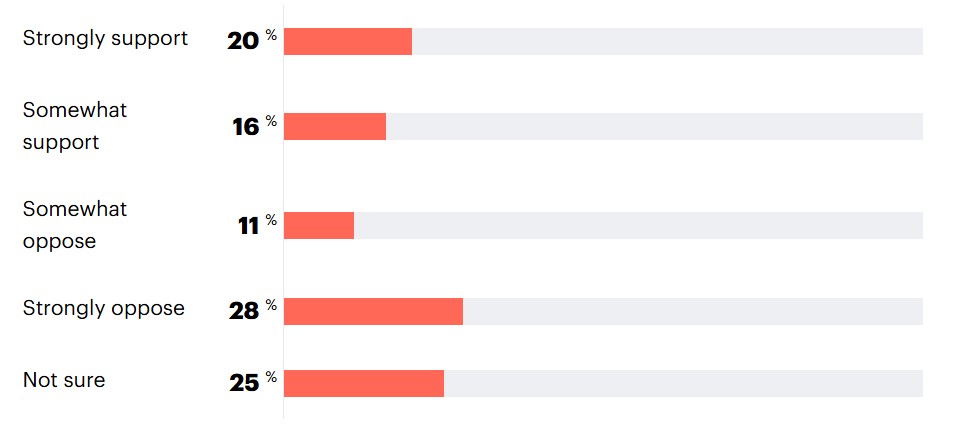
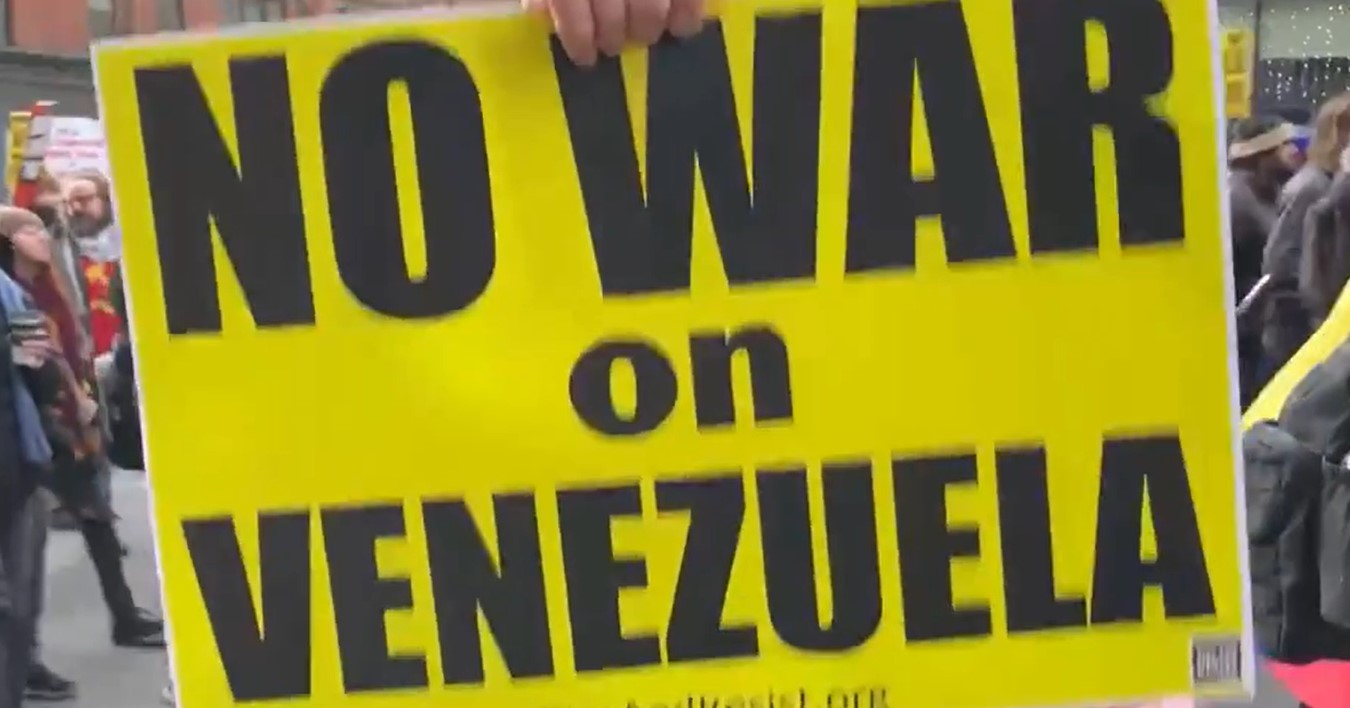
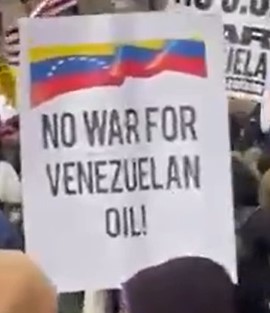
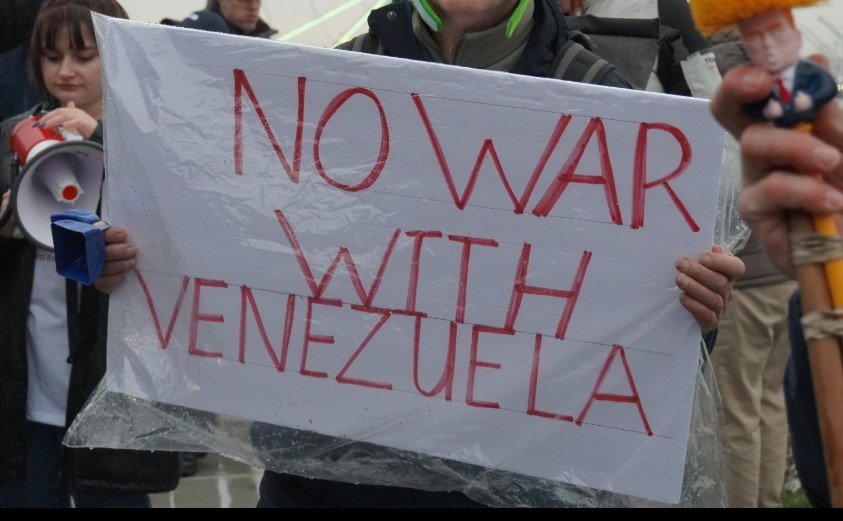
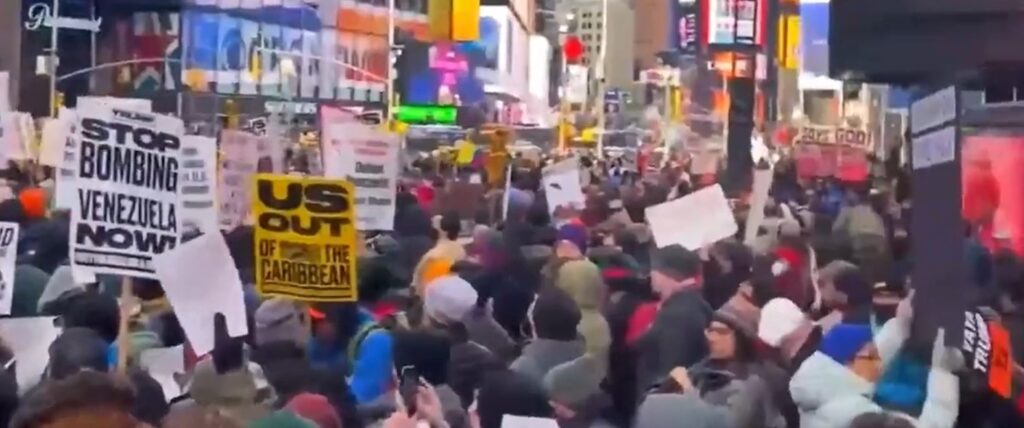
A new YouGov poll taken after the raid on Caracas and the seizure of Maduro – when patriotic fervour might expected to have been boosted by Trump’s boastful press conference – more Americans opposed the venture than supported it. (See inset above). With a situation in Venezuela still very unstable and uncertain, there is not much likelihood that the poll numbers will improve for Trump. On Sunday, there were already numerous demonstrations in US cities against the undeclared war on Venezuela
Here in the UK, it was predictable that Keir Starmer would be too spineless to criticise Trump, even in the mildest of terms. In an interview with the BBC’s Laura Kuenssberg, he refused to condemn the US strikes. He was, he bleated to the world, “waiting to establish all the facts”, adding that he was a “lifelong advocate of international law“.
Starmer is hiding behind the sofa
In reality, Starmer is hiding behind the sofa; he is terrified of making even the softest criticism of Trump. He is playing for time until his spin doctors can work out a judicious form of words to “justify” support for the US, even within ‘international law’.
Many parts of the labour movement have already protested against the US military assault and demanded the release of Nicolas Maduro and Cilia Flores. Those trade unions that are affiliated should demand that the Labour Party condemns the raid and abduction unequivocally. The TUC or one of its the big unions should call for a national demonstration against the US military aggression in Venezuela.
The genocide in Gaza has engendered the biggest political protest movement ever. Across the globe, in thousands of demonstrations, in hundreds of cities – often over and over again, hundreds of millions of marchers have demanded an end to the slaughter. It has been a movement that has in itself provided a huge moral, public-opinion pressure on political leaders.
It should be the aim of the labour movement to do the same now for Venezuela. We cannot forget that the perpetrators of the Gaza genocide were armed to the teeth by the same government that is now attempting to violate the Venezuelan people.
In an article in the Financial Times, outlining US imperialist adventures in Latin America over the years, a US academic made the telling point that “the number one thing that policymakers should take away from the history of US interventions in Latin America is the problem of unintended consequences”.
Those who intervened, he continued, “did not have an understanding of, or an appreciation of the long-term ramifications of such interventions. It would take a lot of effort by their successors to undo the damage.”
If, as is possible, Trump finds that he has bitten off more than he can chew, it will not be international lawyers who deliver that lesson. It will be the world labour movement. That, at least, is the hope of socialists everywhere.
[Feature photograph is from social media, showing protest demonstration in New York, on Sunday]












“The utter contempt that this US administration shows to its ‘allies’ in Europe, and its naked aggression against Venezuela even raises the startling possibility of the USA taking over Greenland. Katie Miller, the wife of Trump’s deputy chief of staff, posted a social media picture of Greenland painted in the colours of the US flag, and the word ‘SOON., eliciting protests from Denmark’s Prime Minister.”
The way I see it: Trump is just a figurehead for the US Industrial/Military Complex and if they didn’t like what the Trump administration was doing, then they wouldn’t be doing it?