By John Pickard
What do the numbers 2.4 trillion and 1.5 have in common? The answer is that although both are important in specific instances, they are often misunderstood or just ignored by the mainstream media – with the result that their significance does not hit home with ordinary workers.
A trillion is such a high number that it is beyond normal human experience. After all, if you just count non-stop – let’s say, once a second – it would take you 32,000 years to count to a trillion. At the other end of the scale, one and a half is so small that most people would disregard it. Is there much difference between one cup of coffee, and a cup and a half (or a bigger cup)?
In an opinion piece in the Financial Times this week, one of its regular columnists, “career analyst”, Stewart Kirk complained that “No one cares about numbers anymore”
“What a schmuck I am…” he wrote, “who gives a wallaby’s about numbers anymore?…Not politicians. Not investors. Not voters. No one, it seems”. It certainly gave you something to think about and what the politics was in all of this.
There is clearly some truth to the point he is making. Republcian politicians in the USA have just passed a budget that consolidates Donald Trump’s previous tax hand-outs to the rich and the super-rich, at the cost of adding a huge burden to the national government debt.
In the next decade, government debt will rise from 98 per cent of GDP to a record 125 per cent. Trump’s ‘big, beautiful bill’ will add $2.4tr or $3tr (depending on who you ask) to the debt. Government spending on interest payments, were already $880bn last year.
Handful of economists
Yet, while Elon Musk complains, along with a handful of economists and the more serious journals of capitalism, the yellow press and the maga movement are cockahoop. Do they understand, or even care about the numbers? It appears as if their complacency transmits to the man and woman on the street.
This is not just a US problem. “In Britain”, Kirk writes, “the £10.5bn loss incurred when a bank returned to full private ownership last week after being nationalised 17 years ago barely elicited a mumble…It could have been £105bn or £10.50 for all anyone cared”.
He also made the very valuable point, that “had Natwest’s finest paid themselves 15 per cent of revenues last year instead of 27 per cent (identical to pre-financial crisis levels, can you believe it!) the Treasury would have saved the same £1.8bn” This is similar to the amount Rachel Reeves is trying to save on the backs of disabled people.
This information is hidden – deliberately – by the mass media
What Kirk is really driving at is that this information is not flagged up or even publicised in the mainstream media. And that is deliberate, because our so-called ‘informed’ democracy actually rests on a mountain of secrecy, so that a £10bn loss for the taxpayer is quietly ignored, much like the £37bn spent on the failed ‘test and trace’ during the Covid pandemic. More to the point, the implications of these numbers to workers’ lives is ignored.
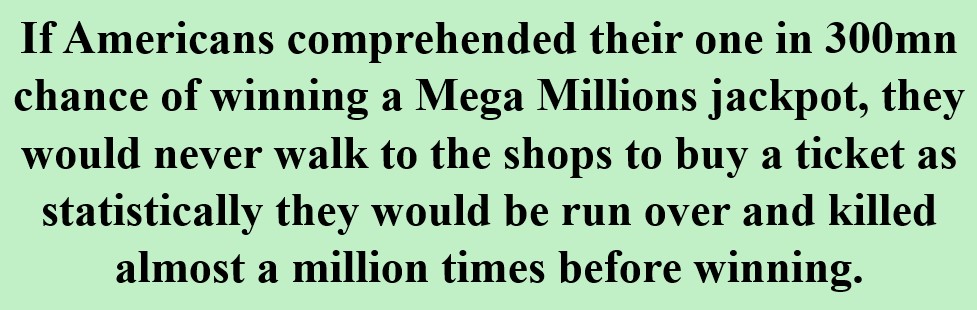
What adds to the dilemma of knowing what really goes on, is the fact that politicians lie. People like Trump and Boris Johnson are blaggers par excellence and they happily make up numbers, which are repeated millions of times of social media and splashed all over the gutter press.
But real numbers do matter. The alleged £20bn ‘black hole’ that Rachel Reeves claims to have found is just a madly high number to her and possibly even to most people who see the figure. But to pensioners struggling to get by, or to disabled people just about getting by with PIP payments, or poorly paid parents with ‘too many children’ to get child benefit, the penny-pinching austeriy of the Chancellor is very real and very concrete. For them, living from payday to payday, £10 less a week is a disaster, not shaving a bit of the wine bill.
Which brings us to the small number mentioned above: 1.5. Kirk makes the point in his article that the numbers may not appear to matter, but the risk is that “we only regain our interest in numbers after it’s too late.” The average global world temperature is already, now, 1.5oC above the average of pre-industrial times.
The maximum rise that governments pledged to prevent in the Paris Accords is already broken. That will have huge consequences that are already ‘baked in’ to the global climate. It will, in time, produce abnormal and extreme weather patterns, food crises and population shifts. We need a complete and fundamental change of our economic system to mitigate the worst effects of this before “it’s too late.”
As for the numbers, Left Horizons will always leave the insults, abuse and shrieking to others. We will continue to patiently argue the case for socialism, with facts, figures and arguments.