
By Joe Langabeer
In Africa and Asia, we are witnessing a tidal wave of young people, often dubbed “Gen Z” by the media establishment, taking to the streets to demonstrate and organise against their political leadership. In Madagascar, Indonesia, Kenya, Morocco, Bangladesh and Mongolia, thousands are voicing their anger and frustration over corruption; poor pay and working conditions; nepotism among the political and wealthy elite; and dire economic decisions that have left them with little hope for their futures.
A report from Bloomberg, which has documented the civil unrest particularly across Asian countries, features insights from Bilal Bassiouni, head of risk forecasting at the advisory firm, Pagea-Risk.
He notes that while these protests arise in very different political contexts, they share strikingly similar grievances: the rising cost of living, weak job creation, and political authorities who favour ageing elites while offering little to the younger generation—aside from their own privileged children.
The elites have not helped themselves by flaunting their wealth so brazenly. Presidents show off luxury watches on social media while ministers’ children post photos of their villas in Ibiza. According to the same Bloomberg article, some of these luxury items, such as the watches, are worth the equivalent of three years’ salary for an average worker.
While I’ve often criticised social media for its toxicity and the misinformation it spreads across the political landscape, it has, in this instance, had a reverse effect. Young people are seeing their rulers’ obscene displays of wealth and choosing to act against it. It is radicalising them to demand better pay, improved conditions, and stronger public services, while holding their leaders accountable for failing to improve people’s lives.
Take Morocco as an example. A group of young activists known as GenZ212, who began organising online, have mobilised people onto the streets to protest the government’s decision to spend lavishly on a stadium for the 2030 Football World Cup rather than investing in hospitals or education. Inequality in Morocco is soaring, and youth unemployment is rising. Economic growth has dropped to below 4% on average since 2011.
Despite being an industrial hub for car manufacturing in Europe, Morocco’s young people see little of the benefits. Instead, they are clashing with authorities. As Houssam, a driver for the ride-sharing app, InDrive, in Rabat, told Bloomberg, “All that’s left is to protest.”
How it All Began
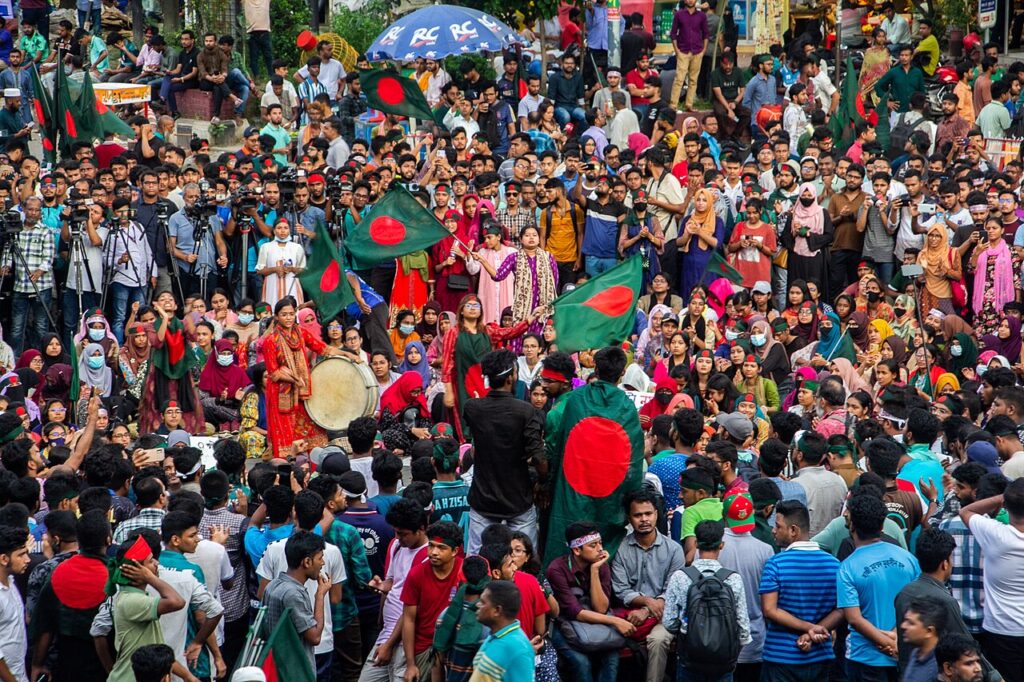
Many news outlets have traced the wave of demonstrations across Africa and Asia back to events in Bangladesh last year. In what has since been dubbed the “July Revolution”, thousands of students in their twenties took to the streets demanding an end to a system that reserved 30% of government jobs for descendants of independence war heroes.
The movement culminated in the removal of Prime Minister Sheikh Hasina, after protesters stormed her palatial official residence, forcing her and her family to flee to India. Before her downfall, however, protesters’ demands were met with brutal repression from security forces and counter-demonstrators aligned with the ruling Awami League.
The irony is that the Awami League was once seen as an anti-authoritarian force in the 1990s, opposing the dictatorship of Hussain Muhammad Ershad. Yet, after taking power in 2009, the party drifted towards authoritarianism. Hasina imposed job quotas, interfered with elections, and ordered the arrest of political opponents. Dissent was silenced by police and security forces.
While protests began peacefully, the Awami League’s student wing launched counter-rallies, and Hasina instructed law enforcement to crush demonstrations with violent force, resulting in the deaths of more than 280 young people last July.
[photo Wiki Commons credit here]
One of Hasina’s final orders before being deposed was to shut down Bangladesh’s internet, hoping to halt youth organising, but the blackout was only temporarily effective. Once connectivity was partially restored, protesters communicated through voice notes and coded messages to avoid detection. Millions poured onto the streets of Dhaka and other cities, defying curfews. Hasina again ordered troops to fire on demonstrators, killing over 200 people across two consecutive days. Eventually, army generals refused to continue the slaughter, joining calls for her resignation. Her reign ended, and elections are now scheduled for 2026.
Although many young people are pleased that elections will resume, resentment lingers from young people. The opposition parties are widely seen as complicit with the Awami League, offering little alternative to the status quo. Still, the protests persist, as the youth continue to fight for genuine democracy and improved living standards.
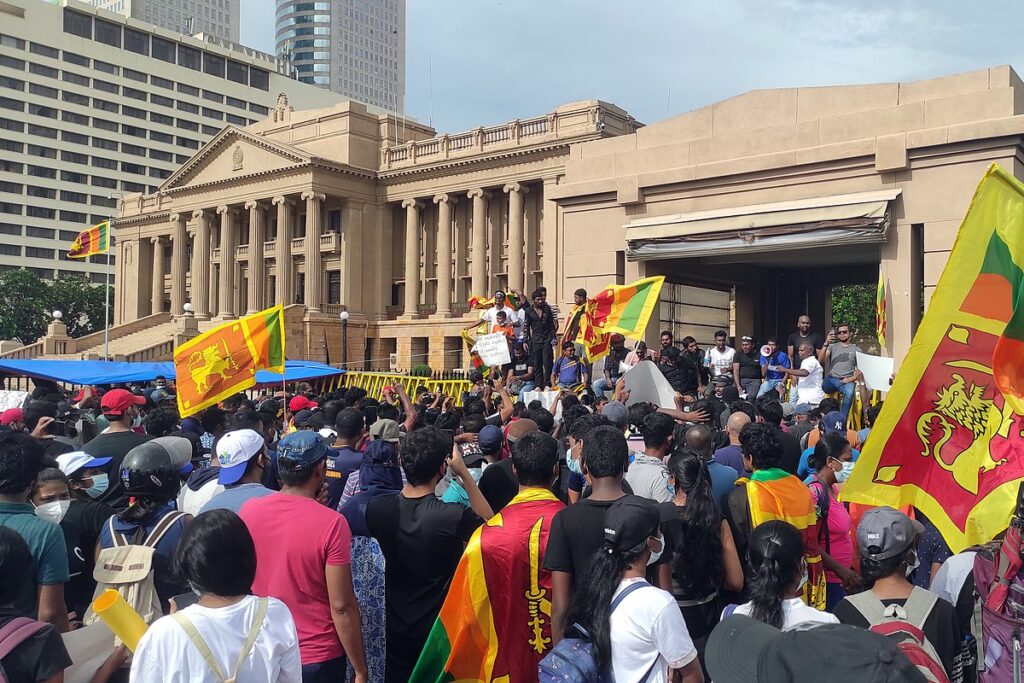
These events echo the “Aragalaya” movement in Sri Lanka in 2022, where mass protests erupted against a government that had catastrophically mismanaged the economy during COVID-19. Severe inflation, blackouts, and shortages of essential goods drove mainly young demonstrators to demand the resignation of President Gotabaya Rajapaksa and other members of the powerful Rajapaksa family.
Once again, the state responded with repression, restricting internet access and deploying both police and the military to quash dissent. But the protests only intensified. In remarkable scenes, demonstrators stormed and occupied the president’s lavish residence until the Rajapaksas fled the country.
Opposition politician Ranil Wickremesinghe was later appointed president, though he has been accused of aiding the Rajapaksa family and helping them regroup politically. Upon taking office, he ordered the military to clear the streets of protesters. While conditions have marginally improved, power cuts have eased but living costs have soared. Research by the policy organisation LIRNEasia found that three million more Sri Lankans fell below the poverty line in 2023, raising the total from four to seven million.
For many, life feels little different from before. As Nimesha Hansin, a university student in Colombo told the BBC, the Rajapaksas bear direct responsibility for the crisis, enriching themselves through fraudulent “development projects”. Their political influence has waned, but the economic misery they created remains the same as before.
As in Bangladesh, unless Sri Lanka undergoes a genuine ideological and political shift, one rooted in socialist policies that guarantee fair pay, decent working conditions, and affordable access to basic needs, the anger that fuelled the Aragalaya will reignite. Young people across both nations have shown they will not sit quietly. They are determined to reclaim a future that belongs to them, even if it means rising again against any government that repeats the failures of the past.
[photo – wiki commons – credit here}
Different Catalysts, Same Foundations
The history of both the Bangladeshi and Sri Lankan revolutions against corrupt political elites has sparked a wider uprising among young people across Asia and Africa. Much of the media has rightly attributed these demonstrations to political corruption, but the deeper fault line lies within the economic crisis of capitalism itself.
In an excellent Bloomberg opinion piece, journalist Karishma Vaswani argues that the core issue driving young people’s rage across the Asian continent is the crisis of employment, or rather, the lack of secure and decent jobs.
According to data co-reported with Morgan Stanley Research, youth unemployment in India and Indonesia stands at over 17%, with China close behind at 16%. This coincides with the rise of informal labour, work that resembles the gig economy.
In Indonesia, 59% of the workforce is employed informally, according to figures from the country’s Central Statistics Agency. Such workers can be dismissed at any time, without the right to challenge it. They have no entitlement to sick or holiday pay, work long hours in poor conditions, and have little chance for rest or progression.
The Indonesian government maintains that, despite the rise in unemployment and informal work, poverty is decreasing. Yet it offers little evidence for this claim. While absolute poverty may have fallen slightly, many people are slipping into poverty due to precarious gig work. Access to social security is also limited and heavily means-tested, excluding large sections of the working and lower-middle classes.
For a young person in Indonesia from a working-class or lower-middle-class background, the dream of living independently, raising a family, and achieving a decent standard of living is increasingly out of reach. The state offers no meaningful support, and social assistance is reserved for only the very poorest.
Teguh Dartanto, a lecturer in economics and business at the University of Indonesia, warns that in the event of a political or economic downturn, these two social classes could effectively disappear, collapsing the system as everyone falls into poverty. Dartanto argues that stronger labour-market policies would reduce youth unemployment and protect the economy from further instability.
With rising unemployment, insecure work, and governments allowing businesses to run unchecked at the expense of decent jobs and conditions, it’s no surprise that young people are furious when they see the children of political figures flaunting their wealth on social media. The anger is real and justified.
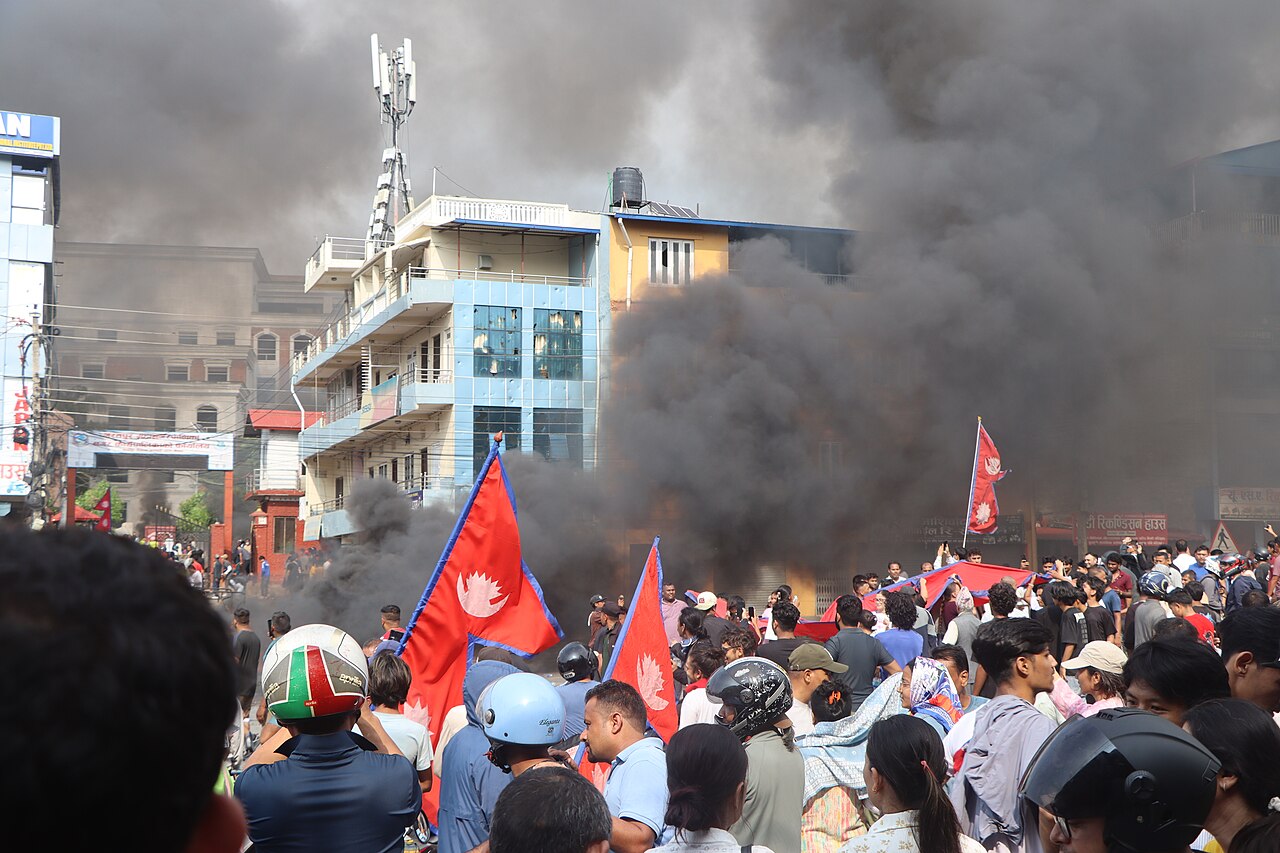
In Nepal, this anger came to a head when viral photos circulated of Saugat Thap, the son of a provincial minister, surrounded by boxes of luxury fashion brands including Louis Vuitton and Gucci. The images sparked outrage, pushing 23-year-old activist Aditya and many others to protest government corruption.
Protesters derided the political elite’s children as “nepo-kids”, those who achieve success purely through inherited privilege rather than talent or merit, a term also used in the entertainment industry to mock untrained actors who succeed only because of famous parents.
Nepal’s tipping point came when the government attempted to ban 26 social media apps, triggering a nationwide backlash against authoritarianism and corruption. Protests turned violent after Prime Minister KP Sharma Oli ordered the military and police to suppress dissent. Dozens were killed, and the government collapsed within a day after Oli resigned.
As before, the root cause lay in a collapsing job market, dire working conditions, and a steep decline in living standards, all overseen by an out-of-touch elite. The spectacle of their children flaunting wealth online added fuel to the fire.
Although young people succeeded in toppling the government, anger remains. The new Prime Minister, Sushila Karki, has promised to crack down on corruption, earning cautious optimism from young people in online forums and polls. The main demand is clear. Corruption must end and a fairer system must be created. Yet, as seen elsewhere, progress risks stalling if the underlying political and economic structures remain intact.
If these movements can produce strong, principled leadership, we may yet see the emergence of new ideas, socialist ones, that challenge the entrenched inequality and stagnation faced by young people. As across the rest of the continent, their struggle is not just against corruption, but for a future built on justice, dignity, and opportunity.
Finally, while there are countless other protests unfolding across various nations, the events currently taking place in Madagascar echo every example discussed here. The catalyst was slightly different, initially sparked by government cuts to water and electricity, but the demonstrations soon widened into broader demands against corruption and for a complete overhaul of the political system.
[photo – wiki commons – credit here]
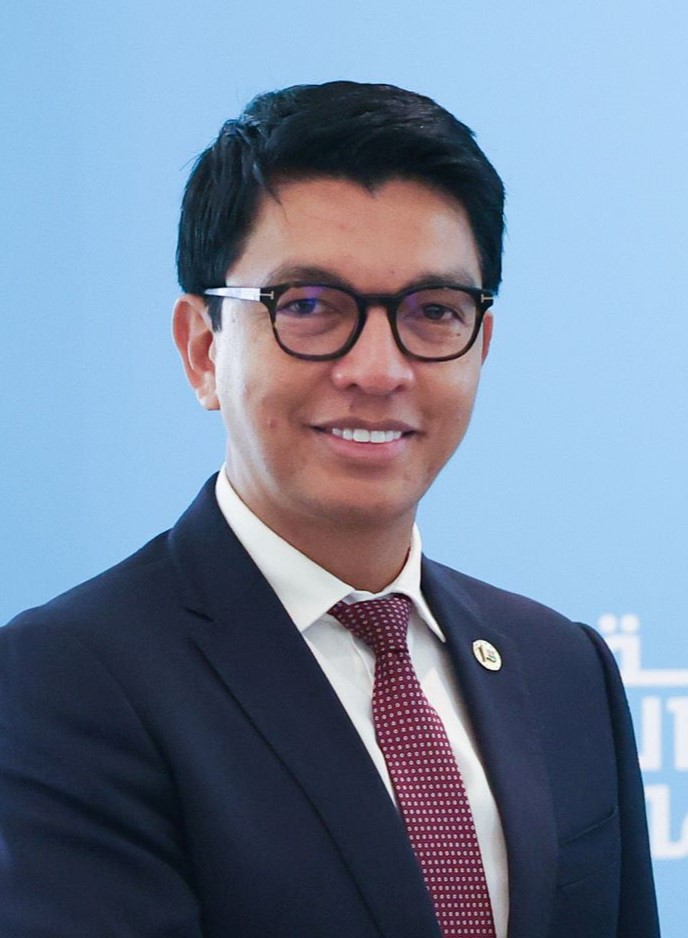
President Andry Rajoelina called for calm, yet his authority crumbled when one of the key military figures who had helped him rise to power defected to join the youth protests, effectively stripping him of control as the army turned against him.
According to data from the World Bank Group and the International Labour Organisation, youth unemployment in Madagascar has risen sharply since the global financial crisis, particularly during Rajoelina’s earlier term in office between 2009 and 2014. It peaked at 5.9% and has since stagnated around that level. Rajoelina has long been viewed as corrupt and continues to be seen as no ally to young people or their future prospects.
What makes this all the more outrageous is the original reason for the protests. The government imposed cuts to energy and water in a nation of just 31 million people, where 68% live in poverty and the average daily wage is barely $2.15.
According to data from the International Energy Agency, only 26% of residential areas even have access to electricity, compared with 40% of industrial zones, which the government has prioritised. These austerity measures were effectively designed to protect industrial output, at the expense of ordinary workers already struggling to survive.
The West’s role In this crisis cannot be Ignored. Madagascar’s economy Is heavily dependent on exporting vanilla and coffee to the United States and the European Union, and Trump’s tariffs didn’t help with the rising costs. While Western consumers sip their Starbucks lattes, Madagascar remains one of the most unequal nations on earth.
According to the UN’s Human Development Index, it ranks as the tenth most unequal country in the world. Western powers continue to profit from Madagascar’s cheap labour and economic dependency, reaping vast rewards from an exploitative system that keeps millions in poverty while capital sells its luxury products at premium prices.
Socialist Policies Must Be at the Forefront
Where political leaders have failed young people time and again, it is the youth who are now organising in protest against a broken capitalist economy that no longer works for them. While headlines have rightly focused on corruption among the political elite, this is inseparable from the wider crisis of capitalism. These same elites—and their children—flaunt their wealth publicly, indifferent to the hardship faced by ordinary workers, showing young people just how out of touch, the elites truly are.
Many socialists, myself included, would scoff at the media’s insistence on framing this movement as a “generational war” through the label of “Gen Z”, or as a technological phenomenon of online activism. It is far more than that. While the internet has helped protesters organise, young people are going beyond social media, they are taking to the streets.
The term “Gen Z” has even been reclaimed and worn proudly by demonstrators, emblazoned on shirts and banners as a symbol of defiance. Across nations, it has become a “call to arms” for young workers to rise against corruption and the economic decay that threatens their futures.
However, where I would gently challenge these movements is in their lack of a vision for what comes next. As recent history has shown, when corrupt regimes fall, they are often replaced by politicians who are little different when no alternative is offered, and the cycle of exploitation begins anew. If these movements are to truly succeed, they must go beyond protest and develop coherent socialist programmes.
That means nationalising key industries, guaranteeing housing as a right, and ensuring universal access to health, food, and clean water, all under the democratic control of workers. They should demand laws that strengthen trade unions, abolish exploitative gig contracts, and guarantee secure, well-paid work for all.
Politics, too, must be democratised, wrenching nepotism and privilege from parliaments that serve only the rich. At Left Horizons, we drafted a charter for young workers and students that puts forward such demands. Though it focuses on Britain, these ideas must extend internationally if they are to have real impact.
Just as we now see connections forming between the pockets of youth uprisings across Asia, these groups should unite to create an internationalist movement—one capable of confronting the global establishment.
Together, they could build a political platform rooted in socialist ideals and solidarity, forming parties that can contest elections and represent the radical aspirations of the young. A movement united across borders would have the strength to turn today’s demands into tomorrow’s reality.
Make no mistake. This is not a movement confined to Asia or Africa. Smaller, but still significant, sparks of revolt are appearing across the West. In Italy, for instance, trade unions have led strikes joined by hundreds of thousands of young people demanding an end to Israel’s blockade of aid flotillas bound for Gaza. For once, even Britain’s media was forced to report it after years of silence on other large-scale protests. Suddenly, Italian Prime Minister Giorgia Meloni, long protected by the media, faced critical coverage from it and now pressure is being enacted on her politically.
We can never predict what the catalyst will be: political corruption, foreign atrocities, or domestic austerity. But these sparks share a common cause, the rejection of a failing system. Across the world, young people are tired of stagnant wages, rising poverty, and the crushing cost of living under capitalism. Even in the United States, where Trump’s reactionary politics have shifted the country rightward, the economy remains bleak, with youth unemployment rising and standards of living continuing to decline.
The global movement may face obstacles and setbacks, but Its direction Is inevitable. The spectre haunting the world today is not one of despair, it is the spectre of socialism. And it will be the young people of today, and those of tomorrow, who carry it forward.
[Featured photo shows the youth demonstration in Nepal,2025. Photo – wiki commons – credit here]












.jpg)