
By Joe Langabeer
Last week, a flurry of news reports from various outlets all asked the same question: why are people’s food prices so high? Of course, people in Britain, have been pondering that question for some time, especially since the pandemic. Prices have continued creeping steadily upwards to the point that orange juice now costs £3.20.
Many in the right-wing press have pointed the finger at this Labour government, particularly its tax rises, including the increase in National Insurance Contributions for businesses. They claim this is the primary reason our food prices have soared. That is the narrative the establishment press are keen to tell.
They complain that, because supermarkets now have to cover staff with those extra costs, those poor millionaires may have to dip into their profits and make an actual contribution to the country, rather than continuing to rip off consumers and pay their workers poorly under miserable conditions.
Much of the rise in food prices comes down to greed, trade wars, Brexit, and most importantly, climate change. Supermarkets have even tried to threaten Chancellor Rachel Reeves with further price hikes should she implement higher taxes on them. For years, they have made record profits, riding high on the wave of “greedflation”, capitalising on the inflation spikes during and after the pandemic rather than keeping costs down for ordinary workers.
The economic history of oranges
In an excellent article, BBC Economics Editor, Faisal Islam, explores how the rising price of orange juice reflects the wider surge in food and drink costs., Supermarket own-label orange juice prices have risen by 134% since 2020 – and 29% in one year. These cheaper, supposedly lower “quality” alternatives to brands such as Innocent and Tropicana have seen the sharpest hikes, though the branded juices have also risen significantly since 2020, by 40% and 28% respectively.
Islam goes on to chart how orange juice became so popular. Once considered a cheap, tasty source of Vitamin C, it gained traction during the Second World War when US soldiers began drinking it, a far better option than their previous supply, turpentine. Orange juice is nearly 90% water, which made it easy to evaporate, freeze as a concentrate, and transport without spoiling.
The product’s low cost and long shelf life helped it spread rapidly. Even Bing Crosby became a shareholder and sang in advertisements promoting its health benefits. Soon, orange juice could be found in every supermarket across the western world.
Of course, the trade in oranges imported into Europe and other Western markets carries a strong whiff of imperialism. Britain sourced many of its oranges from Jaffa, a city in British-mandated Palestine during the 1920s, the origin of the “Jaffa” orange and, by extension, the orange-chocolate Jaffa Cakes still on our shelves today.
Before the British occupation, Jaffa oranges were a thriving Palestinian industry that transformed the small village into a prosperous town. That changed when Britain took control of the region and, later, during the 1948 Arab-Israeli War, when Jaffa was bombarded by Zionist forces, forcing many residents to flee.
“Jaffa” stolen from Palestinians
The orange groves were seized by the Israeli state, and the Jaffa name was stripped of its Palestinian identity and repackaged for western markets and their allies. There’s a great Substack article by JP McMahon titled “Jaffa Cakes: An Oblique History” which delves deeper into this story and the wider impact of imperialism on global food culture. It is highly recommended.
Imperialism made goods cheap by exploiting labour, often enslaving workers to produce and harvest crops for Western consumption. But since Britain is no longer an imperial power, barely even an economic or political power, compared to other countries in the G7, the price of oranges and orange juice has been rising at an alarming rate. Globally, the same pattern persists. Figures from the IMF show that in 2023–24, orange juice prices reached five US dollars per pound — a record high, with only a slight dip since, but still well above pre-pandemic levels.
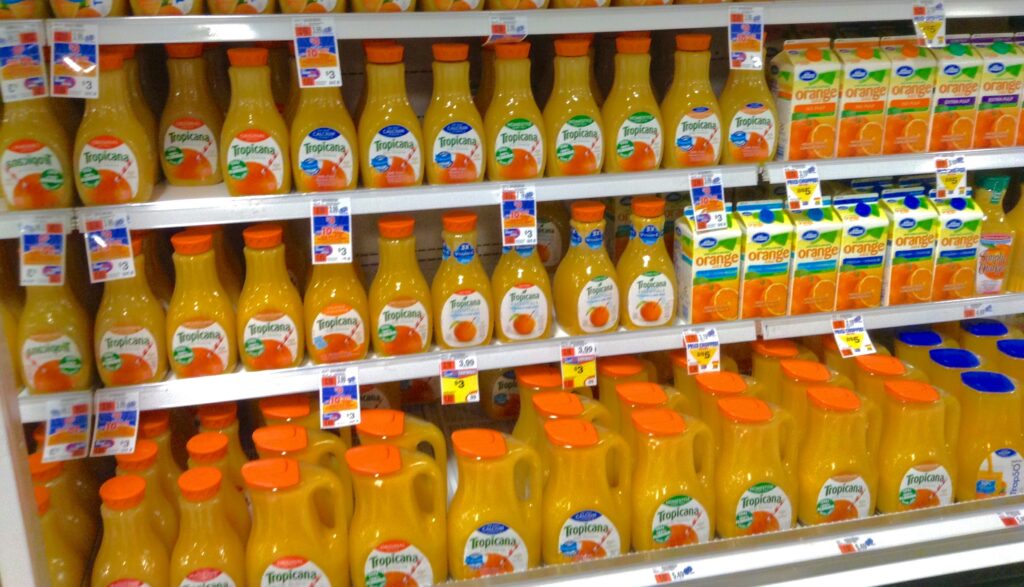
The United States and its western allies now rely heavily on South America, particularly Brazil, as the main producer and exporter of oranges. Yet Brazil faces mounting challenges, severe droughts, deforestation, and wildfires, all of which make orange cultivation increasingly difficult. According to the United Nations Office for Disaster Risk Reduction, Brazil lost $970 million in trade between 1991 and 2023, as each 0.1°C increase in average global temperature has damaged its agricultural output.
Whilst Donald Trump’s climate denialism has only worsened matters, his administration has also imposed a 10% tariff on Brazilian orange juice imports to the US, further driving up costs. In August, the Bank of England reported that food inflation is set to continue rising, with Trump’s tariffs contributing to an estimated 5.5% increase.
There is a growing concern that, as people are priced out of healthier food and drink options, such as orange juice, young children in particular will lose a key source of vitamin C. As Philip Coverdale of GlobalData noted in that same BBC report, demand for oranges and other fruits is falling across major economies. Combined with the effects of climate change and reckless tariff policies undermining living standards, the crisis is only set to deepen.
Climate Change is Costly
Of course, oranges and orange juice products are not the only costs on the rise. Butter, milk, beef, chocolate, and coffee are now responsible for around 40% of the increase in overall food prices. This is despite the fact that, according to the Energy and Climate Intelligence Unit, as reported by the Financial Times, these products make up only a tenth of a typical household food basket.
The report breaks down how climate change is driving the pricing crisis in each of these goods. For instance, 99.9% of cocoa is grown in countries with “low climate readiness”, meaning they are unable to withstand the severe weather events brought about by global warming.
Chocolate prices have already risen due to both inflation and environmental factors, but the situation in West Africa, where most cocoa is grown, has become critical. In recent years, extreme rainfall and plant diseases have caused cocoa crops to rot in waterlogged soil, while 2024 brought one of the worst droughts and heatwaves on record. Scientists at the World Weather Attribution Centre found that this heatwave was made 4°C hotter by climate change.
Closer to home, Britain’s beef and veal industries have also been hit hard. The spring of 2025 was the driest ever recorded, followed by the hottest summer in history. Dry weather conditions have pushed up production costs, as farmers have been forced to use silage earlier in the year, due to reduced grass growth. Silage is far more expensive than natural grass, and poor pasture quality this year has only made matters worse.
To prevent prices spiralling further, the UK has tried to increase imports from Ireland, Brazil, and Australia. Yet Brazil’s problems of climate crisis have disrupted not only fruit but also meat and dairy exports. The US has seen similar trends, with multi-year droughts pushing beef prices higher.
Droughts and wildfires
Australia, meanwhile, has become a major supplier for both the UK and US, though it, too, suffers from droughts and wildfires. Because the American market is larger, Australian producers have prioritised exports there, leaving the UK’s beef and veal quotas unfilled, pushing import prices even higher.
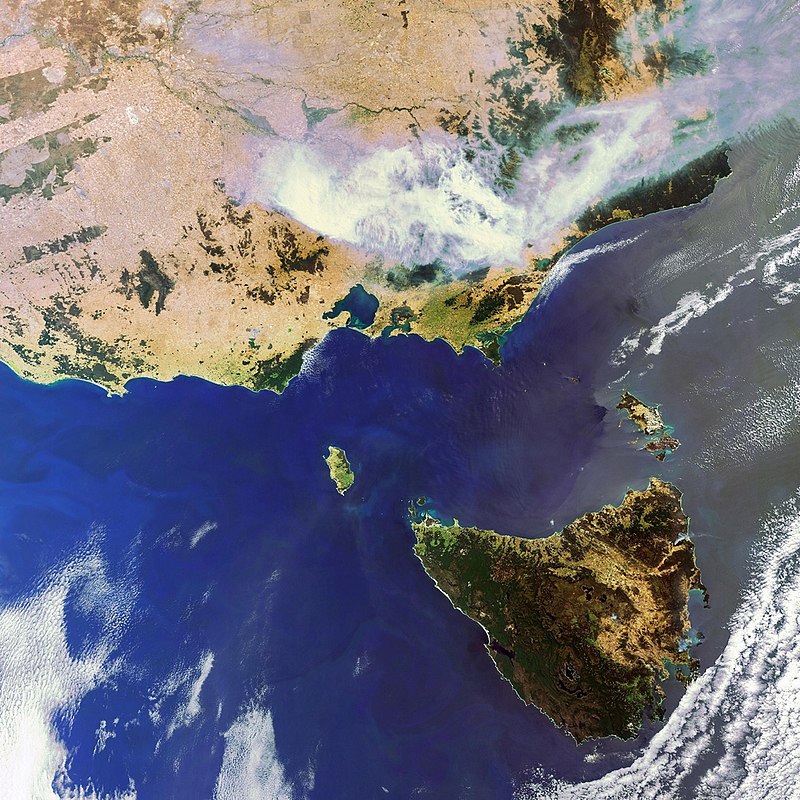
[photo by ESA – wiki commons – credit here]
Dairy prices have not risen as sharply as beef but remain significantly the above levels of a decade ago. The price index has climbed from 100 to 160. As with beef, dry conditions have limited the ability of cows to graze naturally, forcing farmers to use more silage.
Feed prices have stayed relatively stable, but outbreaks of Bluetongue, a virus spread by midges thriving in wetter climates caused by global warming, have reduced European dairy supply. This has sustained high demand for British products and kept prices inflated.
It’s clear from the report that climate change is driving our food costs out of control. Global demand for food is also fuelling higher CO₂ emissions, as mega-conglomerate farms expand production to unsustainable levels. One of the most frustrating things about the last Tory administration was their self-congratulatory claim that Britain was outperforming other nations in reducing emissions.
While it’s true that domestic emissions are comparatively lower, the reality is more complex. Britain produces far fewer manufactured and agricultural goods than most other nations, according to a 2024 report by the Bank of England. We are primarily an importing nation, and we import from some of the world’s most heavily polluted economies. Brazil, Australia, China, and others are major polluters, partially because they produce the very goods we consume.
Britain should be far less reliant on global imports for food, as we have the agricultural capacity to sustain much more of our own supply. Yet the sector has been devastated by Brexit, which stripped farmers of EU subsidies without providing any meaningful replacement. Industrial mega-farms, including those owned by billionaire James Dyson, dominate the market, some of the largest polluters in the country, while small local farms are pushed into ruin.
Those mega-farms should be placed into the hands of their workers, and the entire food supply chain should be nationalised. The corporations running these industries profit from their workers’ labour while exploiting consumers and accelerating environmental collapse. They then have the audacity to raise prices even further.
Supermarkets and “greedflation”
The final piece of the price puzzle lies with the supermarkets, which have deliberately raised prices in line with inflation to boost profits. This practice is known as “greedflation”, when inflation soared during and after the pandemic, energy companies and food retailers exploited the situation by hiking prices even when they weren’t directly affected. In turn, this pushed inflation higher still, as corporations became ever greedier.
There was widespread denial among commentators defending the capitalist class, but a joint report published in late 2023 by the Institute for Public Policy Research and the think tank Common Wealth revealed that business profits among UK-listed firms rose by 30% between 2019 and 2022, driven by only 11% of companies able to push through large price increases. While wages lagged far behind inflation, shareholders were paid billions to keep their wallets full.
Research by Unite in 2022 found that average profit margins rose by 5% between 2019 and 2022. Tesco, Sainsbury’s and Asda alone made combined profits of more than £3 billion. Global food producers also posted record profits during that time.
Although both food and overall inflation have slowed since their 2022 peak, prices remain the highest they have ever been, and they are not coming down. Many of the largest supermarkets have barely seen their profits dented compared to other sectors, because they have deliberately kept prices high to maintain their margins, as reported by the Food Foundation in November 2024.
Tesco has been the biggest winner. Between 2022 and 2024, its executives received payouts totalling £9.9 million a year, while the company continued to dominate the UK supermarket sector. Yet while consumers are being squeezed by these corporate giants, the supermarkets are also exploiting their supply chains, particularly local farm suppliers.
Farmers afraid to speak out
A survey by the campaign Get Fair About Farming found that 67% of farmers are afraid to speak out against supermarkets due to late payments, cancelled orders, and pressure to accept unsustainable prices. Many fear being de-listed by retailers if they do.
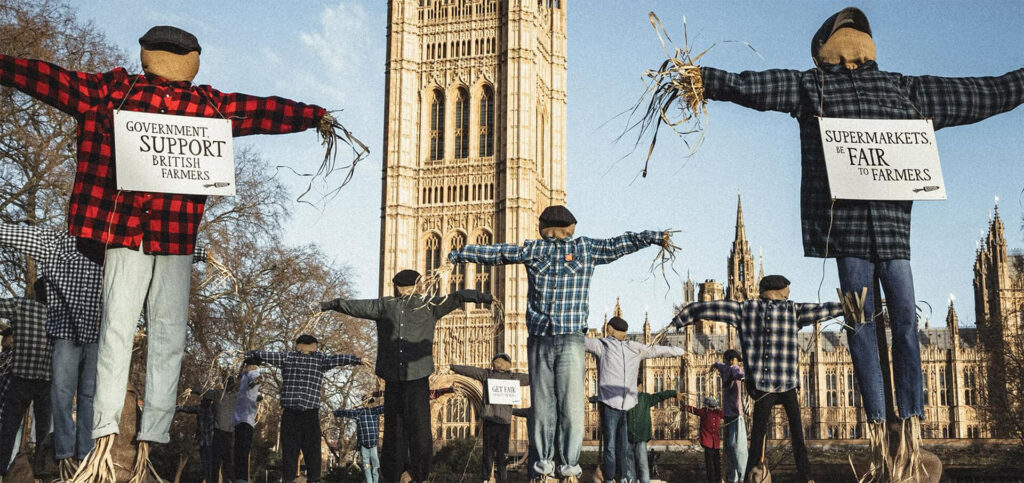
The same survey suggested that almost half of Britain’s fruit and vegetable farmers fear they will go under next year. And who is to blame? According to 75% of those farmers, supermarket behaviour is the leading factor. Whilst there are countless campaigns and adverts from retailers claiming they treat their farms “with dignity” and source produce locally, the truth is far different. They treat farmers poorly and are perfectly content to see them go bankrupt if it means protecting their profits.
The large supermarkets treat their workers with the same contempt as they do their supply chains. Only last year, at the height of their profit-making, Tesco lost a Supreme Court battle after attempting to fire staff members at its distribution centres and rehire them on lower pay and worse conditions. This is the practice known as “fire and rehire”, which Nigel Farage wants to expand in Britain. Usdaw, the union representing shop workers, took action, and the case was eventually dropped.
Tesco has faced similar scandals before. For its fashion brand F&F, workers in Thailand who produced clothes for the company were reportedly trapped in forced labour. Many worked over a hundred hours a week for illegally low pay – as little as £3 a day, according to an exclusive report from The Guardian.
Some suffered severe injuries from machinery, while others were shouted at for refusing overtime or missing unrealistic targets. The most disturbing revelation was that employers created bank accounts for workers, confiscated their cards and passwords, and falsified records to make it appear they were being paid minimum wage, while in reality they received far less in cash.
Supermarkets exploit everyone
Whether at home or abroad, supermarkets exploit everyone, from consumers to workers and farmers, all in the pursuit of profit. And the most extreme exploitative practices are not confined to overseas factories. In a recent scandal, Tom Boyd, a 28-year-old autistic man, had been volunteering at Waitrose since 2021. He performed the same tasks as paid employees: stacking shelves, assisting customers, and other duties.
Yet when he asked to be given a paid position, the company dismissed him and forbade him from volunteering further, even though he enjoyed the role. Boyd’s mother said Waitrose failed to make reasonable adjustments for her son, who had limited communication skills. There was no apology or recognition for the free labour he provided.
After an outpouring of public support, Boyd was later offered a part-time job at Asda. While his story ends on a positive note, Waitrose’s exploitation of a vulnerable man’s labour remains shameful. This kind of greed and cruelty is emblematic of the wider food retail industry, which treats workers appallingly and gives them very little, or, in Boyd’s case, nothing, in return.
So when the heads of these companies complain about rising National Insurance contributions or the threat of higher taxes pushing up prices, remember: the bosses do not care about you. They’re not doing it because they must, but because they want to protect their profits.
Public ownership
Food is an essential, not a luxury. Yet there has not been the same level of demand for the public ownership of supermarkets and supply chains as there has been for water, energy and other utilities. Zohran Mamdani, the current Democratic candidate and frontrunner for New York mayor, has proposed publicly owned supermarkets to keep food prices down and provide affordable options for residents.
Though defenders of capitalism have scoffed at the idea, experts argue it could work. North America already has an example of state-run groceries, the US military. According to a research review posted on geoforum, every branch of the military operates its own public grocery system, allowing military families to buy food at 30–40% lower prices.
Grocery industry veteran, Errol Schweizer. explained that this is possible because they don’t impose the full wholesale and retail mark-ups, meaning goods can be sold at genuinely affordable prices rather than “competitive” market rates.
Bill Moore, former CEO of the Defense Commissary Agency, estimated that this system saved families $1.58 billion in 2023. Mamdani’s proposal would see a network of publicly owned supermarkets across New York, competing directly with private chains.
While I agree with Mamdani’s vision, it doesn’t reach the heart of the problem. For decades, these corporations have squeezed workers for profit, hoarded their earnings, and enriched a small elite.
The industries that generated their wealth belong to the workers, and it should not be left to governments to spend billions building alternatives. We should nationalise the supermarkets and major supply chains, including large parts of the farming sector, without paying a penny in compensation, other than to protect pension funds, on the basis of proven need.
Doing so would allow us to cut carbon emissions by reorganising supply chains and prioritising environmentally sustainable methods of production. We could stop the needless waste of food and shift focus away from unhealthy, profit-driven products towards cheaper, healthier options.
That is how we can truly bring food prices down and ensure everyone has access to proper nutrition, without making workers poorer and unhealthier for the sake of the capitalist class’s profits.
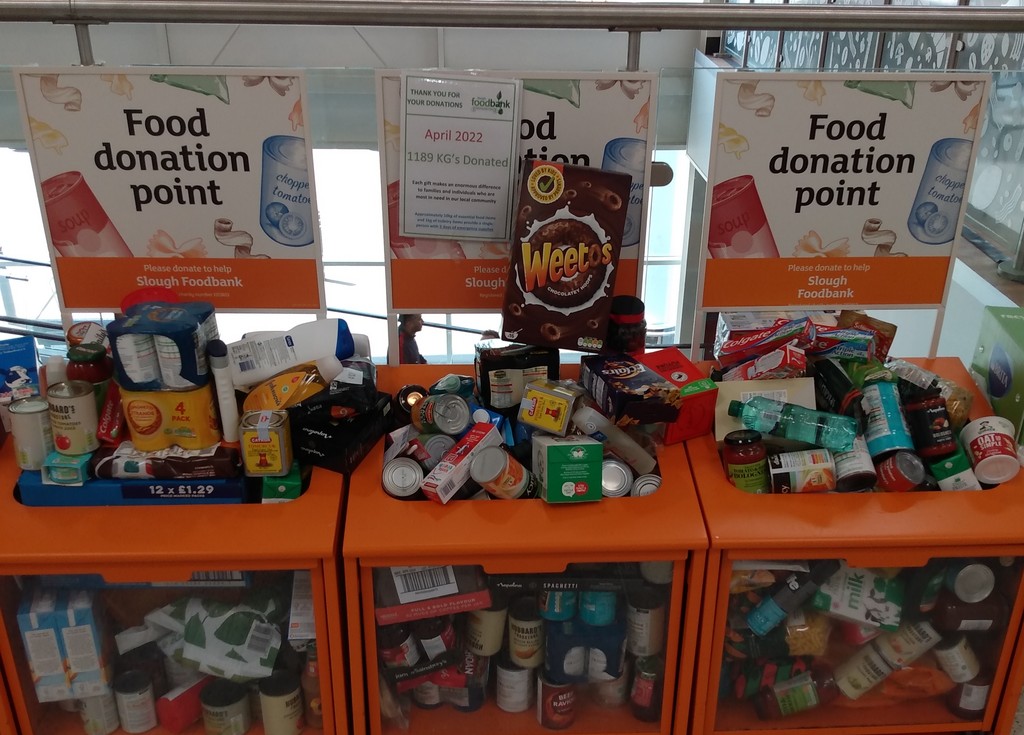
[Featured photo – Food collection point – Slough supermarket – wiki commons – credit here]