
By Joe Langabeer
There is a crisis unfolding across the major gaming publishers and developers. Many of the industry’s biggest titans, including EA, Activision, Microsoft and Take-Two Interactive, are struggling to keep profit margins rising while releasing mediocre, unfinished games priced at a staggering £70. It is an attempt to squeeze the consumer at every turn.
Worse still, they are not only ripping off players but laying off staff in droves in the pursuit of ever-higher profits. Workers are pushed through perilous conditions, expected to endure unreasonable hours for relatively poor pay, only to be discarded at the end of a project. These workers show loyalty, while the CEOs and executives responsible for these failed products show very little care for their staff or the quality of what they produce.
That is the nature of capitalism. Yet workers are beginning to organise against it. A growing number of game companies are now facing the prospect of unionisation, as staff seek proper representation in the workplace amid constant fears of layoffs and worsening conditions. They have had enough.
There have been some successes, including quality assurance workers at ZeniMax under Microsoft, who officially unionised last year. Activision Blizzard, also owned by Microsoft, has recognised the Communication Workers of America, with a report from the CWA in mid-October showing that nearly 400 workers in Blizzard’s Platform and Technology department have voted strongly in favour of unionising.
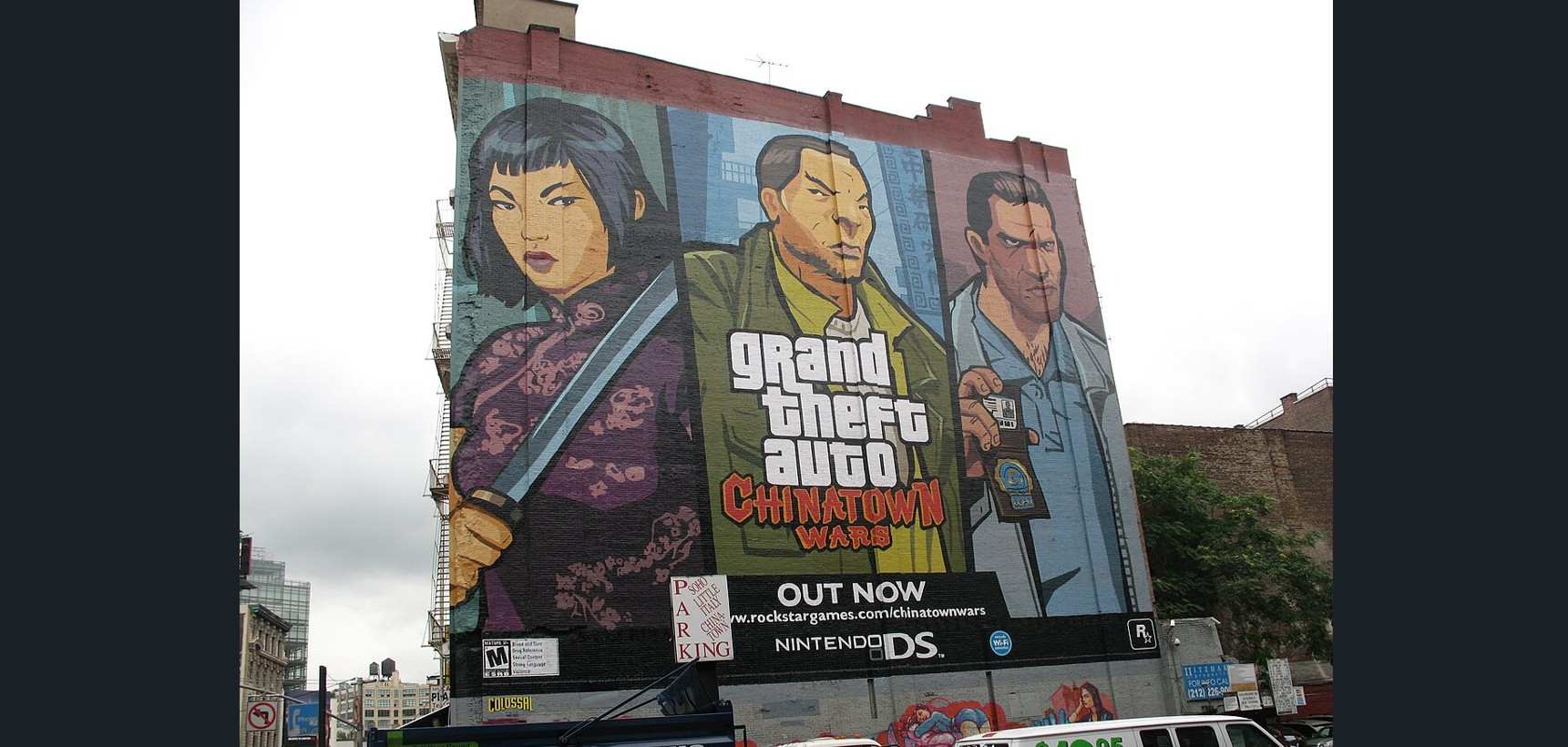
These are positive steps, but there is always someone ready to spoil progress. Enter Rockstar and Take-Two Interactive, the makers of one of the most lucrative video games of all time, Grand Theft Auto.
A recent report from TweakTown, examining Take-Two’s quarterly earnings, revealed that GTA V has generated an eye-watering $10.2 billion since its 2013 release. Rockstar’s other major title, Red Dead Redemption 2, is also among the best-selling games of the past decade, with over 106 million units sold, according to a recent Take-Two investor call.
Despite this vast success, Rockstar and Take-Two have been accused of union-busting after sacking between 30 and 40 employees for alleged “misconduct”. The Independent Workers’ Union of Great Britain (IWGB) argues, in reporting from Bloomberg’s Jason Schreier, that the real reason for these dismissals was a trade union chat group on Discord, with several of those fired being union members or attempting to organise within the company.
Rockstar’s exploitative workplace
In two excellent videos produced by the YouTube channel, People Make Games, the team explores what happened to the fired Rockstar workers who have since been protesting, alongside the IWGB, outside Rockstar’s development studios across the country.
The first video examines the effects these dismissals have had on the workers, with the original plan being to document how their union-organising efforts were progressing as they made the final push towards the highly anticipated next instalment of Grand Theft Auto. The union, called the Rockstar Games Workers’ Union, had already recruited 10% of the UK workforce, which meant they could apply for statutory recognition. Then it all fell apart when these workers were suddenly sacked.
Rockstar Games has long been known for its exploitative workplace culture. In an in-depth article from the same reporter mentioned earlier, Jason Schreier, published by Kotaku in 2018, he exposed Rockstar’s “crunch” culture during the development of Red Dead Redemption 2.
For those unfamiliar with the term, crunch refers to periods where workers are expected to do an exorbitant number of hours as a game nears release. However, as Schreier notes, crunch can occur at any time during a game’s development for a variety of reasons.
Even in an interview with New York Magazine, Dan Houser, one of Rockstar’s co-founders, revealed how severe the situation was when he described the team working “100-hour weeks” to get the game finished in time. He then attempted damage control, issuing a statement to Kotaku claiming he had been “only referring to the writing team over a period of three weeks”.
Schreier reports that developers frequently worked abnormal hours in the run-up to the game’s release, with many saying they were “compelled” to work nights and weekends. These hours took a heavy toll, with one employee saying they lost friendships and family time, leading to a decline in their mental health. Worse still, because many workers were salaried, they received no overtime pay whatsoever.
Fear of reprisals
Later in the same report, one employee, like many others requesting anonymity out of fear of reprisals, revealed that Rockstar not only encouraged overtime but actively monitored those who did not comply.
During the lead-up to Grand Theft Auto V’s release, management would flag an employee’s name in red if they worked “under” 60 hours, pressuring them to increase their workload! As one worker said: “It was mandatory 80 hours for basically the whole studio.”
How did Rockstar keep track of their employees’ hours? Through a bug-tracking tool called “Bug Star”, which workers feared was being used to monitor them so they could be pushed into working beyond their contracted hours. The relentless pressure to do overtime was not optional, and it left serious consequences for workers’ physical and mental wellbeing, one former employee said it pushed them to heavy drinking just to cope.

[photo – Thomas Nugent, Wiki commons]
Rockstar is not the only company to operate under such a culture. In a report from the American socialist magazine Jacobin, one former artist at Activision, the publisher behind the hugely profitable Call of Duty series, described a colleague suffering a heart attack at his desk during a period of relentless crunch.
And according to a 2019 survey from the International Game Developers Association, 41% of workers said their job involved crunch time, while another 35% reported long or extended hours they did not label as crunch.
Many game developers, who are highly skilled workers with years of training and experience, have remained loyal to these companies even as they have been treated with utter contempt. Executives and CEOs have pushed workers to breaking point to ensure games are released on schedule, extracting maximum profit at the right moment to satisfy shareholders – people who do none of the actual work yet reap the rewards simply for investing. No one at the top suffers. The developers do, and so do consumers, who are asked to pay more for games that are often of poorer quality because they have been rushed out for the sake of a release window.
But while developers once tolerated poor working conditions and a toxic culture of crunch in the hope of keeping their jobs once the game shipped, the landscape has shifted. Mass layoffs across the industry mean that even after sacrificing their health and personal lives, workers are no longer guaranteed employment. Developers are starting to fight back, and that is precisely why Rockstar, along with other major companies, is now attempting to stop them.
Union busting
The second People Make Games video attempts to paint a clearer picture of what took place. Rockstar’s stated reason for the sackings was that confidential information was being discussed on a social platform. That platform was an invite-only Discord server, inaccessible to the public, used by Rockstar employees and IWGB representatives as a space to organise union activity.
The server had existed since 2022 and had around 300 members. It was not limited to those who were later fired; much of its content was centred on union recruitment and organising efforts. The source who shared this information with People Make Games was not part of the union, nor one of the dismissed staff, but was a member of the server. According to this source, no confidential material about Rockstar’s upcoming games was ever posted there.
Most conversations were about salaries and workplace conditions, both of which employees are legally entitled to discuss under the UK’s Equality Act (2010). From the video, it appears Rockstar had recently updated its communication policies regarding Slack, a tool used widely in workplaces for internal messaging and project coordination. Rockstar claimed the platform was being misused and imposed strict new rules on how it could be used.
Workers in the Discord, including some of those later fired, voiced concerns about this. One internal email stated that the changes would “help us maintain clearer boundaries between work and personal life”, to which a former employee responded that the company should then allow workers to stick to their contracted hours. The reaction this comment received on Discord suggests Rockstar’s “crunch” culture has not disappeared, despite recent claims from the company that it has cleaned up its act.
The clampdown on Slack worried many workers, leading them to begin drafting an open letter to Rockstar’s senior staff outlining their frustrations with the new restrictions. Rockstar then imposed further constraints on the platform. Employees were no longer permitted to place emojis on their status messages, including Palestinian flags or seedlings — the latter used to show solidarity with unionisation efforts across the games industry amid mass layoffs, symbolising a movement “growing”, and referencing the popular game, Pikmin.
Because Rockstar is notoriously secretive about internal communications, claiming this is necessary to prevent leaks about upcoming projects (a justification I doubt, suspecting it has more to do with silencing the workforce), employees are not allowed to access their work emails outside the office. Yet Rockstar sent these new policy emails outside working hours, meaning many staff could not read them. Those who were able to view the emails shared excerpts on the Discord server.
From quotes shown in the video, it was clear that workers were unhappy with this new policy, again criticising the bad communications from Rockstar, with one person commenting that Rockstar never provide evidence for it, nor do they talk to individuals about these problems or investigate but instead put in harsh workplace policies for all of their workers. The source given to People Make Games suggests that someone inside the Discord server went to management with this information and Rockstar launched an investigation, culminating in the firing of the employees without any internal discussions with specific employees.
We may never know any further information from Rockstar, as they have not released any evidence other than the initial statement disputing their actions. It seems as if Rockstar, hellbent on attempting to stop unionising, found an excuse to purge these workers and gave a weak reasoning without any real disciplinary method beforehand to do this.
Fight the bosses!
With the workers being fired for “gross misconduct”, and with what appears to be no disciplinary hearing or discussion, Rockstar has shown how little it cares for its workforce, both past and present. With the IWGB now pursuing legal action against the company, we will have to see how the case unfolds.
But as Chris Bratt, co-founder of People Make Games and one of the reporters on this story, said in an interview with Novara Media, many of the dismissed workers will now struggle to make a living, face barriers to finding another job given the reason for their sacking, and those on work visas risk having them revoked, potentially being sent back to their home countries after building lives and families here.
[photo – Cian Ginty, Wiki Commons]
Rockstar and Take-Two Interactive are in the wrong, and their union-busting tactics are nothing short of shameful. This is not the first time that major video game developers and publishers have attempted to dismantle unions or stop workers organising, and it will not be the last. But workers in the video game industry have had enough. Video games are the most lucrative sector in the entertainment world. A Forbes report from 2023 found that video games generated an estimated $184.4 billion, while films and music made just $26 billion combined.
Yet game developers do not see those returns. The wealth flows upwards to the billionaires who run these companies and their shareholders. According to a 2023 report from GamesIndustry.biz, Strauss Zelnick, CEO of Take-Two Interactive, reportedly earned $42.1 million that year, while company president Karl Slatoff received a combined total of $72 million. Meanwhile, according to the National Careers Service, average salaries for video game developers in the UK range from £27,000 to £71,000. It is plain to see who benefits from the industry’s profits — and why unionisation might threaten that flow of wealth.
The momentum behind union efforts will not slow down but will intensify as more layoffs occur in companies intent on consolidating profits. A report from the GDC Festival of Gaming in 2025 found that 74% of employed game developers feel less secure than they would in other careers.
It also found that, as implied by workers in the Rockstar Discord server, transparency around pay remains poor: 33% said their company had no official policy on salary transparency, while 18% stated that discussion of pay was explicitly prohibited — the second most common response.
64% of workers in the gaming industry support union efforts, with only 7% opposed. Most are not currently part of a union, but 56% say they would join. These figures show that, amid rising anxiety about corporate executives sacking workers to increase profit margins, staff want to get organised.
AI and job losses
The looming threat of job losses linked to the rise of AI has also heightened fears among developers. Major publishers such as EA are exploring ways to expand their use of AI in development. AI has become something of an obsession among tech executives. A Business Insider report on 7,000 professionals working with AI found that 87% of executives were using it in their roles, compared with 57% of managers and just 27% of employees.
Yet EA, makers of The Sims and the lucrative FIFA franchise, has reportedly been pushing its 15,000 staff to use AI for everything from game design to confidential documentation involving pay and promotions. Workers are unhappy with this increased dependency, feeling it is being used to slash demand for skilled talent while generating flawed code and “hallucinations” [nonsense or false information – Ed] from ChatGPT that often require extensive correction.
It is right that workers seek to organise, and they should be encouraged by the government of the day to pursue that right. At present, the Labour government has been loudly promoting its new employment rights bill, which is set to tackle unfair dismissal and ban “exploitative” zero-hour contracts. Those were the headlines, yet with business leaders lobbying hard to water down the legislation, and unions voicing concern that the architects of the bill have since been removed from office, there has been little movement since.
A stronger employment rights bill would give far more power to trade unions to challenge companies engaging in union-busting. It should include a mandatory requirement that every workplace must have a recognised union representing its staff. It should empower unions to overturn decisions like Rockstar’s dismissal of these workers, ensuring they can return to their jobs.
Every company should also be required to provide a detailed set of disciplinary procedures that must always include the presence of a trade union representative. These are just some of the policies that would genuinely strengthen the bill and give workers a fighting chance against the capitalist class.
We shall see how this employment rights bill progresses. The firing of Rockstar employees has already reached Parliament. Christine Jardine, the Liberal Democrat MP for Edinburgh West, has called on the government to support the workers who were sacked by Rockstar “because they were attempting to unionise”.
She also called for action to prevent the company from doing it again. It is right to raise this, and Labour has said it will investigate the matter to ensure workers’ rights are represented in these discussions. But we should not hold out much hope, given Labour’s repeated watering down of any meaningful steps towards securing decent rights for workers.
Workers should always organise, and they should always have the right to do so. Game developers are now showing solidarity by protesting outside Rockstar’s studios. Everyone in the labour and trade union movement should be fighting for Rockstar workers and for those who were sacked, while also holding the Labour government to account for climbing down on the employment rights bill to appease big business. The bill must be defended — and examples of union-busting, like what has happened at Rockstar, must never be allowed to happen again.
[Featured photo – Grand Theft Auto poster NY, Chinatown. Gary Stevens, Wiki Commons]