
Part 1: SEAC – ‘Save England’s Asian Colonies’
Eighty years on, World War II has been remembered. What has been forgotten was the largest ever mutiny amongst the British armed forces that came at its end. In a two part article, CAIN O’MAHONY looks at the events which led to the mass strike, and how it helped end Western colonial ambitions in the Far East. Part two can be read here.
In South East Asia in 1945, the end of the war was not as conclusive as in Europe. The two great triumphant new powers – US Imperialism and Soviet Stalinism – had already preordained their respective ‘spheres of influence’ for the carve up of Europe.
In Asia, it was not so clear cut. This was because of the obstacle of the, albeit crumbling, British and western European empires.
Britain’s control of India and the south-east Asia colonies was a barrier to US expansionism. The US had developed a growing base in Chiang Kai-shek’s China. They envisaged a new capitalist China would be a springboard into the rest of the Far East.
The US wanted the colonies of Britain and other European states to become ‘independent’ friendly states, a new market in the Pacific, ready for exploitation by the expanding US economy, and a military bulwark to protect their western flanks against the USSR in the new Cold War. They feared Europe’s intransigence in retaining their former colonies would provoke revolution and push south-east Asia into the Soviet camp.
The US lent on Britain heavily to abandon its imperial past. In August 1945, President Truman celebrated the end of the war by immediately cancelling Lend-Lease aid to Britain, plunging it into financial crisis. Then as now – so much for the ‘special relationship’.
In Europe, the Red Army juggernaut had pulverised the German armies, who in the end, literally ran out of ammunition and fuel, while the mass bombing on an industrial scale by the RAF and USAF had returned the ‘Thousand Year Reich’ to the Stone Age. There was nothing left.
In the Far East however, while the fire bombings and then two Atom Bombs had ‘beheaded’ the Japanese military regime at home, their armies remained intact throughout most of South East Asia, numbering over 100,000 and still fully armed.
British imperialism faced a nightmare
As well as the US economic pressure, British imperialism faced a nightmare. Its dream of regaining its colonies, from India to Malaya seemed increasingly forlorn. The colonial revolution was on the march for national liberation, whether based on the model of bourgeois nationalist Nehru in India, or Mao’s Stalinist ambitions in China.
The south-east Asian masses had seen the fellow Asian country of Japan bring down what they had thought was the invincible British Empire. Yes, they had rebelled against their new brutal Japanese rulers to win back their own countries, but having seen western imperialism collapse in 1941, they were not now prepared to hand back their homelands to their old colonial masters.
British imperialism knew that independence for the ‘jewel in the Crown’ was inevitable – once India broke free, the other colonies would go down like dominoes. Support for the Communist Party meanwhile was spreading like wildfire throughout south-east Asia.
British Imperialism had to try a new tact to keep hold of its loot. Presenting a liberal face to the south-east Asian masses, personified by the appointment of Lord Louis Mountbatten as Supreme Commander of South East Asia Command (SEAC), the strategy was simple – drive a wedge between the nationalists and communists in the independence movements, and bribe and cajole the former into a new ‘Commonwealth’ of comprador client states, ripe for British exploitation once more.
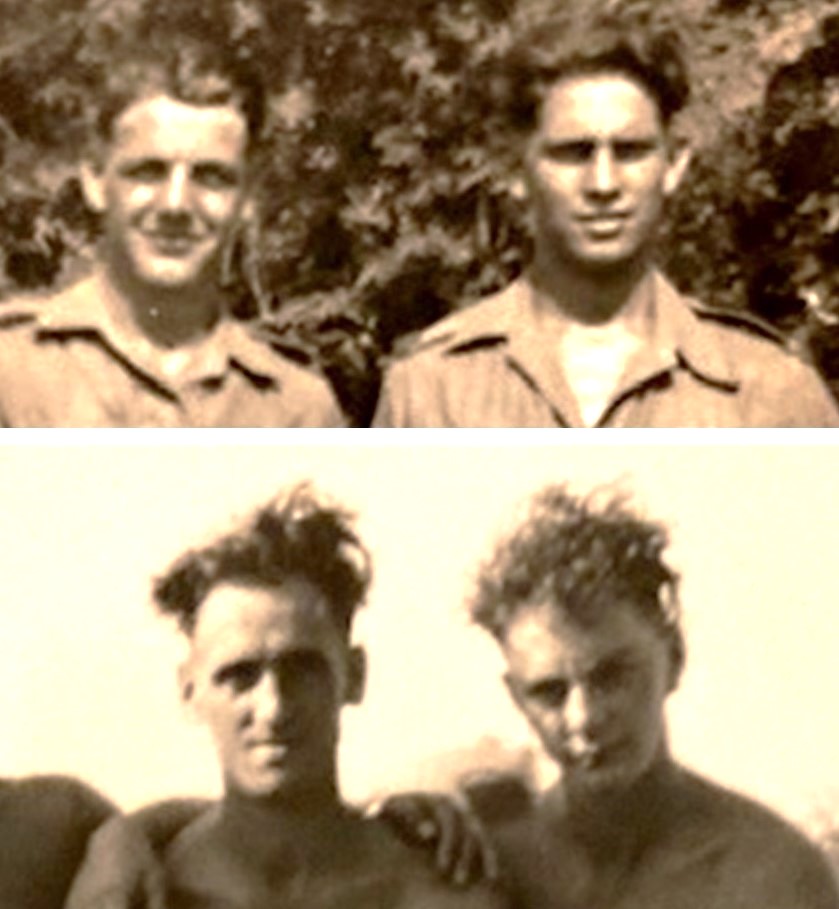
For the ordinary British soldier, airman or sailor, these were bewildering times. South-east Asia had been a particularly punishing theatre of war. They had faced a suicidal enemy, while capture meant a slow death in a Japanese POW camp. The battlefields were either jungles or mountains, while the harsh weather meant disease, rotting equipment and lots and lots of mud.
The war was over, yet while they witnessed the newsreels of mass joy at home and the reconstruction of a new society, they were still in the trenches and now fighting new battles. They had survived a world war, and were not now prepared to die in some imperial adventure.
It had been assumed that with the end of the war, they could all now go home, regardless of how long they had signed up for or been conscripted to serve. The vast majority were not regular military, but had swapped their civilian clothes for uniforms and had made this sacrifice to stop fascism. That had been achieved.
Military service extended – ‘Duration of present emergency’
But now they found their military paybooks stamped ‘DPE’ – rather than be demobilised, given the war was over, they were still expected to serve their full military term for DPE: the ‘Duration of the Present Emergency’. They asked themselves, what emergency? The war was over.
Many had not seen home for over three years. There was frustration that they were missing out on the national enthusiasm for the new radical Labour government of 1945, and all that it promised in new jobs and higher education.
As airman David Duncan later wrote: –
“Men’s futures were at stake. Only a minority of the men had safeguarded jobs to return to. Most would have to go job-hunting, and they were impatient to get on with this. Others who had stopped at school until they were 18… were now concerned about college and university places. Would these all be filled by the time they got home?”
[Mutiny in the RAF – the Air Force strikes of 1946, Socialist History Society, 1998]
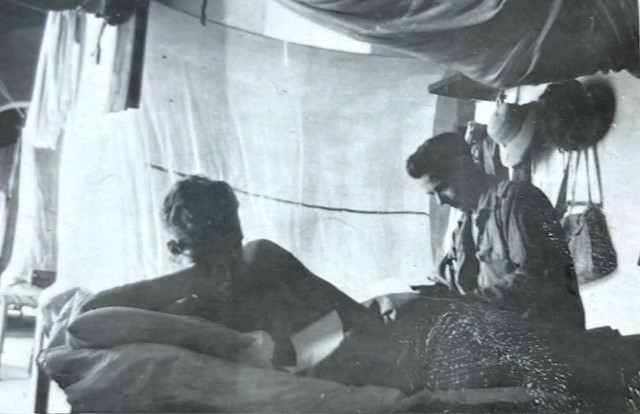
The most popular song amongst the troops in south-east Asia at this time was George Formby’s hit Bless ‘em All, not just because it easily lent itself to the troops’ own version (you can imagine!), but also for the chorus line of: ‘You’ll get no promotion, this side of the ocean…’
Demobilisation looked further and further away, as they realised that ‘DPE’ meant Britain was retaining them to fight new colonial wars, against peoples they had just liberated. The soldiers cynically began to refer to SEAC as ‘Save England’s Asian Colonies.’
There was a further twist. The bulk of SEAC’s forces throughout the war had been reliant on two million Indian troops. SEAC High Command now considered these divisions ‘unstable’ as India stampeded towards independence. Mountbatten would need new ‘armed bodies of men’ to batter the colonies into the new Commonwealth.
Japanese soldiers in British Army
The solution was to make the mostly intact Japanese forces into, not POWs behind barbed wire, like their German counterparts, but ‘JSP’s – Japanese Surrendered Personnel. They were incorporated into the British Army, and Japanese soldiers, still in the uniform of the Japanese Imperial Army, would be fighting alongside British soldiers and guarding British interests right up until 1949.
Not all Japanese soldiers accepted this new conscription – thousands disappeared into the jungle to join the various national or communist resistance movements.
However, while British imperialism trod carefully, not so the French and Dutch imperialists, who deluded themselves that it was back to ‘business as usual’.
Firstly, in September 1945, on behalf of French imperialism, the French colonists in French Indo-China – Vietnam – wanted their piece of the pie returned. The French colonialists were more hated than any other group by British troops, who saw them as traitors. The colonial rulers had backed the Vichy regime and had openly collaborated with the Japanese throughout the occupation, including in the execution of British soldiers.
After the new national liberation leader, Ho Chi Minh, had toppled the colonialists and formed a government, Mountbatten sent in a force of British and Japanese troops to ‘restore order’.
With the arrival of the SEAC force, the French colonialists opportunistically launched a vicious coup and pogrom against Ho Chi Minh’s forces, driving them into the jungle, from where they began their 30 year struggle for liberation. The Vietnam War had begun.
Reign of terror in Vietnam
The British commander, General Douglas Gracey, was an imperialist of the old order, and enthusiastically sent the combined British and Japanese force to back the French coup and join in the reign of terror to suppress the Vietnamese people.
Mountbatten was furious with Gracey’s aggression, but only in terms of scale. In rebuking him, Mountbatten let slip his ‘liberal’ mask, telling Gracey he was
“…distressed to see that you have been burning down houses, and in congested areas too! Cannot you give such unsavoury jobs – if they really are military necessities- to the French in future.”
[Forgotten Wars, C Bayly & T Harper, 2008]
More shocks were to come. In November 1945, having seen France retain its loot at the point of British bayonets, the Dutch government wanted to reclaim its old colonies in Indonesia. Prime Minister Pieter Gerbrandy stated:
“The Netherlands nation is far more than a small part of the European continent. We have a stake in four continents. Our overseas interests condition our very existence”
[Forgotten Wars, C Bayly & T Harper, 2008]
Despite this chest beating, Gerbrandy had no forces to grab back Dutch ‘interests’ – the Dutch state machine had been shattered by the German occupation. They looked to SEAC to do the dirty work, and given that Britain had a 40 per cent share in the Royal Dutch Shell company, which in turn had a keen eye on regaining the oil refineries in Sumatra and Borneo, Mountbatten was happy to oblige. Mountbatten was also keen to give a show of force to bring the national liberation movements into line.
The intervention in Indonesia was a disaster. A small combined British and Indian force walked straight into an insurrection, as the Indonesian masses rose in fury at Gerbrandy’s attempt to put them back in the colonial yoke. An uprising by militias and workers around Indonesia’s second largest city, Surabaya, saw 200 British and Indian soldiers massacred, including their commanding officer, Brigadier Mullaby.
Swift and brutal reprisals
‘Liberal’ Mountbatten’s reprisal was swift and brutal. It was the ‘last pitched battle of World War II’ – even though war had ended. 24,000 British, Gurkha, Indian and Japanese troops fought 20,000 Indonesian guerilla fighters and 3,000 Japanese troops who went over to their side, backed by 100,000 of the city population organised into militias.
During the bitter street fighting, it was a one-sided battle with Mountbatten sending in Mosquito fighter bombers to strafe the streets. 10,000 Indonesians died compared to 600 Allied troops. Such was the ferocity of the repression, that in 2001 the then Prime Minister, Tony Blair, felt it politic to formally apologise to the Indonesian government for Britain’s actions.
British troops however, although having done their ‘duty’, were now totally cynical about their role in south-east Asia. Forced into fighting wars they no longer believed in, demoralisation began apace in British military forces. It took many forms.
Rowdiness and debauchery was common place. Levels of venereal disease rose to seven per cent in the British Army, the highest level in its history. Depression was widespread. The Royal Army Medical Corps had to draft in 100 extra psychiatrists to cope with the work load.
However, for many the shock of their imposed new role turned to anger and sympathy for the south-east Asian masses. The SEAC High Command became alarmed at the levels of fraternisation and support for the national liberation movements amongst the troops.
In Malaya, troops were openly attending nationalist and communist rallies. When the Singapore Special Branch raided the headquarters of the Malayan Communist Party, they were dismayed to discover that most of the books in the library had actually been ‘donated’ by sympathetic soldiers from the Army’s very own Education Centres.
In Bukit Timah, Singapore, plantation workers held a General Strike – British troops not only refused to quell it, but warned their red faced officers that they were thinking about joining it.
Merdeka! – Freedom!
When the Netherlands had finally mustered enough conscript Dutch troops to take over, the Scottish soldiers who they were relieving – the Seaforth Highlanders – greeted them with clenched fist salutes and cries of ‘Merdeka!’, the Indonesian liberation cry of ‘freedom!’
But at the end of 1945, the main ferment was beginning to brew in the RAF. They were noticing that Army personnel were increasingly beginning to be demobilised before them. ‘Officially’ the airmen were being told that their slow rate of demobilisation was due to a ‘shortage of shipping’. Yet newsreels from home showed no shortage of ships, including luxury liners, ferrying the mass of demobilised American GIs from Europe home to the USA.
The RAF ranks were suspicious that British imperialism had other plans for them.
They were right. The rebels had been crushed in Surabaya, despite vastly superior numbers, because of the intervention by the RAF Mosquitos. The national liberation movements may have the mass of numbers on their side, but they did not have airpower which could be used to subdue them from above.
This was the (wishful) thinking of British imperialism. The airmen’s suspicions were later confirmed in a secret Committee minute (later released) by John Strachey, Labour’s Under Secretary for Air, which stated in October 1945:-
“A relatively large RAF and a small army is by far the most economic way of meeting our world commitments”
[Sked & Cook, Post War Britain, 1984]
For ‘world commitments’ of course, read imperial interests.
However, by January 1946, ordinary RAF servicemen were beginning to formulate other ideas.
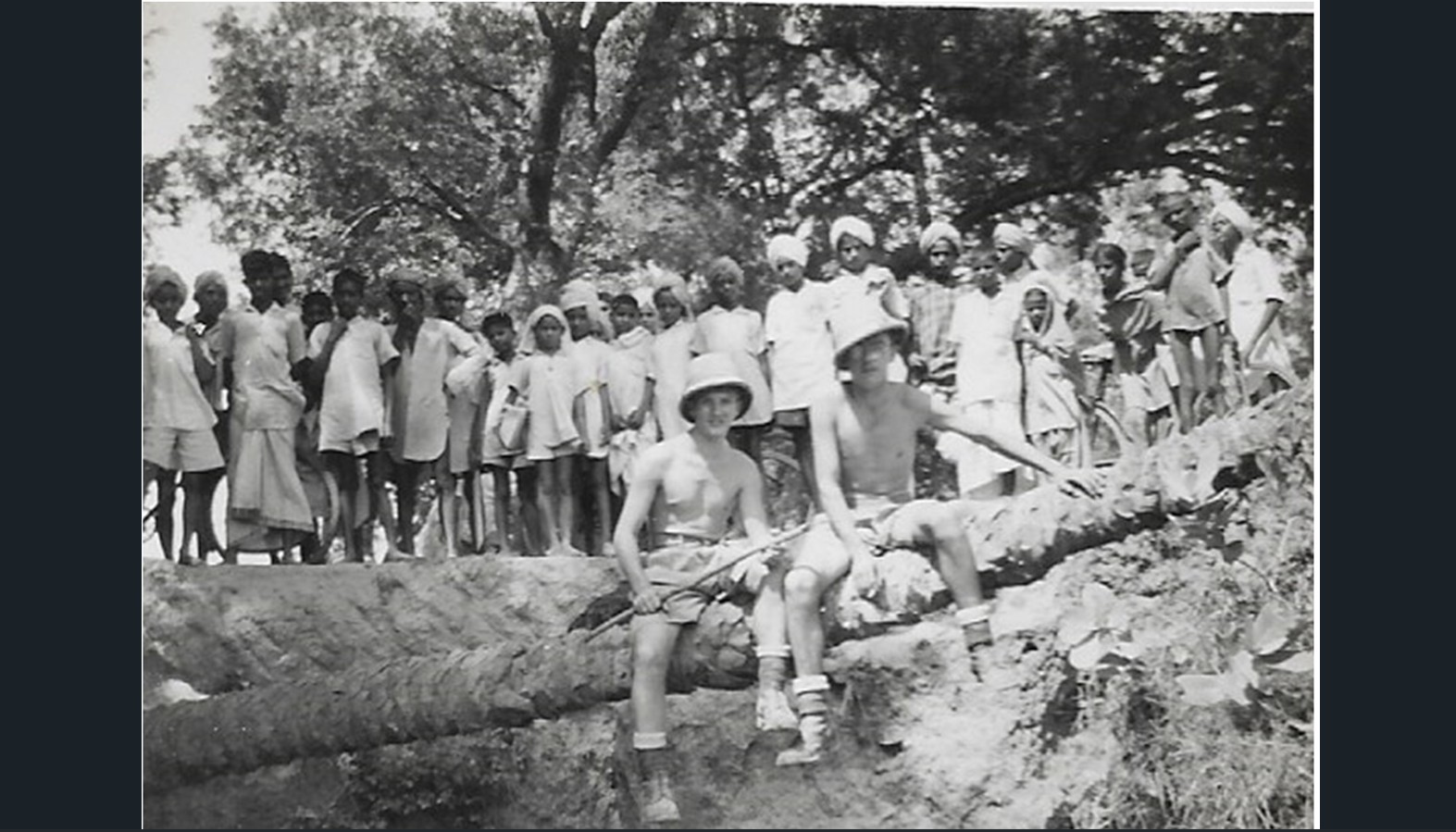
[All pictures by L Sgt Bob Wade, Royal Signals (1944-47) – Featured photo (top) – British soldiers meeting with plantation workers in northern India. There was widespread fraternisation between British servicemen and the national liberation and communist movements.]











Vietnam (Operation Masterdom): In September 1945, British Major General Douglas Gracey used 5,000 armed Japanese soldiers alongside his 2,500 British-Indian troops to suppress the Viet Minh in Saigon and restore French colonial rule. Indonesia (National Revolution): Faced with intense nationalist revolts, the British re-armed Japanese units to protect European civilians and secure infrastructure. Semarang: Under British command, Japanese troops defended a large city sector against insurgents, which one British captain described as working “remarkably well”.
Bandung: A Japanese garrison of 1,500 armed soldiers reinforced British positions during heavy fighting.
Up to 35,000 Japanese troops were assimilated into the South East Asia Command (SEAC) to guard prisoner-of-war camps and protect vital supply lines.
The performance of these former enemies was highly regarded by some British officers:
In November 1946, British General Philip Christison recommended a Japanese officer, Major Kido, for the Distinguished Service Order (DSO)—one of Britain’s highest military honors— while fighting under British command. At least one other Japanese soldier was nominated for the Distinguished Service Cross as early as 1945 for his role in securing territory against independence movements.
To avoid international legal issues regarding the use of prisoners of war for combat, the British designated these soldiers as “Japanese Surrendered Personnel” rather than POWs, allowing them to remain legally armed and operational until Allied reinforcements arrived.
You learn something new every day, about the rotten British ruling class.
“The solution was to make the mostly intact Japanese forces into, not POWs behind barbed wire, like their German counterparts, but ‘JSP’s – Japanese Surrendered Personnel. They were incorporated into the British Army, and Japanese soldiers, still in the uniform of the Japanese Imperial Army, would be fighting alongside British soldiers and guarding British interests right up until 1949.” My uncle Jimmy fought out in Burma and Japanese soldiers fighting alongside British soldiers has really shocked me. We need to learn our history from reading articles such as this. But is there nothing, that the British ruling class will not say or do to protect their interests?