By Andy Ford, newly-elected Unite NEC member
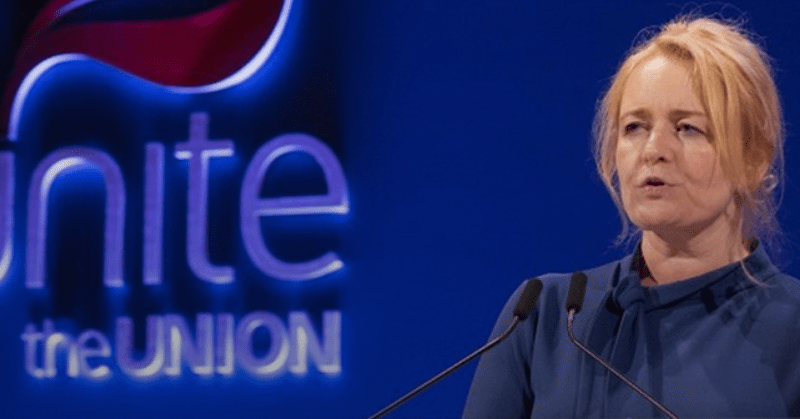
The recent elections to the Executive of the Unite union, one of the Labour Party’s largest affiliates, returned a decisive majority for candidates aligned with General Secretary Sharon Graham.
Her ‘Back to the Workplace’ candidates now hold 40 out of the Executive’s 61 seats, with 18 seats going to the Morning Star-influenced ‘United Left’/‘Members United’ group, as well as three independent candidates. It is to be hoped that with Sharon Graham now having an EC majority to work with, we may see an end to the paralysis and mud-slinging at the top of the union, with walkouts and court cases as an added bonus.
In the Regions, which mainly elect two members each, two regions (Wales and the SW) returned two Back to the Workplace candidates, with most returning one from each group. In West Midlands the United Left scored one of three seats, and in London, the biggest region, United Left retained one of the four seats.
In the industrial sectors, United Left candidates were elected in Chemicals and Pharmaceuticals, Energy, and Graphical and Print. The ‘Back to the Workplace’ slate won outright in the Voluntary Sector, Docks, Education, Engineering and Steel, Finance, Local Authorities and Road Transport. A mixture of candidates were elected in Aerospace, Automotive, Passenger Transport, Services and Construction.
In the Equalities seats, the Women’s, BAME, LGBT and Retired Members are now represented by ‘Back to the Workplace’ while the Disabilities seat was taken by UL and the Youth seat by an independent candidate.
Turnout was only around five per cent
The results seem to indicate a limit to the power of ‘slates’ in the union elections, with members tending to vote for good trade unionists regardless of their slate affiliation. But as turnout is only around 5% anyway, most members are actually non-voters. It would appear that it is mainly the activists who exercise their right to vote, and they will recognise hard-working reps when they see them.
There are some excellent trade unionists on the United Left (UL) slate and the best thing would be for everyone to abandon the hyper-factionalism that has plagued the last three years and face up to the many challenges facing Unite – a crisis in the grass roots structures, the continuing decline in manufacturing, cuts in public services, the lethargic delivery by Starmer of the agreed and “baked in” commitments on workers rights, and the threat of a Reform government which would rip up not only the rights promised by Starmer, but also take us back to something like the Victorian era.
What is clear from these results is that the old UL election machine based on nominations from branches dominated by retired Morning Star readers, is gone, and gone for good. The bureaucratic system whereby the General Secretary told the officers to tell the branches to tell the members who to vote for, has been in decline for years, and clearly now it is finished. But what the union urgently needs is an open, principled and democratic left grouping led by working age members, not by senior union staff.
One big issue for the new EC is that of affiliation or disaffiliation to the Labour Party. It is true that the Starmer clique who currently control the Party have gone out of their way to attack and alienate Unite, as they have with most of their coalition of support.
They have lost the students and university cities by the slavish support for the IDF mass slaughter in Gaza; they have alienated ethnic minorities with the hierarchy of racism in the party and pathetic flag-waving; they have lost the mass of the working class over the winter fuel allowance and two-child benefit cap, continuing industrial decline and the glacial pace of reforms on housing, the NHS, and privatised utilities; and with the abolition of NHS England they have broken one of their last bastions – well paid public services professionals.
Recent conference backed emergency resolution
Some in the union are calling for disaffiliation from the Labour Party. But is that the answer?
The recent conference backing for an emergency resolution to review the relationship with the Labour Party passed overwhelmingly, fuelled by anger at the appalling stance of the Labour leadership in the Birmingham bin dispute where ministers have intervened repeatedly to block a settlement – and have even visited strike-breakers, while ignoring the Unite members (members of a union affiliated to their party) who are on official strike action!
But anger is a poor guide to action. Yes, Unite should “review its relationship with the Labour Party” but not by walking away, but by dealing with the Starmer clique. If your house is infested with rats, you do not walk out and leave the rats in control – you deal with the rats!
Unite should organise a real campaign to dump Starmer and his acolytes and enablers, as the only way to change the policies, and to save the Labour Party. Without such a change Labour faces a wipe out, and the rest of us face a Reform government. Unite spear-heading a campaign to drive out the Starmer clique could have a big effect in the coming months.
And would a disaffiliated union join with any other political party? The Greens? Your Party? It’s just not going to happen. Unite would be left like the RCN or any other big unaffiliated union, with a political policy to no lever with which to apply it.
When Unite disaffiliated from the Irish Labour Party in similar circumstance, the union did not link with any other party and remains ‘independent’ to this day. Meanwhile the Irish Labour Party did not collapse, and in fact is now undergoing a certain revival. They have 12 TDs in the Dail, two senators and 56 councillors. If Unite was to re-affiliate the union could push the Irish Labour Party towards more pro working-class policies – and it would grow even more.
Using political influence to secure reforms
At the recent Unite Policy Conference, fully 80% of the motions passed asked for Unite to use its influence with the Labour Party to secure reforms and changes – from more toilets in town centres, to improvements in health and safety law, to huge improvements in the old age pension.
Strikes can only get us so far: political militancy needs to stand alongside industrial militancy. The reps submitting all those motions clearly understand that fact. They know that the union movement needs a political voice. The task is to turn the Labour Party into that voice.
On its present trajectory, Labour is paving the way for a Reform government. Starmer and his inner circle will be boxed off with cushy jobs in consultancies, lobbying firms, the voluntary sector, the BBC and elsewhere Meanwhile our members and reps will face something like what Milei has implemented in Argentina:
- The working day extended from 8 to 12 hours
- Overtime pay replaced by ‘banked hours’
- 50% staffing mandated during strikes, in some industries 75%
- No collective bargaining at any level above the workplace
- ‘Dynamic wages’ tied to productivity
- Three years’ probation in smaller businesses
- A right to sack workers for protesting
- An onslaught on sick pay
That is what Starmer’s misrule is preparing for us. If nothing is done.
Andy Ford’s NEC election website, which will become a website to report back to members in the health section of the union, can be found here.