By Ray Goodspeed
The Green Party of England and Wales are currently seeing an extraordinary surge in its membership, not only becoming bigger than the Liberal Democrats but even overtaking the Tory Party. This has been in response to the election of a new, more radical and charismatic leader, Zack Polanski.
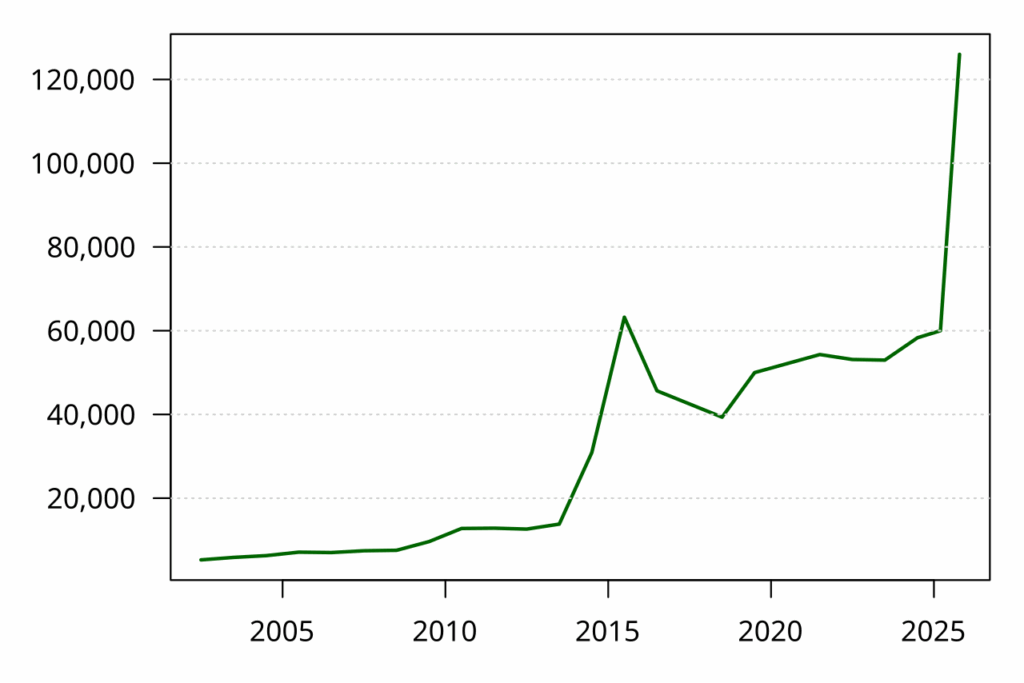
When he was elected on 2 September, the party had 64,000 members – it now has double those numbers – 140,000, at the time of writing. The Greens received 6.7% of the votes at the 2024 general election (though only four seats under the UK’s unfair electoral system). According to YouGov, it is now polling at 15%, compared to Labour’s disastrous 20%. Among young voters (18-24) Greens are leading, on 32%, and it is supported by 18% of 25-49 year-olds and 16% of previous 2024 Labour voters. Labour are losing more votes to the Green Party than to Reform.
Since he became leader Polanski has waged an extremely effective social media campaign, focussing on offering a sense of hope to those who have borne the brunt of attacks on living standards and hollowed out public services. His posts have been reminiscent, in their emotional appeal, of those put out by Jeremy Corbyn and his supporters at the height of his popularity in 2015-17. They have garnered millions of views and generated enormous enthusiasm. One Green Party political broadcast in particular, “Let’s Make Hope Normal Again” on the subject of inequality and wealth taxes, led to 10,000 new members within days.
He even has his own YouTube channel, where he interviews others. So far, he has interviewed a list of the most well-known socialist “influencers”, such as Ash Sarkar, Owen Jones, and Gary Stevenson, and has clearly carved out a space for himself in that world. After less than two months he has 27,000 subscribers.
Eco-populism
By using a much bolder approach to party communications that he calls “eco-populism”, he has managed to cut through into mainstream media. His blunt and straightforward responses on issues such as the vast increases in inequality in wealth, rip-off privatised public utilities, and greedy landlords are a breath of fresh air. So too are his standing up for migrants and asylum and trans people’s rights, and especially his clear opposition to the genocide in Gaza.
People are sick and tired of the weasel words, evasions, hypocrisy and naked deception of Tory, and now Labour, government ministers. He has stood up to the racism of the hard right-wing Reform UK, even boldly (if inaccurately) calling them fascists to their faces on live TV!
All this, of course has unleashed frenzied and sustained attacks on him by the right-wing press and attempts at condescension from the self-identified “liberal intellectuals” of the more centrist media. But he does not indulge “kinder, gentler politics”. He appears to have learned the lesson that attacks need to be forcefully batted back or ridiculed.
He has been pilloried for his past job as an actor, for his gapped teeth, and even for changing his name. We now have the jaw-dropping absurdity of a mainstream media that has weaponised accusations of antisemitism against the left for years, criticising a Jewish politician for reclaiming, as a teenager, his original Jewish surname that his family had changed to escape antisemitism in Britain!
He has also been ridiculed for a decision twelve years ago, to respond to a suggestion from a Sun “journalist” (of all people) to work with women to enlarge their breasts by the power of hypnotherapy. At the time he was using hypnosis to assist women with negative body image issues. He was not a politician, was not paid for the experiment, and it was not his idea, but it was stupid and cringeworthy by any standard. He accepts this when questioned and accepts that he was an idiot to play along.
His honesty has disarmed some interviewers and they will almost certainly change their tactics in the near future and stop giving him any mainstream platform at all, or limit mentions of him to a few personal attacks.
Labour betrayals
But what has caused this sudden explosion in support for the Green Party, beyond just the Polansky factor? Without doubt, the main reason has been the appalling betrayals of the Labour government together with the general air of dull incompetence and hopelessness.
Starmer and Reeves seem deliberately to be trying to alienate as many groups of voters as possible, as he has targeted pensioners, families with more than two children who claim benefits, disabled people, trans people and students.
The continuation of the Tory freeze on income tax allowances has meant an annual tax increase for millions of workers. And all the while the government has failed to address the crisis in the cost of living, energy bills, private rent levels, homelessness, lack of social housing and the spiralling costs of home ownership.
His government’s complicity, or active support, for the Israeli assault on Gaza, has led to a collapse in support for the party in many areas, and by no means only among Muslim community voters. He has lost previously loyal Labour voters by pandering to right-wing talking points on asylum seekers and migrants, and by slashing international aid in favour of huge increases in defence spending. The government has abandoned its pledges on net zero, and has granted new permissions to drill for oil in the North Sea.
The list could go on, and even clearly progressive measures, such as extending employment rights, seem likely to be watered down or delayed. Starmer’s response to party members and Labour voters who object to all this was to say, “The door is open. You can leave.” – so it is no surprise whatsoever that many have chosen to do so. Even huge trade unions such as UNITE are openly talking about the possibility of disaffiliation.
The Green party has a history of doing well when Labour turns to the right, particularly among younger voters. A previous peak in performance was in 2014-15, as Ed Miliband embraced the policy of “austerity-lite” instead of steadfastly opposing Tory policies. Membership back then rose to previous high of 63,000.
[Image – wiki commons – credit here}
This was only cut short by the election of Jeremy Corbyn as leader of the Labour Party later in 2015, as thousands of Green Party members joined Labour. Only in the Brexit-confusion leading up to the 2019 election did the party membership climb back over 50,000. But it has taken the truly disastrous leadership of Starmer for the Greens to reach the current startling levels of membership and support.
“Your Party” potential
The main beneficiaries of the revulsion with the Labour government could and should have been the new left party around Corbyn and Zarah Sultana, provisionally called “Your Party”. On the face of it, such a party has the potential to dwarf the Greens in membership. If only a quarter of those who expressed an interest in the “Your Party” project actually joined they could reach 200,000 members, and there were real hopes that it could be even bigger, and create a mass alternative left party for the first time.
However, “Your Party” has developed, up to now, in a secretive atmosphere of shadowy rival groups, animosity, gossip and indecision. The fiasco concerning the unauthorised membership portal, and the subsequent confusion and suspicion may have done serious damage to the project. When the first membership portal went live, it registered 20,000 members in a few hours, but it is very telling that Your Party has not released any information on membership since then.
This has played into the hands of a Green Party which is already up and running, and has a name, hundreds of councillors and four MPs, an effective organisation and a clear and decisive leader advocating similar polices to what is likely to emerge from the founding conference of Your Party in November.
It is still possible that the new party can recover from this divisive and confusing start. Corbyn and Sultana are trying to present a united face in the run up to the founding conference in November. In hundreds of localities unofficial “proto-branches” have been set up in a wave of hope and enthusiasm, with local activists coming together, keen to start campaigning for a vibrant mass socialist party. Such a party could attract members away from the Greens, who do not have such a strong local activist base.
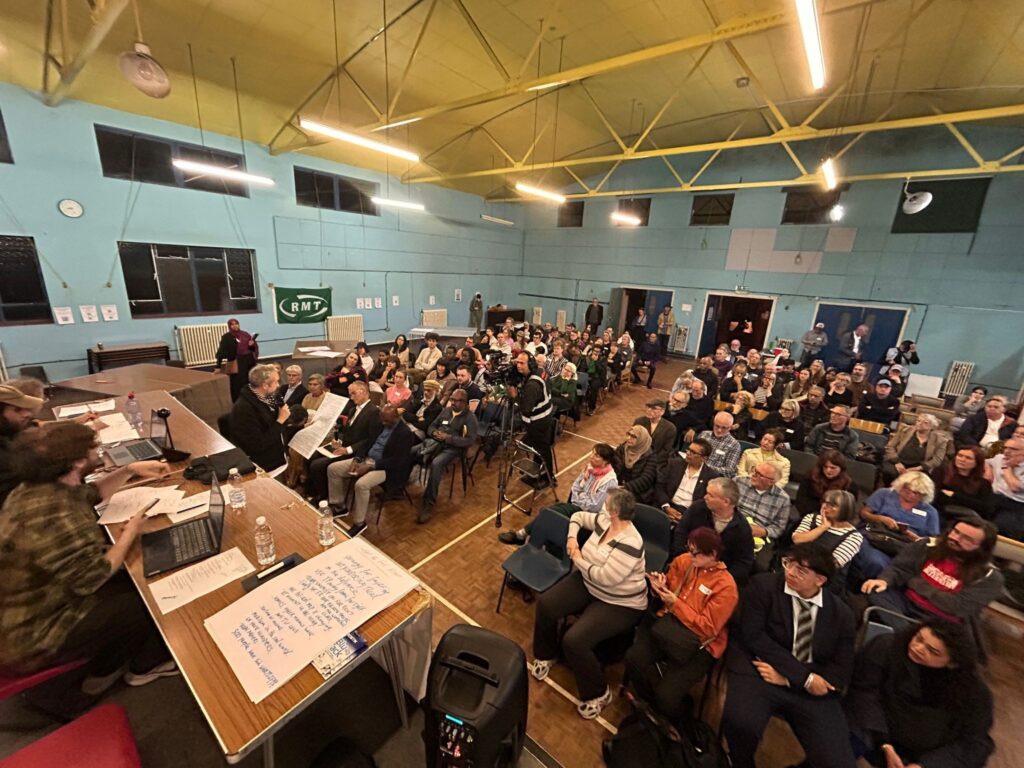
For socialists it is essential to recognise that the growth of the Green Party represents a desperate hope for a better society, especially among young people. It would be a big mistake to dismiss or right off those who join it for those reasons. Criticism should always be friendly and respectful.
Nevertheless, the Green Party does have some potential flaws. Some of these are specific to the Green Party itself and its ideology, or lack of it, while it shares others with many on the “Corbyn left”.
Debt of gratitude
The Green Party, along with the wider green movement of single issue campaigns and NGOs, are right to prioritise the environmental and ecological threats, and especially the existential threat of man-made climate change. They are owed a debt of gratitude for analysing and highlighting these issue many years before most of the socialist left took them seriously.
They are united in their desire to “save the planet” but they are not united in how to do it. There have always been different strands of opinion, from those who still have faith in liberal capitalism or market-based solutions or some major technological “fix”, to some who focus on changes in lifestyle, localism or alternative micro projects, to those who prioritise population growth or who see humans, as such, as the main problem facing the planet.
Of course, there is a large and growing number of Green Party supporters who see the greed of capitalism as the major contributory factor to environmental destruction. They see environmental justice as intimately connected to social justice, as the poorest in society are the first to suffer from environmental crises.
Zack Polanski won the leadership with a huge vote of 85%, albeit on a very low turnout of just 37% of eligible members, suggesting a largely passive, rather than activist, membership. The socialist group Greens Organise was a major factor in his success, and the socialist wing of the party appears to be totally in control. So it may seem to be unfair to cast doubt on their commitment to left politics.
But the membership of the party in the past has overwhelmingly been from the professional, intellectual and/or countercultural middle class, with no sense of automatic affinity with working class people. It has gained significant support in affluent, rural areas, sometimes on an opportunistic basis. Attitudes towards manual workers and their interests can be marked by condescension or frankly, just plain snobbery.
This was painfully clear during the endless debates over Brexit. The party correctly campaigned for Remain, but joined mainstream liberal opinion in calling for a second referendum and sometimes sharing in the middle-class outrage at “stupid northerners” voting the wrong way. They joined in the attacks on the Labour left and Corbyn – the man Polanski now says he admires and supports – and put overturning Brexit before supporting a possible left Labour government that could have implemented their own policies.
Peak of absurdity
The peak of absurdity came in the end of 2019 when Caroline Lucas, their only MP at the time, suggested that there should be a national government made up only of women ministers, including the Tories, and led by Labour right-winger, Harriet Harman! What cynical disregard for the working class, the poor and disabled – to promote this idea after nine years of savage Tory and Liberal Democrat austerity!
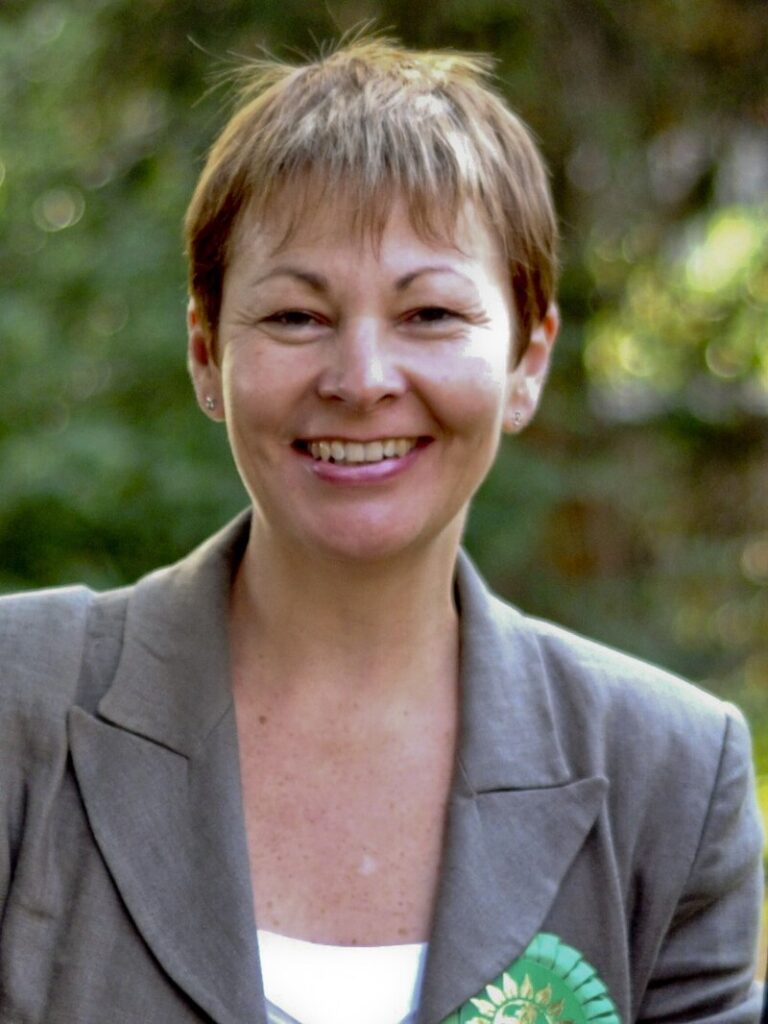
[photo – wiki commons – credit here]
Polanski himself was a Liberal Democrat Party member during their coalition with the Tories, and stood for them in the London Assembly elections as late as 2016, though he joined the Greens soon after. That is a more serious criticism than all the other nonsense served up by the gutter press.
Without the anchor of class based politics or a real connection to the tradition of the socialist and trade union movement, parties can be easily blown this way and that. In Germany and Ireland, Greens have served as coalition partners in utterly reactionary anti-working class governments. Yet, in France, a Green party is part of the New Popular Front, allied to Mélenchon’s La France Insoumise (LFI).
Of course, Social Democratic or Labour parties have often had leaders who betrayed working class interests. Keir Starmer has taken this to a whole new level, but the integration of those parties into the wider labour and trade union movement and working class communities means that the rank and file members can put up spirited resistance to such betrayals.
Polanski says he wants to broaden the Green party membership among the manual working class and ethnic minorities and to work more closely with trade unions, to escape the “white, middle class, do-gooder” image that he acknowledges. He has spoken on trade union picket lines, such as one organised by the UVW. Over the last few years, the party has won more local council seats in metropolitan, working class and ethnically diverse areas and his campaigning is geared more towards those targets, but only time will tell.
Many of the Green Party’s flaws it shares with the wider Corbyn left and others. Most of Polanski’s stated policies do not differ wildly from the 2017 and 2019 manifestos, even on issues such as NATO membership. These can be characterised as “left reformists” – those with a genuine commitment to greater equality, justice, anti-austerity or even “anti-capitalism”, but who have not fully thought through what that means, however dedicated, courageous or resilient they may be.
Inequality and exploitation – driving force of capitalism
Inequality and injustice and exploitation are not just unfortunate side effects of capitalism that can be managed and mitigated by a fairer taxation system. They are essential to its operation, its driving force. Socialists support and fight for every reform that can be squeezed out of the capitalist class that owns and controls society, such increased taxes on wealth or nationalisation of utility companies, both of which are Green Party policies. But the capitalist class will not allow their wealth and power to be taken from them, however gradually or democratically.
Many look back on fondly to the post-WW2 decades, when workers were able to force concessions from capitalism. But any left government, now, that tries to take serious measures against the essential interests of the bosses will face ferocious political, economic or even military resistance. Their power, ultimately, can only be challenged by working class people – in this sense, the vast majority of the population – organising in workplaces and communities, to realise and exercise the enormous power they have if they are united. That is why the bosses and their pet media outlets spend so much time and effort trying to divide us on any basis they can find.
Socialists, whether in the Labour Party, “Your Party” or the Greens should argue for the need to break with capitalism, to take over the huge corporations that control the economy and run them under democratic control of workers and society as a whole. They have to be part of wider campaigns to build the strength of the workers movement locally, nationally and internationally, and turn passive, online supporters into real-world socialist activists. That is the way to end exploitation and inequality and to save the planet.
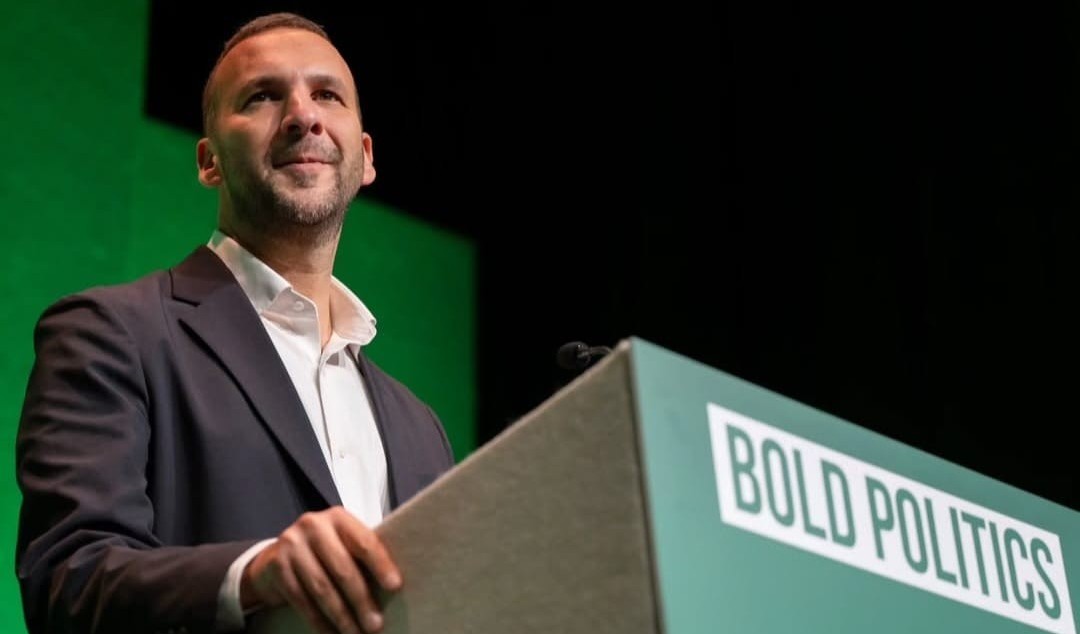
[Featured top photo – Zack Polanski addressing Green Party Conference 2025 – Photo Green Party]