By Cain O’Mahoney
Sarajevo, the capital of Bosnia-Herzegovina, has been brought to a standstill for over four days this week by mass demonstrations, in protest at the death of a student in a tram crash. It mirrors similar protests two years earlier in Serbia.
Many demonstrators in Sarajevo held up the ‘blooded handprint’ image associated with the protracted struggle in Serbia against their government, in protests ignited by the disaster in Novi Sad in 2024, when a roof collapsed the city’s station, killing 16 people.
A week ago, on February 12, the brakes failed on a 50-year-old tram as it approached the National Museum stop in Sarajevo. It killed a 23-year-old student, while a 17-year-old girl lost her leg. The tram driver was arrested, being held responsible by the authorities.
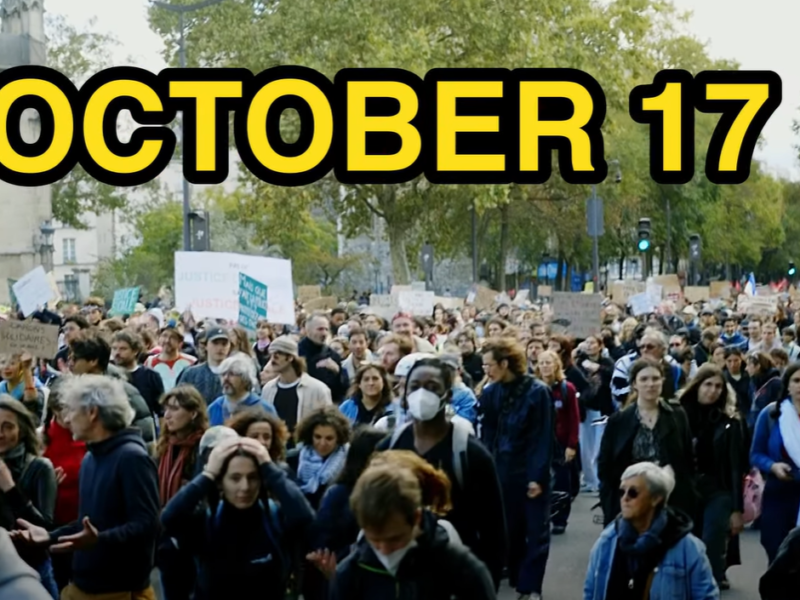
The next day students held a mass vigil at the crash site. Then the day after, on February 14, organised overnight on Instagram, thousands joined the students in a mass demonstration that blocked the main streets and the motorways heading into the city, with chants of “Justice! Justice!” They were demanding more accountability of those in power, transparent governance and investment in an efficient and modern transport system.
Another mass protest was held again the next day, this time demanding the release of the tram driver. People knew he was being used as a scapegoat by the government; how could he be held responsible for the brakes of a decrepit vehicle that first saw service in 1975? The mass protests in Sarajevo – initiated by students – were not going to allow those in authority, who were really responsible, to get away with their usual cover-ups. Then on Monday, university and High School students went on strike and again marched on the city, blocking off roads with mass pickets.
As in Serbia, a tragic accident has triggered protests
As in Serbia, a tragic accident has quickly led to mass protests against corruption. In Serbia, the government tried to cover up the Novi Sad collapse, and then used government thugs and riot police against any who protested, particularly young students. Far from intimidating the protesters, instead it ignited a mass movement against government corruption, with nationwide strikes and the largest demonstrations Belgrade has ever seen, and the fight is still ongoing.
A symbol of that struggle was the ‘blooded handprint’ motif, demonstrating that it is the government that has blood on its hands.
Now too in Bosnia, the tram crash has sparked anger and the handprint protest against a succession of corruption-riddled governments that have been siphoning off public funds for years, funds that should have been invested in the country’s infrastructure, but instead used to line the pockets of oligarchs, bent politicians and corrupt public officials.
In the Corruption Perceptions Index, run by the German NGO ‘Transparency International’, Bosnia is rated on a par with Russia and Serbia. The main problems are so-called ‘Facilitation Payments’ (actually legal, but basically the private sector greasing the palms of public officials and politicians to ‘win’ profitable public sector contracts), and public officials selling jobs to the highest bidder, to those desperate for work and prepared to pay a hefty bribe.
Senior judges suspended for alleged corruption
Despite promises by successive governments to tackle corruption, nothing ever happens. Indeed, at present, nine members of Bosnia’s senior judiciary have been suspended for years while they are being ‘investigated’ for corruption. Yet they all have remained on full pay – some have been suspended for over ten years! The cost of their salaries has reached into the millions, while they have sat doing nothing.
Bosnia is in the process of trying to join the European Union, but the EU has warned Bosnia that it is “… nearing the threshold associated with non-democratic regimes” (Sarajevo Times, 16.02.26), such is the level of corruption.
If the Bosnian students have learnt lessons from their Serbian counterparts on how to fight back, the Bosnian government too have looked with trepidation at the events in Serbia over the past year, and quickly succumbed to the pressure. The Sarajevo canton (regional government) Prime Minister, Nihad Uk, and the Director of the tram operating company announced their resignations on the fourth day of the protests.
Such resignations may not be enough of a sop to quieten the new movement however, and already fellow students in Mostar have said they will join new protest events planned for next weekend in Sarajevo.
Speed of protest shocked the government
The Bosnian government was shocked at the speed of the student reaction and protests. But ever since the magnificent example of the Serbian movement, students and youth throughout the former Yugoslavia have been organising.
This time last year there were mass protests by students in Bosnia, Croatia, Montenegro and Slovenia, in solidarity with their Serbian counterparts, but also in protest against corruption in their own governments and their inaction and lack of accountability when dealing with national crises.
For the Bosnian protesters, there was anger at the country’s lack of preparedness for recent floods that saw 29 people killed – most of them in one village when a massive mudslide from an illegal quarry buried them alive. For the Montenegro students, protests came after a second mass shooting incident that followed an earlier mass shooting, the anger being that their government failed to bring in any gun control after the first incident.
But the actual incidents, whether in Serbia or Bosnia, are a sub-text for an explosion of anger amongst young people across the Balkan states, against their mirror-image corrupt rulers. As one of the organisers for the Montenegro protests, Milo Perovic said, the protests have been inspired by the “waves of boldness” coming from Serbia (Independent, February 10, 2025).
For the Left internationally, there is little to celebrate in a world of rising authoritarianism and Trumpian capitalism. Therefore what we are seeing in the Balkans is truly inspiring.
This is even more so when we consider that the parents of these student protesters were victims of the brutal civil war that followed the break-up of Yugoslavia. Their parents suffered the horrific consequences of their former respective Stalinist leaders retreating into vicious nationalism, which saw partition, ethnic cleansing and a murderous war that left 140,000 dead.
That their children, in just one generation, now instead look to cross-border solidarity and internationalism, and recognise a commonality of struggle, can only lift our spirits.
It gives hope for the future. As one High School student on the Monday one-day strike in Sarajevo said: “… I’m not foolish enough to tell my (future) children one day that I was running to school to be tested on history while history itself was unfolding in the streets” (Balkan Insight, February 19, 2026).
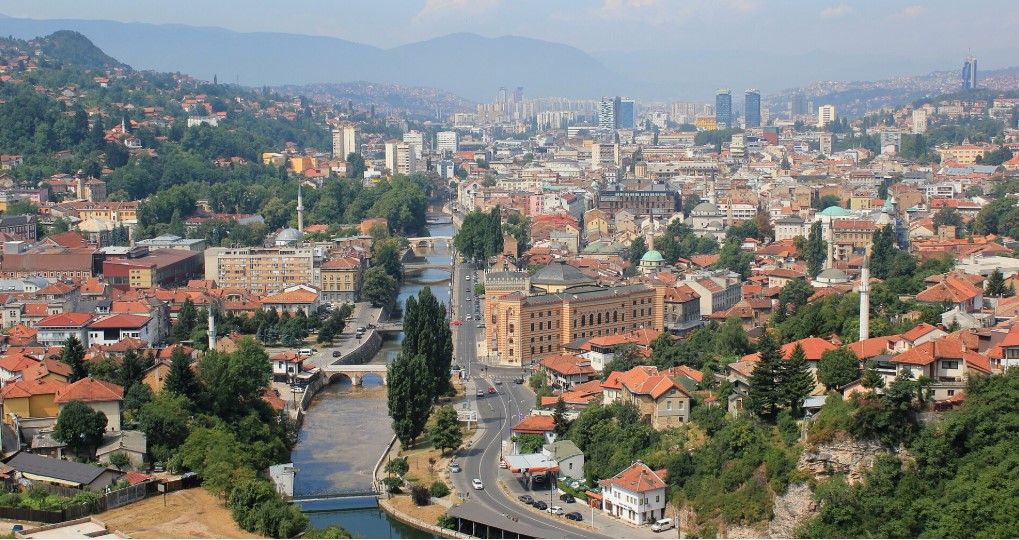
[Feature picture: panorama photograph of Sarajevo, from Wikimedia Commons, here]