By John Pickard
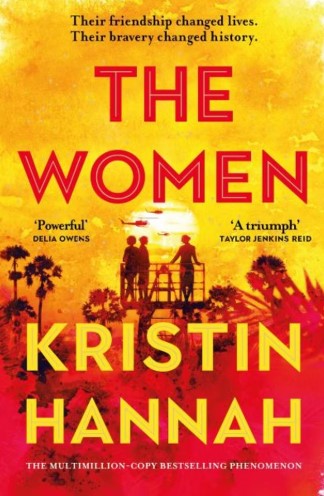
M*A*S*H was a film, later turned into a popular TV series, that was broadcast from 1972 to 1983. It was based on a Mobile Army Surgical Hospital, treating wounded American soldiers in the field during the Korean War. But for a real-life description of a MASH, in this case based on the Vietnam War, read The Women, by Kristin Hannah.
Whereas the film and TV series were comedies, following the capers of the doctors in the hospital, with nurses (like ‘Hot Lips’ Houlihan) playing secondary roles, Hannah’s book is no comedy and, as the title implies, it focuses on the nurses. Hannah was inspired to write the book by earlier biographies of nurses who had served in Vietnam.
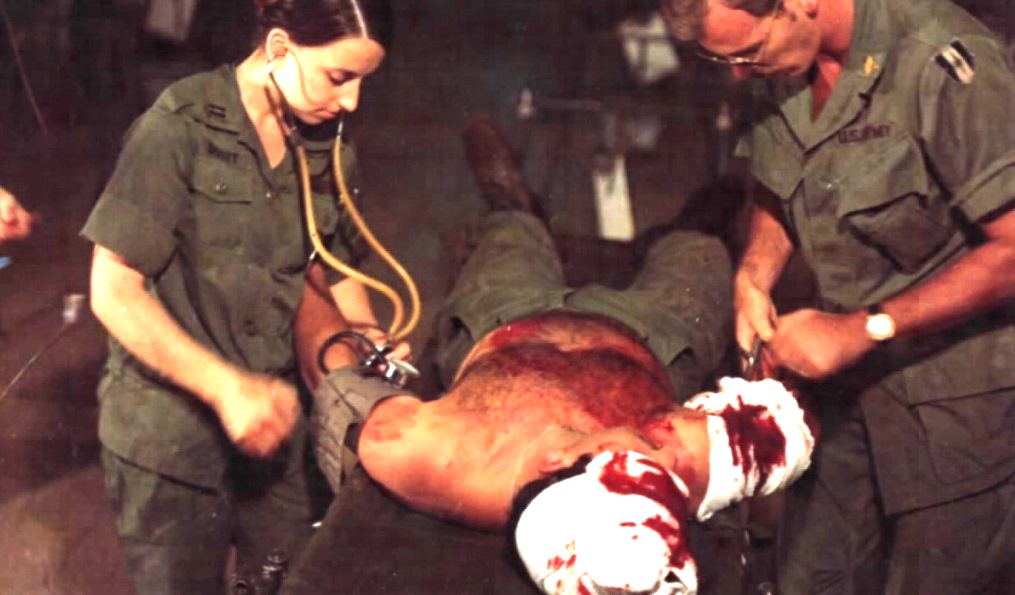
In fact, more than 11,000 women served in the US army as nurses in that war, nine tenths of them volunteers. They were not in the front line, but in their US base hospitals they were still subject to attacks from mortar and rocket fire. Eight of them were killed. More significantly in the impact on their lives, the nurses were subjected daily to the horrors of war through their interactions with wounded GIs.
The conditions faced by the medical staff were a world away from the sanitised atmosphere of the TV MASH, where life-threatening injuries and serious issues, like the stresses and strains on the hospital staff, were the exception rather than the rule. Hannah describes US bases overrun with rats, and with a constant stream of helicopters bringing in the wounded and dying. When there was a ‘MASCAL’ – a mass casualty event, involving dozens of incoming helicopters – the surgeons and nurses worked twelve or fourteen hour shifts dealing with patients non-stop.
Some wounded left to one side to die
Mass casualties meant an immediate triage, with some of those brought back only to be put to one side and expected to die within a couple of hours (as many did). Doctors and nurses had to deal with young men with legs or arms blown off or horrific chest wounds, or all three. And all this in a camp boasting rudimentary sanitation and ‘comfort’, with an unfamiliar (to the Americans) south east Asian climate soaking everything to the bone during monsoons and baking hot at other times.
Imagine the TV series, but with no laughs at all, and a whole lot more blood, gore and suffering.
A socialist would be struck by two things reading this novel. The first is that the main character, Francis (‘Frankie’) McGrath, has clearly led a very sheltered life before Vietnam. Coming from an upper-middle-class family in a prosperous part of California, her background contrasts markedly with that of one of her best nursing friends, Barb, who is a Black woman from a ghetto in Chicago. Barb suffers the death of a brother, a member of the Black Panther Party, at the hands of the police and this and other experiences open Frankie’s eyes.
The other thing a socialist might ponder on, is the lack of balance, in the sense that the novel is based primarily on US casualties, although Vietnamese civilians and South Vietnamese Army soldiers are often treated in the field hospitals. Although Americal casualties were enormous – and eventually created an unstoppable political movement against the war – they pale into insignificance compared to Vietnames casualties.
Widespread use of carcinogen Agent Orange
The latter are estimated at anything between a million and a half and three million dead, and that does not count the maimed and injured or the huge damage caused by the US use of the carcinogen Agent Orange across large swaithes of the countryside.
To be fair to the novel, however, it does not set out to be an objective historical account. It is a story based on the experiences of US nurses. It also relates through dialogue between the characters and the events they are caught up in, that civilian villages are often bombed by the US. The infamous massacre in My Lai is mentioned, where up to five hundred unarmed villagers, including women, children, and elderly men were killed. It was a horrific incident that also included mutilations and rapes. Unsurprisingly, when this was revealed, it also gave a huge impetus to the anti-war movement.
The first half of The Women deals mainly with conditions and the experiences of Frankie McGrath working in field hospitals “in-country”, but the second half describes her home-coming and the disappointment and disillusionment that came with it. More often than not, she is met with stony silence – her extremely well-to-do family were even ashamed of her, despite losing their own son to the war. And all around, there is outright denial: “there were no women in Vietnam.”
Nurses returning from Vietnam often suffered Post Traumatic Stress Disorder as often as the men who had been in combat and it meant inevitably stumbling as they attempted to move back into ‘normal’ civilian life. In the beginning, they were even refused help by veterans’ organisations, again, because “there were only men in Vietnam”.
Through her friend Barb, always a more militant character, Frankie McGrath quickly becomes involved in anti-war movements and the most prominent of these were the marches of army veterans. One of the most famous was a march by a thousand veterans into Washington, where they threw their war medals onto the steps of the Capitol building, an event that had a huge political impact. All of this is in the book.
Hannah’s book is a historical novel, but it is based on research and interviews the author did with women who served as nurses in Vietnam and on earlier biographies of nurses who had been in Vietnam. The point about the book is that it took many years before the sacrifices of those nurses was even recognised.
“women’s contributions throughout history are not recognised…”
Although barely recognised as ‘veterans’ the nurses persisted in their participation in protests against the war and slowly but surely their recognition came. Even this book, although late in the day (2024) had some impact. It topped the New York Times best sellers list in 2024 and did the same for The Sunday Times over here.
The American Legion (AL), like the British Legion in the UK, is an organisation that concerns itself with the interests of army veterans. The AL website describes an event in June of 2024, when both Kristin Hannah and the author of a biography, Diane Carlson Evans, a Vietnam veteran nurse, addressed a packed-out audience of 1,200 in Montana.
Referring to the two authors’ books, Hannah told her AL audience, “This is the story of women throughout history …that our contributions are not recognized. They are not examined…” Both women have received accolades for their books and their work has been widely recognised, for raising awareness of the role of women in the war.
Some readers might find parts of the book less interesting, where there is the love-interest and the typical middle-class American dating and marriage process, but this is not the meat of the book. It is chock-full of genuine social content, from the PTSD of the nurses to the horrors of war, to the massive protests that built up such a momentum that the USA effectively accepted defeat and the need for withdrawal.
In its own particular field, this book and other like it have made a contribution to raising the standing of women in American society. It is clear from the book that in the 1960s and 70s the role of women in the ‘American Dream’ was seen only as an adjunct to their men. The experiences of the Vietnam war and its aftermath changed all that for a whole generation of women.
For a variety of reasons, The Women is well worth the read.
[Feature picture, from Wikimedia Commons, here, shows a US army nurse in a field hospital in Vietnam]