By Ray Goodspeed
The voters of the central-London constituency of Holborn and St Pancras face a clear choice on 8 October, where there is a by-election to replace Sir Keir Starmer. Can the leader of the Green Party, Zack Polanski stop this safe Labour seat from going to the Labour candidate, Sagal Abdi-Wali, currently the leader of Camden Borough Council?
The Greens are certainly mounting a serious challenge. Polanski has said that they are not just throwing the kitchen sink at it, but the whole kitchen as well! Hundreds of volunteers have flooded into the constituency, for canvassing leafletting and phone banking. Leaflets have gone out to every household every three or four days, often delivered in a single day. Canvassing has been steadily increasing, with new records being set as the number of volunteers has grown throughout the campaign.
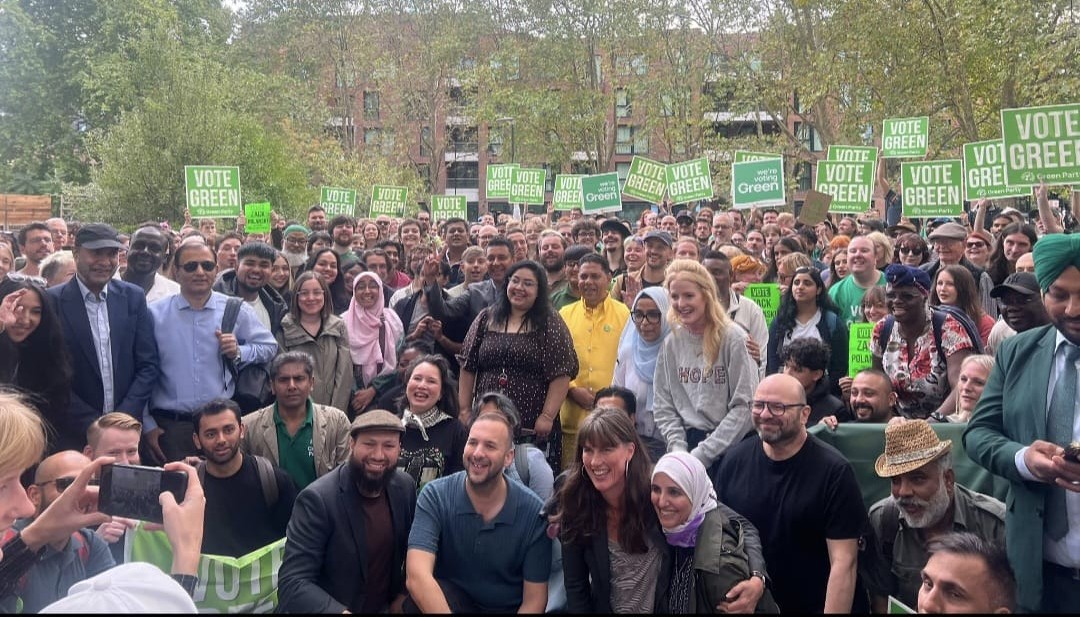
Large and vibrant rallies have been held in local parks before canvassing and leafleting session. These have been addressed by Polanski himself and other Green MPs, as well as charismatic left figures such as Owen Jones and Andrew Feinstein.
Feinstein’s endorsement of Polanski is important, as he stood as an independent in 2024 against Starmer and came second, with an impressive and unexpected 19% of the vote while Starmer’s fell by more than 17% points to 49%. The Greens came third on 10.4%, which was 6.4% higher than in 2019, when they lost their deposit. A previous Green Party leader, Natalie Bennett achieved their highest ever vote – 13%, back in 2015, as part of the “Green surge” of those years.
Astonishing contrasts
Holborn and St Pancras is a very unusual and varied constituency with some astonishing contrasts. It runs from the more affluent Primrose Hill and Kentish Town, though the famously trendy and alternative Camden Town, down to the heart of the commercial, historic and tourist areas of central London.
It includes three main rail terminals (Euston, King’s Cross and, of course, St Pancras), a part of the Covent Garden shopping area, the British Museum, and Great Ormond Street Hospital. In Bloomsbury there are large campuses and student residences of University College London (UCL) and the famously radical School of Oriental and African Studies (SOAS). Both Unite and Unison and some other unions have their national headquarters in the constituency, as does the Trades Union Congress itself.
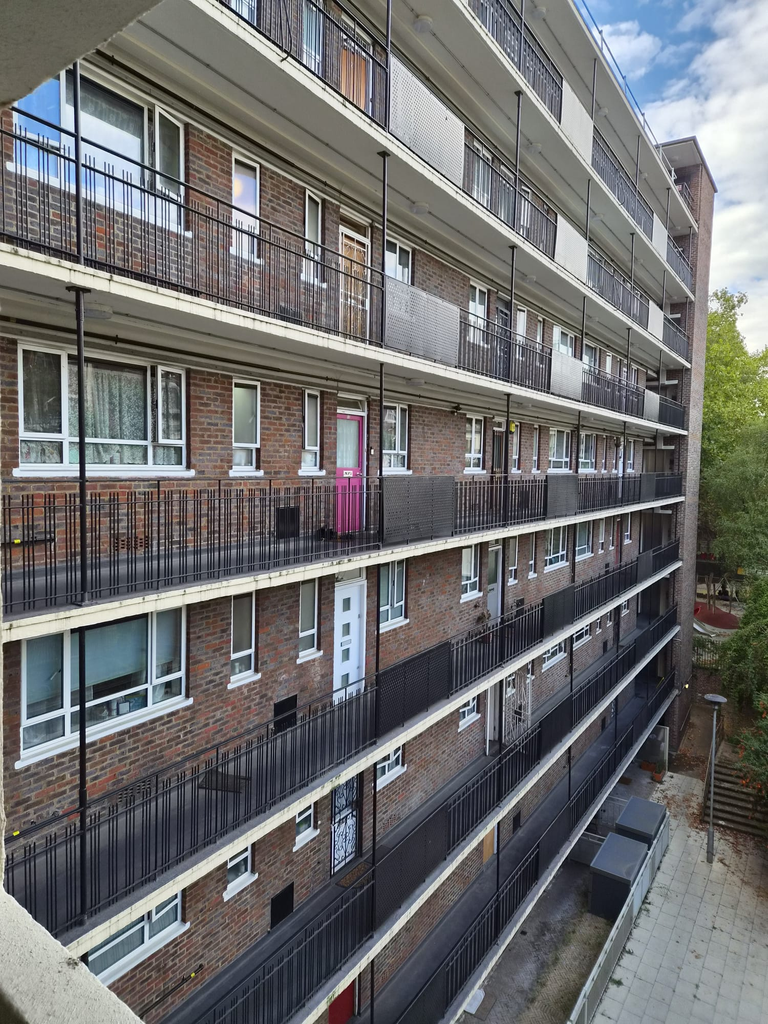
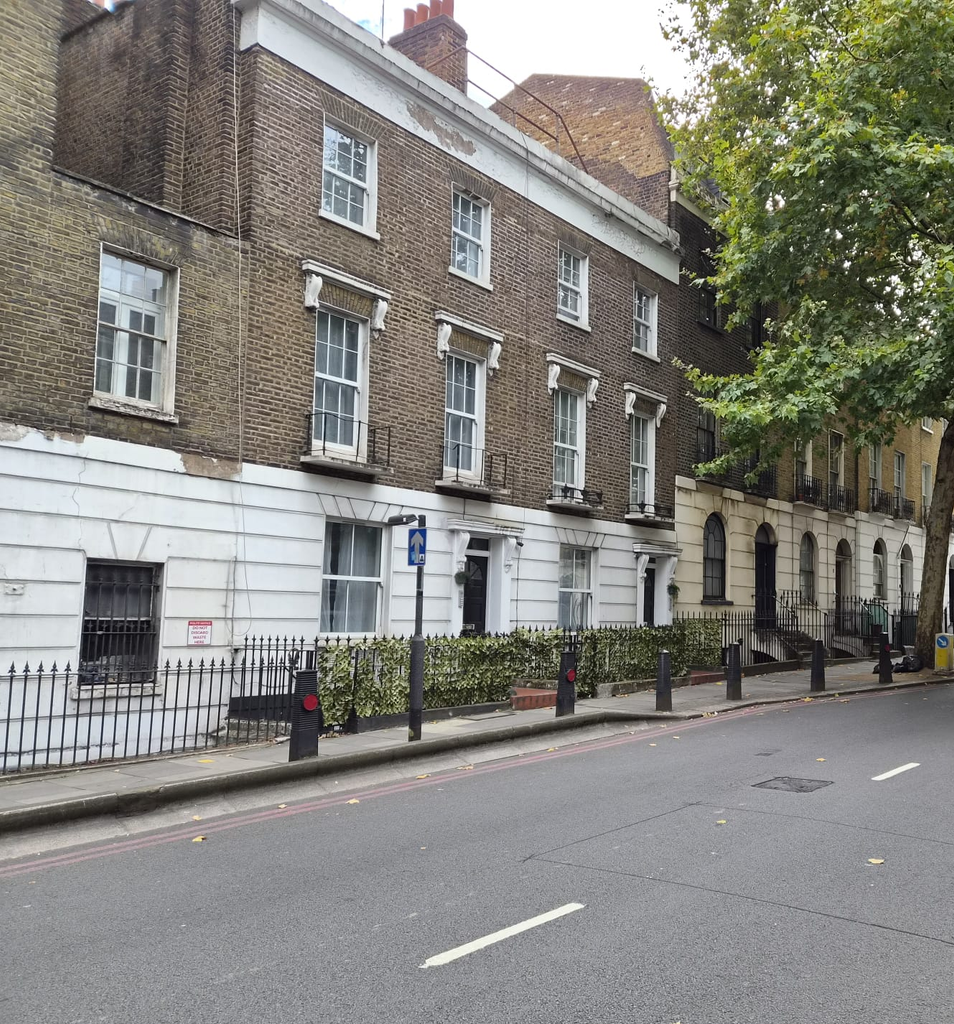
Leafleting rounds can take in luxury apartments and literal penthouses and then, just round the corner, large blocks of council flats. Mansion blocks above shops and cafes are interspersed among very big hotels. There are terraced streets of Georgian houses that appear affluent. Some of them are but many others are split up into flats, sometimes as many as six or more, and often in a bad state of disrepair. In the area north of the train stations there are several traditional, large Council estates of medium to high rise blocks of flats.
Compared to other areas of London and to Britain as a whole, voters are younger and better educated. 22% of people are from a Muslim background. It has higher than average numbers of people in the ABC1 social category, but also a higher than average deprivation figure, a shocking 57%. Only 24% are homeowners (half the figure for London) and the average house price is over £1 million! Only 26% are married compared to a national figure of 45%. Just 30% of people have a car, half the figure for the whole of London. It voted 75% to remain in the EU. [Statistics from Electoral Calculus].
Safe Labour seat
This has been a safe Labour seat in every election since WW2 except one (1959), either under current or largely similar boundaries. For Labour to lose here would be deeply shocking. The party’s vote has never fallen below the mid-40s%; its highest vote was, ironically, when Starmer received 70% in 2017 under the leadership of Jeremy Corbyn. In the absence of any local opinion polls, the bookmakers all predict a Labour win.
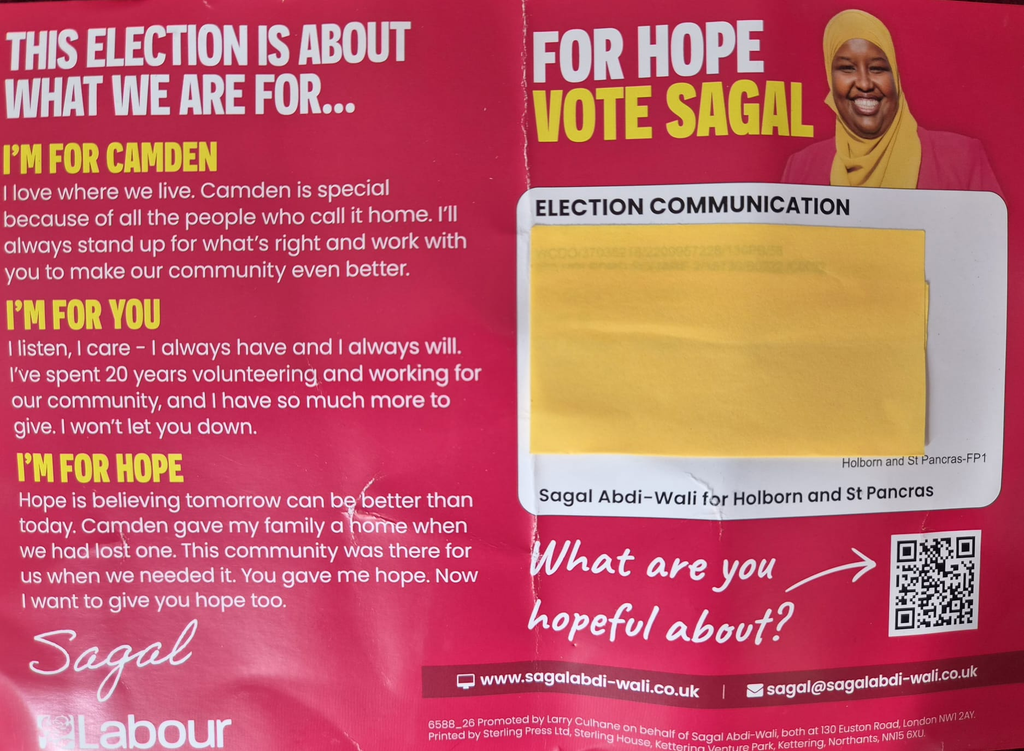
The Labour candidate this time, Sagal Abdi-Wali, is a well-known local figure, a councillor since 2022, the leader of Camden Borough Council since May and previously a Council lead on housing. Her campaign is focusing almost exclusively on her local connections and her personal story. She is a Somali refugee who came to Camden as a child, a hijab-wearing Muslim young woman who has a record in local community work. This addresses a feeling among some voters that the MP should be focussed more on representing Camden on constituency issues, after their last MP was a more distant Labour leader and then Prime Minister.
Abdi-Wali does not make an easy political target. Moreover, she has been subject to predictable vile attacks by the far-right and the Greens have had to be scrupulous in supporting her against those. Both Reform and Restore are standing. Restore, especially, are pushing an explicitly racist narrative in their campaign material. Luckily they are both unlikely to make any serious inroads in an area like this.
[Photo – Left Horizons]
Nevertheless, Abdi-Wali was a Starmer loyalist and part of the right wing of Camden Labour in their factional attacks on the left. Her leading role on the Council is a mixed blessing as it is not that popular among its thousands of tenants. Since October 2023, Camden Borough Council, has seen an enormous increase in its investments in Palantir, all while she has been a senior councillor and then leader! She has not come out boldly against Starmer’s complicity in the Gaza genocide. She has now supported the public ownership of Thames Water, but her main campaign slogan – “I’m for Camden, I’m for You, I’m for Hope” – is as bland as it is cynical from this Starmerite.
The media are gleefully eager to pretend that if Polanski fails to win, then he has “peaked” or is “finished”, but that is clearly false. He has taken on a difficult challenge. It is true that the Greens made impressive gains in the Local elections in May, at the peak of Starmer’s unpopularity. They took 11 seats out of 55 on Camden Council (up 10) and 27% of the vote (22% up on 2022), but they did not make anything like the sweeping gains that the party achieved in Hackney, Lewisham or Waltham Forest, where they took control.
Difficult circumstances for the Greens
This election is being held in very difficult circumstances for the Green Party. Starmer is gone, partly brought down by the very success of the Greens in the Gorton and Denton by election and in local elections. Labour under Burnham is currently enjoying a rise in the opinion polls and Burnham’s own personal popularity is way higher than the hapless Keir Starmer. His well-received speech at Labour Party Conference was in the middle of the Holborn and St Pancras campaign. For now, before any budget or other key decisions which may put the government’s more radical “vibes” seriously to the test, Labour’s honeymoon persists.
Even on Palestine, Labour has finally taken some minimal actions, accompanied by Ed Miliband’s more radical change in tone, that have attempted to lessen the anger directed at the party on that issue. Netanyahu is even alleged to have to said that the change in government policy was more to do with Holborn and St Pancras than with Palestine!
[image from Green Party social media]
Labour’s gains in popularity have largely been achieved at the expense of the Greens. In the six months after Zack Polanski was elected Green Party leader, the party soared in the polls and more than tripled its membership to reach 230,000 in May this year, possibly matching or exceeding that of the Labour Party. For a while, Polanski was one of the most popular politicians in the country. But then he was subjected to the familiar barrage of personal attacks and smears that are unleashed against anyone who offers a radical alternative.
The character assassination was relentless. Polanski was simultaneously accused of antisemitism and attacked for being Jewish. Even his Jewish identity itself was questioned and undermined. He certainly did make some foolish errors, particularly in his inexperienced use of social media and other trivial matters, but the media frenzy was entirely disproportionate. Just as with Corbyn, such attacks eventually had some effect on his popular perception.
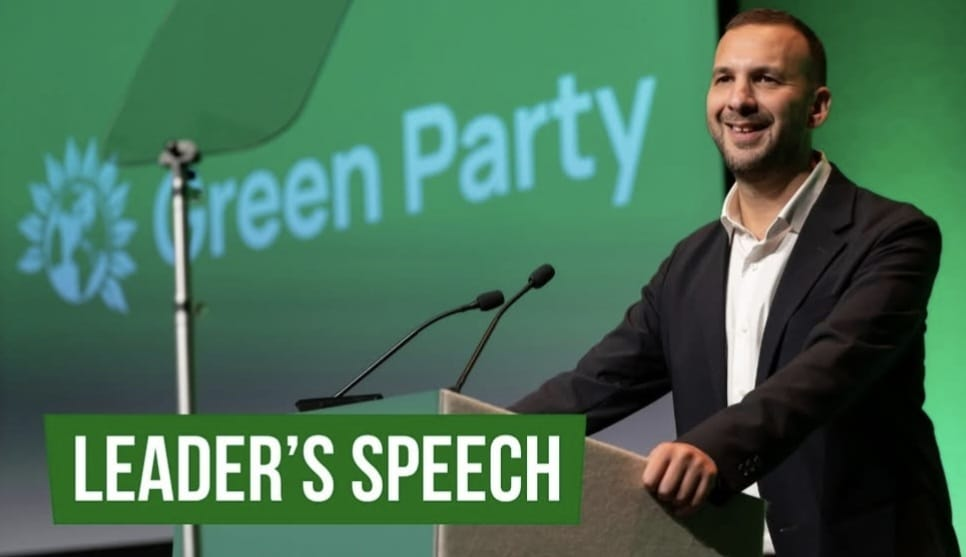
Green Party Conference was held on the last weekend of the campaign. Polanski only stopped campaigning on the Friday to deliver his set-piece leader’s speech and was able to get some more detailed reporting of Green policy ideas, such as a three-year freeze on rents, and other useful headlines, but most coverage of the conference has focused on a resolution on Zionism and racism, and that has provided a pretext for the media to continue their attacks on the Green party and on Polanski himself – all just a few days before polling day!
Starmer’s sudden, surprise resignation and the immediate move to call a by election just five weeks later was clearly designed to catch the Greens napping. Moreover, holding it in early October means that the extremely large number of first year university students will have barely had time to move in to the many halls of residence in the constituency, let alone register to vote. Very many of those students would have been likely Green voters.
Cost of living, housing and Gaza – and climate change
[photo – Left Horizons]
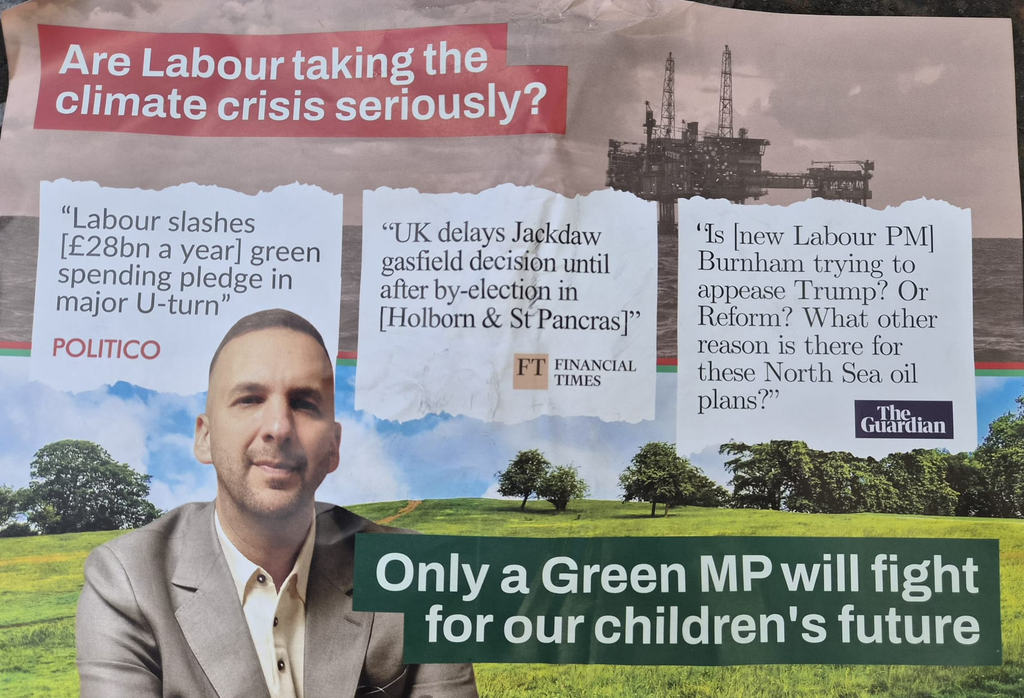
Beyond stressing that Zack Polanski used to live and work in the borough and lives a short bike-ride away, the Green campaign has focused on the cost of living, housing and Gaza. They have called for rent controls to deal with the impossibly high rents in the area. One leaflet carried an endorsement from the former Labour MP for Kensington, Emma Dent Coad, who represented the tenants of Grenfell Tower. They have also laid particular emphasis on climate change, highlighting the government’s cynical postponement of the decision regarding the Jackdaw gas field until after the election.
A key tactic is to acknowledge that the election will not change the government but that voting for Polanski will mean a Green MP can keep up the pressure on Burnham to tack left. They claim that just electing another Labour MP who will do as they are told will not represent local interests or push the government in a more radical direction. They point out that Burnham is already backtracking on promises to bring in funding for 100% Council house-building schemes, that the measures outlined by Miliband on Palestine are simply inadequate, and that pensioners are still being arrested for holding up signs against the genocide.
Green campaigners report a very positive reaction from those they encounter, and a feeling of real goodwill, but these impressions are always rather unreliable. The feeling of the campaign team is that it will be close and they will need to fight for every vote till the polls close.
This election is a test for how many people who abandoned Labour under Starmer will be tempted back now that Burnham has taken over and promoted a more hopeful mood around the party. Some will but others will see through the media smears and vote for the Green Party under Zack Polanski as offering more radical measures to address the real problems that they face in their daily lives.
[Featured photo – Zack Polanski at a pre-campaigning rally, with , Hannah Spencer MP, Andrew Feinstein and the two Green Party Deputy Leaders, Rachel Millward and Mothin Ali – Photo from Green Party social media]
[All other images Left Horizons unless specified]