We look at the recent government decisions re fossil fuel extraction and then reprint an extract from our recent booklet “A socialist Programme for the Green party.”
********
The Burnham government’s decision to authorise drilling in the Jackdaw gas field in the North Sea, while not unexpected, has left many socialists, trade unionists and climate activists angry and bewildered.
Indeed, if “insider” whispers are to believed, then even Cabinet ministers secretly oppose it, including Foreign Secretary Ed Miliband and the Energy Secretary herself, Miatta Fahnbulleh. However, as is so often the case, they do not have strong enough spines, or principles, to openly oppose it.
They are trying to spin the decision as “not that bad really”, as it is a relatively small field; it is gas, rather than more damaging oil; and the bulk of the gas can be piped to British consumers and thus can reduce gas imports, thereby improving national energy security. Jackdaw—operated by Adura, the joint venture between Shell and Equinor—will boost UK gas production by around 6% over an 11-year lifespan, with the first supplies due to flow within weeks.
They also pledge that the tax revenues from the gas will be put into a new Energy Wealth Fund for renewable energy schemes – a poor (very poor) relation of Norway’s huge Sovereign Wealth Fund that was set up several decades ago.
But none of this special pleading would be necessary if Labour under Starmer had kept its commitment to spend £28 billion per year on the Socialist Green New Deal, investing in a massive programme to create skilled jobs in manufacturing and installing renewable energy systems and in energy conservation. The Burnham government needs to return to that policy.
Instead they drastically scaled back their ambitions and have now capitulated to the powerful fossil fuel lobby. Greenpeace estimates that burning Jackdaw’s gas will cause £16.1 billion in global damage. The Energy Secretary has said herself that this will make no difference to energy bills for consumers, and will create only 27 jobs. Zack Polanski, Green Party leader, rightly called it climate vandalism and a victory for Shell over the people. Of course, the government postponed the decision on Jackdaw until after the Holborn and St Pancras by election, for obvious reasons.
For all of their warm words about the catastrophic consequences for climate change of burning fossil fuels, the government have essentially said “just one more cigarette, and I’ll give up tomorrow”. Or as St Augustine of Hippo once prayed in the fourth century CE, “Give me chastity…but not yet!”
Disappointing
It is disappointing, to say the very least, that two big trade unions, Unite and the GMB, have enthusiastically welcomed the decision. Unite leader, Sharon Graham is correct, of course, to stress that the Green Transition should not be at the expense of the jobs and livelihoods of those who work in the fossil fuel industries. Alternative jobs must be in place before the old jobs are phased out. We cannot allow these workers to be treated like the miners and their families and communities were treated in the 1980s and 90s.
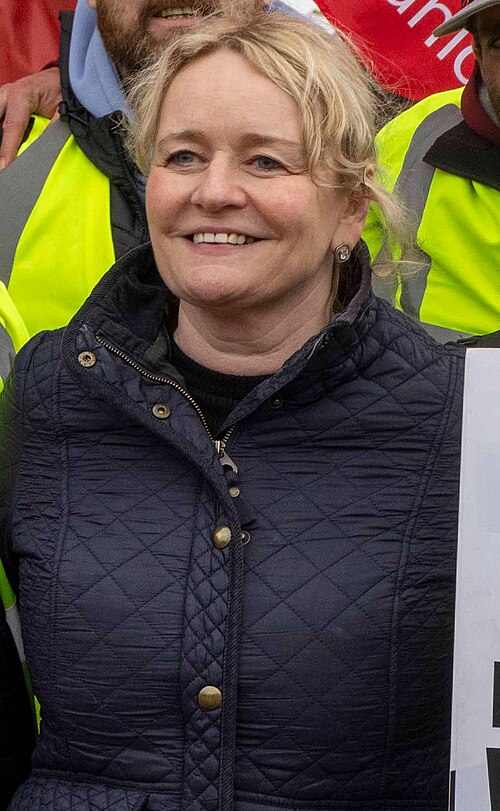
[photo – wikicommons}
But Jackdaw is a new gas field, and one that will have a negligible effect on new jobs, let alone existing ones. The labour movement correctly campaigned in the past to save coal mining jobs, but we would not support the opening of a new coal mine! The leaders of these trade unions, which are affiliated to the Labour Party, should use their power and influence and financial resources, both inside and outside the party, to build popular support for massive investment and job creation, in renewable energy, not to cheer for the burning of even more fossil fuels, with all the environmental damage that will cause.
Even worse, a decision is awaited from the Energy Secretary, Fahnbulleh, on whether to grant permission to develop the Rosebank oil field off the coast of the Shetland Islands. This is the biggest undeveloped oil field in UK territorial water, estimated to extract 500 million barrels.
If this field is developed, it will have disastrous consequences for climate change and the wider environment. It has none of the carefully spun selling points of Jackdaw. It is a huge field and is overwhelmingly made up of highly damaging oil, although there is some gas as well. It would not directly supply the UK and would be sold on the global oil market.
Approval will be a cynical betrayal and a victory for the fossil fuel lobbyists who hover around the government and Labour MPs. The government is briefing out confusing mixed messages, sometimes suggesting that authorising Jackdaw but not Rosebank is some kind of pragmatic compromise, while other rumours suggest it will get the go ahead. It seems there are severe divisions inside the Cabinet itself. Labour MPs on the left and others who oppose this action must work with the Green MPs to put pressure on Burnham and Fahnbulleh.
The trade union and labour movement and environmental campaigners must fiercely oppose any permission to develop this oil field. It is likely to be opposed by another wave of direct action. The trade union leaders must organise campaigns against these new fossil fuel extraction schemes. An open letter signed by many of Unite members is circulating, calling on Sharon Graham and Unite leaders to reverse their support both for the recent Jackdaw decision and even for a future approval of the Rosebank field [see link here].
********
Left Horizons has recently published a booklet – A Socialist Programme for the Green Party. Below we republish a long extract on the section dealing with energy policy and the need for public ownership
**
Democratic public ownership must be central
The most essential missing element in the Green New Deal, and which is also absent from the detail of the Green Party programme is exactly how change will be brought about. Capitalism has proved repeatedly that it cannot provide the solutions to the needs of most of the population or even guarantee the existence of human life on earth. But the system will not have the decency to die off of its own accord – the working class, which makes up the bulk of the population must organise to end it.
If we are seeking solutions to the climate emergency and to the social and economic stresses facing the majority of the population, then the central core of our policies must mean that the levers of economic power – energy production, industry, transport, services, land use – must be taken out of the hands of the billionaires and be put to use in an organised way for the benefit of all, not a tiny few.
The post-war Labour government, and to some extent later Labour governments, nationalised key sectors of the economy, not for the benefit of workers, but so that the capitalist system as a whole could tick over more efficiently. Nationalisation in that ‘old-fashioned’ sense has little to offer today. Most big companies are internationally-based, with shares quoted on international stock-exchanges, and most have associated companies and subsidiaries all over the world. It is often no longer a question of nationalising companies, but nationalising the resources they hold in this country.
Nonetheless, despite changes in company ownership and the multinational character of capitalist industries, socialists have to advance policies that meet the needs of the moment. We must argue for the expropriation of the billionaires who are despoiling the planet and who ‘manage’ economies only in their own interests. It is an obscenity that major investment decisions affecting the lives of billons of people are based on what is most profitable for a handful of the mega-rich. The Green Party has to advance policies that would democratise the main levers of the economy in such a way that they would no longer rely on a rigged ‘market’, but would instead be based upon a rational plan of investment and production.

Central to such a policy must be democratic public ownership, with the management of economic resources for public benefit. Such ownership could include cooperatives or regional public ownership, but the large corporations and finance houses would be nationally, state-owned. It would mean the organisation of national resources for public benefit, through the democratic management of industry, involving elected managers from the trade unions in the industry and consumers, as well as experts and specialists from government. This democratic form of public ownership should be at the heart of Green Party policy.
Energy production and distribution
The most important part of industry that needs to be taken over in this way is energy production and distribution. Most energy companies are internationally-based and owned. But the UK government has a sovereign right to utilise those resources in its own territory and territorial waters for public benefit.
This key section of the economy, could be managed through something like a National Energy Commission, which would have to be a democratically elected body. It could consider the best means of investing in renewable energies like solar, wind, biofuels, geothermal and tidal. It could instigate massive investments in tidal barrages and develop an increased capacity to make wind turbines.
An energy commission could redevelop and renew the vital industrial foundations for a revolution in sustainable energy. Those trade unions whose workers are currently engaged in fossil-fuel industries are understandably anxious about the livelihoods of their members and their policy relating to ‘zero-carbon’ calls for a just transition. Under Margaret Thatcher, entire industries like coal-mining, steel and ship-building were obliterated, without there being any alternative jobs provided. Even today, forty years later, there are communities blighted by the enforced unemployment created by those policies. The Green Party cannot advocate the same kind policy for workers in the oil and gas industries today.
Workers in the current fossil fuel industries should be guaranteed their jobs and livelihoods until such time as their skills and expertise can be re-located or adapted to other forms of energy production or useful industries. Massive investment in renewables could in itself create hundreds of thousands of new jobs, with the installation and maintenance of solar panels, turbines, storage systems and the modernisation of the national grid. A modern grid system would need to be integrated with continental Europe and have publicly-owned regional delivery and retail arms.
The conversion of home heating systems from natural gas to hydrogen or other systems would also require retraining and the provision of thousands of skilled jobs. In short, in a rationally-planned energy system, there would be no requirement for today’s workers to be thrown on the scrap-heap, as the miners and shipyard workers were in the 1980s.
Where sectors of the economy are likely to be heavily dependent for a period of time on fossil fuels, a national energy commission could commission research and development in the production of hydrogen as a non-carbon alternative to natural gas and fuel-oil. There is also the important issue of essential carbon-generated products, particularly plastics, which are part of everyday activity and which cannot be removed from production and circulation at a stroke. Nonetheless, steps can be taken to begin to substitute less harmful alternatives over a period of time.
The Green Party’s policies on energy, therefore, should include:
*Democratic public ownership of all the plant and utilities related to energy-production industries, including coal, oil, gas and nuclear power.
* Democratic public ownership of an electricity grid, integrated with storage systems, and with suppliers in other countries
* Democratic public ownership of ‘downstream’ regional electricity suppliers and delivery companies
*A national investment plan, through a National Energy Commission, to develop wind, solar, geothermal and tidal energy and appropriate electricity storage systems. This to include a national policy of installation of solar panels on public buildings.
*Promotion of research and development in all areas of renewable energy, including in hydrogen technology, as an alternative to fossil fuels
[This 29-page booklet is essential reading for all supporters and members of the Green Party, and, indeed, anyone on the left, including the Labour left. You can get your copy or copies by emailing the editor at editor@left-horizons.co.uk]
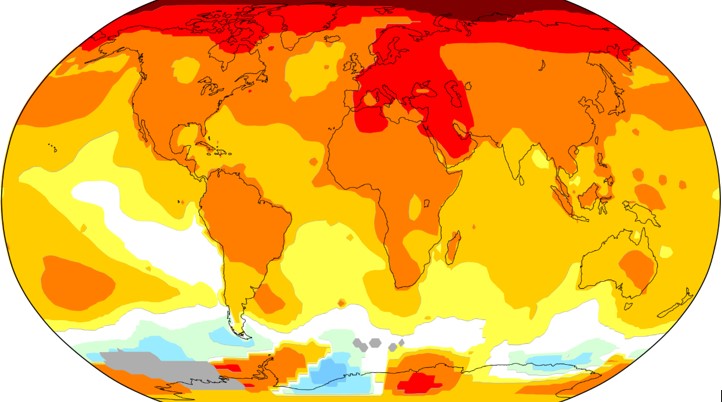
[featured image – hot earth from NASA’s Scientific Visualization Studio – wiki commons]