Review by John Wake
The film Wild Horse Nine is set in Chile in 1973 a short time before the military coup that installed General Augusto Pinochet as dictator. It is well-made (although I think that some scenes were too dimly lit) and well-acted. The film holds the interest of the viewer. I was certainly engrossed.
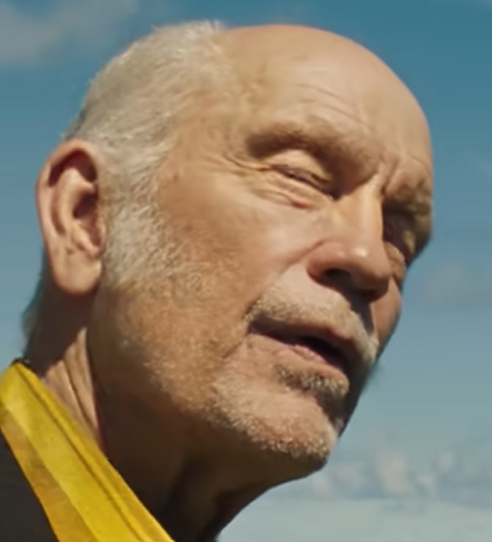
The protagonist is a terminally-ill veteran CIA operative who has committed monstrous crimes and appears to be regretting some of his past actions. He is worried about whether he will be received into Heaven when he dies. The film evokes sympathy for him, but for us to sympathise it is necessary that his crimes be glossed over.
According to the film, the CIA was responsible for the assassination of US President Kennedy. That the protagonist in the film was involved in this event is a thread that binds the plot together. For that claim, for which there is no evidence, to be given the same status as the actual facts of CIA wrong-doing in other countries is an insult to the victims of that wrongdoing, just as it diminishes it.
The protagonist says that he was involved in CIA-sponsored coups in Guatemala and Indonesia, and the killing of the elected first Prime Minister of the (former Belgian) Republic of Congo and that he had killed people in countries that his fellow operatives could “not even spell”. (At this point, I did wonder if the director considered it politically expedient to omit mention of the CIA-sponsored coup in Iran in 1953). He is said to have killed 65 people, but we are not informed how many people died as a consequence of the events he helped to come about.
Guatemala endured 42 years of military dictatorships that involved in genocide against the indigenous people of that country. The army in Indonesia was responsible for the murder of a million left-wingers in that country in the mid-1960s, with US support, and an estimated 180,000 people in East Timor, which it invaded a decade later. I have no idea how many people died in the conflict in Congo in the 1960s, and the film does not inform us, but it does show actual film of the arrest of Patrice Lumumba.
Allende nationalised some US-owned mining companies
It would not have been out of character for the protagonist to say that the CIA overthrew Arbenz in Guatemala because he nationalised some of the assets of United Fruit (a US banana company), and that it wants to overthrow Allende because he nationalised US copper-mining companies. The Writer could have encapsulated the essence of US imperialism in a sentence, should he have chosen to.
(Incidentally, the coup in Guatemala led an Argentine called Ernesto “Che” Guevara to conclude that social change could not come about peacefully, and after becoming one of the leaders of the Cuban Revolution, he fought with the unsuccessful guerrilla forces in Congo in 1965, and then travelled to Bolivia to support another unsuccessful guerrilla war, in which country he was captured, and killed by CIA agents in 1967).
There is a poster in the film advertising a concert by Víctor Jara, and a folk singer is depicted who is probably meant to be Jara. He was a popular Chilean singer subsequently tortured and murdered by Pinochet’s regime. If film makers are going to refer to a real person who became a victim of real events, then perhaps they ought at least to honour the memory of that person and inform the viewer of his fate in the closing titles.
Chile was “the England of South America”
It is rather poignant that the protagonist is shown genuine sympathy by someone who may herself have become a victim of the very conspiracy in which the protagonist was involved, when he tells her that he is dying.
The protagonist later warns her about what is being planned, but she would have wondered what to do with the information, after events indicated that it was true. Would anyone believe her? I suspect that the answer would be “no”, and one of the reasons for that would be political. The leaders of the parties of Allende’s Popular Unity coalition would probably not have been able to accept the truth. They were convinced that in Chile, which was known as the “England of South America” on account of its democratic traditions, it was possible to peacefully transform society.
The protagonist saves the life of this woman towards the end of the film but does nothing to try to save the people of her country from the harm that he and his colleagues have been plotting to bring about. If there were a God in Heaven in this cinematic cosmos, then I don’t think that He would have considered the protagonist redeemed by the end of the film. He may have been impressed if the protagonist had made an effort to warn Allende of the plan to bomb the Presidential palace and seize power, but I imagine the protagonist died a sinner.
We are naturally predisposed to feel sympathy for another human being in distress, but we should not let our feelings cloud our judgement. One of the factors creating such sympathy – for this character who has committed monstrous crimes – is that his suffering is very clear to us. But the enormous suffering for which he was responsible is unseen.
I found the film Wild Horse Nine moving, but that is perhaps because I already knew something about the coup in Chile, which had a profound effect on my political outlook when I was a teenager. It is the imminent fate of the people of Chile that moved me. I am not sure if those ignorant of the events in Chile would have been so moved.
Priest declares Allende “an agent of Satan”
There are some nice details in the film, such as the priest presiding over a church service being heckled when he calls Allende an agent of Satan. “Who elected you?”, cries a young man, as he and his companion walk out.
It is a shame that the director went to so much trouble, only to miss an opportunity to educate the viewers about the real story of Chile. Of how people around the world were inspired that a self-proclaimed Marxist could be elected and institute policies that visibly improved the lives of ordinary people. Of how that country was subjected to sanctions and economic sabotage by the USA to foment discontent in the run-up to the coup. Of how economists trained by the University of Chicago then used Chile as a laboratory for their neo-liberal economic theories and thereby impoverished the ordinary people of that country.
Real events were used here as a peg for a fiction. If the writer/director had wanted to make a political point, then perhaps he could have better informed the viewer about those events. If he did not wish to make a political point, then perhaps he should not have set the story in the midst of real events.
Perhaps the director was making a political point: that these real events are not worth knowing about in detail, because in the end there is nothing that can be done to prevent the people with the guns stopping any attempt to change society for the better, for, as the protagonist says, there will always be people who will grow up to be soldiers.
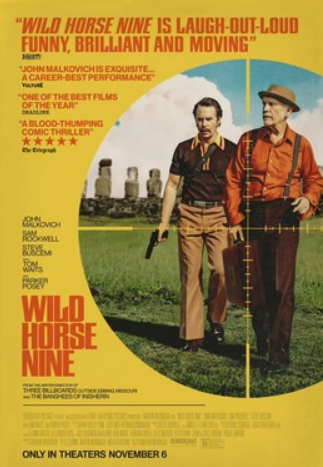
The poster for the film (above) describes it as “laugh out loud funny”, and indeed I did laugh aloud a few times. The protagonist and his colleague do say amusing things, and I am not opposed to humour being used even in the most serious of films.
Comedy is problematic in a film like this
However, comedy, in a film on this subject, is problematic in my view, and for three reasons. First, it humanises two CIA assassins. Secondly, it trivialises the crimes of the CIA. Thirdly, it seems to me that the film having an element of comedy enables it to deflect any possible political criticisms of the film, on the grounds that it is a comedy, rather than serious drama.
I was expecting that, at the end of the film, there would be some text on the screen informing the viewer of the extent of the repression and impoverishment imposed by Pinochet’s regime in Chile. I would have liked to have seen something along the following lines:
“The elected socialist President of Chile, Salvador Allende, was overthrown in a military coup sponsored by the USA on 11 September 1973. The regime of General Augusto Pinochet, that came to power in the coup, murdered 3,000 political opponents, tortured 40,000, and forced 200,000 people (2 percent of the population) into exile.
“Some of the “disappeared” victims of Pinochet were drugged and dropped from aircraft into the Pacific Ocean.
“Furthermore, an unrecorded number of people died as a result of the Pinochet regime’s extreme implementation of “Chicago School” neo-liberal monetarist policies”.
Infant mortality, which had reduced significantly during the Presidency of Salvador Allende, increased by 18 per cent during the first year of the military government.
“The economy of Chile contracted by an unprecedented 12.9% in one year and the annual rate of inflation topped 500%.
“Before the coup, unemployment in Chile was 3.1 percent, one of the lowest in the Western Hemisphere. By July 1976 approximately a quarter of the population had no income at all, and depended on food and clothing distributed by humanitarian organisations
“It was estimated that by the end of 1975, the real income of the poorest urban workers had declined to one-third of what it was in 1972.
“General Pinochet was dictator of the Republic of Chile for seventeen years.
“Thirty-three years after Pinochet left office, and fifty years after the coup, relatives of the “disappeared” were still searching for the bodies of their loved ones in the Atacama desert.”
Wild Horse Nine stars John Malkovich, Sam Rockwell, Steve Buscemi, Tom Waits and Parke Posey and was written and directed by Martin McDonagh