By Ray Goodspeed
Last Tuesday evening saw extraordinary scenes in Parliament as Starmer, Reeves and Kendall were forced to remove huge chunks of their proposed Bill to cut Personal Independence Payments (PIP) for disabled people and the benefits of those receiving the incapacity top up to Universal Credit, in order to avoid a shocking defeat by their own backbench MPs.
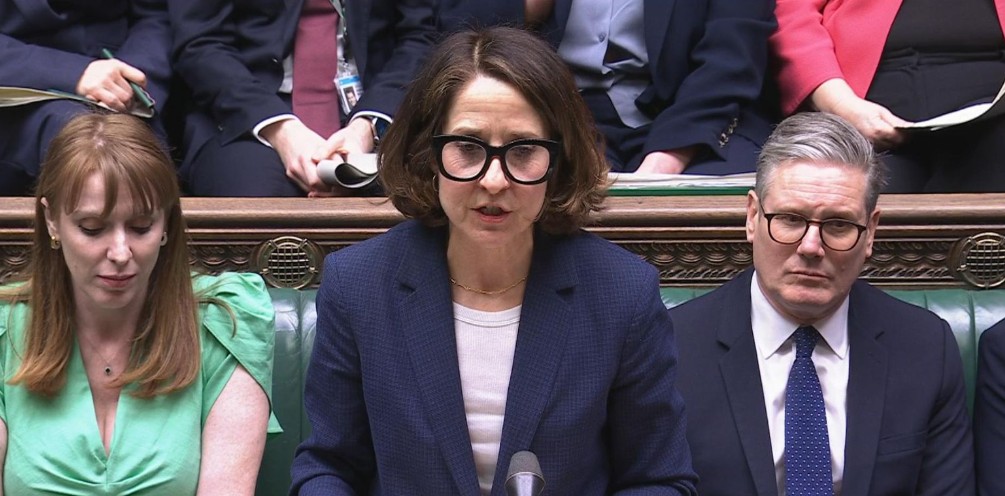
Liz Kendall the Secretary of State for Work and Pensions had already made major concessions in the face of a huge backbench revolt of Labour MPs. She passionately moved this new compromise as an essential part of the government’s plans get more people back into work (and, of course save millions of pounds of government spending).
Then, as it became clear that even this compromise was likely to fall, her junior Minister, Sir Stephen Timms, chose to make a major announcement, incredibly, by an intervention in a speech of another MP in order to declare that the entire clause relating to changes to entitlement to PIP benefits would be junked at the committee stage if this Bill got through the second reading that evening.
MPs were left stunned and bewildered, and not at all sure what they were being asked to vote for. One MP, Mary Foy (Durham), popped out to eat a banana and came back to the chamber to face a drastically different Bill. In the event, in spite of this humiliating climb-down by the Starmer leadership clique, 49 Labour MPs still voted against the government and the Bill.
Nauseating
One of the most nauseating aspects of this whole business is the government trying to present it as a moral mission – a valiant campaign to help more people get jobs and increase their living standards. The truth is that the whole idea for these cuts to benefits for the sick and disabled came as a panic measure introduced by Reeves, without any of the most basic consultation with the groups affected, in order to save money and meet her “fiscal rules”.
Having signposted the proposed cuts, Reeves then made them even more harsh, purely because of a less favourable report on her “fiscal headroom” from the Office of Budget Responsibility (OBR) to which she had voluntarily tied herself. It had nothing to do with morality.
The proposals were to drastically cut back on eligibility for the PIP payments, restricting it to those who score a 4 in any single section of an assessment of what that they can do and what they need, whereas it had previously been available to those who score 2, for example, over a number of different ability categories, to reach the necessary 8 points.
PIP is not means tested and many claimants are already in work. PIP payments, in fact, help them to stay in work, by providing assistance for a range of needs. So all the hand-wringing about generations lost to the labour market is so much piffle, when applied to PIP. The proposals would have meant 370,000 disabled people no longer qualifying, and a further 430,000 future recipients getting less than they would previously have been entitled to. The average loss would have been around £4,500 a year!
The basic rate for all Universal Credit (UC) claimants was to rise to £106 a week, which was good news. But the health top-up of Universal Credit of £97 was to be frozen. For new claimants it was planned to be cut to just £50 by 2026-7, and then frozen at that level. Young people between 18 and 22 would get no health top up at all. Future UC claimants stood to lose around £3,000 per year.
Forced into poverty
The government’s own figures suggested that 250,000 people would be forced into poverty by these measures, including 50,000 children, but others, such as the Joseph Rowntree Foundation, suggest it could be as many as 400,000.
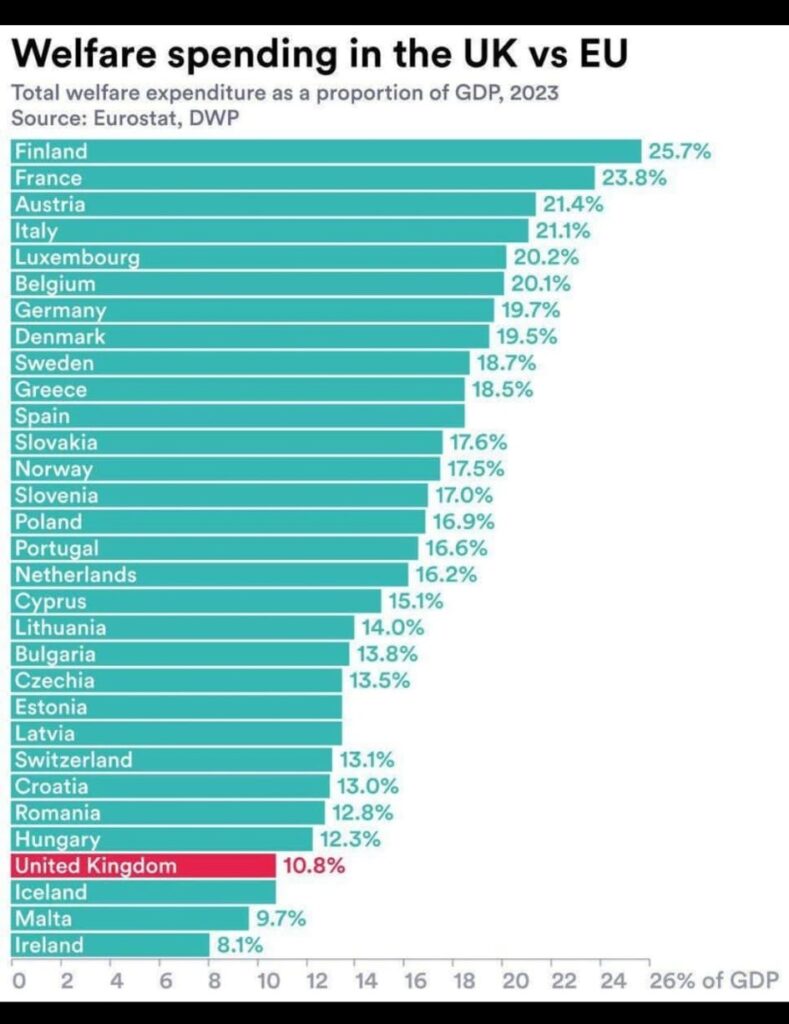
For a Labour government to have even been considering such changes is a disgrace, trying to save £5.5bn to balance the books at the expense of the most vulnerable in an attempt to stick to fiscal rules which even many bourgeois economists regard as too restrictive. In any case, benefits in Britain are among the worst in Europe. It is not true that life on benefits in Britain is a bed of roses.
And all this time, the incomes of the super-rich have been soaring – tripling or quadrupling over the last few years, especially during the Covid crisis, while the same crisis ruined the physical and mental health of many at the bottom of society.
It is true that measures were also announced to fund programmes of assistance to those on benefits, to help them find and keep jobs, but why should that be linked to a punitive cut to benefits? The clear implication was that many claimants were not really disabled or sick enough to “deserve” benefits – that they were somehow scrounging – yet there was no clear evidence of this. And where are the employers who are willing to make adjustments and install aids and adaptations to allow them to offer jobs to disabled people?
Much was made of the rise in mental illness in young people as a reason for claiming, yet this did not rise exponentially, but broadly in line with other increases in disabilities. And why is it so hard to imagine that there has been an increase in mental illness caused by the stresses of modern capitalism, and the lack of hope of this generation?
Economy and society fundamentally broken
In his speech against the bill, Clive Lewis MP (Norwich South), clearly outlined the desperate situation that forms the background of the mental health crisis. He pointed out that the welfare bill is rising, not because people are lazy but because the “economy and society are fundamentally broken”, after 14 years of “cuts and dehumanising and punitive changes” introduced by the Tories as a “brutal disciplining of the workforce”.
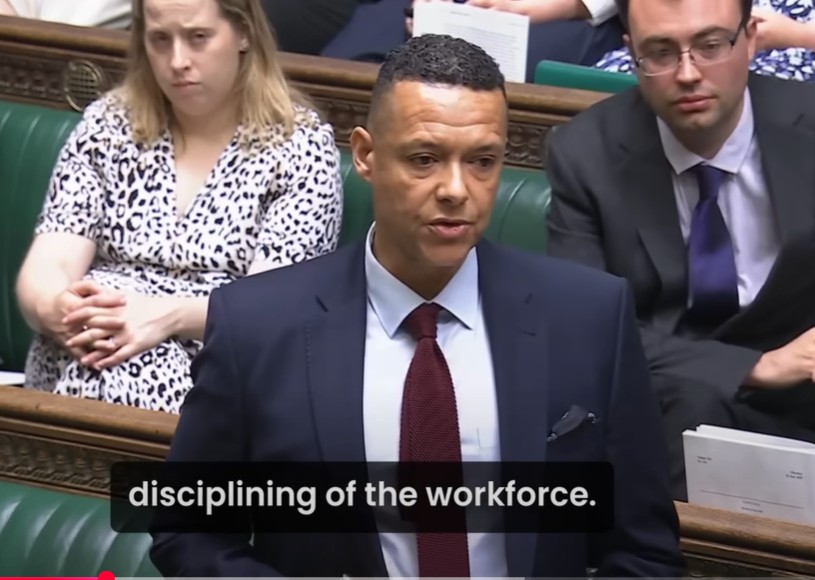
[photo – still from BBC Parliament channel]
Insecure jobs and poverty wages subsidised by in-work welfare benefits, have left many “drained and burnt out.” The cost of living, food and energy costs, insecure housing and soaring rents, and monopoly price gouging have added to the pressure, and the weakness of trade unions has hampered any attempt by workers to fight back.
But the Labour leadership drastically miscalculated the mood of its own MPs. This is all the more remarkable given that a majority of them had been virtually hand-picked for their loyalty by the Starmer clique and their puppets in the Labour Party bureaucracy. Favoured candidates were ruthlessly slotted in to winnable seats and anybody with a shred of independence illegitimately ruled out in order to produce a House of Commons filled with spineless nodding dogs.
Yet so inept are Starmer and Reeves, and so arrogant, that they managed to provoke a rebellion among even these fainthearts. One of the most passionate and emotional speeches against the proposals was delivered by Marie Tidball MP (Penistone and Stocksbridge), who is, herself, physically disabled, and a disability rights campaigner. Yet it was she who had been chosen to introduce Sir Keir Starmer before his speech to Labour Party conference in 2023, in fawning and gushing terms, stressing his commitment to the sick and disabled!
Arrogant bullies
The depths of contempt in which new MPs were held by the arrogant bullies around Starmer is revealed by one quoted by the BBC, who said: –
“What did they think the job was? They all think they are JFK because they delivered some leaflets while Morgan [McSweeney] won them the election.”
Such attitudes are not the most effective ways to win support among your own MPs! The leader of the first rebellion, in the week before the vote, was none other than the moderate Meg Hillier (Hackney South and Shoreditch) an ex-minister and long-standing senior back bencher – chair of the prestigious Treasury Select Committee and former chair of the Public Accounts Committee.
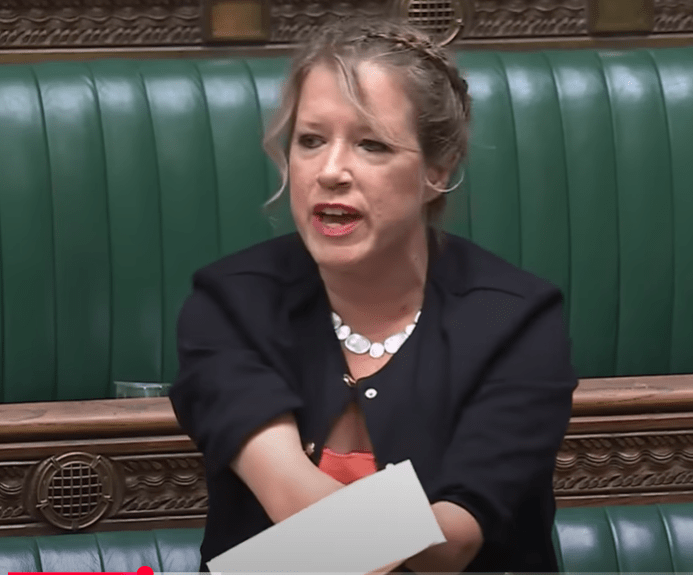
From fawning Starmer fan to passionate rebel
[photo – still from BBC Parliament channel]
Much to the astonishment and fury of Starmer and the clique around him she introduced an “amendment” to the bill that would have effectively killed it off. This was signed by a jaw-dropping 127 MPs from all sections of the Parliamentary Labour Party, including several other senior MPs and chairs of Select Committees.
Attempts to blackmail, shout at and threaten the rebels came to naught, as did frantic and humiliating phone calls from ministers sent out to rally the troops. So over the weekend Starmer was forced to amend the Bill such that existing claimants would be protected from any cut , and the health top up of Universal Credit would be uprated for inflation and not frozen. The savings were reduced from £5.5bn to £2.5bn – an enormous climb down.
Many of the rebels backed down, and it was thought that the Bill might just squeak through but the process had been handled so badly, that 42 MPs signed a further amendment tabled by Rachel Maskell (York Central). Starmer’s team and the whips realised that this rebellion, instead of being bought off, was actually growing, getting close to the 83 MPs needed to actually defeat the government in the House of Commons, even after the concessions. No less than 138 organisations of disabled people opposed the Bill, and this encouraged MPs to stand firm.
Reeves’s savings went up in smoke
In particular, they felt that it was absurd that a commission was promised, led by Sir Stephen Timms and reporting next autumn, to look into the whole way that disabilities were graded under PIP, yet the restrictions on who could claim would be voted through that Tuesday! That was why Timms got to his feet to drop a bombshell near the end of the debate. All the changes to PIP for new claimants, section 5 of the Bill, would be dropped completely. All of Rachel Reeves’s proposed savings went up in smoke.
Even now, more left-wing Labour MPs, independents and Greens are supporting Richard Burgon’s amendment in the committee stage of the Bill, to stop the halving of the health top-up of Universal Credit for new claimants. The whole Bill is an attack of some of the poorest in society and deserves to be completely thrown out.
It is undoubtedly the case that Starmer is remarkably devoid of any political talent, understanding or charisma. It is also true that he has around him a truly revolting and arrogant bunch of officials who have been much more motivated by crushing the left, some bearing grudges from their factional disputes in the student movement, than working out what they would do if they actually won power.
All those years of fuming while Corbyn was leader did not lead to any policy platform that offered a way forward for the UK in the midst of a long capitalist crisis. They only plotted revenge against the “Trots” ie members of the party with any socialist instincts whatever.
While this makes their recent defeat all the more enjoyable, and you would need a heart of stone not to laugh, their weakness stems not mainly from their manifest personality defects but from their refusal to break from capitalism, indeed, their enthusiastic embrace of it. They have not properly understood the nature of the crisis, and think that if they can just be more efficient managers than Boris Johnson or Liz Truss they will somehow deliver enough improvements to worker’s lives to give them a second term.
Their only hope is “growth”, but they are tied to a capitalist class that only invests for profit, not for worthy social improvements. The price they will demand for investing in the productive economy is even higher profits than they have already squeezed out of workers, and out of the state itself in privatised contracts. Starmer and Reeves will have no option but to attack workers’ living standards again and again in the interests of profit, and they will be more than happy to do so.
This will inevitably bring them into collision with workers organised into trade unions, and eventually with wider sections of their voters and members. In the absence of radical socialist measures to take on the power of capital, and challenge their control, they will lose support of wider layers of voters and usher in a Reform government or a coalition which incudes them. The fight for socialist polices is even more urgent than before.
[Featured photo – l-r Angela Rayner. Liz Kendall, Keir Starmer]