By Jamie Green
The Cramlington Train Wreckers, a play by Ed Waugh, is a powerful story based around the Northumberland miners fighting to defend their livelihoods and communities. It describes the dertailment of a train on the main north-south east coast line at Cramlington in Northumberland, an area notable for its collieries.
The events relate to the derailment of the Flying Scotsman – which travelled between Edinburgh and London – during the great 1926 General Strike, what for miners was the great 1926 Lock-out, because they were literally locked ouit of their work, until they agreed to work longer hours for less pay.
The story in Ed Waugh’s play is told through the eyes of Bill Muckle, one of the eight courageous strikers who were later imprisoned for their part in the strike and the derailment. Waugh, used excerpts from Muckle’s 1981 autobiography and the play describes the background – and the battle lines drawn – leading up to the biggest conflict in British industrial history.
“With the railway workers, docks and other transport workers, the miners had formed the Triple Alliance in 1914, which by 1926 amounted to a combined membership of more than two million of the TUC’s 5.5 million members. Their watchword was “solidarity”. The mines, which had been nationalised during WWI to expedite production (surprise, surprise), were then returned to capitalists after the war”.
Muckle gives a view of an ordinary young man striking for his livelihood. He describes the dangerous and unhealthy working conditions of the mines, alongside the cramped and miserable living conditions in his daily life outside.
Like his fellow miners, he was facing an enforced 40% pay cut, so his was a struggle undertaken by all of the miners and their whole community. It would have been hard for anyone in this audience to walk away unsympathetic and untouched by Bill Muckle’s life.
Several challenging characters
The director of the play, Russell Floyd, also acted in the production, and shifted flawlessly between several challenging characters, with a catalogue of varying accents. His portrayals of mineowner Lord Londonderry and Winston Churchill and other minor, but crucial, characters, left the audience in stitches.
His duet with fellow-actor, Alex Tahnee, as two overly affectionate ‘toff’ siblings, and their rendition of I’m Alright, Jack (Tom Robinson) transcends the passing decades. The tragic tale has withstood the last 100 years. That great General Strike, as the play makes clear, was a revolution, and far from being a failure, it was betrayed.
The strike was deceived by key trade union leaders at national level, and 10,000 strikers were eventually arrested for their involvement in the strike – including the “wreckers”. A large group of miners were involved in the derailment, although they expected to derail a coal train, not a passenger train.
Although there were no deaths from the derailment and only one person slightly injured, eight miners were betrayed by locals and given a total of 48 years imprisonment between them. They were given heroes’ welcomes on release, though several did not survive long after their stint in squalid prison conditions. Those who had pointed the finger at them were ostracised in the community for the rest of their lives. The local community never forgot who were the heroes and who were the rats.
Muckle’s bracing and solemn delivery of, Solidarity Forever was echoed by the audience, both in volume and heart. The pits are no longer here, so for many of these working-class communities there is no central ‘anchor’. But the struggle remains and the work remains to hold onto the traditions. Waugh’s work is an accomplished, harrowing and vibrant story – and completely necessary 100 years on.
Watch interviews with some of the original miners involved and convicted for the derailment, here.
The Cramlington Train wreckers sold out across nine venues in the north east in 2025, and is still being shown in venues this year. More information about the play can be found here. Ed Waugh is also known for his other plays: Wor Bella, Carrying David and Hadaway Harry.
[This is based on a review article first published in Left Horizons, here following performances of The Cramlington Train Wreckers in the north east]
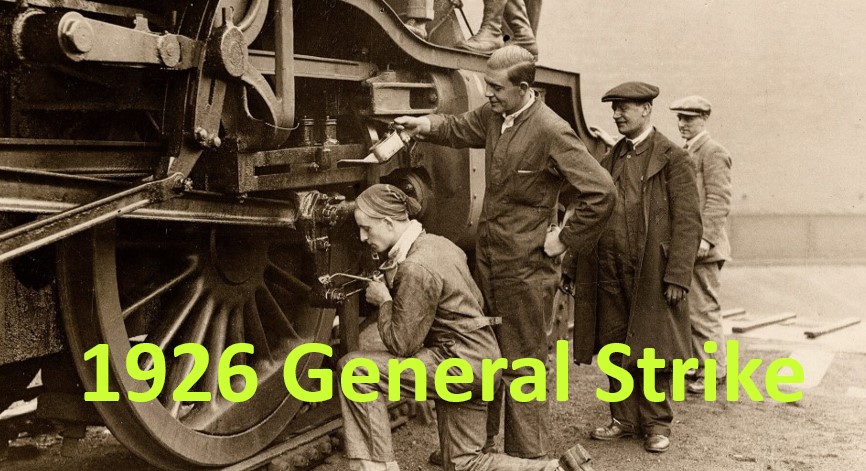
[Feature picture, from Wikimedia Commons, here, is not from Cramlington, but shows students being familarised with engines to enable them to scab on the strike].