
By Michael Roberts
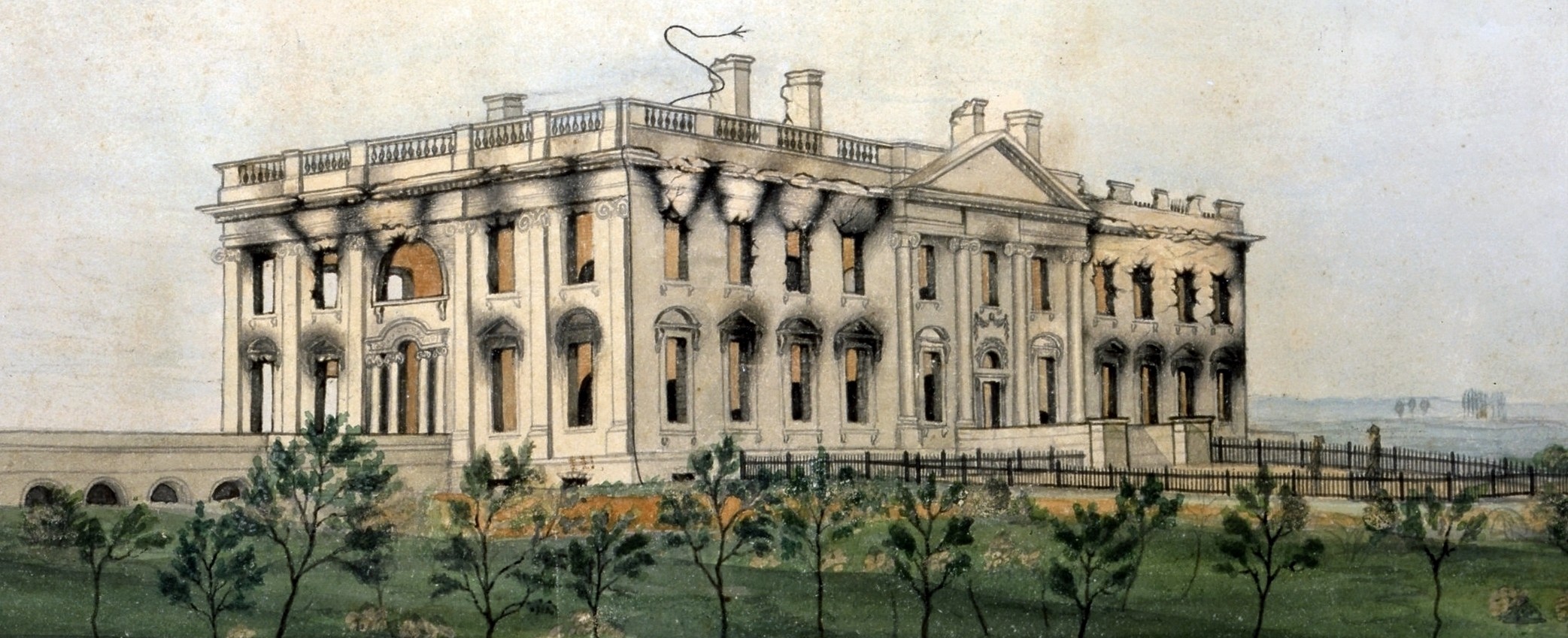
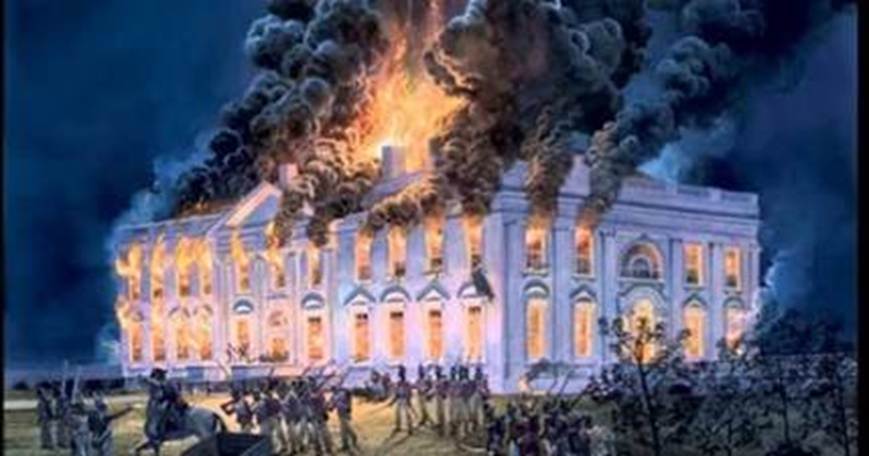
It took time after independence and the defeat of the British for the new United States economy to get going. War with Britain continued intermittently over Canada and culminated in a short British invasion and the destruction of Washington DC in 1812.
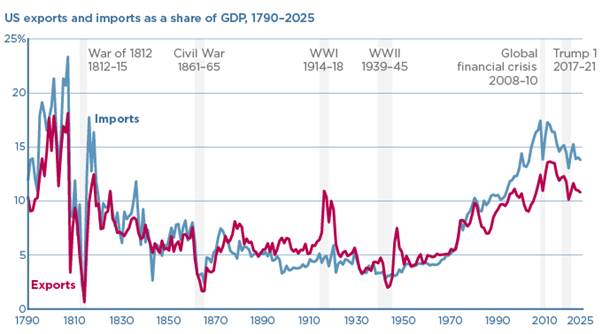
During this period, trade was volatile, rising to over 20% of GDP after the revolution before collapsing during the subsequent war with Britain. After that, however, the US economy began to expand rapidly. Trade as a share of GDP remained low only because domestic output surged as agricultural production exploded.
Expansion across the continent
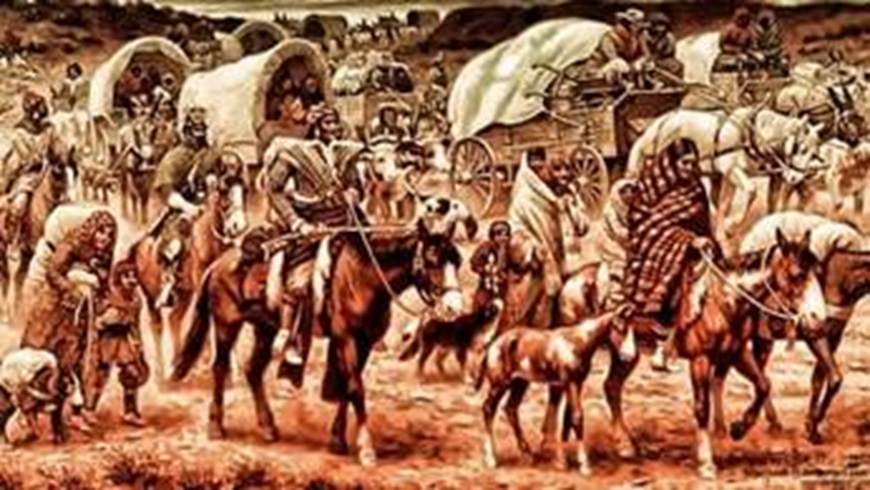
Under its early presidents, the US administration encouraged settlement in the West and South at the expense of Native Americans, who were driven further and further west. The US expanded its territory by purchasing Louisiana from France in 1803. Then, under the Indian Removal Act of 1830, Native Americans were forced to relocate, leading to the devastation of thousands on the ‘Trail of Tears’.
In 1823, President Monroe proclaimed his famous ‘doctrine’: the Western hemisphere would fall under American control, and the old European colonial powers were no longer welcome.
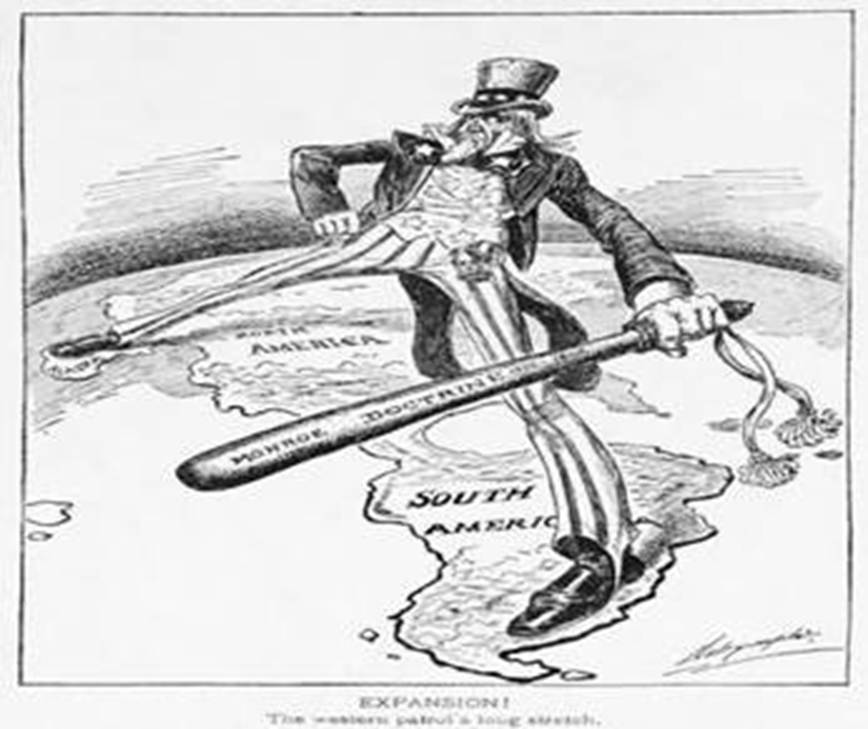
In 1846, the US expanded again by signing the Oregon Treaty with Britain, opening the way for further settlement. It went further still by launching a war against Mexican control of Texas, eventually taking over vast areas of the South-West all the way to the Pacific Coast.
Slavery and Industrial Ancestry
But one crucial factor held the United States back from becoming a major industrial and trading nation: slavery in the southern states. When the South tried to secede from the Union, the North launched a long and bitter war that lasted nearly five years. The eventual victory of the industrial North, with its much larger ‘free’ working population, laid the basis for a huge expansion of output.
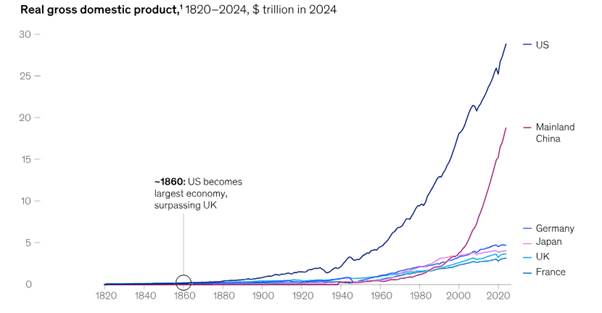
The Civil War shifted political power to the northern Republican Party, which introduced high tariffs to raise revenue and protect domestic industry. The US economy became more diversified, with a growing manufacturing sector that reduced the nation’s dependence on imported manufactured goods. By the end of the Civil War, the US had already become the largest capitalist economy in the world in GDP terms.
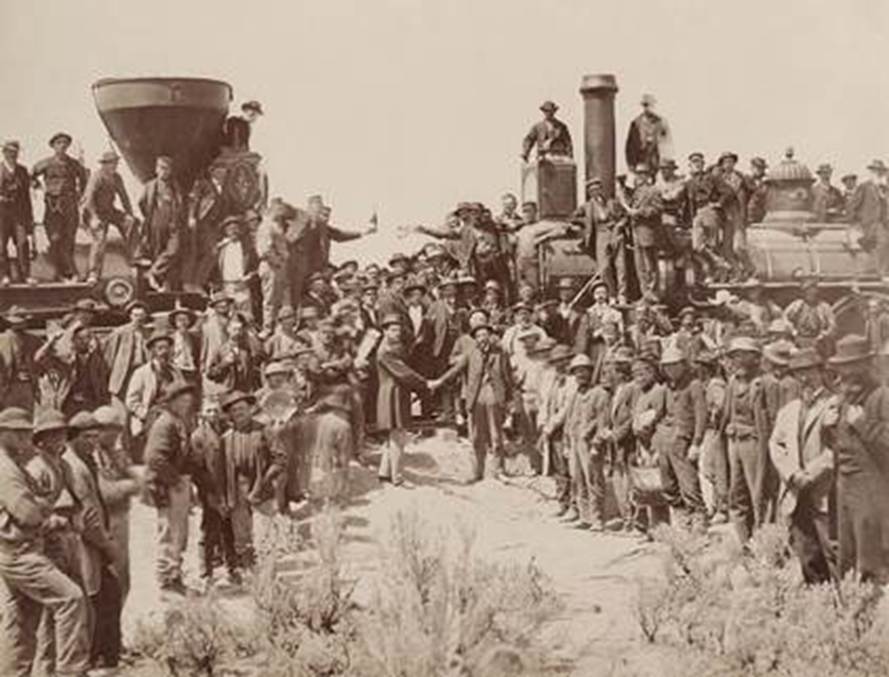
The railway boom after the Civil War, culminating in the transcontinental rail connection between East and West in 1869, was a huge step forward for domestic production and trade.
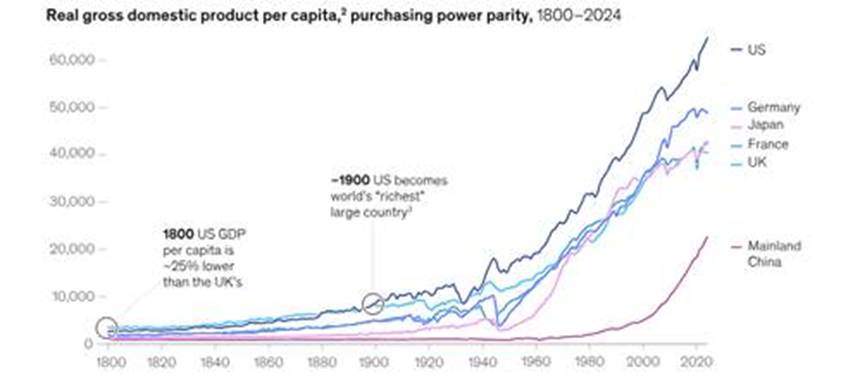
By 1900, US per capita income exceeded that of the then-current but declining hegemonic power, the UK. In just one century, American capitalists had overtaken their former masters.
From the 1850s, the United States took its first steps toward building an overseas empire in the Pacific. In 1867, it bought Alaska from Russia. Trade with Asia now became possible, and the US elite began to see the value of gaining control over the vast Pacific Ocean.
This new empire was driven by economic interests. Whenever there was a commodity boom, entrepreneurs raced into Pacific islands to set up farms and plantations or stake claims for mining. The first islands were annexed in the 1850s and 1860s, starting with Midway.
By the 1870s, American citizens were effectively running the Hawaiian government and steering it toward annexation. By the 1880s, the US government was directly administering Samoa and acting like a traditional imperial power alongside the British and German governments.
The late 19th century marked the transition from a continental nation to an established global power, a shift galvanised by the Spanish-American War of 1898. Using the unexplained explosion of the US battleship Maine in February 1898 as a pretext, the US declared war on Spain and quickly took over Cuba. Soon after, the Philippines, Guam and Puerto Rico were occupied, and the independent Republic of Hawaii was annexed by the US.
From the start, the construction of this American empire was riddled with racism. For some in the elite, building an empire in the Pacific was a problem because it could lead to “polluting and weakening our system of government by taking to our bosom a horde of Asiatic savages.” Others favoured a missionary approach. American control was necessary, they argued, because Filipinos were “children utterly incapable of self-government.”
The US role in the Philippines was a “divine mission” to establish a “system where chaos currently reigns.” Imperialists doubted the capacity of the Philippine people for self-government; they would “need the training of fifty or a hundred years before they shall even realize what Anglo-Saxon liberty is.”
Boom and depression
Although the US economy expanded throughout the 19th century, it did not do so steadily or harmoniously. The boom-and-bust cycle of capitalist accumulation produced a long depression from 1883 to 1897 (note, in the graph below, the stagnant growth of the 1880s).
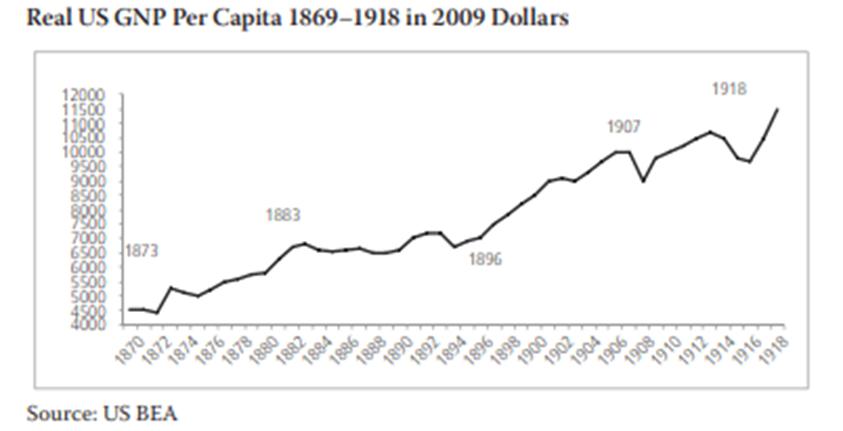
Even as late as 1880, nearly half of all American workers were still farmers, while only about 15% worked in manufacturing. Over the next 40 years, that ratio was reversed. By the 1920s, the US had become the world’s manufacturing powerhouse and financial centre. The American working class was now the largest in the world. But as ‘going West’ ceased to be an option for those unemployed or on low wages, trade unions formed and class struggles intensified in the cities.
The weakening and destruction of large parts of Europe and Asia during WW1 and WW2 put the US firmly in the driving seat of global capital. By 1945, the US was dominant in manufacturing, finance and military power, although only the Soviet Union could rival the latter. The US controlled the post-war institutions established at the Bretton Woods meeting, including the UN, the World Bank and the IMF. The world entered a period of ‘Pax Americana’.
‘Pax Americana’ meant world peace only on America’s terms: the ‘Cold War’ continued against the Soviet Union, while the US intervened to stop leftist governments from gaining power not only across South America, but also in the Middle East and Asia — though not always successfully, as the war in Vietnam proved.
Beginning of relative decline
Indeed, that ignominious defeat coincided with the beginning of an underlying decline in America’s economic power: first, with the rise of European industry from the ashes of war, and then with Japan’s meteoric industrial revival in the 1970s.
The dollar began to lose its near-total dominance in world markets and was devalued in 1971, as US manufacturing declined and shifted overseas in search of cheaper labour. The Vietnam disaster led to the economy running trade deficits and the US government running budget deficits for the first time since WW2. The profitability of capital had begun to fall, and the Golden Age of US investment was over.
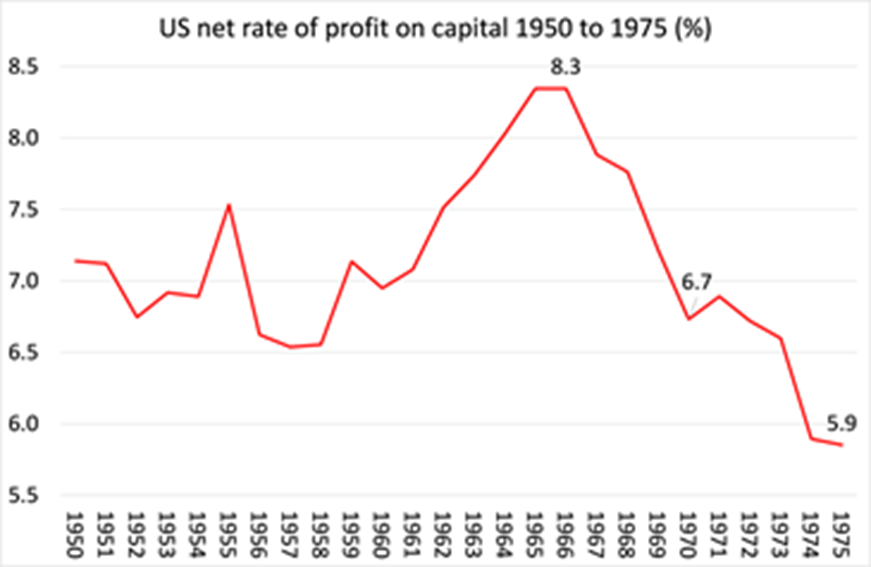
The fall of the Soviet Union in the early 1990s was supposed to give US imperialism complete control forever. It would be ‘the end of history’. Ironically, it marked the start of US decline in the face of an even stronger new economic rival: China.
In the third part of this story, I shall cover the current threat to the US global empire, generated first by weakness within the domestic economy and second by emergent rivals without — not unlike the decline of the ancient Roman empire after the 2nd century AD.
From the blog of Michael Roberts. The original, with all charts and hyperlinks, can be found here.
The feature image for this article is a painting of The President’s House by George Munger, commissioned between 1814-1815. The image was taken from Wikimedia Commons and can be found here.