By Tim White
Ninety years ago, on the morning of July 17, 1936, a radio broadcast was sent from Cuerta, in Spanish Morocco, to mainland Spain, announcing a military rising against the Popular Front government that had been elected only six short months before. This revolt aimed to crush a revolutionary movement that had already begin. It was the starting point of the Spanish Civil War.
In Morocco, General Franco had assumed command of the Spanish army’s ‘Foreign Legion’ and its regiments of Moorish (ie Moroccan) troops. The radio broadcast announcing the revolt was short and to the point: calling on the army on the mainland and its supporters on the far right, the Church and the capitalist class, to join a crusade against the ‘godless’ supporters of the Popular Front.
The uprising of the generals did not come out of a clear blue sky. It was anticipated after the election of the Popular Front and the huge upsurge in revolutionary fervour that it had triggered. In response, the Spanish fascists – the Falangists – had become increasingly aggressive and they were usually armed and facilitated by local police and the military.
In Madrid, carloads of Falangists, armed with automatic weapons, tried to sow terror in working class areas. There was an abortive bomb attack on Largo Caballero, leader of the left in the UGT (the general union of workers, the main trade union federation). Many local left and trade union leaders were assassinated. “Practically everyone could see”, Pierre Broué writes in his book, The Revolution and the Civil War in Spain, “that it [the Spanish army] was preparing to intervene and seal the fate of the revolutionary movement once and for all.”
There is no doubt that the Popular Front government, dominated at that point by right-wing socialists and Republicans, were aware of the connections between the army and the Falangists and that the former were preparing to act. But they chose to do nothing – in reality, it was less than nothing, because they denied that ‘their’ army could be ‘disloyal’.
When left leaders of the socialist movement and the trade unions issued public warnings about an approaching army revolt, the government had denounced them, for their “stubborn, criminal intent to undermine the Army”! As Pierre Broué writes, “The feebleness of the steps taken against the [army] conspirators and the government’s avowed intention to close its eyes to them undoubtedly succeeded in rallying many hesitant officers to the coup de force.”
Leaders could have anticipated and prepared for the revolt
Had the Popular Front government an ounce of revolutionary initiative, they could have easily prepared, by mobilising and arming the working class and arresting likely rebels. The whole course of future events would have been different. But the leaders of the Popular Front were wilfully blind to the possibility of reaction and when it happened they even tried to suppress the news, although it got out by a thousand channels.
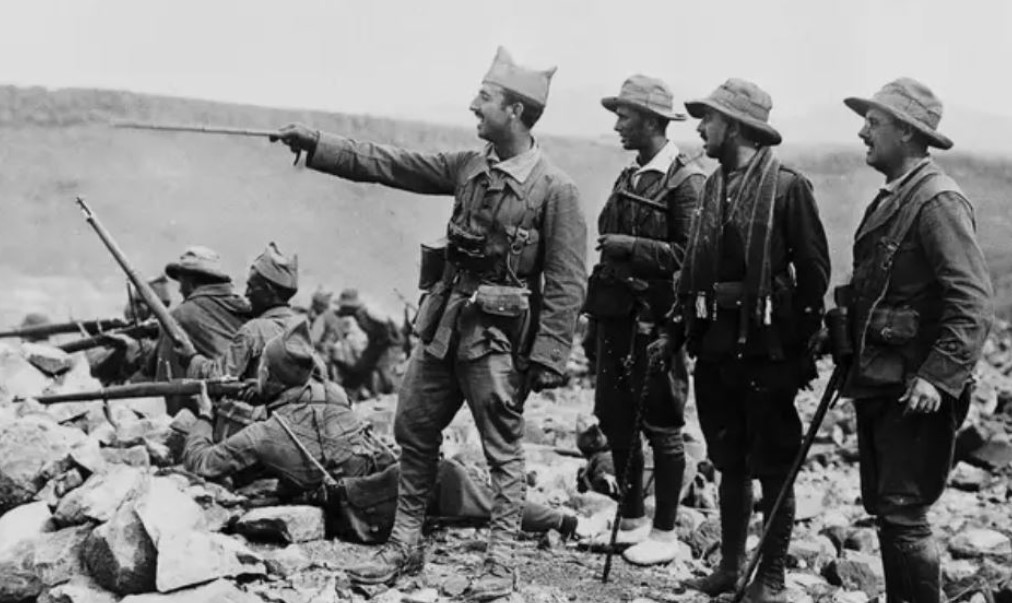
From the point of view of the pro-capitalist elements – which was the majority of the Popular Front government – trying to hush up the news of the coup made sense, because they, too, feared a working class already restless and ready for battle. But to their horror, Francos’s coup, far from stabilising a weak government around Spain’s effete capitalist class, had the opposite effect: it lit the blue touchpaper, and started a full scale social revolution. The Civil War had begun.
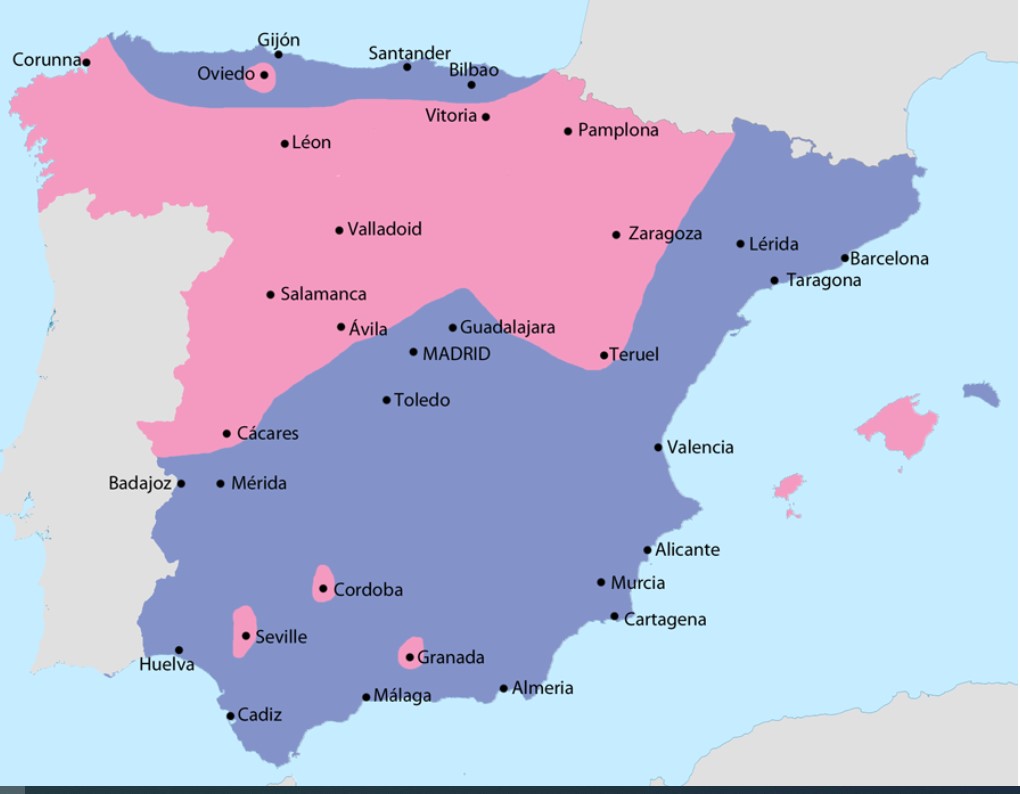
Army units on the mainland quickly followed the uprising and rose against the government, deploying into nearby towns and countryside. They made important gains in many areas, capturing, for example, the city of Seville, which had been a stronghold of workers organisations.
Franco’s troops, aided by the Civil Guard, rounded up and brutally murdered all the local leaders of the trade unions, the UGT and CNT, as well as local socialists, communists and anarchists. These murders numbered in their tens of thousands and they were a prelude to a far wider White Terror, during and after the end of the war in 1939, in which hundreds of thousands of socialists and anarchists were murdered. “Mass executions of workers and militants”, Pierre Broué writes, “sometimes led the hesitant and half-hearted to submit in advance.” Not that the forces of reaction showed any mercy.
The only part of the military that did not support the coup was the navy. As is often the case (for example in Russia, in 1917 and in Germany in 1918), the daily conditions faced by sailors more resembled the lives of workers rather than soldiers, and they are correspondingly more militant.
On nearly all the ships of the Spanish navy, there were small groups of anarchist or socialist sailors. Broué again: “Everywhere Sailors Committees were in control; after executing the majority of their officers, they forced those who remained to serve their orders”. This was important in the early weeks of the war, because the rebels, based in Morocco, were unable to land troops on the Spanish mainland. “Instead of ensuring communications and the arrival of reinforcements from Morocco, the warships prevented them from landing.”
Asturian miners’ ‘dynamite’ battallions
On the other side of this class conflict, workers and peasants took revolutionary initiatives in many areas, holding back the army and disarming police and Civil Guard units where they could. In many cases, workers found arms and laid siege to army barracks.
In Asturias, the miners already knew and hated Franco after he had played a leading part in the bloody suppression of the 1934 workers’ commune there. Faced with the general’s revolt, the Asturian miners quickly outfitted an armoured column, the Dinimeteros (literally dynamiters) to march on Madrid to assist.
In Barcelona, another key organisation of the Spanish working class, the anarchist CNT union, began to organise the workers’ militia that was to become the famed Durruti column led by the anarchist, Buenaventura Durruti. This formation was to march towards the Aragon front where it was to play an important role.
In Spain’s two most proletarian cities, Barcelona and Madrid, workers took to the streets and clamoured for arms. All over Spain, where it was possible, they began to fight the Francoist coup without waiting for ‘permission’ from the cowardly, skulking liberals in the government. Within two days, barricades were thrown up around many military barracks on the mainland.
The key to the fighting in the first couple of days lay less in the actions of the leaders of the workers’ organisations – and even less in the inaction of the government – so much as in the bold initiatives taken by workers at a local level. They rose as one, finding what arms they could by improvising and disarming police.
Within three days of the declaration of the coup, by July 20, the main lines of the ‘front’ were established, with Franco’s army in control of an east-west belt across northern Spain, and the government – in reality the workers’ organisations – in control in the south and west. (See map)
There are many important lessons that socialists should learn on the start and the developments of the Spanish revolution and civil war, not least the lack of preparation on the part of the workers’ leaders before the coup of July 17.
In reality, a revolution had been simmering for a long time in Spain, like a pot of soup, bubbling away on a hot stove. Since the downfall of the Primo de Rivera dictatorship in 1928, and King Alfonso in 1930, the weak and ineffective Spanish capitalist class had been sitting astride the volcano of the unachieved hopes and aspirations of the Spanish people.
The earlier republic declared by the socialists and liberals (1931-33) had come and gone, its two years in government, marked by failure. At the root of its failure was the absence of any serious attempt to resolve the desperate land hunger and literal starvation of Spanish peasants, by carrying through land reform.
Spanish capitalism was always weak, tied by a thousand threads to a semi-feudal nobility and the mediaeval church, and so it was incapable of fulfilling its historic mission by launching any land reform or laying the foundations for a modern capitalist democracy.
In common with their class brothers in Russia and China, the Spanish capitalists had long ago made their peace with landlordism. Like in Russia and China, Spain confronted the tasks of what Marxists would describe as an uncompleted bourgeois-democratic revolution.
In Russia this question confronted the Russian social democrats in 1905 and 1917. The Marxist movement there, led by Lenin, rejected any compromise with the liberal capitalists. He founded the Bolshevik party which was ultimately successful in wresting away the leadership of the working class from the liberals and opportunists of the left.
At that time, Trotsky put forward his celebrated theory of the ‘Permanent Revolution’, which correctly argued that the working class would not only lead the revolution, but having done so, would continue on to the socialist revolution.
This is exactly what happened in October 1917, when the Bolsheviks, now led by both Lenin and Trotsky, carried through the establishment of the world’s first successful socialist state, in alliance with the Left Socialist Revolutionaries. This, in turn, provoked a revolutionary wave across post-war Europe.
By the mid-1920s, the Russian Communist Party was already becoming ‘Stalinised’, ignoring the lessons of the October Revolution. In 1927, a revolutionary wave began in China, similar in terms of the social weight of the working class, to Russia. China was another country facing a bourgeois-democratic revolution, but, with a weak and impotent capitalist class, the initiative was being taken a revolutionary movement of workers and peasants.
The young Chinese Communist Party (CCP) could have emulated the Bolsheviks ten years earlier, with the small industrial working class providing the political leadership for a workers and peasants revolutionary movement. But, unfortunately, the CCP followed the fatal advice given by Stalin to form an alliance with the Chinese capitalist class – or more correctly, its ‘shadow’ in the form of the Kuomintang nationalists – rather than striking out with the independent class-based approach that had succeeded in Russia. This disastrous advice led the 1926-27 Chinese revolution to a bloody defeat.
The same lessons were raised ten years later in Spain, as the right wing of the socialist movement, instead of leaning on the strength of their own working class, cast around for allies among the ‘liberal’ pro-capitalist parties. Their opportunism gave its colouration to the Popular Front government and the Republican government during the Civil war.
Spanish liberalism, the supposed ‘ally’ of the workers, was linked by its past history and its whole outlook to the weak capitalist class and to landlordism. Unfortunately, the Spanish Socialist Workers’ Party (PSOE), educated in the spirit of class compromise and reformism, went into an alliance with the liberals.
This meant that the PSOE failed to take a golden opportunity to change society through the social revolution that was unfolding in front of their eyes. It eventually resulted in a bloody defeat of Spain’s first Popular Front.
Hitler’s triumph in Germany and Mussolini in Italy
When the Popular Front government was first elected, from February 1936 onwards, the working class had gone onto the offensive. The modest government program was achieved in days, not by parliamentary arithmetic, but by the actions of workers in the cities and by the movement of peasants and agricultural workers in the countryside.
Workers who had been blacklisted during the ‘two black years’ of 1934-36 were marched back onto their jobs by their work colleagues while scabs were booted out. Those still incarcerated were released as prison gates were torn down.
From March 1936 up to July 17 there had been a steep rise in strikes in industry, and in the countryside, peasants had begun to seize land from landowners and from the Church. Political assassinations of both right and left were taking place daily. The capitalist class, and their allies the landowners, took fright and, abandoning any pretence of ‘democracy’, enthusiastically supported the pronunciamento of Franco in July.
Most of the capitalist class defected to Franco
Most of the capitalist class defected and supported Franco. Those ‘liberals’ who remained in the government of the Republic represented only themselves, in reality a ‘shadow’ of a capitalist class. Many of these, like many of the generals who remained ‘loyal’ to the Republic, were later to stab the Republic in the back and betray it at crucial moments during the war.
When the coup was first announced, the liberals even attempted to negotiate with the rebels, even while they tried to silence the newspapers of the left. But the workers were having none of it, and they clamoured for arms.
The city of Seville was only taken by the army because here the workers had waited for their leaders to ‘sanction’ action against the rebellious forces of the state. That fateful hesitation ended up with them being rounded up by the rebels.
In most of Republican Spain, the state apparatus collapsed after the coup. The police, the Civil Guard and the army were in control in whole regions, but elsewhere what Engels described as the core element of the capitalist state: the “armed bodies of men”, had disappeared (or been eliminated) to be replaced by worker militias.
These militias could have been the embryo of a Spanish Red Army, but unfortunately, the right wing leadership of the PSOE, the UGT and, surprisingly, the anarchists of the CNT/FAI, (The National Labour Confederation/Iberian Anarchist Federation) had illusions in the liberals and looked to link up with them in the Popular Front. The Stalinist Communist Party (CP) was among the strongest disseminators of such illusions. They were illusions, we might add, that the rank and file of the workers’ movement did not share.
In the end, it was this rotten alliance with liberalism in the Republican government that was to hamstring the revolution and at the centre of this was the Communist Party, which on orders from Moscow, strangled all the revolutionary elements of Republican Spain, in defence of a capitalist state.
That strangulation, for reasons linked to the purges in Moscow and the consolidation of the Stalinist state in Russia, we shall explain in later articles. But it included the kidnap and murder of leading elements of the left and the outright suppression of other workers’ parties.
As a revolutionary workers’ government the Republic could have crushed Franco. But as a capitalist Republic – rolling back land reform, refusing to nationalise industry, and assassinating leaders of the left – it was doomed to defeat.
Indeed, Franco’s armies included peasants who could have been won over, but they were disillusioned with the failure of the Republic to push land reform to the fore. The rebels always retorted to any appeal from the republican forces with, “what did the Republic give us to eat?”
Franco’s army included crack Moroccan troops, and had the Republic offered independence to Spanish Morocco – which they never did – it could have undermined the morale of these troops. Abd al Krim, a Moroccan revolutionary leader, even offered to raise a rebellion amongst Franco’s Moors, in return, not for independence but mere autonomy. Yet the republican government refused, for fear of upsetting the French Bourse and French colonialism in north Africa.
Two roads open
In the end, there were only two roads open to the Spanish workers after July. Either a revolutionary struggle that would have ignited the working class of the world and undermined Franco’s army, or the course dictated by the liberal government of the Republic, backed by the Stalinists, and dooming Spain to a 40 year nightmare of reaction. There was no shortage of determination and heroism by Spanish people to go along different course, but it was not to be, because of a lack of revolutionary leadership.
The struggle of the Spanish workers, especially in the first year of the war, when the revolutionary fervour was at its strongest, was an inspiration to workers across the world. Thousands joined the International Brigade to fight against the fascists, including socialists and trade unionists from Britain and others fleeing fascism in Germany and Italy. We will deal with this in a future article. In many battles with the fascists, the International Brigades played a decisive role. We will deal in future articles with other important elements of the civil war and key events.
After July 17, 1936, it was to take three more years and a vicious civil war to smash and defeat the Spanish workers. Up to 1936 and for some time afterwards, the organised socialist movement in Spain had every opportunity to build a revolutionary leadership with the same clarity of purpose and determination as the Bolsheviks two decades earlier and with that to storm their way into the future. But that was not to be, and unfortunately, Franco’s revolt in July 1936 eventually led to his victory.
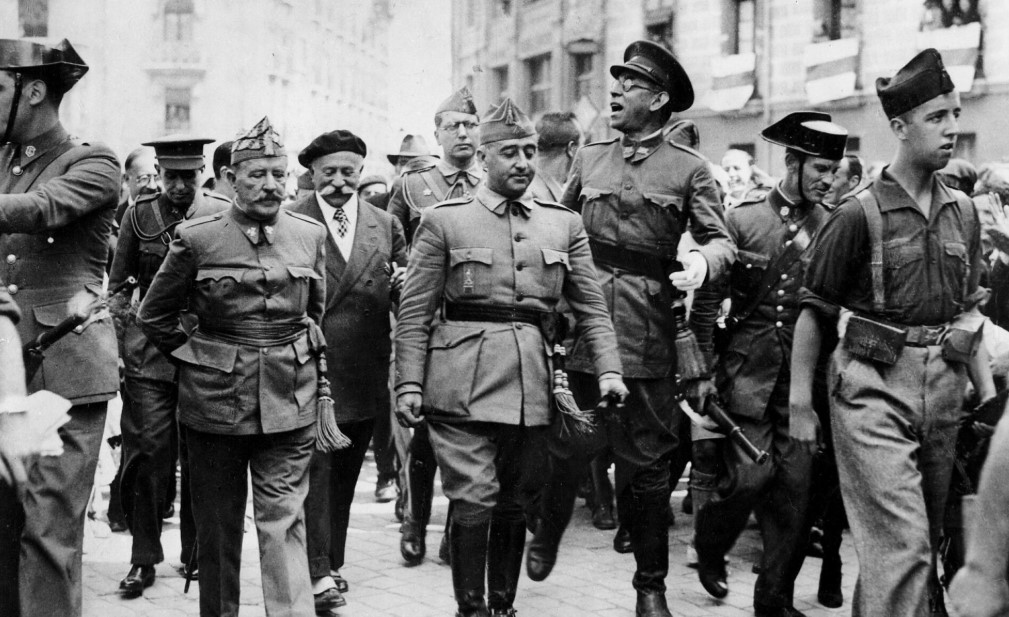
[Feature picture shows army generals Mola and Franco in Burgos. From Wikimedia Commons, here]
Other reading on the Spanish revolution and civil war:
Trotsky: The Spanish Revolution, 1931-39
Pierre Broue and Emile Temime: The Revolution and the Civil War in Spain
George Orwell: Homage to Catalonia
Felix Morrow: Revolution and Counter-revolution in Spain