By Ivan Antokhin
Last Sunday the Communist Party of the Russian Federation held its traditional memorial rally and march to commemorate the anniversary of the White House shooting on October 4, 1993. The event concluded with an Orthodox memorial service for those killed in those events—a familiar commemorative event. It seemed nothing out of the ordinary.
The beginning was routine. As usual, people gathered at the monument to the heroes of the 1905 Revolution, a square just down the road from the White House that had been the site of the insurrection in December 1905 and is named after the workers who were massacred back then.
The usual speeches were heard, especially Zyuganov’s mumbling, repeating the same words over and over again. The speeches of the other members in the entourage of the leader of the Communists of All Russia were also nothing special. However, a visibly lively atmosphere emerged in the crowd—unusual movements were taking place.
Who are these new faces? Where do so many young people come from? Who are they? It wasn’t difficult to see: young people approached us with interest, introduced themselves, and asked about our platform. Many of them were holding apples to show their support for the party Yabloko (which means apple in Russian). This is a liberal party that has attracted support by calling for an end to the war in Ukraine. Many of the young people who turned up had voted for Yabloko candidates or would have liked to vote but were too young or could not because many its candidates were blocked from standing.
Grandpa Zyu’s views didn’t captivate these newly politicised young people, but leftist ideas resonated strongly: after all, they not only conveyed the idea of freedom, but also expressed the aspirations of working-class youth, the same people known today as “zoomers.”
Growing tension in the crowd
Tension was already growing in the crowd and among the police. Election-related chants rang out that were given an added urgency following the arrest in Izhevsk of Dmitry Morozov, who had recently been involved in a protest against a rubbish-burning facility in his town, as well as being an election observer. The police conducted a raid at his flat and said that they had found illegal drugs there. “We want fair elections!” “Free political prisoners!” “Down with the Tsar!” “Down with internet censorship!” “Free Dmitry Morozov!”
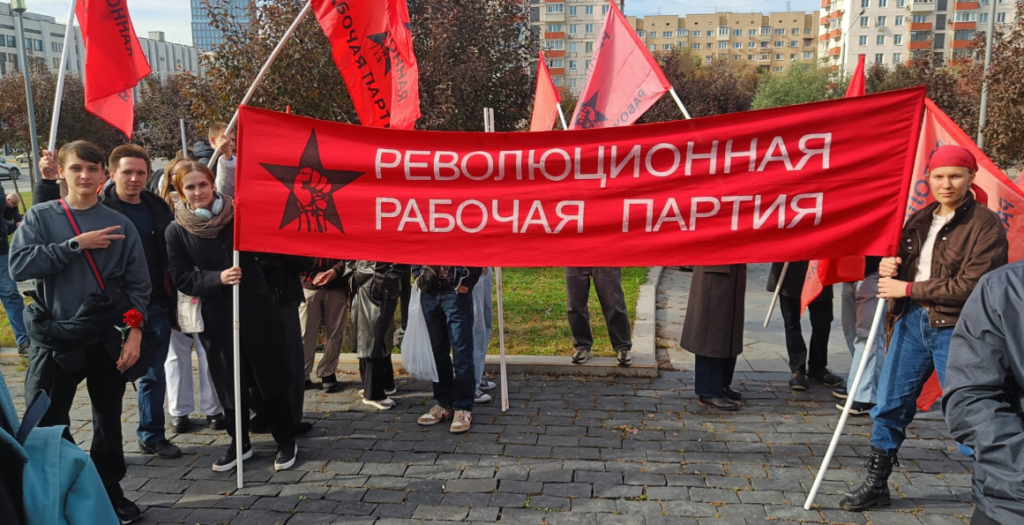
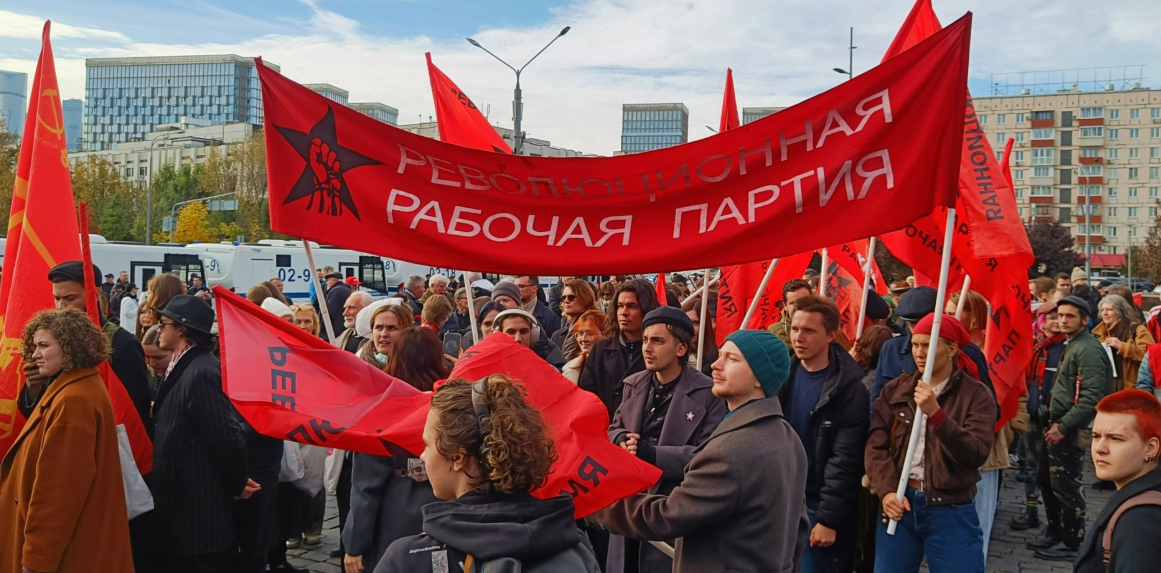
Several young people were detained, but this didn’t cool the tension. When the column began to form for the traditional march to the White House, the police declared their “authoritative” opinion: passing with flags was prohibited. The flags were furled, and the column moved forward. However, gradually more and more Soviet banners were unfurled, and the participants’ spirits grew bolder.
So a demonstration under the red flag marched through central Moscow. People chanted slogans that today seem radical – we’ve forgotten them so much – as well as new ones. Meanwhile, the police prepared for decisive action.
As the demonstrators approached the memorial dedicated to the fallen defenders of the White House 33 years ago in 1993, police intervened: the crowd was broken into pieces, people were haphazardly detained and thrown into police vans. But this did not break the spirit of the demonstrators. The young people continued to chant, “Down with the Tsar!” and did not retreat in the face of the law enforcement onslaught.
Noting the police aggression, elderly female Communist Party supporters, as if instantly transformed, displayed unexpected resolve. Under the slogan, “Don’t touch the children!” they resolutely opposed the arrests. Thirty-three years had passed since Yeltsin shelled the parliament, but, as the saying goes, “no one is forgotten and nothing is forgotten“—the grandmothers had forgotten nothing.
And all the while, an Orthodox memorial service was underway. The clergy read prayers, Zyuganov and his entourage stood nearby, and in the background the police continued to detain protesters.
A total of 65 people were taken to various police stations, including some of our young Revolutionary Workers’ Party activists. Those who remained free went to the stations to support their detained comrades. Support is a reliable foundation for uniting people in the fight against injustice.
Now the question arises: will the Communist Party of the Russian Federation be allowed to continue holding such protests? If an excited crowd came to one protest, they can go to another. And we will turn up too.
[Photographs by participants]