
By Andy Ford
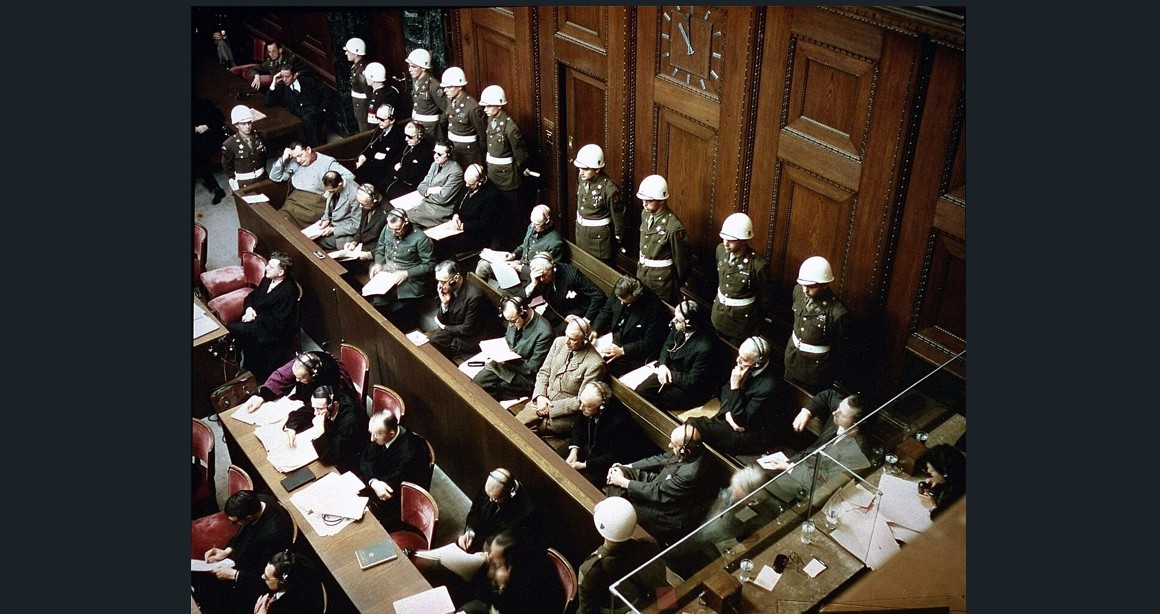
The Nuremburg Trials of 24 of the most prominent Nazis opened eighty years ago, in November 1945, and ran until October 1946. One of the 24, Martin Bormann, Nazi Party General Secretary, was tried in his absence. His remains were found in Berlin in 1972.
Four of those charged were military officers: Admirals Donitz and Raeder from the navy for their use of unrestricted submarine warfare, and Generals Jodl and Keitel for their complicity in massacres of Jews and civilians in the Soviet Union.
A further four had governed territories for the Nazis and had been responsible for horrific abductions, torture, mass executions and destruction of towns and villages – Hans Frank in Poland, Wilhelm Fricke in Czechoslovakia, Arthur Seyss-Inquart in Austria (and then the Netherlands), and Alfred Rosenburg in the eastern territories.
Two Nazi propagandists, who had normalised virulent anti-Semitism through press and radio broadcasts, were charged – Goebbels’ deputy Hans Fritsche, and Julius Sreicher, editor of the extreme hate-rag Der Sturmer.
Konstantin von Neurath and Joachim Ribbentrop were indicted for their role, as successive Nazi Foreign Ministers, in making and then breaking international treaties.
Walther Funk and Hjalmar Schact were in the dock for their role in creating the financial machinery that bankrolled Nazism, and other ministers – Albert Speer, Hitlers armaments guru, Gustav Krupp from the giant German arms manufacturer, and Fritz Saukel, who organised the supply of slave labourers across Europe – joined them in the dock for their role in the forced labour that kept the war going after 1943, at the cost of the lives of hundreds of thousands of prisoners of war and abducted civilians.
Einsatzgruppen death squads
Robert Ley, who dissolved the German trade unions into the Nazi ‘German Labour Front’, or DAF, committed suicide before the trial could begin. Ernst Kaltenbrunner was indicted over his leadership of the notorious death squads, who murdered up to one million Jews in Russia and Eastern Europe, termed the ‘holocaust by bullet’, in 1941-42.
Baldur von Schirach, boss of the Hitler Youth was charged for his role in sending 65,000 Viennese Jews to their deaths at Auschwitz. Rudolf Hess, who had been a prisoner in England ever since his mysterious flight there in 1941, and was Hitler’s deputy up to that point, was charged with signing off the Nuremburg laws and the takeover of Poland by the Nazi regime. Herman Goering, the highest-ranking Nazi to fall into Allied hands, was now to be the most prominent defendant.
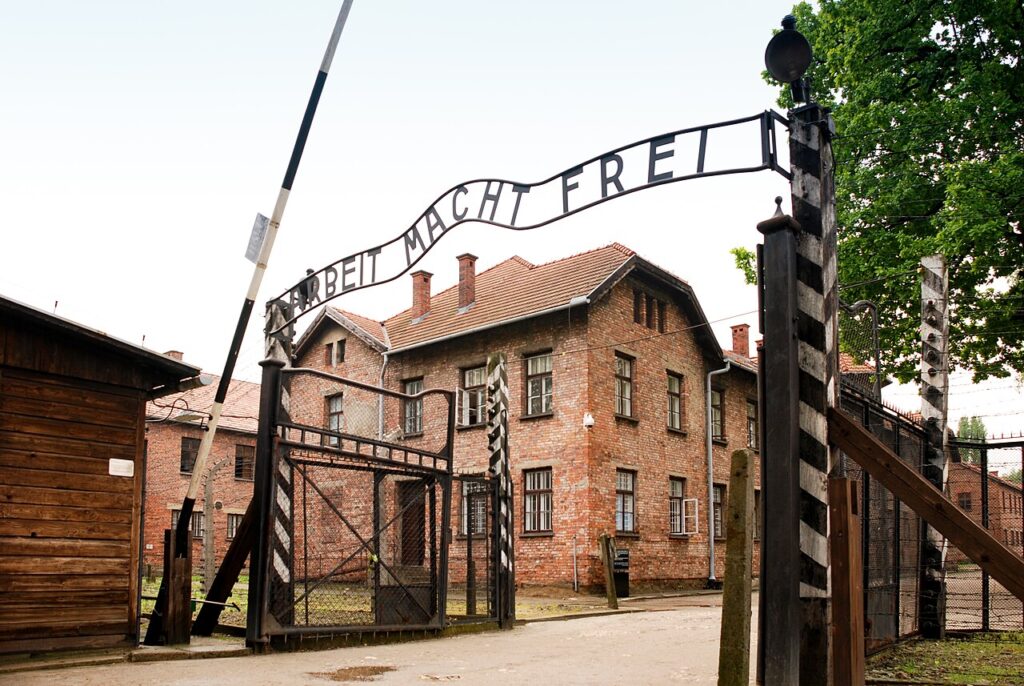
[photo – xiquinhosilva – wiki commons]
Lastly, Franz von Papen, who had actually placed Hitler into power all the way back in 1933 was charged for his role in key events that propelled the Nazis into their dictatorship, such as the dissolution of the elected social democratic government of Prussia in 1932. He was to be acquitted.
The selection of the 24 was quite a random process with little connection to the degree of war crimes and atrocities committed. For instance, of the 75 ‘Gauleiters’ who formed the bedrock of the Nazi state throughout its existence, 23 were imprisoned and then released (often after short sentences), 17 committed suicide, 11 simply disappeared, 4 were killed in action, and 3 are known to have escaped to Spain or Argentina. Only 17 were executed and 6 died in captivity. Only two of them were in the dock at Nuremburg.
Why were just two of Hitler’s generals indicted, when they had all participated in the starvation and murder of 3 million Soviet prisoners of war in 1941-42? Why was Krupp the only industrialist charged as they had all either bankrolled Hitler, or benefited from his destruction of the German trade unions, with a subsequent cut in wages of around 25%?
Crimes against peace
They were charged with ‘crimes against peace’ or ‘waging aggressive war’ (what other kind is there…?), and also with ‘crimes against humanity’ and, in some cases ‘war crimes’, defined as acts or orders contrary to the Geneva convention.
The British socialist newspaper of the time, the Socialist Appeal, summed the trial up in the following terms:
“The Nazi leaders are being tried for their lives at Nuremberg. Everything has been arranged to provide a dramatic spectacle. Workers all over the world, particularly German workers, will shed no tears for the criminals in the dock. They are not the only ones who should be there.
Prosecutors and accused shared joint responsibility for the horrors of Nazism and the war. The British imperialists, who feign horror at the Nazi leaders, carefully nurtured and supported them both before and after they came to power.
Sensational minutes and documents, demonstrating the ruthlessness with which the Nazis pursued their imperialist aims, are quoted and published the world press of the ‘Allies’. But it is certain that only carefully selected documents will in fact see the light of day. All documents [that] show the ‘democrats’ in an unfavourable light will undoubtedly be kept in the archives, if not destroyed altogether.
Little wonder that the Nazis have been refused permission to subpoena prominent British politicians as witnesses in their trial! According to official views “great international harm might be done if allied nationals of cabinet rank were questioned concerning diplomatic secrets”.
The diplomatic secrets, in reality horse deals, too foul in their commitments to see the light of day; the agreements with the Nazis, carried out behind closed doors at the expense of nations on the border of Germany, and in particular at the expense of the working class; the social intercourse between the leading capitalist ‘democracies’ and capitalist Nazis, and the identity of their class views, all these might be brought out into the light of day if the prominent witnesses were to be called. Hence in this trial through which the allies hoped to divert the hatred for imperialist war away from themselves and onto the shoulders of the defeated Nazis, only selected witnesses will be allowed to appear.”
[Socialist Appeal, December 1945]
Allied hypocrisy
And indeed, it was a simple matter for the Nazis to point out that their judges were guilty of most of the same crimes. Donitz and Raeder had indeed engaged in unrestricted submarine warfare in the North Atlantic, but so had the US Navy in the war with Japan. They each served 10 years jail time.
Similarly, the two bankers charged, Funk and Schact, could point to the fact that Britain had extended a very substantial loan to Hitler in 1934 to stabilise his regime, even though he had in effect defaulted on the rest of Germany’s loans at that time. Also, the Bank of England had turned over the Czechoslovak gold reserves to Nazi Germany following the Nazi takeover of the Czech lands in 1938. But that was when the western powers were trying to direct the Nazi threat east, towards the Soviet Union. The Nazis real crime was double-crossing them in 1939, making a last-minute alliance with Stalin, and then striking to the west. Schact was acquitted, and Funk served 11 years.
Wilhelm Frick and Rudolf Hess, charged with writing the anti-Jewish Nuremburg laws 1935, had actually modelled them on the ‘Jim Crow’ race laws in the southern states of the USA. Frick was executed, mainly for his role as ‘Reich Protector of Bohemia and Moravia’ from 1943-45, and Rudolf Hess was imprisoned until his death in prison 42 years later, in 1987. It is thought that the real reason for his long jail time was to prevent him revealing any secrets about his mission to Scotland in 1941.
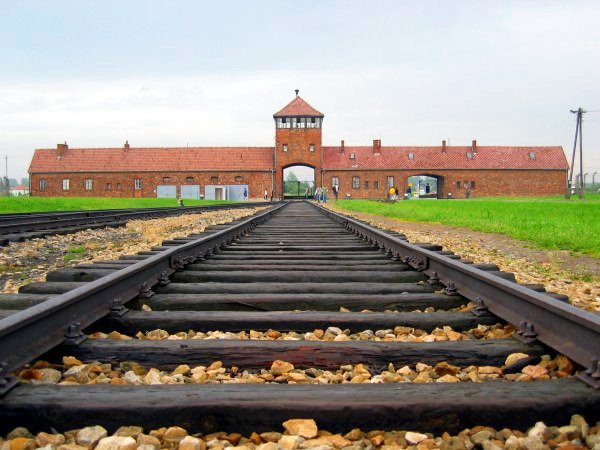
[photo – wiki commons]
Fritz Saukel, who had organised forced and slave labour in Germany’s industries, coal mines and agriculture in the most brutal fashion, was executed. And yet the same systems of forced labour had been implemented in many of the colonies of the ‘democracies’, the best known and most brutal being the Belgian Congo. Albert Speer, who had turned a blind eye to slave labourers working in barbaric conditions on his advanced technology ‘wonder-weapons’, such as the V2 rocket, served 20 years and went on to write his memoirs, telling how he went from Hitler’s architect to the evil genius of Germany’s arms production.
Crimes of Britain, France and Netherlands
The Nazi governors of the conquered territories, Hans Frank, Wilhelm Fricke, Arthus Seyss-Inquart and Alfred Rosenberg were executed for their campaigns of terror and torture in Poland, Bohemia and Moravia, the Netherlands, and occupied Ukraine and the Baltics. And yet their judges were at that very moment using the same methods to counter the Communist uprising in Greece, where the British Empire went so far as to rearm the Nazi collaborationist militias and deploy them in terror campaigns in the Greek mountains, burning villages, and hunting down and executing anyone suspected of sympathies with the communists.
The French were doing exactly the same in Vietnam, where they even re-armed Japanese prisoners of war to crush rebellious workers in the cities. In Indonesia, the Dutch engaged in a vicious but ultimately futile campaign to keep control of a country of hundreds of millions of people on the other side of the world, using all the tools of occupation employed by the Nazis in Europe – punitive expeditions, bombing of villages and execution of anyone who refused to name names. The Dutch government only apologised for this in 2013.
Goering in particular used the platform provided by the trial to tell the Allies a few home truths: –
“Of course, the people don’t want war. Why would some poor slob on a farm want to risk his life in a war when the best that he can get out of it is to come back to his farm in one piece? Naturally, the common people don’t want war; neither in Russia, nor England nor America, nor for that matter in Germany. That is understood. But, after all, it is the leaders of the country who determine the policy and it is always a simple matter to drag the people along… the people can always be brought to the bidding of the leaders. That is easy. All you have to do is tell them they are being attacked and denounce the pacifists for lack of patriotism and exposing the country to danger. It works the same way in any country.”
[from Nuremburg Diary by Gustave M Gilbert]
He also reminded them that the “entire diplomatic corps” had attended the Nazi rallies in Nuremburg throughout the 1930s.
Industrialised death camps – millions murdered
But although the socialists of the time pointed out the hypocrisy of the Allies charging and trying the Nazis for many of the same actions and methods they had employed in building their colonial empires, there was one aspect which was completely unique to the Nazi regime – the industrialised death camps constructed and operated all over Europe – which had murdered millions and millions of Jewish men women and children, for no other reason than their race. Hundreds of thousands of Romani people were also murdered.
There was shocked silence when the American prosectors screened a film shot in 12 different death camps [Nazi Concentration Camps (film) – Wikipedia] and the trial had to be adjourned after the film was shown due to the harrowing sights depicted. The Soviet prosecutors showed three films – The German Fascist Destruction of the Cultural Treasures of the Peoples of the USSR; Atrocities Committed by the German Fascist Invaders in the USSR; and The German Fascist Destruction of Soviet Cities. The Soviet films had footage from the liberation of Auschwitz and Maidanek and was considered even more disturbing than the American film.
At Nuremburg not a single Nazi defended the death camps and what went on in them. They either claimed to have no knowledge of them, or that they had no involvement. Even Julius Streicher, whose anti-Semitism was so extreme that even many Nazis considered him insane, said:
“These actions of the leader of the State [Hitler] against the Jews can be explained by his attitude toward the Jewish question, which was thoroughly different from mine. Hitler wanted to punish the Jews because he held them responsible for unleashing the war and for the bombing of the German population. . . . I repudiate the mass killings . . . in the same way as they are repudiated by every decent German.”
This was even though his racist tabloid, Der Sturmer, had consistently run made-up stories about Jewish men molesting innocent German girls, calling for their “extermination root and branch” as “weeds and vermin”. He claimed to be merely a ‘political author’.
Walther Funk broke down during the showing of the films, and von Schirach denounced the killings:
“It is the greatest, the most devilish mass murder known to history… The murder was ordered by Adolf Hitler, as is obvious from his last will and testament… It is a crime which fills every German with shame.”
Goering
Even Goering repudiated Hitler after the evidence of the death camps was shown. When asked if, having seen the evidence, he was still loyal to Hitler, Goering replied, “When the German people learn all that has been revealed at this trial, it won’t be necessary to condemn him: he has condemned himself.”
And yet he still claimed to know nothing of the detail of the camps, and said that Hitler had more than likely known as little about the atrocities as he had himself.
And that was probably true. They had both been happy to use racism to build political support, to talk about a ‘final solution to the Jewish question’ and to send millions to their deaths, but they had made sure they knew nothing of the details.
This was a constant theme during the Holocaust and attempted genocide of the Slav population of eastern Europe and Russia. When Germany invaded the Soviet Union, there were explicit instructions to keep the ordinary soldiers away from the pogroms and massacres. Instead, the Nazis created the Einsatzgruppen, literally ‘special detachments’, four groups of around 750 men each sent to the Eastern Front. Einsatzgruppen A, which covered the Baltic states shot around 140,000 people in the 5 months after the German invasion – about half the total of this ‘holocaust by bullet’.
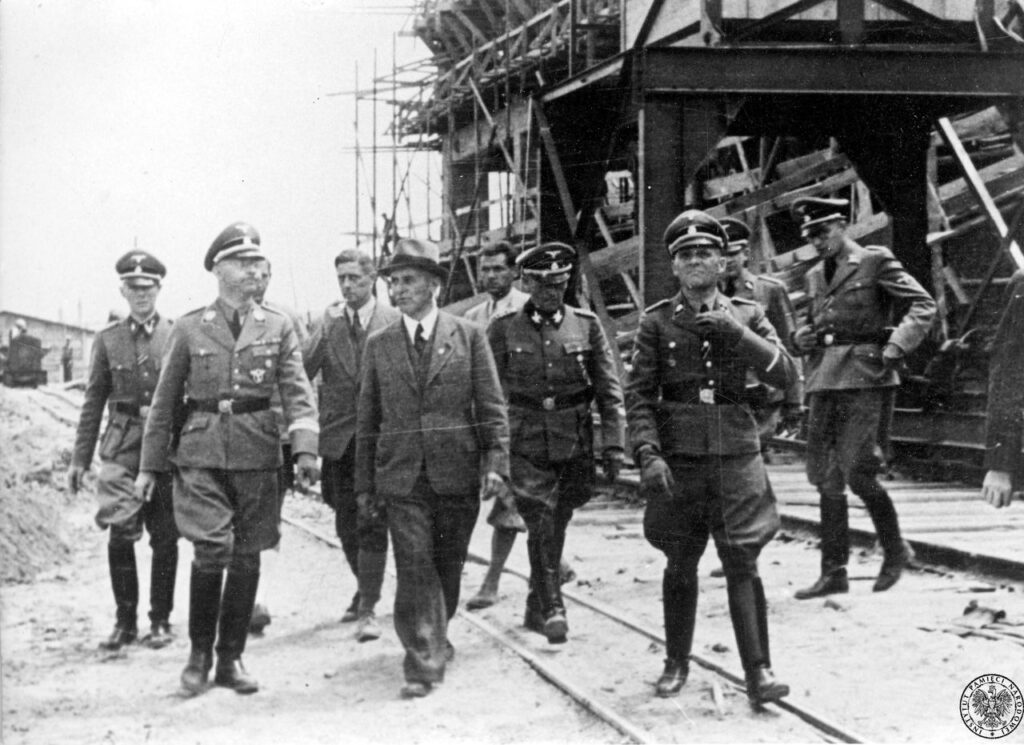
plant at Auschwitz – July 1942
[photo – Yad Vashem – Poland’s Institute of
National Remembrance. Wiki commons]
But even the hardened racists and anti-Semites recruited intro the Einsatzgruppen could not carry out such horrible acts of murder of defenceless women and children unscathed; alcoholism and mental illness began to surface and spread through the units. It was at that point that the Nazis started experimenting with gassing vans that asphyxiated their victims with carbon monoxide; but the Einsatzgruppen still had to remove the bodies at the end; a horrible ordeal. Himmler inspected one massacre and decided that it was too much for even the SS to take, it was “demoralising for the troops”. People brought up in a normal environment, even Nazis and racists, could not commit such acts, day in day out, unscathed.
Cognitive dissonance
It was then, from 1943 onwards, that the Nazi regime began setting up the death camps. The general population had to be kept away from the awful reality. The film Zone of Interest captures the political and personal cognitive dissonance necessary for the commandant of Auschwitz to do his ‘job’ in the day in the camp, and then come home to his family. Over the last two years, in Israel and Gaza, we have seen how people on one side of a fence go shopping, or out for fast food, or spend a day on the beach, while just a few miles away Palestinians are starving and children are being torn to shreds by shrapnel.
The charge of ‘crimes against peace’ was defined at Nuremburg as “planning, preparation, initiation, or waging a war of aggression, or a war in violation of international treaties, agreements or participation in a common plan or conspiracy for the accomplishment of any of the foregoing.”
We would have to say the biggest culprit in the years after 1945 has been the United States of America with their unprovoked invasions of Guatemala (1954), Grenada (1983) and Iraq (1991), to give just the clearest examples, or the manufactured incident in the Gulf of Tonkin that was used to justify aggressive war in Vietnam. Naturally no prosecutions have resulted.
The Nuremburg definition of ‘crimes against humanity’ was “Murder, extermination, enslavement, deportation and other inhumane acts committed against any civilian population, or persecutions on political, racial or religious grounds”. The modern definition is “systematic attack on a civilian population”.
Ironically, the Nuremburg Trials were supposed to show the rule of international law. But the decades since have shown that there is no such thing. The call was for “Never again!” and yet we look on in horror at modern crimes against humanity being committed with impunity. The reality is not international law but the rule of the most powerful, wealthy and well-armed states. Under capitalism, might is right.
[Featured image – Nazis in the dock at Nuremburg – Goering, Hess, von Ribbentrop on the left – front row. Photo Raymond D’Addario – wiki commons]











And what of today. Why isn’t the unindicted war criminal, Anthony Charles Lynton Blair, not at The International Criminal Court (ICC), charged with war crimes. Makes a mockery of The ICC and “weapons of mass destruction – 45 minutes” would you believe?
An excellent and measured piece of writing which provides more details than I had known previously. It provides a context often lacking in others writing on this subject.