From B’Tselem
B’Tselem is an Israeli human-rights organisation and monitors the harassment and repression of the Palestinian population by the Israeli state. The following is taken from the regular email circular that they send out to supporters.
……………………………………………………………………………………..
“My family and I know the date our lives as we know them will end,” says Zuheir a-Rajabi, a leader of the struggle against the eviction of the Baten al-Hawa neighborhood in Silwan, East Jerusalem. “They’re not just taking a house. They’re trying to erase an entire community.”
For the first time since Israel occupied East Jerusalem in 1967, an entire Palestinian neighbourhood is facing displacement. Some 1,800 residents of Baten al-Hawa are at risk of being uprooted from their homes so that Jewish settlers can take over the area.
Israel is advancing Judaisation of the area through a combination of discriminatory laws, court rulings, settler organisations and state-backed force. For decades, Israel has pursued a policy aimed at reshaping East Jerusalem by dispossessing Palestinians of their homes and expanding settlements inside Palestinian neighbourhoods. The planned expulsion of an entire neighbourhood marks a dramatic escalation of that policy and forms part of Israel’s broader efforts at ethnic cleansing in the West Bank.
In recent years, Baten al-Hawa has become one of the clearest examples of how this policy is implemented. Fully backed by the state, the organisation, Ateret Cohanim has pursued a prolonged legal campaign to take over the Palestinian homes and hand them over to Jewish settlers. The courts, the police and state authorities have all played a role in advancing this effort.
For residents, this means living under constant threat of eviction and arrest, while private security guards hired by settlers patrol the neighborhood. It means an ongoing struggle simply to remain in the city where they were born.
Legal mechanisms discriminatory
The legal mechanism enabling these evictions is discriminatory at its core. Israeli law allows Jews to claim ownership of property in East Jerusalem prior to 1948, while denying Palestinians the right to reclaim homes and property they lost in that same year in West Jerusalem or elsewhere inside Israel.
Zuheir a-Rajabi is among those facing expulsion. A long-time community activist, chair of the neighborhood committee and B’Tselem volunteer, he has spent years documenting violence and harassment by settlers and Israeli authorities in Silwan. He has devoted his life to defending his community and resisting the displacement of Palestinians from Jerusalem, at heavy personal cost. Now his own family is on the verge of losing the home where his children were born and where generations of his family have lived.
Zuheir’s story is, in many ways, the story of East Jerusalem itself: life under a regime that seeks to make Palestinian existence in the city temporary, fragile and untenable.
A systematic policy
What is happening in Silwan is not an exception to Israeli policy. It is one of its clearest expressions.Even as Israel continues the genocide in Gaza, it is further entrenching apartheid and ethnic cleansing in the West Bank and East Jerusalem. Settler violence, home demolitions, community displacement and settlement expansion are not “flaws” in the system. They are integral parts of it.
Governments around the world know exactly what is happening in Jerusalem. Diplomats and officials have visited Baten al-Hawa and heard directly from residents facing expulsion. They have witnessed the violence, the discriminatory laws and the close cooperation between state institutions and settler organisations. Yet their response has largely been limited to statements of concern while Israel continues to create irreversible facts on the ground.
As long as the international community allows this reality to continue, whether through silence or active support, it contributes to the ongoing dispossession of Palestinians and enables Israel’s crimes against them.
Determined and non-violent struggle
For years, the residents of Baten al-Hawa fought a determined and nonviolent struggle. They organised demonstrations, cultural events and educational activities. They spoke to journalists, appealed to the courts and met with diplomats and international delegations. They exhausted every available avenue.
But they could not overcome a violent state apparatus dedicated to advancing apartheid and displacement. Now, they are losing their homes.
It may be too late for Zuheir a-Rajabi, his family and many of his neighbours. But across East Jerusalem, the West Bank and the Gaza Strip, Palestinians continue to fight for their rights, their homes and their future.
Anyone who believes in human rights, equality and human dignity must find a way to stand with them.
This report and commentary is from an email circular to subscribers from B’Tselem. Its website, where you can find more information and make donations, can be found here
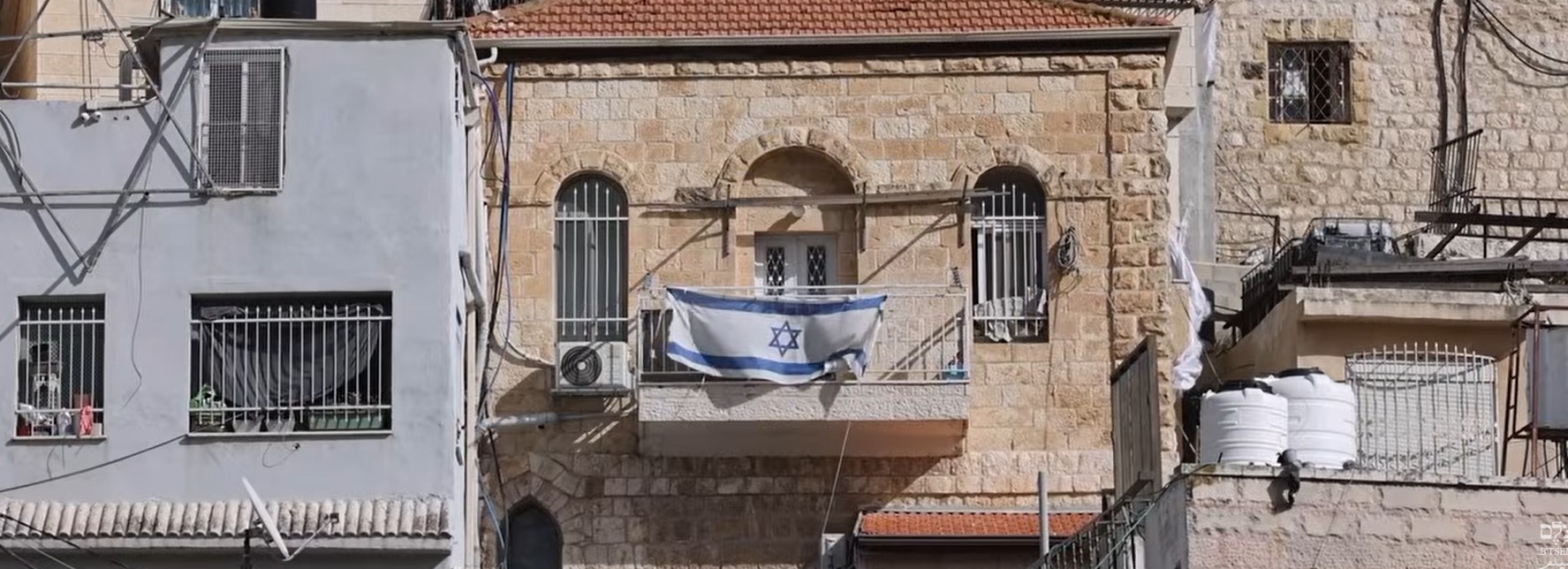
The feature picture is a still from the video about the ethnic cleansing, which can be found here.