
By Gary Hammond and Mike Whale (Hull and district Trades Council)
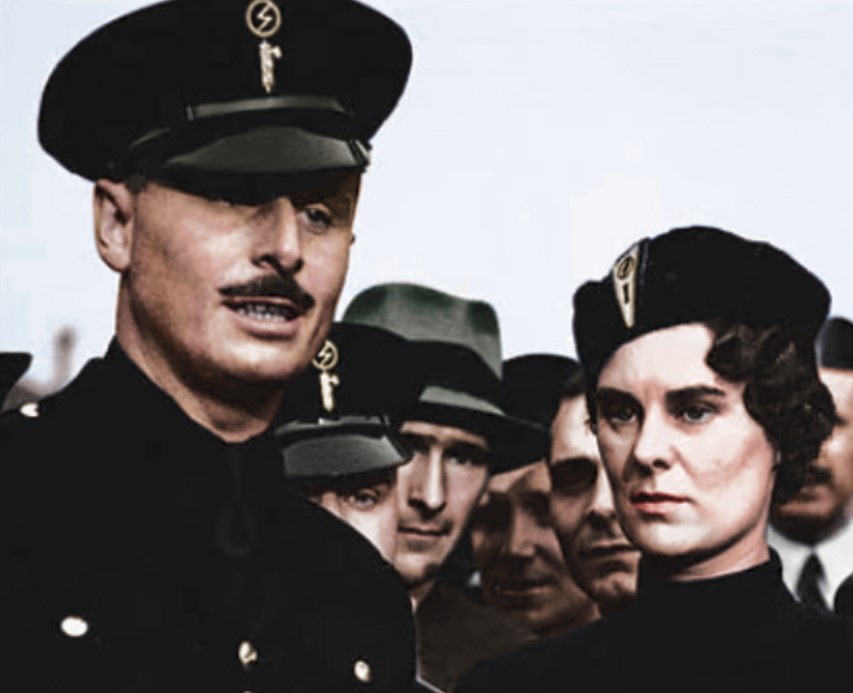
On July 12 1936, the organised working class of Hull, 10,000 or more labour and trade unionists including activists from the Hull and District trades council, dock and railway workers, together with a significant number of Hull’s Jewish community marched onto Corporation Fields to confront Mosley’s British Union of Fascists. They won a resounding victory.
What took place, known as the Battle of Corporation Fields, was one of the precursors to the more well known Battle of Cable Street in London, which took place three months later. The battle in Hull was ferocious. For the Blackshirts, it was a shock that they had not expected.
In the words of one fascist, “the trouble which developed and the size of the oppposition that had assembled there before our arrival was absolutely beyond our comprehension. It was obvious before the meeting started that there was going to be serious trouble”. (John Charnley)
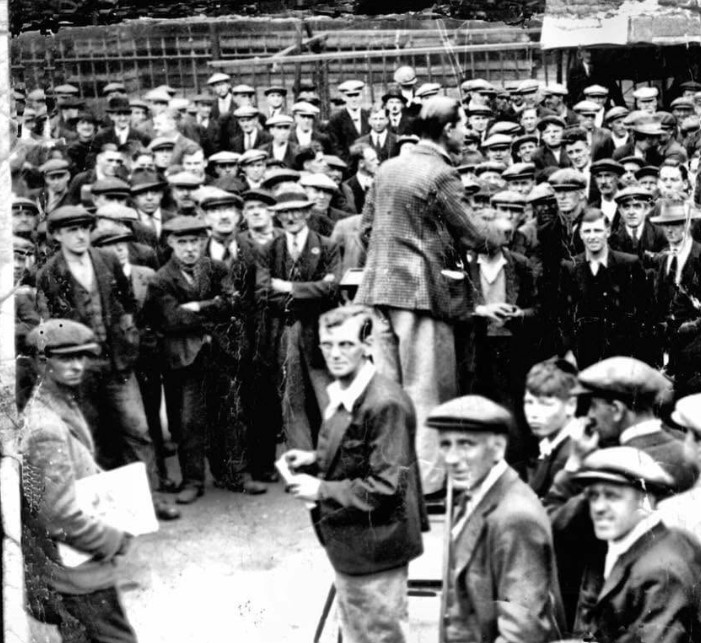
A pitched battle took place. Despite Mosley’s attempts to speak, he was drowned out by the crowd. His cause was not helped by a microphone failure. One theory (unproven) was that two youngsters were encouraged (with a bribe of an ice cream) to cut the electric cables to the microphone speakers.
The fighting was so intense that the police feared that there might be a fatality. Notwithstanding this the so called neutral police continued to protect Mosley and attempted to drive the workers away. One police observer reported that, “The Yorkshire National inspector in attendance (Peter Whittam) yelled out “This can’t go on, Get your bloody belts off. We did and using them in self defence kept our frenzied assailants at bay”. The police recovered many home made weapons including iron bars, bicycle chains and potatoes with razor blades.”
The anti-fascists proved too powerful
Eventually, despite the attempts of the police, the anti-fascists proved too powerful. The police advised Mosley to give up and retreat. While he was being driven away over Park Street bridge, his car window was smashed. Most people believe that it was a gun shot though this has not been corroborated.
Today we celebrate the magnificent mobilisation of the Hull working class in defence of their communities against the far right and it is important for todays generation to learn the lessons of those battles. One important lesson is that the demonstration against the Blackshirts did not drop from the sky ready made. The BUF was formed by Mosley in 1932. Yet 1936 was the year when they suffered significant defeats. The four years between 1932 and 1936 were spent educating and explaining why Fascism was a threat.
Alongside patient education, anti-fascist activists did what they could to physically stop the fascists. Often these activists showed extreme bravery in doing so. 1932 was also the beginning of a recovery of TU membership and activity following the defeat of the 1926 General Strike and this went hand in hand with the building of the anti fascist movement.
At a time when we are facing a threat from the far right we have to be patient in explaining the present day threat. In 1936 mobilising meetings were held in the main workplaces. A central but not exclusive role in this was the activities of the Communist Party branch which had been formed in Hull. The battle of Corporation Fields was successful because of a combination of clear-minded activist leaders of the trade unions but also because a huge number of anti- fascists took part in the counter demonstration.
The police were not neutrals
A further lesson for today’s generation is that the police cannot be relied on for protection. At Corporation Fields, the police were not neutrals standing between the fascists and the workers. They did everything they could to allow the fascists to hold a successful rally. The Labour and trade union movement cannot rely on the police today. This does not mean that we start off with a position of hostility towards the police but, It does mean that we need to ensure that any demonstration we organise is properly stewarded by ourselves. Any demonstration against the far right carries with it a degree of risk but it is important that as far as possible demonstrators feel as safe as possible.
The battle of Corporation fields was prepared for in advance by the trade unions. In fact, the Fascists wanted to meet in doors. In the weeks running up to Corporation Fields, various venues were approached by local fascists to host a Mosley rally. These included the Astoria Cinema on Holderness road and the City Hall in the town centre. The management of the Astoria were left in no doubt that if they allowed Mosley in, there would be a picket outside of every film they would try and show. Unsurprisingly they refused to hold the proposed rally.
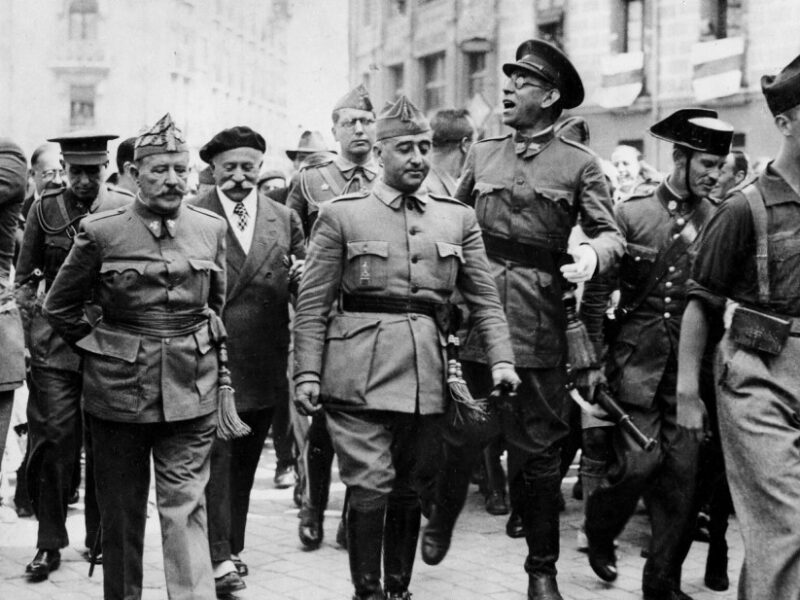
1936 did not see the end of the Fascists. It was however a pivotal year in which they were increasingly beaten back and stopped from marching and rallying. The battle against the far right increasingly focused, not only on the situation in Britain but on the civil war in Spain. General Franco had organised sections of the Spanish army to try and crush the Popular Unity Government which had been democratically elected. Franco was was an ally of Hitler and Mussolini and a victory for his nationalist forces would be seen as a victory for Fascism.
Around the world anti-fascist volunteers joined the International Brigade. We are aware of at least eight volunteers from Hull. At least two, probably more of the Hull volunteers who joined the International Brigade were at the battle of Corporation Fields.
Joe Latus and Morris Miller were definitely there. Morris, who was to die in Spain at the battle of Ebro was both Jewish and an active trade unionist. He was quite badly beaten up at the battle of Corporation Fields but was a determined socialist and anti-fascist and would not be put off by a few cuts and bruises.
Fighting the BUF helped shaped the trade union movement in Hull
Joe Latus was a key organiser of the anti fascists on the day and in fact served a short prison sentence after being arrested for his activities at Corporation Fields. As a young sailor Joe had attempted to organise trade unions on the fishing boats going out of Hull. Joe survived the Spanish Civil war and continued to fight fascism throughout the second world war. Among other heroic activities, he piloted a boat to help with the Dunkirk evacuation.
Many of those who did not go to Spain were active in organising support for the International Brigade and continued to organise against fascism. The battle against the BUF helped shape the trade union movement in Hull. It is not surprising that the generation that gave Mosley a bloody nose on Corporation Fields went on to be the backbone of a determined and militant workforce on the docks and other work places in the post second world war period.
Most significantly, winning job protection through the dock labour scheme and better terms and conditions for dock workers. Perhaps the most enduring lesson from the Battle of Corporation Fields is that determined militancy in any field helps builds the trade union movement and that ensures we can win.
This article was produced as a pamphlet for Unite, by Gary Hammond and Mike Whale of Hull and district trades Council, and is published here with their permission.
[Feature picture shows a speaker addressing the anti-facist crown in Hull. From Facebook]












There is so much we do not know about our working class history and when I was in school (1949 -1959) it was a basic secondary school education too. I can remember weaving baskets at the Secondary Modern School but not much about history, or anything else. And the Secondary School leaving Certificate in English Literature, Maths, Science and Tech Drawing that I received, were not worth the paper that it was printed-on. And never needed with manual labour in the coal-mine, building sites and local steelworks. In Neath there is a memorial to those killed in the Spanish Civil War and who went to fight with the International Brigade – that’s our history and which the ruling class would like to bury.