
By John O’Brien and Glenda O’Brien, Carlisle
Why are so many people dying? More than 2,700 people are estimated to have died from heat-related causes in England and Wales during May and June 2026: around 550 in the May heatwave and roughly 2,200 in June. The numbers point to a wider failure: of housing, of health and social care, and of a society still treating extreme heat as an inconvenience rather than a killer.
Southern Europe used to be the place we associated with killer heat. Not any more. Extreme heat has become a serious and growing public health threat here in Britain, and the figures from this year prove it.
The death figures are estimates rather than a final count taken from individual death certificates, but their scale should still stop us in our tracks. Blaming the weather is the easy response. Without the extreme temperatures, of course, these deaths would not have happened when they did.
But heat on its own is not the whole story. People are dying because extreme temperatures are colliding with poor health, unsuitable housing, poverty, disability, isolation, and health and social care services already stretched to breaking point.
Most people do not simply die of “heatstroke”. Say the words “heat-related death” and most people picture someone collapsing in the sun. That does happen, but it accounts for only a small share of the deaths.
What heat actually does is put the whole body under strain. It tries to cool itself by sweating and sending more blood to the skin, and that process can cause dehydration, disturb salt levels, drop blood pressure, and force the heart to work harder than it should.
For someone already living with heart disease, angina, breathing problems, diabetes, kidney disease or circulation problems, that extra strain is often enough to tip things over into a heart attack, stroke, breathing crisis or kidney failure. The UK Health Security Agency (UKHSA) has warned of these risks, with deaths rising within as little as 24 hours of high temperatures setting in. Heat, in other words, is usually the final weight placed on a body that was already struggling.
Age matters, but again, this is not simply about old age. Older people are especially vulnerable because the body loses some of its ability to regulate temperature as it ages, and older people are also less likely to feel thirsty, even when they are becoming dangerously dehydrated. In the 2026 rapid analysis, people aged over 85 accounted for around 60 per cent of the heat-related deaths across the two heatwaves.
None of that means these deaths should be shrugged off as inevitable simply because the people involved were old. An older person living with heart disease may have been coping reasonably well before the heatwave hit, and without those extreme temperatures might have lived for months or years longer. To call such a death unavoidable purely on the grounds of age is both medically questionable and, frankly, wrong.
And it is not only older people who are at risk. Babies, people with serious mental health conditions, people with diabetes, heart or lung disease, homeless people, those on certain medications, and people with restricted mobility all face greater danger too.
Disability changes everything
Public advice during a heatwave sounds simple enough on paper: drink more water, open a window, close the curtains, move to a cooler room, or get out to somewhere air-conditioned. For many disabled people, none of that is simple at all.
A heavy window, or a curtain rail that is out of reach, might as well not exist. Someone who needs help transferring cannot just get up and move to a cooler room. A wheelchair user may have no way of reaching a cooler part of the building on their own. And a person who relies on carers may have to wait hours before anyone arrives to bring a cold drink or help them shift position, by which time the damage may already be done.
Some disabled people cannot regulate their own body temperature. Others may not recognise that they are becoming dangerously hot or dehydrated until it is too late. People with dementia or learning disabilities may not understand a heat warning, let alone be able to say that they feel unwell.
Heat is an equality issue
Britain’s housing was not built for this heat. Most British homes were built to keep heat in, not to let it out. Top-floor flats, poorly ventilated rooms, large unshaded windows and heavily insulated modern buildings all trap heat through the day and into the night. Once a home has overheated, opening a window does very little when the air outside is just as hot.
Warm nights are the real danger, because the body never gets a proper chance to recover before the next day’s heat begins. Telling someone to “stay cool” means little when their home has turned into an oven and they have nowhere accessible to escape to.
Air conditioning is still rare in British homes. Portable cooling units can be expensive to buy, and running even a couple of fans around the clock is a cost some households simply cannot carry on top of already stretched electricity bills. Money buys choice here. Someone with means can install cooling, travel somewhere cooler, or book into an air-conditioned hotel. Someone on a low income is far more likely to be stuck in unsuitable housing with nowhere else to go.
Are failing services contributing to the deaths?
It would be wrong to claim that every heat-related death was caused by an NHS or social care failure. The estimates we have do not tell us whether a particular ambulance was delayed, a care visit was missed, or a hospital ward was simply too hot. But it would be just as wrong to pretend the state of public services makes no difference.
Health and social care staff should already know which of their patients are most vulnerable before a heatwave arrives. That means welfare calls, medication advice where it is clinically needed, extra checks on people living alone, and clear plans for keeping hospitals, care homes and supported housing at safe temperatures.
Carers and health workers need to recognise the early signs of heat exhaustion and dehydration: confusion, weakness, dizziness, headaches, reduced urination and behaviour that is out of character. But none of that means much if there are not enough staff to deliver it. A missed care visit on an ordinary day is an inconvenience. During extreme heat, it can be the difference between life and death.
Climate change is turning vulnerability into danger
Researchers estimated that human-induced climate change made daytime maximum temperatures during the May and June 2026 heatwaves around 3°C to 4°C hotter than they would otherwise have been, and calculated that roughly 42 per cent of the heat-related deaths across both events were attributable to that extra warming.
Nobody can claim that climate change caused every individual death. But the pattern is hard to argue with: greenhouse gas emissions raise temperatures, higher temperatures place more strain on human health, and the people already living closest to the edge suffer first. UKHSA’s official report for summer 2025 put the figure at 1,504 heat-associated deaths in England across five separate heat episodes. This is not a distant problem for the end of the century. People are dying from it now.
Weather warnings are not public health plans
Britain needs to stop treating extreme heat as an occasional inconvenience to be managed with sun cream, bottled water and advice to stay indoors. We need homes that are designed or adapted to stay safe in hot weather. Hospitals, care homes and supported housing need proper temperature standards.
Local authorities and the NHS need reliable ways of identifying and contacting the residents most at risk, and disabled people need to be part of emergency planning from the start, not remembered only once a crisis has begun. Alongside all of that, we have to confront what is driving the temperatures up in the first place, rather than issuing stronger warnings year after year while the underlying problem goes untouched.
Heat exposes a broken safety net
That is why heat deaths should never be written off as simply an unavoidable feature of summer. They are a warning about the climate, yes, but they are also a verdict on the kind of society we have built, and on how well, or how badly, it looks after people when they are at their most vulnerable.
Voluntary advice has had its chance. What is needed now is a set of legally binding obligations that run across every level of authority, from Westminster down to the local council.
Westminster should update building regulations without further delay, so that new developments are built with external shading, reflective materials and passive ventilation as standard rather than as an afterthought. Existing housing stock needs mandatory maximum temperature standards, applying to social landlords and private owners alike.
A top-floor flat should not be allowed to become an unliveable trap every time the sun comes out, and financial support schemes need to be widened so that low-income households can install proper cooling without being landed with ruinous energy bills.
The NHS and social care providers need to give extreme heat the same operational seriousness they already give winter pressures. That means clear protocols for reviewing vulnerable patients before temperatures spike, including adjusting prescriptions for medications that interfere with sweating and making proactive contact with people known to live alone.
Care agencies should be contractually required to maintain emergency staffing during heat alerts, because when a care worker cannot get through, it is the person waiting for them who pays the price, often with their life.
Local councils are best placed to protect people at community level. They need up-to-date registers of residents at high risk because of mobility problems, serious illness or severe mental health difficulties, with those records properly connected to social care teams and community networks rather than sitting in isolation.
Every neighbourhood should have an accessible, air-conditioned space people can get to, with free transport laid on for anyone who cannot travel there under their own steam.
This cannot keep being left to individuals to sort out on their own. A society that takes itself seriously plans for the climate it actually has, and builds a safety net strong enough to hold everyone when the temperature rises, not just the people who can afford to look after themselves.
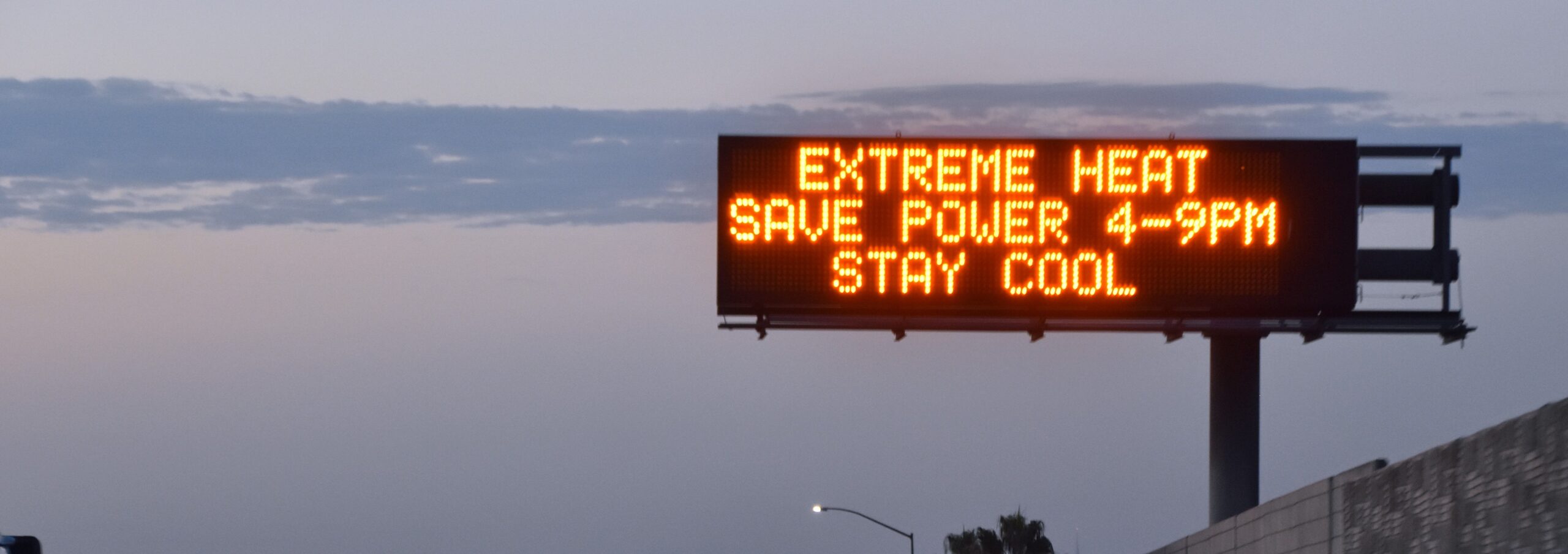
[Feature image: taken on a road in the US and sourced from Wikimedia Commons, here]












.jpg)