By Roy
I’ve been here 20 years and like a huge number of locals moved up from London. My wife and I were 38 when we arrived with youngsters between 11 – 18 to provide for. I’d never been political before, but about 2011 something woke me up.
Like most places the area is socially varied but taking an average, what’s clear is that there’s more over 55s, more people unable to work or care for themselves, more poverty, more claimants, more low-paid, unsecure work. There are fewer social homes, higher housing costs in relation to income and a lot of low quality housing.
The health and care services are strained, public transport is poor and relatively expensive, and not a great deal of further education and training in the local area. The local authority for decades has mostly been a perfect neo-liberal model, reducing direct public services, plus encouraging private investment with little interference.
The wider area is largely semi-rural (but rapidly changing) and generally the whole area hasn’t got the legacy of urban areas where social movements helped bring about public amenity and homes. Apart from beaches and cliffs, most of the land is private. Maybe the private ownership feeds into the psychology of many. When so many are excluded, I suppose, is it harder to imagine visionary change?
Regarding the environment, we’re part of a narrow peninsula and with green belt relaxation, we’re disturbing and removing vital habitat for species. House building in recent years has been rapid, the new homes and developments mostly unimaginative boxes in car-reliant locations. Community vision this is not! Exchanging our wildlife and food production for homes that no average local can ever own serves no one long term.
A recipe for social problems
If you want to write a recipe for social problems with a view to initiating a fascist uprising this is not a bad start. It is not so hard to understand how we got our previous MP or that Reform run the whole county. Our local issues have been largely shaped by decades of government policy driven by the global market, controlled by a tiny number of people and more bureaucracy.
The environment and its people feel the same effects the world over. Its an abusive relationship. This is the natural default setting of the market: accelerate speed, greed, and magnitude whilst coercively reducing any safety mechanisms. It’s an extremely myopic sickness. The improvements, support system and safety net that we won in the past is being weakened, hollowed out, destroyed or stolen.
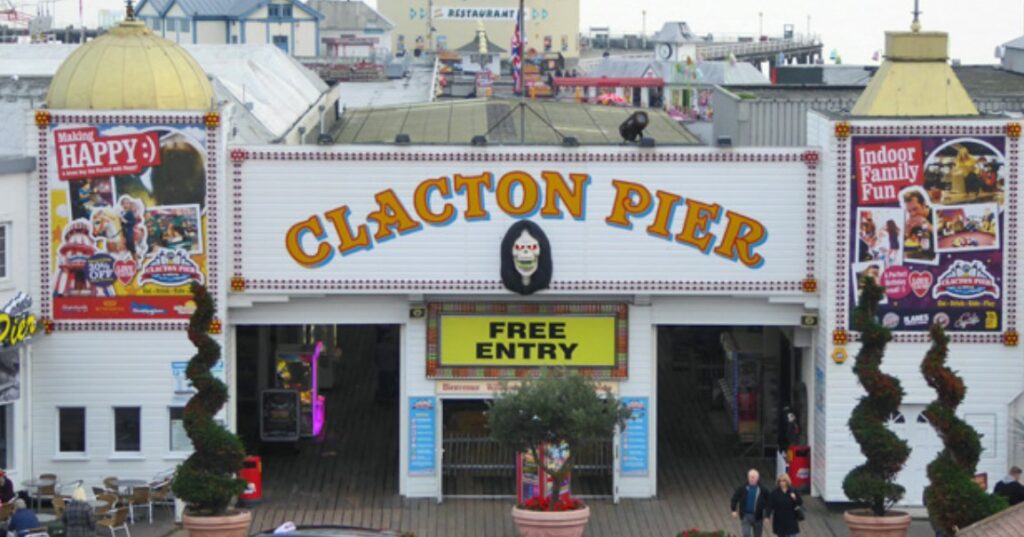
So Clacton is a small part of a much bigger problem. We’re offered the suggestion that change comes about through choosing new leaders. Without signifiant change, many have lost faith, trust and are now backing what they see as something different. Others opt not to participate.
But our role is more as a passenger and spectator than a participator. So what do you do ? To most, it is daunting and unappealing, but I feel optimism. Once you accept the odds are stacked against us, you think about what’s possible and what success can look like.
Focus on what unites us
How do we reset the relationship? It’s clear that voting in representatives and party politics will never deliver what we need. We know if the pendulum swings one way then it will swing the other. It might swing less or more, for longer or shorter but real changes are built through our power. History and present reality show us that. The recent renters’ and workers’ rights success was built from the bottom.
I’d argue that it’s an advantage to focus on what unites us and that is certainly more enjoyable. Inviting new people into a polarised, aggressive environment will not appeal to most. The demographic here is changing, for instance many in the care and hospitality sectors are younger, are first or second-generation immigrants, women. The ratio of housing costs to wages is favourable to London and the SE, and the migration of retirees to here adds to the abundance of work in the care sectors.
As activists direct democracy is key. We need to make connections and build strong relationships and networks with each other: Workers, renters, students, pensioners, etc, particularly on a human level. Together we can become organised and realise our power. It might start with a tenancy dispute or a carer losing vital hours. But if will build enough power to deliver we’ll win.
With what we’ve learned, we’ll build again and win bigger. It’s hard to start the process with a lack of direction and belief. All around us people have skills and talents. Society feeds us with a feeling of powerlessness. Our conversations and examples must awaken belief, give direction and promote cooperation.
We’re clearly disappointed with the results of indirect change. Direct action is just logical. Many people are underpaid, undervalued, over-stretched and often angry. When we unite around these issues we fight for our common interests. Whatever sub-group we identify with, or are lumped into, we feel a lot of the same class pressures, and when we experience the collective struggle it reveals the true narratives more vividly than any media narratives elude us.
When we act as a class we combat prejudice indirectly. We build understanding, confidence and consciousness. Looking around here, there’s potential and I hope a journey might be starting. It’s a psychological as well as physical one. Because of its history, Jaywick, the poorest area of Clacton, has a DIY attitude. Locally and globally we need an injection of that into our, movements.
There’s some great enthusiasm right now. In Unity In The Community, we are making connections. Clacton Arts Centre are holding some great events. Maybe we can build an Acorn group too. We’ll just keep pushing and see where we get. Here and the world over the system wants to make profit and privatise. No system lasts forever. Our counter should be to organise and democratise.
More broadly on the left, our evaluation’s should tell us a re-think and re-balance of strategies are needed. Strategy should be at the forefront. It feels like it’s hardly considered by most. We need to be honest about how effective strategies in recent years have been. The same rise in enthusiasm then disappointment and disengagement of elections is evident in some large campaigns.
Where we see success recognise it, understand it,support it,adopt it! and together we can scale it up.
[Feature and inset pictures from Wikimedia Commons, here]