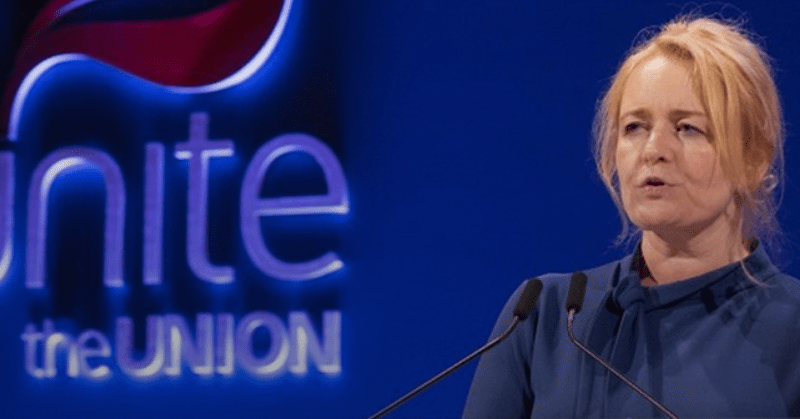

The TUC conference this week passed a composite resolution supporting the campaign of Boycott, Divestment and Sanctions (BDS) against Israel. For the first time in its history, this organisation of over five million workers, has expressed concrete support for a boycott of Israel, rather than just the West Bank settlements, and although it may have been late in coming, it is a very welcome development.
The TUC has not moved in this direction by accident. It is the cumulative effect of tens of thousands of protests, rallies and demonstrations in the last three years. Taking all of the individual actions together – and many of these demonstrations each involved hundreds of thousands of people – the protests against Israel have amounted to the biggest single political protest in British history. It could hardly be otherwise, given the events in Palestine in the last three years, much of which has been relayed on TV screens and through social media to the world outside.
Following the Hamas attack in southern Israel nearly three years ago, Israel used that incursion as a pretext to conduct a one-sided genocidal war against the entire population of Gaza. At least 73,000 people were killed – and likely thousands more – the big majority not Hamas members or activists, but mostly women and children. That narrow strip of land was bombed into rubble, leaving two million desperate survivors concentrated in an even smaller sliver of land, surrounded by tanks and dependent entirely on humanitarian aid. If that is not the very definition of genocide, then nothing is.
Gaza Strip totally destroyed
Having literally destroyed the Gaza Strip, the Israeli government intensified its terror on the Palestinian population of the West Bank, where there is an ongoing process of ethnic-cleansing, driving Palestinians out of villages and off farmland. Tens of thousands have been displaced, as Jewish settlers continue to organise nightly pogroms, actively supported by the Israeli ‘Defence’ Force and armed with assault rifles by the government in Jerusalem.
It is because the world has seen what has happened that there have been massive and unprecedented protests around the globe and not just in Britain. Political and diplomatic support for Israel has collapsed everywhere, and the tens of millions of protesters have pushed, demanded and cajoled their governments, often grudgingly, into at least expressing concern, if not direct opposition to Israeli policies.
It is in response to such protests that the UK government announced last week that it was planning to impose sanctions on Israeli settlements, within six to nine months.
Even before and since the last general election, the Labour Party had been losing votes, to the Green Party, and also to independents, specifically over its support for Israel. This dramatically worsened for Labour as the Green Party, led by Zack Polanski, surged in support over the last year.
Despite murmuring and hand-wringing over the genocide in Gaza, Labour ministers, notably Keir Starmer and David Lammy, were enablers of Israeli policies in Gaza and the West Bank, through continued military support for Israel and military cooperation, including the spy-plane flights over Gaza launched from RAF Akrotiri, in Cyprus.
Gaza a major factor in collapsing support for Labour
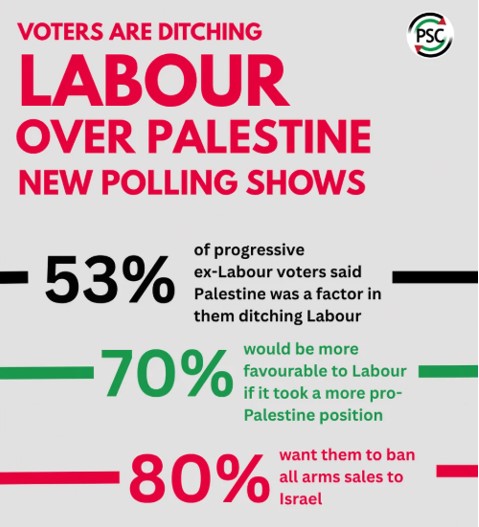
The unstinting support for Israel, despite Gaza and despite the West Bank pogroms, has been a major factor in the collapse of Labour’s support. A poll carried out by Opinium at the end of May, found that over 40 percent of those who voted Labour in the 2024 general election had switched to the Green Party in the last local elections. 53% of “progressive” voters abandoning Labour cite their Gaza policy as a factor. Starmer must have been aware of this, but would do nothing to upset the Labour Friends of Netanyahu.
A report in the Guardian notes that “The Greens are just four points behind Labour in urban constituencies across the UK, putting them within touching distance of taking as many as 40 seats if the result was replicated at the next election”. As an aside, this poll was commissioned by the right wing faction ThinkLabour (formerly the mis-named Labour Together), before the recent Burnham bounce in the opinion polls and it gives a clue as to why it was one of their supporters who stood aside in Makerfield so that Andy Burnham could re-enter Parliament and push Starmer out.
The new leadership under Andy Burnham is keen to burnish at least some kind of radical credentials and hence we had the announcement by Ed Miliband, now Foreign Secretary, that the UK would boycott the Israeli settlements on the West Bank and Israeli-occupied Syria. There is an obvious problem with boycotting such goods, of course, because the produce (most agricultural) from the occupied territories would be simply transported over the border and labelled “Israeli”.
Supporters of Palestine will legitimately ask, where was Miliband while Gaza was being pummelled with high explosives, and its people were being killed in their thousands? He was, after all, a minister in Starmer’s cabinet for all this time. There is a New Testament phrase about “swallowing a camel and choking on a gnat” and it seems to apply perfectly to Ed Miliband and much of the Labour leadership.
The Israeli government is the prime cause of West Bank pogroms
More importantly, the belated sanctions on Israeli settlements do nothing to address the prime cause of the ethnic cleansing on the West Bank – the Israeli government itself. “The Israeli people”, senior Labour Cabinet minister Louise Haigh said to the conference, “are not responsible for the actions of their government”. That is a back-handed admission that it is precisely the Israeli government that is behind the settler pogroms.
Within the Israeli political spectrum there are violent anti-Arab racists and religious fanatics who, judging by their own words, would – if they were allowed to – put every Palestinian on a bus and forcibly transport them somewhere else, or even physically wipe them out. Haigh knows full well that some of these people are in the Israeli government, arming and encouraging settlers – or she wouldn’t have made any reference to the government.
And why boycott Israeli settlers for their actions in the West Bank yet not boycott the Israeli government for the horrendous crimes committed by its own military in Gaza? It makes no sense.
The question she needs to answer – and Ed Miliband, and Andy Burnham – is why the British government is continuing to provide military, logistical and intelligence support to a government responsible for these appalling policies. When it comes to the responsibility of the “Israeli people”, Haigh is being equally disingenuous. There is no long-term sustainable future for the mass of Israeli workers on the basis of a militarised state and the forced occupation and/or ethnic cleansing of a reluctant population.
The problem is that a majority of Israeli voters have not yet come to realise that – and the only way they can be shifted from their illusions in the dead-end of militaristic Zionism is through a sustained and complete boycott of the Israeli state itself. On the relatively small left fringe of Israeli politics there actually is support for an outside BDS campaign, because it is seen as the only hope of holding back a reactionary and ultimately unsustainable policy.
Louise Haigh told the TUC Congress, “We will stand against injustice…“ She might start by acknowledging the character of the Israeli state. Currently the Israeli government controls a population half of which has either no democratic rights, or, in the case of Arab citizens of Israel, fewer rights compared to Jewish citizens. It is an apartheid state. Yet the policies of Netanyahu, loathsome though they are, are only the logical extension of a decades-old policy of a brutal colonisation at the expense of the original population of Palestine, always dressed in the garb of a religious or national Jewish ‘redemption’.
An indication of a profound shift in public opinion
We should not pretend that a UK trade boycott of the Jewish settlements is anything more than a token. But neither should we underestimate its significance. Like the TUC motion, it is an indication of a profound shift of mass opinion, as a result of protests and campaigns against the Gaza genocides and the West Bank pogroms. That campaign has shifted the dial of public discourse on Israel and Palestine and it is not going to move back any time soon.
Eleven other countries – Canada, Denmark, Finland, France, Iceland, Ireland, Norway, Poland, Portugal, Spain and Sweden – have joined the UK in supporting or considering sanctions on trade in goods with settlements. It is not the end of the road – far from it – but it is an important milestone in the struggle for the rights of the Palestinian people.
Even in the United States, the main economic and military enabler of Israel’s aggressive ‘forever wars’ in the Middle East, there is growing opposition to Israel’s policies. The accusation of ‘antisemitism’, thrown at anyone who criticises Israel, doesn’t wash any more. Democratic Party candidates are winning primaries and elections on the basis of opposing the Israel lobby in the USA and its policies in Palestine.
There, it was the Republican Party who were the main cheer-leaders of Netanyahu, but the huge shift in public opinion has even unsettled Trump’s party. According to the Israeli liberal newspaper, Haaretz, (August 31) even Republican candidates are now trying to distance themselves from the powerful Israeli lobbying organisation, AIPAC. “Republican leaders” Haaretz argues, “are confronting a worsening Israel problem within their own coalition…”
The reason is clear: the Pew Research Centre, a prestigious US polling organisation, found that as long ago as April “57 percent of Republicans ages 18 to 49 viewed Israel unfavourably, compared with 41 percent of Republicans overall”. The worm is turning, not because politicians have had a sudden change of heart, but because of mass public pressure.
National TUC event on Palestine in November
Returning to Britain, the Middle East Eye reports that the successful TUC motion is to be followed by a national event on November 26, when trade unionists will be invited to take part in a TUC-backed workplace day of action in solidarity with Palestine. Having noted the strength of feeling on this issue – delegates from many trade unions spoke in Congress in support of the composite motion – the TUC now has to ‘put its money where its mouth is’. It should issue circulars, posters and information about Gaza and the West Bank, to circulate in workplaces and to assist in the organisation of work-place meetings, sit-downs and walk-outs where the workforce and the trade union organisations are strong enough.
Ed Miliband’s belated boycott and the TUC motion are important in themselves, but the struggle for Palestinian rights has still got a long way to go. November 26 should be made into another important milestone, to expose the role of the Israeli state in Palestine and to solidify further the BDS movement.
From the TUC website, the wording of the Composite motion 18 on Palestine:
Congress notes the:
i. catastrophic destruction of Gaza, including infrastructure, hospitals, schools, and universities, following Israel’s genocidal assault since 2023, killing over 70,000 Palestinians, displacing millions, and increase in illegal settlements, military occupation and apartheid
ii. findings by UN bodies and human rights organisations documenting grave violations of international law including genocide, war crimes and crimes against humanity
iii. Israeli settlers’ violence and attacks, supported by the IDF, on Palestinian communities, has caused the deaths of several children and closure of many schools, leaving students and teaching staff terrorised
iv. global Palestinian-led movement for boycott, divestment and sanctions initiated by Palestinian civil society including trade unions
v. ongoing government efforts to discourage and censure Palestine solidarity, including within art and culture.
Congress believes:
a. the need to answer the call of Palestinian workers for solidarity
b. BDS is an effective strategy to pressure Israel to end its ongoing genocide, system of apartheid, occupation and denial of the right of return for refugees
c. the trade union movement has a proud history of BDS campaigns against oppression, including against apartheid South Africa.
Congress resolves to:
1. campaign for a permanent ceasefire and just peace plan that respects international law and successive UN resolutions, providing for a two-state solution
2. campaign for legislation banning trade with the illegal settlements and suspension of the UK-Israel Trade and Partnership Agreement, until international law is respected
3. support the Palestinian led BDS movement; trade union-led campaigns in support of Palestine; the workplace days of action; divestment from companies complicit in Israel’s crimes against Palestinians, in cooperation with union members in those companies
4. end all military cooperation and arms trade with Israel to comply with international law
5. call on the government to impose wide-ranging sanctions on Israel until it complies with international law, and commit to freedom of speech and end attempts to censor artists and art organisations expressing solidarity with Palestine
6. support trade unionists, including artists, culture workers and education workers who refuse to handle goods and services linked to violations of international law.
Mover: Artists’ Union England
Seconder: UNISON
Supported by: Unite, National Education Union
[Feature picture is a still from the TUC video feed of TUC – here delegates cheer a fraternal address from an international representative.]