
Review by Tom Rollings in Moscow
Artem Kirpichenok, a Marxist historian and critic of the state of Israel in the Russian-language press, was arrested in Israel in August this year. He has been held without being formally charged. His lawyer has told the press that he has been subjected to torture in prison in an attempt to get him to incriminate himself.
Artem (pictured above) emigrated to Israel in the early 1990s where he did military service and went to university. But he became disillusioned in Israeli society and returned to Russia, retaining dual citizenship. As someone who knew Israeli society and history inside-out, he shared his knowledge in Russian-language articles in various left-wing publications as well as specialist platforms devoted to global diplomacy and regional politics in the Middle East.
Such publicist activity was much needed. Given the weakness of left-wing ideas in post-Soviet Russia, the Russian media, spanning official government sources and liberal opposition platforms, have echoed the line of Israeli propaganda.
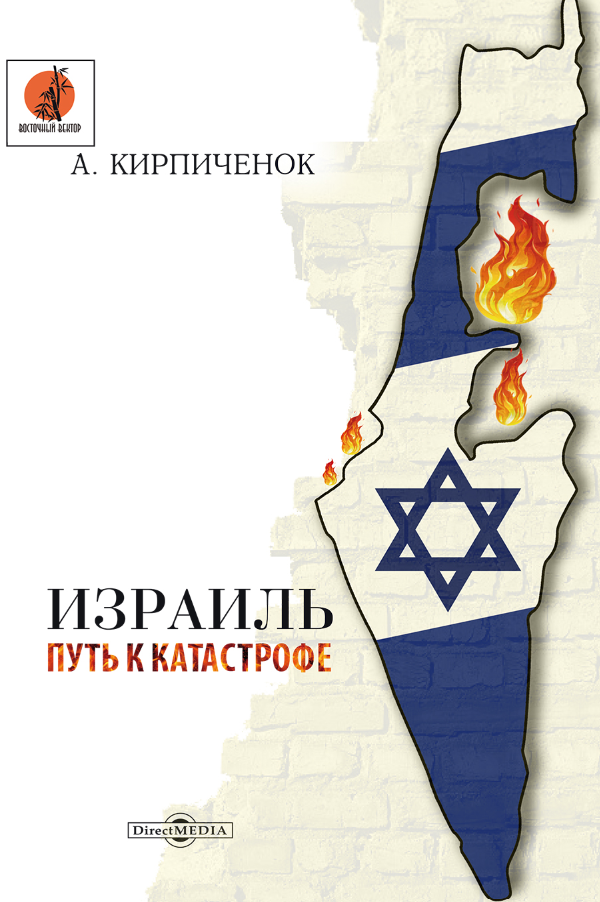
However, the extent of the genocide against Palestinians after October 7, 2023, has dented the myth of Israel as a progressive society. In response to demand for more in-depth analysis among specialists and general readers, Artem was able in 2024 to bring together a compilation of his articles in a book entitled Israel: A Path to Catastrophe.
Artem’s arrest in Israel this year has given his work a higher profile in Russia and is the occasion for this belated overview of it. The context today, with the debate over the Zionism is Racism resolution at the Green Party conference, the shift in attitude towards Israel in the USA and the prospect of Gadi Eisenkot, a Mizrahi Jew, replacing Benjamin Netanyahu as Prime Minister, if he can form a coalition that includes Arab parties, further reinforces the relevance of his contribution.
Russian Jews in Israel and Russian-language coverage of Israel
Artem was one of over a million people who emigrated to Israel from what had been the Soviet Union in the early 1990s. In Israel, former Soviet Jews who had university degrees and had formerly enjoyed prestigious jobs, found themselves doing manual labour, often taking work from Palestinians. Artem reviewed the consequences of this fall in prestige in his article “Right-wing attitudes among emigrants from the former USSR in Israel – loyalty or protest?” (pp. 237-246). Their support for Benjamin Netanyahu was important when he first won elections in 1996 and remains so today (pp. 244-5).
There is a paradox in this support for an established political leader on the part of a community that is opposed to mainstream politics. As citizens who wanted to purge themselves of their former Soviet identity, Russian Jews were often amenable to the most racist and nationalistic rhetoric of Netanyahu. Here, there is a parallel with Maga supporters of Trump in the USA, who dreamed of making America great again because they were anxious about the deterioration in their living standards and prestige. Artem alluded to this parallel in an article on Netanyahu’s attacks on the deep state in Israel, in an echo of Trump’s position (pp. 227-236)
In line with their identification with racist propaganda that constructs an image of pure, superior Jews, Russian Jews in Israel are often ignorant of the diverse currents in Jewish history and the tradition of Jewish opposition to the state of Israel. Together with the work of Israeli propaganda abroad, their correspondence with family and friends back in Russia has perpetuated the blind-spot about the history and present-day reality of Israel in Russia (see the article “Israeli soft power in Russia,” pp. 247-256).
Artem countered such stereotypes in his articles. In their separate forewords to Artem’s book, professor Yakov Rabkin of the University of Montreal, author of A Threat from Within: A Century of Jewish Opposition to Zionism (2006) and What is Modern Israel? (2016), and Mikhail Magid, a Russian specialist on the Middle East, noted that Russian-language studies on Israel tend to be characterised by racism and recommended Artem’s analysis as one that would contain much that was new to Russian readers.
A large part of Artem’s efforts was to popularise the contribution of a group of experts known as Israel’s new historians. For example, Benny Morris wrote The Birth of the Palestinian Refugee Problem, 1947-9 (1988) and Israel’s Border Wars 1949-1956 (1993). The latter work framed Artem’s article “The border war of Israel” (pp. 83-94). Morris has since moved to the right, but other historians continue to challenged propagandistic accounts of the formation of Israel, such as Tom Segev, who has written on the Six-Day war and Israel’s first Prime Minister David Ben-Gurion. Artem encouraged his readers to view Russian-speaking Jews in relation to their neighbours in Israel, both Jewish and Arab alike.
Zionism is antisemitic
In addition to a concern with the interplay of Jewish and Russian/Soviet history, Artem’s main thesis will be a familiar one to many activists who have criticised the state of Israel, namely that Zionism itself is racist. But if in the UK most activists focus on Israeli racism against Arabs, Artem clarified the racism directed against Jews in Israel.
In his article “Eastern Jews” (pp. 95-116) Artem discussed the case of Eastern Jews in Israel. The ancestors of most Jews were either Sephardic, who lived on the Iberian Peninsula, or Ashkenazi, who settled in Northern Europe and then moved to Eastern Europe. Less well known are Mizrahi Jews whose ancestors lived in Central Asia and the Middle East for thousands of years or who converted to Judaism in the Ottoman Empire. (To avoid confusion, Mizrahi means Eastern Jew in Hebrew and has nothing to do with Ashkenazi Jews in Eastern Europe who were known as “Ost-Juden” in German.)
Artem explained that Ashkenazi Jews in Israel are called European Jews and Sephardic Jews are called Mizrahi (p. 96). This distinction is the crux to antisemitism in Israel. In illustrating this point, Artem popularised the research of Ella Shohat at New York University, an Iraqi Jew whose parents were subjected to racism on arriving in Israel in the 1950s. In a 1988 study entitled “Sephardim in Israel: Zionism from the standpoint of its Jewish victims” she described Mizrahi Jews as victims of Zionism. Her work is essential reading for activists who want to further their knowledge for the case that Zionism is racism.
Artem also looked at the case of Ethiopian Israelis through the same lens in “The Israeli Baltimore” (pp. 257-262). The ancestors of Jewish Ethiopians converted to Judaism long ago. They were invited to emigrate to Israel in the late 1970s. It was reported in the news in 2012 that their children were segregated from others and that Russian Jews in Ashkelon did not let an Ethiopian Jew into a bomb-shelter and in 2013 that Ethiopian Jewish women had been given contraceptives under the disguise of vitamins to stop them from having children (p. 259). Then in 2015 a video of police beating up an Ethiopian Jew in army uniform who ended up picking up a rock to defend himself in the same way that Palestinian children used to do against Israeli soldiers rocked the country (pp. 260-1).
When placed in this context, the discrimination that Jews from the Soviet Union faced appears as a further example of Zionist racism. But unlike the other groups mentioned above, former Soviet Jews are Ashkenazi, only their background as European Jews did not save them:
“From the time of Max Nordau and Ber Borochov, left Zionists considered galup (diaspora) Jews deformed and thought that only hard physical labour could make true Israelites out of them. Emigrants from the USSR are considered bastards (“mamzerim”) among religious Jews because in the Soviet Union they could not observe all religious rituals and rules” (p. 240).
In Britain Kemi Badenoch can state at the Conservative Party conference that black people can be English and her mixed-race children should be too. But she does not criticise Zionists when they discriminate against Israeli citizens who are not pure enough for their liking.
Artem’s reference above to Zionist thinkers who predated the formation of Israel is important. Today Zionist defenders of Israel accept that there are some bad apples, such as Netanyahu’s coalition partners or Netanyahu himself, but they contrast them to a better, more enlightened Zionist project, which was not allegedly racist. But the rise of the more explicitly racist figures was the result of the left Zionist project that repelled Mizrahi Israelis who backed Menechem Begin in the 1970s, the right-wing founder of Kherut, the precursor to Likud (p. 244). Since then, the same racist policies of European Jews have pushed Russian-speaking Jews to support Likud under Netanyahu’s leadership.
A historical perspective to Zionism
The compilation of Artem’s articles is broadly organised chronologically following an overview of the Zionist project “Zionism and the problem of migration of European Jews.” There, Artem explained that antisemitism and Zionism emerged at about the same time in about the same place, namely Western Europe in the late nineteenth century. In both cases their goal was to cleanse Europe of diaspora Jews, especially poor Jews who travelled through Europe en route to America and other far-flung destinations (pp. 23-4).
There follow brief historical accounts of a move to send Italian Jews to Abyssinia and the situation under British rule in the interwar period. Here we learn that the Zionist plan for the repatriation of Jews to Palestine began to take shape in the 1920-30s with the arrival of settlers from the former Tsarist empire (pp. 39-41) and emigrants from Nazi Germany in a deal between the Zionists and the fascists known as the Haavara Agreement (Transfer Agreement) (pp. 41-44).
He noted how Jewish terrorism in modern Israel was initially a continuation of the terrorist tradition in pre-revolutionary Russia, as illustrated in the case of the sinking of the ship “Patria” (pp. 55-58), which was blown up in 1940 in an elaborate false flag operation. (For context, the Museum of Jewish People highlights the sinking of the Patria as a “forgotten Zionist mass tragedy” but assumes that the perpetrators from the Haganah, the Zionist paramilitary organisation in Palestine, botched the job, leading to unplanned for deaths, which overlooks the fact that they were trained.)
In the course of describing violence against the Palestinians, Artem reflected on the need for Russian Jews in cities such as Ashkelon, where he lived for many years, to engage with the contribution that Palestinians made to the area, to their country, before they were violently expelled, see “Madzhdal – Ashkelon. A forgotten history” (pp. 75-82).
Artem also discussed shocking developments in the 1940s after World War Two when Jews who survived the Holocaust were treated badly on arriving to Israel, which led many to move on to new countries. Their onward move led the authorities to promote the emigration of Mizrahi Jews (pp. 95-116), as discussed above. However, in an article on “Israel and the lefts” (pp. 123-138) Artem cited the reflections of Isaac Deutscher from the 1950s when it became common to view Israel as a safe haven for Jews following the Holocaust, a view that was given ballast by the socialist brand of Zionism at the time.
Artem further discussed subsequent left-wing politics in Israel in connection with “Matzpen” (pp. 167-194), a group that formed from a split in the CP in the 1960s and formulated Jewish opposition to the Israeli state after the success of the Six-Day War in 1967, and “The Rise and Fall of Socialist Zionism” (pp. 195-212). Artem noted that Matzpen members refined the CP’s critique of Zionism, extending it back prior to the foundation of Israel in the 1940s and arguing that Zionism was not an instrument of Western imperialism but an imperialist project in its own right.
However, Artem added that these members did not enjoy any success in spreading their position into the working class, and ended up as a network of informed activists in exile where their polemics influenced left-wing coverage of the fate of the Palestinians. Matzpen’s legacy deserves further study as it seems to frame the polemic on Zionism among the Jewish left in Britain, including in the Green Party.
After the articles on Jews from the former Soviet Union, Artem took up more recent political developments in an article entitled “Israel. Behind the crisis is war” (pp. 263-270), where he highlighted the military context on the ground and the weakness of Netanyahu’s position, and Artem also provided an interview he conducted with an Arab MP from the United List party (pp. 271-278). Final articles discussed an Orthodox sect that wanted to emigrate to Iran but was prevented from doing so and cultural and literary history.
The hypocrisy of Zionists in the UK
One question that is missing in the articles in Artem’s book is the constitution of any future state or states in Israel/Palestine. This omission is not surprising. His book was published by a specialist academic publisher and discussed the imprint of history on the present, not what people today should do to impact on the future. However, even without stating a position with regard to the future, his analysis contains sufficient material to overturn the hypocrisy of Zionists who defend the existence of the state of Israel to the detriment of both Jews and Arabs alike.
For example, in relation to the diatribes against the Green Party for their posing of the question of Zionism, it is worth recalling Artem’s references to support for Zionism on the part of British politicians such as Lord Balfour, who was antisemitic and backed Jewish emigration to Palestine as a means of getting rid of Jewish migrants to the UK.
What remains to be stressed is that the position of politicians such as Balfour anticipated the desire of current-day politicians who would like to send illegal migrants off to Africa or Asia, as Boris Johnson wanted to do and Reform leaders continue to advocate for. From the point of view of Zionists in Israel, antisemitic statements against individual Jews are insignificant as long as the antisemites back the state of Israel to the hilt. This is why you can find statues of Balfour in Israel and roads named after him rather than any commemoration of Jews such as Disraeli who were successful in integrating themselves in Western Europe. It is necessary to call out such double standards that deny antisemitism on the part of Zionists and attribute antisemitism exclusively to critics of Zionism.
Artem’s own foreword, which brought his articles up to date at the time of his book’s publication following the events of October 7, 2023, and their aftermath, remains salient two years later. The events of 2023 were, he explained, a surprise to many, including to many Israelis who believed in the country’s propaganda (known as “khasbar” in Hebrew):
“But for those aware of the dark pages in Israel’s history and the problems of Israeli society, army and politics, what took place was tragically inevitable, the result of yet one more crazy attempt to use force to solve political problems. And the book that lays before you is to some extent an attempt to understand how Israel has followed this path to catastrophe” (p. 20).
His attempt to subvert official Israeli narratives among Russian-language Jews would appear to be a factor in his arrest. Were such a shift to take place, the development of dialogue among Russian-speaking Jews and their neighbours in Israel, both Jewish and Arab alike, would encourage them to reassess their support for Netanyahu and instead seek common cause with other oppressed and minority groups in Israel and throughout the Middle East.
Such a perspective is not guaranteed. Active solidarity and further exposure of the Zionist project in Israel and its enablers further afield can help to make it happen as part of a wider international struggle against imperialism, including Zionism.
Israel: A Path to Catastrophe by Artem Kirpichenok (DirectMEDIA: Moscow, Berlin, 2024) is unfortunately only available in Russian