By John Pickard
International news has been so utterly dominated by the lunatic ramblings and the aggressive foreign policy stunts of Donald Trump that for most of the mainstream press, Gaza and the West Bank have fallen off the headlines. In many cases they get barely any mention. But as long as the ethnic cleansing of these Palestinian areas continues, there can be no let-up in the protests against Israeli policy.
The slow-motion ethnic cleansing of the West Bank is continueing, “slow-motion” only in the sense that it has not yet reached the murderous ferocity of the Gaza genocide. Palestinians on the West Bank face a two-pronged assault: from the Israeli Army and the ‘irregulars’ of the armed Jewish settlers’ movement. The government occasionally wags its finger at the latter, but in practice it condones everything that is being done: vandalism, assault, theft, torching of property and murder.
The United Nations Relief and Works Agency (UNRWA) report that between 7 October 2023 and 16 January 2026, 1,049 Palestinians – at least 229 of them children – were killed in the occupied West Bank, including East Jerusalem. This week, the UNRWA reports, Israeli forces launched a large operation in Kafr ‘Aqab and Qalandiya Camp, north of Jerusalem. They demolished several dozen structures adjacent to the West Bank Barrier.
The IDF regularly demolish homes, destroy roads and community buildings even in areas of large Palestinian populations. In the South African version of apartheid, the white racists did not usually go into the African townships to demolish homes and the infrastructure of everyday life. But under the Israeli version of apartheid, no Palestinian community is safe from the IDF Bulldozer Corps and its wanton destruction.
Surge in Jewish settler attacks on Arab communities
In the less populated areas and in smaller towns and villages, Jewish settlers regularly run amok. This week, the Israeli daily newspaper, Haaretz, reported, there was a surge in attacks on Arab communities. “Settlers raided the three Palestinian villages of Khirbet al-Fakhit, Khirbet Tibnah, and Khirbet al-Halawa in the southern Hebron Hills in the West Bank on Tuesday, setting at least one of them on fire…”
Haaretz commented that these pogroms were going on “despite the presence of Israeli security forces”, but a more honest reporting would be saying that the pogroms are happening because of the presence of Israeli security forces. Israel protects settlers who carry out violent attacks, only occasionally offering a gesture of opposition for the sake of the international media. Settlers, Haaretz reported, “moved between the villages, stealing flocks of sheep”, even under the watchful gaze of the Israeli state.
As residents came under attack and settlers torched buildings, a number of villagers were wounded. They called for ambulances and fire trucks, but the emergency services were initially blocked from reaching the scene.
This week also, another group of settlers uprooted five hundred olive trees belonging to Palestinians. This was in a zone ‘theoretically’ reserved for Palestinians and near enough to an IDF base that, if the pogrom were not officially sanctioned it could easily have been prevented.
“Pogroms” on the West Bank – a profound historical irony
Given the history of the Jewish people in Russia and Eastern Europe in the nineteenth century, there is a profound irony that the word “pogrom” is used – with complete justification – for the activity of Jewish settlers today. Attacking Palestinian farmers, torching vehicles and buildings, spraying graffiti, occasionally injuring or killing any opponents – these are an activities effectively condoned by their silence by politicians in the west, including the leadership of the Labour Party.
The UNRWA reports that in 2025, 37,000 Palestinians were driven off their land and farms in that one year alone. The figure including 2023 and 2024 will be well in excess of 40,000.
But how many settlers are currently in jail? Hardly any. In fact ‘security minister’, Itamar Ben-Gvir, has distributed 10,000 assault rifles to settlers.Yet since October 2023, over 20,000 Palestinians have been detained without trial and most are held in appalling conditions where, according to Israeli humanitarian organisations, torture is commonplace.
Since the destruction of Gaza – by a bombing campaign more intense and concentrated than any bombing of any city in the Second World War – the population who remain are hemmed into an area less than half of the original area of the Gaza Strip. Even before October 7, 2023, Gaza was effectively an ‘open prison’ without any possibility of economic development, put on permanent rations by the Israeli government.
The destruction of Gaza has rightly be condemned as ‘genocide’, not only because of the killing of over 71,000 – a figure accepted by the IDF – but also for the systematic destruction of all buildings associated with normal life – schools, hospitals, universities, clinics, desalinisation plants, etc – even if they had no military significance.
One in twelve Gazans killed or maimed
The death toll, which includes over 20,000 children, may in fact be a lot higher than the official figure. All in all, more than 170,000 Palestinians have been wounded, many of them seriously. This figure means that one in twelve of the population have either been killed or injured by Israeli forces.
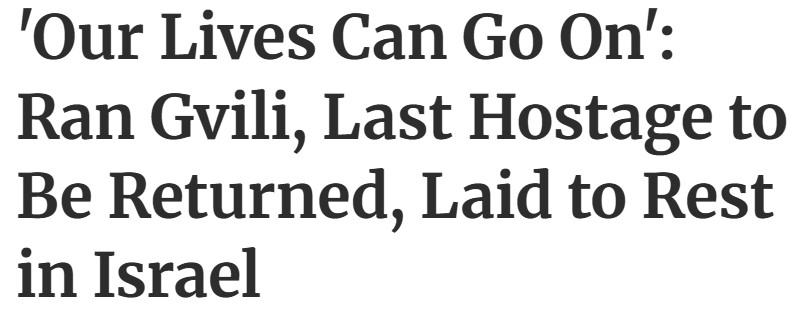
There is a profound contrast this week between the lives of Israelis and those of the Gaza population who survive. With the return of the remains of the last hostage taken by Hamas on October 7, Israeli politicians announced, “our lives can go on”. Nothing better summarises the gulf between the awful inhumanity of the genocide in Gaza and the relative peace and security of Israeli society, where most news of Gaza is actively suppressed.
Since the signing of a ceasefire last October has reduced the rate of killing of Palestinians by the IDF, but deaths are still a daily event. UNRWA reports that since the start of the ceasefire 463 Palestinians have been killed and 1269 injured. The remorseless bombing may have (largely) ended, but Gazans are still being killed for queuing in the wrong place for food, or for straying into the part of Gaza designated as the ‘Yellow’ zone, still occupied by the IDF.
UNRWA reports that despite the ceasefire, their observers “continue to report significant military activities including killing of civilians in Israeli aerial attacks, shelling, and gunfire across all five governorates of the Gaza Strip, including incidents both far from and in the vicinity of the “Yellow Line”.
It is impossible to say in advance what the future might hold. While two million Gazans are hemmed into refugee camps, barely surviving on humanitarian aid, western politicians turn a blind eye. Trump proclaims with his usual bombast that his latest vanity project – the ‘Board of Peace’ – will over see investment and development in Gaza. He has nominated a supposedly “transitional technocratic Palestinian administration”, to be headed by a former Palestinian Authority official, Ali Shaath.
But a different unelected Palestinian stooge of Trump/Netanyahu is unlikely to be welcomed by the Gaza population, as battered as they are. Let us recall that in the only elections to have ever taken place in Palestinian areas, in 2007, Hamas – a political organisation – won handsomely (even in the West Bank) precisely because the old corrupt officals of Fatah, now in control of the Palestinian Authority, were rejected.
Netanyahu looking for an excuse to end the ceasefire
Besides Trump’s erratic manoeuvres and ‘deal-making’ there are loud voices inside the Israeli government to break the ceasefire, on the grounds that what remains of the Hamas armed wing has refused, so far, to disarm.
Haaretz reports that Netanyahu “has threatened to resume the war in Gaza” if Hamas refuses to disarm. He is opposed to even hints of Palestinian autonomy in the 20-point ‘Trump plan’ and so he is desperately looking for any excuse to disown the ceasefire, The IDF, the newspaper reports, “has drawn up plans for a new offensive in Gaza City that could be launched as early as March”.
“In truth”, the correspondent in Haaretz writes, “neither Hamas nor the Netanyahu government seems to want the cease-fire arrangement to succeed, even if both have formally agreed to it. Pressure by the Gulf States on Hamas and by the United States on Israel has so far helped to keep the cease-fire together. But the next phase will test the cease-fire’s durability to an even greater degree”.
In the meantime, Netanyahu will at the very least continue to do what all previous Israeli governments have done – consolidate the “facts on the ground” – which means permanently holding on the bit of Gaza they hold. There is little hope for two million Palestinians in an even smaller prison than they were in before.
Part of a new permanent arrangement may well be new ‘camps’ for displaced Gazans. Al Jazeera reports this week that there are large-scale plans for a new camp near Rafah. Speaking to the Reuters news agency, retired Israeli General Amir Avivi, who still advises the military, described the project near Rafah as a “big, organised camp” capable of holding hundreds of thousands of people, stating it would be equipped with “ID checks, including facial recognition”, to track every Palestinian entering or leaving. (Al Jazeera, January 28).
Hundreds of thousands of Palestinians, to be kept in camps, no doubt surrounded by a high fence with razor wire. Once again, in the week of Holocaust Memorial Day, we have a profound historical irony, completely lost on the Labour Friends of Israel, Labour leaders or western politicians in general.
Palestine, therefore, has gone off the headlines, but the issue is a long way from being a dead one. The labour movement must continue to organise its protests, its occupations and its rallies in defence of Palestinian rights and against the continued Zionist occupation of Palestine.