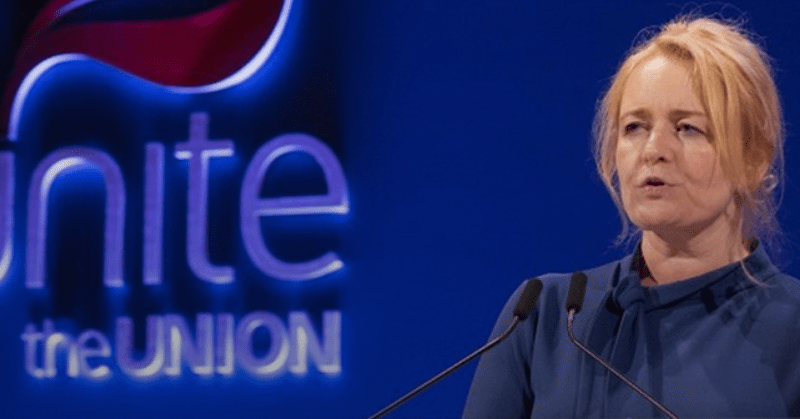
For previous local elections, Left Horizons has argued in favour of a vote for Labour, because it was the party that most carried the aspiration of workers for a better life. It was also the best chance of defeating a Tory Party bent on a policy of permanent austerity.
But the dynamics of politics have changed, and what was once a ‘two-party’ system across the whole of Britain is now a ‘seven-party’ system. Within that, the left vote is more splintered than it has been in generations.
Now, in tomorrow’s elections, the most serious threat to the local government services on which workers depend – and presenting a longer term threat to the NHS, to living standards and democratic rights – is Reform UK.
The poisonous and secretive organisation, Labour Together, first promoted Starmer to be leader and then organised the complete take-over of the Labour Party, including the NEC. But in trying to solve the crisis of capitalism at the expense of workers, this faction has demonstrated irrefutably that it is incapable of stopping Reform, even while pandering to Reform ideas. Indeed, this government and the whole Starmer/Reeves project has increased support for Reform.
All the forecasts for tomorrow’s local elections are pointing at a debacle for the Labour Party and a huge surge of support for Reform. Labour is facing a huge loss of council seats, some estimates suggesting as many as 1,800, which would make it the biggest local government defeat in its post-war history. The party is likely to lose control of the Senedd in Wales, and is likely to lose ground to the SNP in the Scottish parliament.
Millions likely to abandon Labour
Among the big majority of Labour members – and there are still approaching a quarter of a million of them – and the millions of workers who are likely to abandon the party in the polls, there will be no doubt about where the fault lies for Reform’s surge: with Keir Starmer. It is the Labour leadership which owns the coming defeat, and in due course it will face the consequences.
Unfortunately, the unpopularity of Starmer’s Labour will mean that many local councils will be taken over by Reform. This pernicious party took control of County Durham last year, after that council had been Labour for a century. On current trends, more councils like that will go to Reform, many in formerly ‘solid’ Labour areas. Gateshead, for example, Labour-controlled since 1945, and from time to time with every council seat being Labour, is likely to be taken by Reform or a Reform/Tory coalition.
Reform are aiming to drastically cut the services upon which workers rely, and to slash local government jobs. Like turbo-charged Thatcherites – which is what Nigel Farage’s councillors are – the new intake of right-wing councillors will completely undermine much of local government: in education, social care, roads, housing, waste collection, and many other provisions.
It is unfortunate that so many former Labour voters have been conned into imagining that Reform UK offers some kind of ‘solution’ to the problems of unaffordable housing, low wages and a crumbling NHS. Reform’s method is to point the finger at migrants and asylum-seekers who are in no way responsible for the growing insecurities and uncertainties that working class people face.
Farage failed to disclose a £5m donation
Reform is extremely well financed by millionaires and billionaires. Farage admitted this week that he failed to disclose a £5m donation from a billionaire living in Thailand. His party is backed by rich donors; he is personally bank-rolled by the same people; and despite his demagoguery he has no interest in the dire economic problems that workers fact in every-day life. His strategy is to use ‘small boats’ and ‘illegal’ immigration as a route to political power, so his party can implement ultra-Thatcherite policies in Westminster.
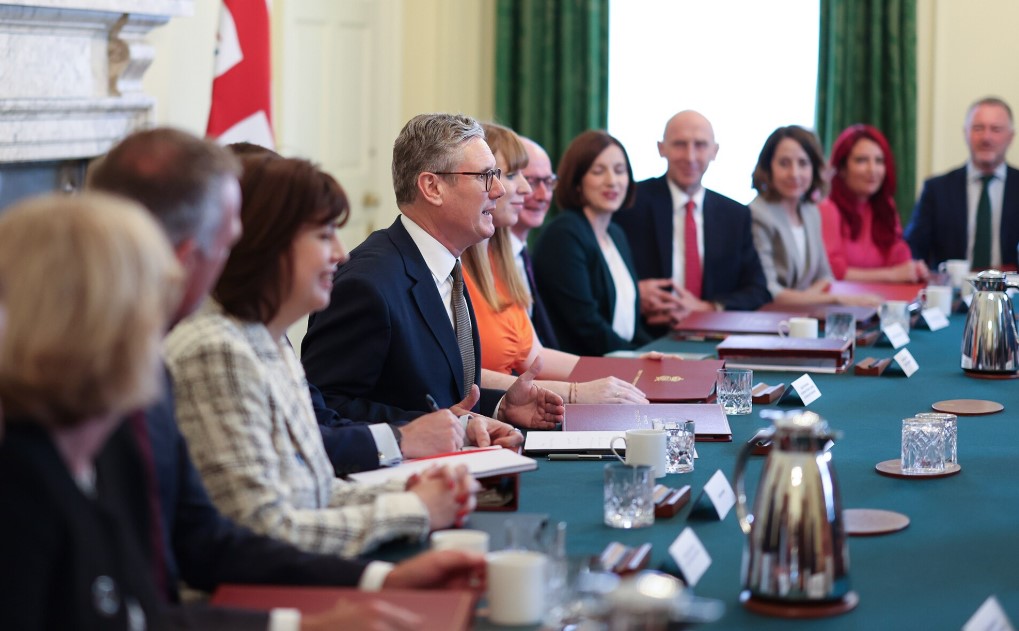
It is a scandal and an outrage that the Labour Party under Keir Starmer has been utterly incapable of fending off the threat of Reform-run councils and in the longer term, a possible Reform-run government. From the very beginning of Starmer’s government – when very early the pensioners’ Winter Fuel Allowance was removed – he has utterly failed to address the needs of workers.
Some minor reforms, like shorter NHS waiting lists, a heavily diluted ‘workers’ rights’ act and a ‘renters’ charter’ may be welcome. But in the general scheme of things, these small improvements are swamped by a much larger tide of problems, like NHS privatisations and cuts, and sky-rocketing rents.
The long decline in the health of the population, started by the Tories has actually continued under Starmer. The UK has lost on average two years of healthy life expectancy over the past decade, largely because of the huge gulf in wealth and income in society.
Because of the US war on Iran, it is likely in the coming months that living standards in Britain will be hit even harder. According to the International Monetary Fund the British economy will be hit hardest of all the G20 countries. The UK’s inflation rate in the UK is already the highest in the G7 countries. (See Michael Robert’s article here)
A system rigged to profit a tiny handful.
These problems reflect the trajectory of capitalism, a system rigged to provide profits for a tiny proportion of the population, whatever the cost to the big majority. British capitalism is in a crisis much deeper than that of the other main capitalist countries. Starmer’s failure lies in his unwillingness to deal with this because his political outlook is entirely based on the preservation of the capitalist system.
Even Polly Toynbee, a milk-and-water supporter of Starmer up to now, has admitted in her most recent Guardian article, “This is a national emergency to be treated as wartime, not keep calm and carry on time”. The only ‘national emergency’ recognised by the Starmer/Reeves leadership is one to reverse the decades-old managed decline of British capitalism. They cannot be relied upon in the slightest to do anything other than foist the burden of this onto working class people.
Not all of the votes that Starmer is throwing away are going to Reform: far from it. A large proportion of former Labour supporters will choose to stay at home and not vote at all. Another significant portion, however, will take a more proactive view and opt for whichever candidate they think is best placed to keep out Reform and their stable-mates, the Tories.
The British first-past-the-post electoral system means that candidates can be elected with a tiny proportion of votes, at both national and local level. Jeremy Corbyn got 40% of the vote in 2017 and lost, yet in 2024, Starmer, with only 34% of the vote achieved a ‘landslide’. The same perverse mathematics dictated that last May, in Cornwall, a Lib-dem was elected to the council with only 19% of the vote. In January, Labour lost a seat to a Reform candidate in Wales who only got 22% of the vote. In this situation, many workers will choose to vote tactically.
London and larger cities will see a Green surge
A large proportion of voters who had been Labour supporters will vote for the Greens, especially younger voters and those in London and larger cities, where they could make sweeping gains. That will not only be due to tactical decisions, but reflects a positive endorsement of a party that has adopted a much more radical political programme under the leadership of Zack Polanski.
The Green Party today is very similar to the Labour Party as it was under Jeremy Corbyn. Its 2024 manifesto, Real Hope Real Change, focused on urgent climate action, but featured significant elements of social justice, including a wealth tax, and public ownership, notably of utilities like water. This party has seen a surge in membership and many are former Labour members.

Apart from the internal sabotage by Labour’s right wing, and leaving aside the venomous and lying assaults by the majority of the mass media and the BBC, opinion polls showed that the social and economic policies of Corbyn were always very popular. Much the same is true of Zack Polanski and the Green Party today – so for many workers it has replaced the Labour Party as the main party of the left.
The threat that the Greens pose to the interests of the British ruling class can be seen in the onslaught against Polanski that has begun in the press, including, as it was with Corbyn, manufactured claims of ‘antisemitism’. But despite the antipathy of the press, it is likely the Green Party will make considerable gains on Thursday.
Many independents
Alongside them, there are many independents around the country. Some of them are associated with Your Party (which is standing very few of its own candidates), some of them ‘left’, and some not. They will have mixed fortunes, but overall are unlikely to make the gains the Green Party will make nationally, because of the latter’s national profile and established party organisation.
The most class conscious workers will probably vote tactically to keep out Reform and the Tories, and that will mean supporting some independents and especially the Green Party. In many places, particularly where the Greens have no significant base, the best option to defeat the right will still be Labour, and it may still retain support, albeit reluctant, as the best means of beating the right.
Just as important as these elections will be as an indicator of the direction of travel of British politics, we need to consider the aftermath. It is inconceivable that the drubbing that Labour is about to face will not have an enormous impact on its base, on the affiliated trade unions, and even in the Parliamentary Labour Party.
Inside the bubble of Westminster, the big majority of the four hundred-odd Labour MPs owe their cushy lifestyles and their ‘careers’ to the favours of the same factional machine that pushed Starmer to the leadership. But even among these carpet-baggers – three quarters of whom are looking at losing their seats in three years – open revolt against Starmer could become the norm.
In the longer run – measured in years, not months – there is still the possibility of the development of a new left inside the Labour Party. The expected demise of Starmer will open up a new phase in the development of the party, and one, we would hope, that opens the door to fresh ideas, more open debate on policy and demands for the restoration of democratic processes. All of that would be to the good.
Workers paying a high price for ‘Starmerism’
The working class will pay a high price for the failures of ‘Starmerism’. On present trends it looks like Reform will not only win control of many councils, but unless there is a sizeable shift in the polls, it will also form the next national government, perhaps in coalition with the Tories.
It was originally Karl Marx who suggested that a deeper and more profound radicalisation in the working class is sometimes provoked by ‘counter-revolutionary’ movements. To be sure, it is the working class that has to pay the price in the form of Reform and its far right agenda.
But there is at least one consolation for the grim years of Reform local authorities, and possibly a Reform government in Westminster, and that will be the clearing out of thousands of Labour councillors and MPs, many of whom never had any real interest in the working class beyond their own careers. Unfortunately, even that has a cost, because alongside the careerists, some very good Labour councillors (and in the future MPs) who have worked tirelessly for their local communities will also lose out.
As things stand in the polls, working class communities up and down the country, are about to experience Reform control of their local authorities. Perhaps that is a harbinger of worse, with polls pointing to Nigel Farage holding the reins of power in Westminster.
We can be sure of one thing, however: the failures of Starmer and the subsequent rise of Reform will not remove the willingness of workers to fight back, including many workers who mistakenly voted for Reform. Even the weakest trade union leaders – and there are several who have a large responsibility for allowing Starmer’s faction to take over the Labour Party – will not be able to hold back a strong tide of opposition. It is in that direction that socialists and trade unionists will look in the coming years.
[Inset pictures are from Wikimedia Commons]