By John Pickard
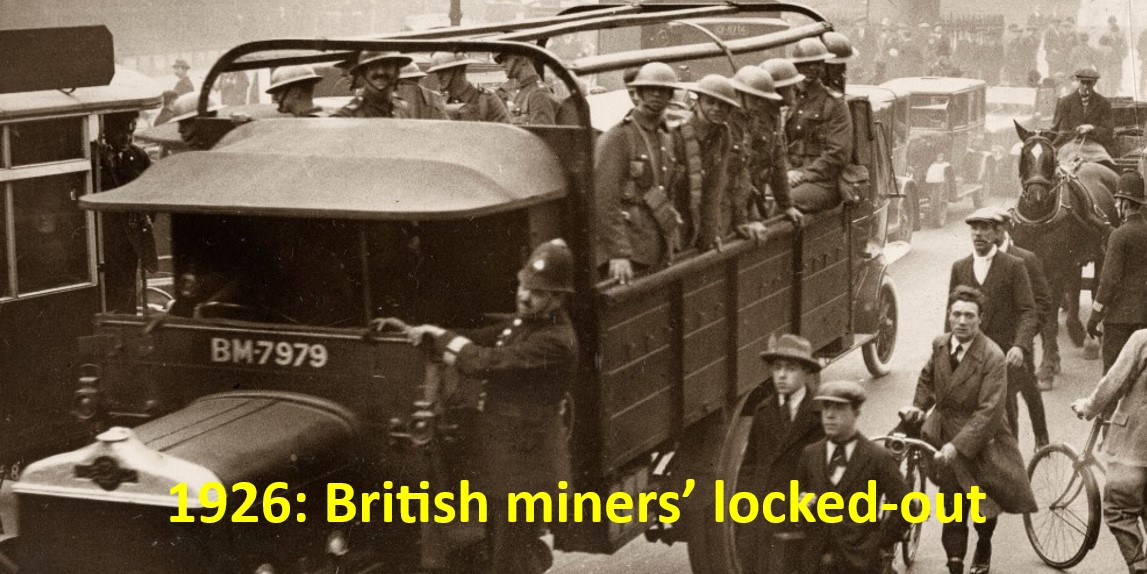
The General Strike of May 1926 lasted only nine days. But the Great Lock-out of 1926 – which is how that struggle is remembered in the tradition of the miners’ union – lasted nearly seven months. Because they were in the forefront of the struggle just to maintain workers’ living standards, it was in the mining community that the days of the General Strike and the seven-month lock-out were fought most bitterly.
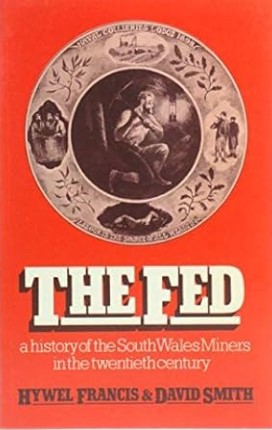
We get a glimpse of the intensity of the fight during this period and the revolutionary character of the class struggle from one history, that of the South Wales Miners’ Federation. (The Fed, a history of the South Wales Miners in the twentieth century, by Hywel Francis and David Smith).
Support for the General Strike when it was declared in early May was completely overwhelming. In The Fed, the authors write:
“So overwhelming was the support that to contemplate not joining the strike would have been tantamount to committing social suicide. Not one miner is said to have been arrested, although there was much illegal action. It was not so much a question of ‘dual power’ as almost one of transference of power in some valleys.
“In such villages as Bedlinog and Mardy, the miners through their strike committees and councils of action virtually ran their communities unchallenged.”
“The most profound effect the events of 1926 had on the coalfield”, we read in The Fed, “was the way in which they clarified and then polarised class loyalties”. That was true in the early days of the nationwide general strike, but as the lock-out extended into weeks and months, the class polarisation and the bitterness deepened.
“Class discipline and resourceful, quasi-political illegality”
Francis and Smith describe how in the increasingly harsh and desperate conditions of the lock-out, with autumn turning towards winter and with the miners and their families having little to sustain them, an “alternative culture” developed. It was founded on “class discipline, resourceful quasi-political illegality, direct action resulting often in guerrilla and open warfare, collectivist action of various forms, perverse humour and escapism”
Communal kitchens, not unlike those set up in the 1984-85 miners’ strike, except on a much large scale, sustained hundreds of families. One miners’ agent, James Griffiths, is cited in The Fed, “…we went through the seven months in our area without a single breakaway…due…to the Fellowship engendered by that one meal a day…”
Although in the early days of the nationwide strike, the miners’ effective control of their areas was solid, as the lock-out progressed, the government increasingly used large numbers of police, drafted in from different English counties, to intimidate the Welsh miners.
Police like an occupying army
“The coalfield resembled a battlefield”, Francis and Smith write in The Fed, “with an ‘army of occupation’ attempting to break the spirit of a hostile, turbulent population and with local newspapers publishing lists of ‘riot’ summonses, almost as if they were wartime casualties.”
The hostility towards the ‘occupying’ police was to be directly replicated in the nationwide strike sixty years later. As it was later, in 1926, the conflict grew bitter as the lock-out wore on. “The eighteen major clashes between striking miners and police occurred mainly in the last eight weeks of the lock-out. By far the most serious were those in the upper Arfan Valley where activities bordered on insurrection…”
But eventually, beaten, starved and desperate, the miners were forced to submit to longer hours and worse pay and “…only a skeleton remained of the communities which had sacrificed everything in the ‘war between poverty and opulence’.”
“The lock-out had been a catastrophe”, we read in The Fed, “but something could be claimed from the wreckage, for it taught us to know our enemies.”
Without a doubt, the Great Lock-out of 1926 was the real foundation of the Communist Party in South Wales and elsewhere in Britain. Notwithstanding the opportunist advice given to the British CP leaders by the Communist International, the Soviet state still had huge support and admiration from the best fighters in the miners’ communities.
It had not gone unnoticed that Russian miners had sent money to help alleviate the hardship of their fellow miners in Britain. The Russian contribution to the British Miners’ Relief Fund, The Fed notes, was well over £1.1mn, and it amounted to 87% of all overseas donations.
The ‘Red International’ of Labour unions
Towards the end of the lock-out, in October 1926, the Penallta lodge, in the South Wales Valleys, passed a motion to demand that the Miners’ Federation of Great Britain affiliated to the ‘Third or Red International of Labour Unions’. Arthur Cook, speaking in Moscow in December 1926, boasted that the Communist Party by then had 12,000 members “80% of whom were allegedly miners”. (Western Mail, cited by Francis and Smith)
As a result of the high CP membership and its overt support for Soviet Russia, Mardy was nick-named ‘little Moscow’ in South Wales, but it has to be said that this wasn’t the only one. Chopwell for example, near Gateshead in the Durham coalfield, had exactly the same nickname and to this day has streets named after Marx and Engels.
The experience of the miners in that great lock-out is an important part of the tradition of the British trade union movement, every bit as much as the bitterly-fought, and lost, strike of 1984-85. An important lesson that can be drawn from the miners’ histories, as it was for the nine-day general strike, is that there was enormous
The Fed, a history of the South Wales Miners in the twentieth century, by Hywel Francis and David Smith, can be obtained through a good used-book deal, such as Abe books, here.
Feature graphic based on photograph in Wikimedia Commons, here