

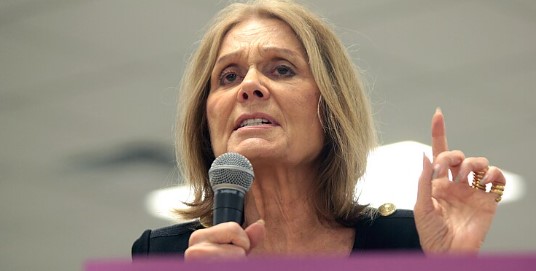
 An anti-requiem for Gloria Steinem, cold-war icon
By Sarah Raymundo (From Facebook)
Gloria Steinem, March 25, 1934,- September 2, 2026
As the media machine prepares to unleash a flood of fawning tributes, the usual suspects will inevitably honour Gloria Steinem—a spectacle revealing little about liberation and everything about their own bankrupt politics, brazen opportunism, wilful blindness to historical fact, and the hackneyed claims to “complexity” and “nuance” held so dear by these intellectual mercenaries.
How does one assess a life after it ends? Those who benefit and are in a good position in this system will honour Gloria Steinem for contributing to stabilizing a system oppressive to many and dis-aligning them from revolutionary ideas—this is not what women want and need.
The death of Gloria Steinem will undoubtedly unleash an avalanche of sanitized obituaries, performative tributes, and ruling-class hagiography. Western media will mourn her as a “groundbreaking icon” and a pioneer for gender equality. But for the global majority—the millions of women across the Third World and the working-class masses who remain crushed beneath the boot of imperialist exploitation—her passing marks the end of a legacy that fundamentally weaponized feminist rhetoric to protect the empire.
CIA-backed organisation
Steinem did not liberate women; she weaponized women’s liberation to serve the interests of US hegemony. The foundational sin of her career was never a mere footnote: her early leadership of the CIA-backed Independent Research Service in the late 1950s and 1960s was explicitly designed to undermine anti-imperialist, socialist, and communist youth movements at international youth festivals. When exposed, Steinem didn’t apologize; she defended the covert arm of the U.S. imperialism, describing its operatives as “liberal and honourable.” This was not an innocent blunder of youth, but the blueprint for her entire career.
Through Ms. magazine and her manufactured status as the singular, polished face of “second-wave feminism,” Steinem pioneered a dangerous model of liberal counter-insurgency. As radical feminists, Black panthers, and anti-capitalist women were rising up to demand the dismantling of the triad of imperialism, white supremacy, and capitalism, Steinem offered a palatable alternative: bourgeois, reformist faux feminism.
Climbing corporate ladders
This imperial feminism detached gender oppression from its economic and geopolitical roots. It told American women that liberation meant climbing corporate ladders, breaking glass ceilings inside warmongering state institutions, and achieving parity within an exploitative system—all while the very empire housing them carpet-bombed, starved, and destabilized nations across the Global South. By framing patriarchy as an abstract cultural enemy separate from class struggle and US military domination, her brand of activism effectively depoliticized the feminist movement and severed its solidarity with anti-imperialist struggles worldwide.
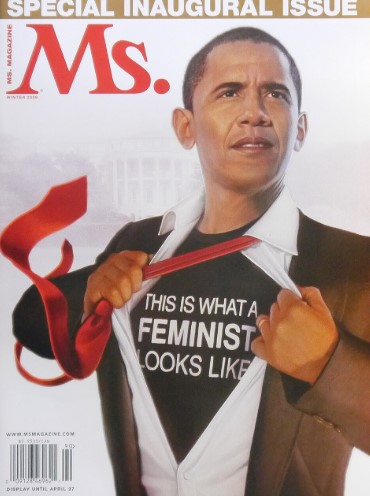
It was precisely this co-optation that radical groups like Redstockings rightly called out in 1975. They recognized Ms. magazine and Steinem’s elevated media stature as a parallel organization meant to channel radical anger into benign electoral politics. When challenged on her intelligence connections and corporate backing, her apparatus used legal threats and publishing pressure to suppress internal dissent, silencing the very radical women whose ideas she had watered down and monetized.
For the global majority, Steinem’s legacy is not one of freedom, but of co-optation. Her pro-imperialist ideology gave feminist cover to U.S. soft power, making Western liberal democracy look progressive while its economic structures continued to siphon labor and resources from women in Latin America, Africa, and Asia. She normalized a brand of identity politics that allows female CEOs, drone operators, and politicians to be celebrated as triumphs for “womanhood,” even as their actions inflict violence on millions of impoverished women globally.
We must refuse the myth-making that surrounds her death. True liberation for women will never come from the handshakes of CIA handlers, corporate sponsors, or ruling-class media elites. It will come from the destruction of the imperialist, capitalist structures that Steinem worked so tirelessly to legitimize. Her death should serve as a stark reminder: a feminism that aligns itself with the empire is no feminism at all—it is merely the soft edge of oppression.
Sarah Raymundo is assistant professor at the Center for International Studies, University of the Philippines. She is the international liaison officer of Bagong Alyansang Makabayan (New Patriotic Alliance) and chairperson of the Philippines-Bolivarian Venezuela Friendship Association. She is a columnist for Bulatlat, an alternative online news publication in the Philippines.
This article is from Sarah Raymundo’s Facebook post, here.
Feature picture is from Wikimedia Commons
 The Unwomanly Face of War - Book review by John Pickard Left Horizons has published a series of articles on the role of the Red Army in defeating Nazi Germany, often
 The Galloway “Novara” interview: who is splitting the left? - Readers who engage with social media may well have stumbled across a dispute between George Galloway, the new MP for Rochdale, and the left news
 Wor Bella: star of World War One women’s football - Review by John Pickard “It generally comes as a big surprise to people that there were women’s football matches during World War One. Not only
- Letter: Attack on Diane Abbott – race and class - By Mark Langabeer – Member of Hastings & Rye Labour Party As has been widely reported, Frank Hester, who has donated £10 million to Tory
- Institutional Racism in the French Republic - By Greg Oxley, Editor, La Riposte Over the recent period, governmental propaganda in France has once again brought fear and suspicion against Muslims to the