By Andy Ford, biomedical scientist
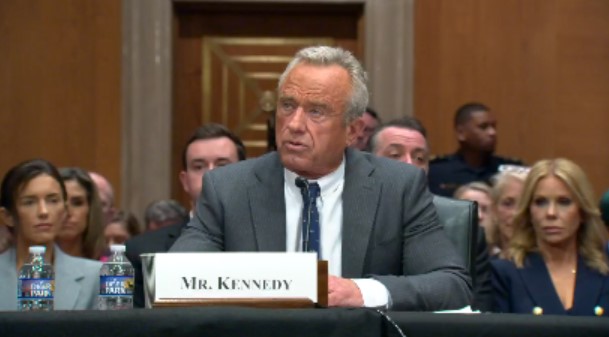
Autism, and the apparent rise in the numbers of autistic children, has become a political issue, thanks to the remarks and activities of Donald Trump and his pick for US Secretary of Health and Human Services, Robert F Kennedy Jnr.
“Autism is an epidemic”, Kennedy told the US Congress, “and genes do not cause epidemics. They can contribute a vulnerability, but you need an environmental toxin. It’s like cigarettes and smoking.” He has also previously mentioned vaccines as a possible ‘environmental toxin’, while his conspiracy-theorist supporters even mention early umbilical cord clamping, mobile phones, pesticides and even aircraft vapour trails.
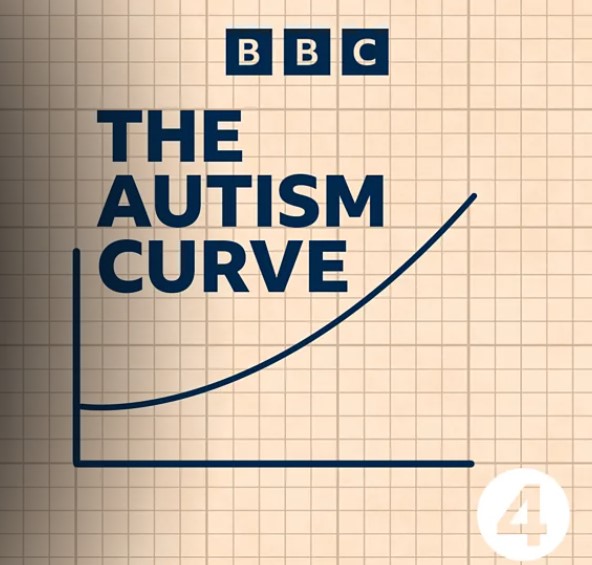
Both Kennedy and Trump cite autism as an ‘emergency’, with one in 36 children being diagnosed, driving panic amongst prospective parents. Autism can be a debilitating condition, and often leaves parents with a huge burden of care and advocacy, with ripple effects on the wider family. It is serious. So, what is the scientific thinking, and the data? BBC Radio 4 recently investigated in The Autism Curve.
In the first episode, Professor Ginny Russell of UCL confirmed that her most recent study found an astonishing 800% increase in diagnosed autism over twenty years from 1998 to 2018, with diagnosis being based on persistent difficulty in social life, in things like conversation and eye contact, talking in monologues; and also restricted interests and repeated behaviours like repetitive movements, or eating the same food every day.
Autism: a spectrum merging imperceptibly into ‘normal’ behaviour
This just underlines the fact that autism is a spectrum, which merges imperceptibly into ‘normal’ behaviour – after all, many people have difficulty with conversations, or vary in the amount of eye contact they give, or occasionally bore people with monologues.
All other European countries are showing similar increases over the same time period, and in the US the rate went from 1 in 150 to 1 in 36, a 300% increase. Hence the comments of Trump and Kennedy.
But this is not what it seems. When Professor Joshua Stott (also of UCL) was studying dementia, he found that many older people referred to him for dementia actually had symptoms more similar to undiagnosed autism. Only after their support networks fell away over time – due to leaving the workforce, bereavement or loneliness – behaviours emerged that led to referral for dementia.
He then made a study of historic GP records segmented by age, class, gender and mental disability, and calculated the rates for each. Huge variations in diagnosis rates were revealed. A vast number of autism diagnoses had clearly been missed in the past, with significant under-diagnosis in older people. In this country there might be between 440,000 and 1.2 million undiagnosed.
It would appear that modern diagnostic criteria derive a rate of around 3%, while previous diagnostic criteria, only showed around 1%. Also, until recently many women and ethnic minorities were missed or diagnosed with other conditions, which may explain the present rises in diagnosed autism. This led the programme to ask, quite logically, whether, “If so many were missed, was there that much wrong with them?”
Link between autism and MMR vaccine discredited
The issue first began to transform from a medical and scientific debate to a political issue back in 1998 when Dr Andrew Wakefield published a study in The Lancet claiming a link between autism and the Measles-Mumps-Rubella (MMR) vaccination. Wakefield was a gastro-enterologist at the Royal Free Hospital who claimed to have found Measles virus in the gut of 12 autistic children.
His findings, however, have never been replicated by other researchers and Wakefield’s study was vehemently attacked by vaccine manufacturers and the scientific establishment. He eventually left his job and moved to the US.
Once in the US Wakefield was taken up by right wing elements as a ‘defender of truth’ against vested interests, big Pharma, the scientific establishment and the ‘deep state’. He eventually received national coverage by the likes of Fox News.
The Autism Curve looked at the “zombie afterlife” of Wakefield’s discredited (or unproven) ideas. Dr Francesca Happe discussed possible environmental triggers for autism. She described how, because autism often presents as a regression of development at around 18 months, desperate parents cast around for causes.
She described how they will blame themselves for moving house at 18 months, or sometimes also the vaccines that are often given at around that age. The parents may see the emergence of autism in a child who up until that time had been developing normally. But Dr Happe pointed out that post-Wakefield, hundreds of studies covering thousands of children have been done – and they have all failed to find a link between vaccination and autism.
Happe explained that autism is largely genetic, but not like the inheritance of eye colour or blood groups. Instead, the inheritance of autism is much more like the inheritance of height, where dozens of genes are working together, interacting in all sorts of directions. A combination of pre-existing, sub-clinical traits in the parents can push a child ‘over the edge’ of the diagnostic criteria for autism.
Environmental triggers post-1990s
If there are environmental triggers, they would have to have arisen post-1990s, and have effects on neurological development, and have affected large numbers of people. What the science has found as environmental triggers are older parents, pre-term birth and infection in pregnancy. In modern societies people do have children later, and many, many, more pre-term infants survive into adulthood than was the case 20 or 30 years ago.
But most of the increase is due to changes in the understanding of what exactly autism is: the diagnostic criteria. It was once a very rare diagnosis confined to children with severe disability. In the past they would have been shunted off to long-term institutions where they were invisible to society at large. It is completely different now, with people diagnosed with autism working, living independently and raising families.
But can anyone prove that the ‘real’ rates are not going up? Although it is always difficult to prove a negative, Professor Russell tried. She conducted a study of rates of diagnosis ten years apart, compared with reported traits of poor communication, difficulty making friends, fear of new things or people, and not understanding sharing.
She found that in the group with the most pronounced traits there was no jump in numbers, but that there had been an increase in the number of children with milder traits being diagnosed, probably due to greater awareness on the part of teachers, nurses and doctors.
But autism is no longer a purely scientific issue. There are thousands of parents of autistic children struggling with their situation, with inadequate support and a veritable battle to secure specialist education, or the right support in mainstream education, and they are looking for answers. Trump and Kennedy are tapping into this feeling of abandonment and desperation to further their own right-wing political agendas.
First serious Measles outbreak in the USA for decades
It is striking that the ‘vaccines = autism’ idea has taken particular root in the rural, and Republican-voting, communities of the USA, which has already produced the first serious Measles outbreak in decades, in isolated west Texas.
Research also shows that anti-vaccine sentiment is heavily divided along partisan lines, with 35% of Republicans versus 10% of Democrats believing in some sort of linkage between vaccination and autism, and also between rural versus urban areas:
“In 2001, 6% told Gallup that vaccines were more dangerous than the diseases they were designed to prevent. That was 20% in 2024. In three polls before 2024, roughly equal small shares of Democrats and Republicans said vaccines were more dangerous. In 2024, however, there was a 26-point gap between partisans.”
The support for Kennedy’s ideas is also an expression of the distrust and loss of confidence across wide layers of society in all the institutions of official society because of the economic dead end they have led people into since the financial crash of 2008. It could be said to be an instinctive understanding that, as Marx wrote,
“The ideas of the ruling class are in every epoch the ruling ideas, ie the class which is the ruling material force of society, is at the same time its ruling intellectual force. The class which has the means of material production at its disposal, has control at the same time over the means of mental production, so that thereby, generally speaking, the ideas of those who lack the means of mental production are subject to it.” (The German Ideology, 1845)
However, in the modern world, the alternative ideas that people will come across on the internet are much more likely to be those funded by American billionaires or Russian bot farms, and much less likely to be censored or downranked by the likes of Facebook and Twitter/X than those of socialism and Marxism. In the words of Antonio Gramsci “The old is dying and the new cannot be born; in this interregnum monsters are born.”
Meanwhile, in the real world, scientific advances continue to be made, with studies in mice showing that deleting some genes leads to autistic-type behaviours due to ‘hyper connectivity’ between neurons in the brain, and many studies gradually uncovering the networks of genes that influence autism. Imagine how more rapidly such research could advance if capitalist politicians chose to fund them properly, rather than spending $3tr a year on weaponry or $12 bn just to flatten Gaza.
The BBC Radio 4 programme, The Autism Curve, can be found on the BBC Sounds app, here.
[Feature picture of RF Kennedy Jnr, from Wikimedia Commons, here]













Families react to RFK – https://www.msn.com/en-gb/lifestyle/family-relationships/rfk-jr-says-autism-destroys-families-here-s-what-those-families-want-you-to-know/ar-AA1FVmA2?ocid=msedgdhp&pc=HCTS&cvid=951651d1e6e345679270ecd580312ce6&ei=21