
By Joe Langabeer and Guy Cowen-Hutton
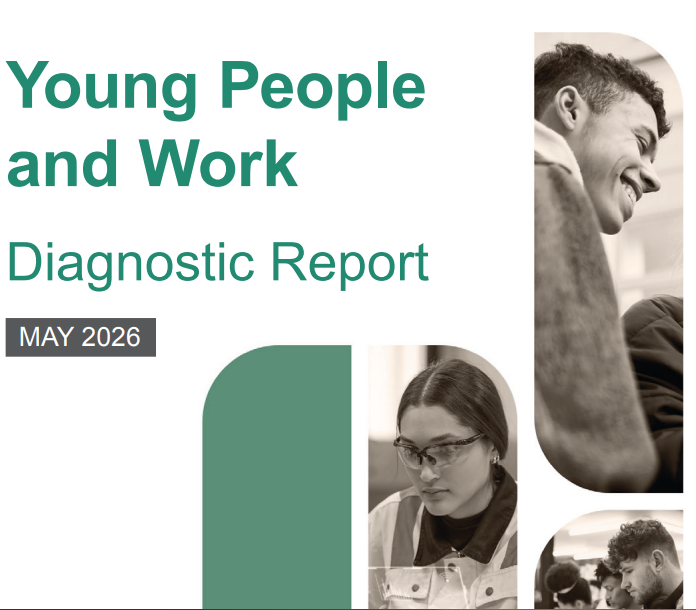
Former health secretary during the New Labour years, Alan Milburn, has published the first part of his report into why so many young people are not in education, employment or training (characterised as NEETs). The report has become an excuse for Starmer’s government to revive welfare cuts to the most vulnerable, some of whom are young, instead of providing solutions to the crises that young people face.
The first part of the report acts as a diagnosis of the problem, with the second part supposedly providing solutions on how to get young people into work. The second part of the report will be published at a later date, but it is striking how quickly the government is looking to act on it when we do not yet know what solutions Milburn will provide.
Presumably, there has already been a discussion with Milburn suggesting welfare reforms, and his comments both in chapter 6 discussing welfare costs, and his conclusion of this report do point in that direction, claiming that the welfare “bill” is becoming increasingly high.
Some of the headlines from the report include the claim that the cost of NEETs to the public purse is £125 billion a year. Newspapers including the Financial Times and The Independent have run with this figure, though it is clear in Milburn’s report that the data is speculative and predominantly relies on young workers not being able to contribute to the economy, rather than representing the direct cost of welfare.
The report frames the issue as a choice between welfare and employment support for young people, when the actual cost of welfare paid to young people is relatively insignificant, at £3.2 billion, compared to the rise in UK defence spending to £60.2 billion in 2024/25, as reported by the Department of Defence.
Mental Health and Poverty
The report is correct in identifying that ill health, and especially a rise in mental health issues, including anxiety and depression, is a primary driving factor behind why young people are struggling to be in work. There is a suggestion that poverty is creating distress, though this is not presented as the overriding factor.
Elements such as poor health choices, including eating junk food and vaping, are said to be affecting young people, with Milburn clumsily forgetting, perhaps purposefully, that people often engage in these behaviours because they are living in poverty and have poor mental health.
But he does not truthfully acknowledge that the driving factor behind the decline in mental health is poverty, as reported by The Health Foundation in 2024. Using data collected from NHS Digital, The Health Foundation found that young people from poorer backgrounds are more likely to experience a “probable mental disorder”.
If they do have one, they are more than twice as likely to live in a household that cannot pay its rent or mortgage than those who are unlikely to have a mental disorder. Poverty is creating a vicious cycle that is causing young people’s mental health to decline, preventing them from being able to work.
Whilst Milburn comments on the fact that the pandemic accelerated the mental health crisis, rather than starting it, he does not offer a starting point for where this crisis began. Yet there is research on the issue, even if it is limited in scope. A report published by the British Medical Journal in 2016 indicated that there had been a gradual deterioration in mental health following the 2008 financial crash. Since then, we have seen a prolonged period of capitalist decline, further intensified by the pandemic and savage cuts to public services designed to protect the interests of capital.
Austerity, the single biggest driving factor behind the decline in young people’s mental health, is not mentioned in this report. In a blog post by the organisation Understanding Society: The UK Household Longitudinal Study, it found that reductions in local authority spending caused far greater mental health problems for young people, particularly in areas such as the North East, where some of the harshest cuts were enacted.
Youth services slashed by public spending cuts
Many of the services that supported young people, including youth centres and community hubs, where young people had access to activities connected to the workplace as well as social activities, were wiped out by these brutal cuts.
This type of data should have acted as a wake-up call for this Labour government to reintroduce public services that cater to young people, such as the previously government-funded Connexions advice, guidance and support service for young people, or by bringing back youth clubs and community centres where young people can take part in recreational and vocational activities that prepare them for life and the workplace. In Labour’s manifesto for the 2024 general election, it promised that new youth hubs would be built so that young people could participate in their communities.
However, in March last year, as reported by the charity Youth Access and the online news website Schools Week, many of these hubs are not “universally” available to young people. Youth Access estimated that much more funding would be needed to truly make an impact with these hubs, but Labour has not committed to that and continues to ignore one of the most important elements in solving the crisis facing young people.
Missing The Point
There are some good points made in the report. The decline of the apprenticeship levy has seen a reduction in apprenticeships, forcing young people to go to university as their only option for gaining a decent job. Milburn is fairly critical of the reliance on higher education as the only pathway into work, particularly when vocational sectors are crying out for workers. He argues that funding for apprenticeship levies would be the best way to train more young people and help them get into work.
He is also rightfully critical of the over-reliance on exams in schools, which leads to stress and higher levels of mental health problems among young people, while also failing to adequately prepare them for vocational work.
The emphasis on exam success rates, in which Milburn does not identify the root of the problem, stems from OFSTED and its harsh framework for determining success through qualifications and exam results. OFSTED should be scrapped and replaced with a system that does not penalise schools or teachers, but instead values students’ wellbeing and supports schools where there are concerns that students are not receiving adequate support.
Quality of Jobs
The biggest problem with this report is its conclusion, where Milburn stresses that the welfare system must be reformed so that young people are pushed into work. In interviews, he states that he does not blame young people for not being in work, but rather that the state allows these failures through easier access to welfare and by the Department for Work and Pensions spending more on providing benefits than on helping young people find work.
What this means in practice is that young people currently on welfare are likely to face further cuts to their benefits, whilst the DWP will impose harsher conditions in order to push them into work. It is not a solution to the problem, as it is the same method that the DWP has pursued since its inception.
The New Economics Foundation released an excellent report earlier this year, arguing that merely pushing people into work, often low-paid and insecure, will not solve the growing crisis of unemployment but will instead exacerbate it.
According to data in the NEF report, the UK is the second-strictest country in the OECD when it comes to job-search requirements for welfare recipients. The strictness of these requirements sees Britain spend the highest percentage of GDP on this approach, because people are being forced into lower-paid jobs and the insecurity of those jobs means they are often out of work fairly quickly, pushing them back onto welfare.
A return to workfare?
Poorer areas of the country have fewer jobs, or poorer-quality jobs, meaning there are more people claiming welfare. If you are on welfare, the likelihood is that you will receive a poor-quality job because the DWP pushes people into any type of work, even if that work leaves them trapped in a cycle of low-paid employment and welfare dependency. Milburn appears to be advocating a return to workfare rather than meaningful investment in public services that support young people in developing skills and finding employment.
The government is seeking to accelerate this through cuts and harsher requirements for accessing welfare, forcing people into poor-quality jobs. They do not target the real penny-pinchers of the state and of people’s labour: the capitalist class that offers poor-quality jobs. Both Milburn and his former leader, Blair, have appeared in the media lambasting Labour over the rise in the minimum wage, arguing that it has led business leaders to cut vacancies in the labour market.
Of course, they make this argument to protect the interests of employers, masking the fact that capitalism is in crisis and that businesses are seeking to save every penny generated by workers’ labour. The capitalist class is concerned only with preserving its wealth, whilst workers face poorer pay and conditions alongside rising costs for food, energy, rent and other necessities that will make young people’s lives much harder.
All young people should condemn this report as another attack on their generation, contrary to what Milburn might argue. The only alternative to the crisis facing young people, brought about by the crisis of capitalism, is socialism. The task for young socialists now is to fight for it!