
By John Pickard
Notwithstanding the comic machismo of US War Secretary, Pete Hegseth, and leaving aside the impossibility of taking seriously anything Donald Trump says, the latest ‘pause’ in the bombing of Iran has exposed the limits of US power in the region.
The war that Trump said would only last weeks is now five months old and it is proving more costly militarily, financially and politically than he ever bargained for.
There is no getting away from the fact that the US military is stronger globally than any other, perhaps as strong as the next four or five put together. But its bombing of Iran has so depleted its Middle East resources – and without any noticeable effect on the willingness of Iran to fight back – that the US military chiefs have forced Trump to call a halt to bombing, at least for the moment.
Iran has claimed all along that its attacks on US bases in the region have been relatiatory, so now that the US has stopped bombing, Iran is also holding back. A few articles here and there in the US press have revealed the extent of the damage being done to US bases in the region and the cost to the US in materiel and hard cash. Trump is throwing billions of dollars at the war he started, and there is so far nothing plausible that he can brag about as a ‘victory’.
The last ceasefire collapsed in the first week of July, to be followed by nearly two weeks of relentless bombing of Iran, including many non-military infrastructure targets like road bridges and tunnels. The new US pause is not only due to mounting expense – the war so far has cost $40bn tax-dollars, according to Pentagon figures – but because American forces have seriously depleted their armoury.
The damage to the US bases, as a result of Iranian missiles, have been largely kept out of the mainstream press, but reports beginning to come out suggest that it is considerable. The New York Times reported that some of the US bases in Saudi Arabia, Jordan and Kuwait, that were attacked in the early period of the war, in March, became “all but uninhabitable”.
Huge financial cost of the war
The Centre for Strategic and International Studies (CSIS), made an assessment of the financial cost of the war damage just to US bases and came up with a figure of up to $5bn. While a large proportion of Iranian missiles are intercepted and shot down, it notes, a small proportion do get through, and in a large barrage the actual number of missiles can still be devastating.
Looking at ‘before’ and ‘after’ satellite photographs, CSIS notes, “The images make clear the Iranian strikes were precise. There are no random craters indicating misses or wasted assets. Most struck facilities were unusable afterward”. Moreover, in the context of fewer interception missiles being available, the prospect is for more Iranian missiles to get through.
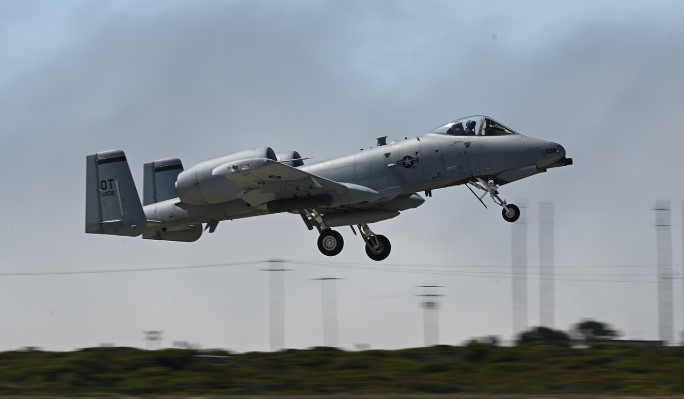
The CSIS gives a list that includes aircraft destroyed or damaged, including four F-15 fighters, an AWAC aircraft, a refuelling aircraft, a ‘Warthog’ ground attack plane, as well as helicopters. But, a report to Congress in May said that at least 42 American aircraft, including unmanned drones, had been destroyed or damaged since February.
Air defence systems seriously depleted
Such aircraft losses represent hundreds of millions of dollars each, but the most significant losses triggering this new pause are those that have built up in recent weeks in air-defence: ie missiles and radar systems. In the early days of the war, an important missile defence radar array, part of the Terminal High-Altitude Area Defense (THAAD) system, was reportedly destroyed by Iran.
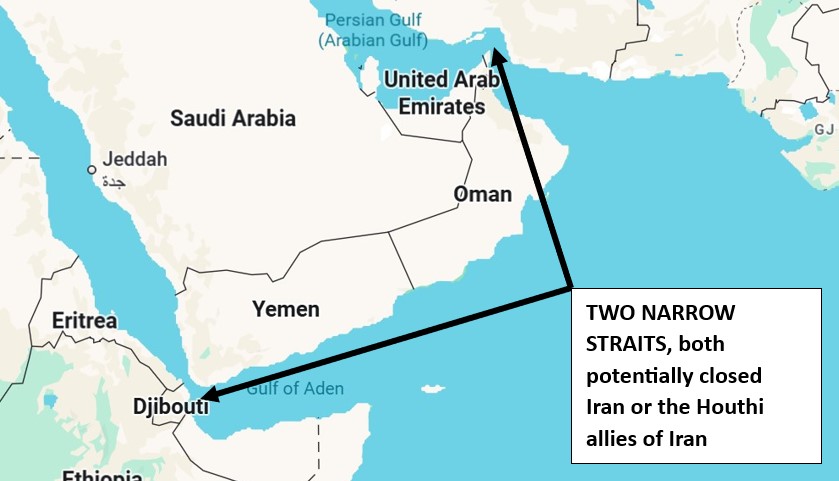
Map showing not one, but two potential choke points for Middle East oil
It has become clear that a war of attrition conducted from the air is proving extremely expensive, but, more to the point, it is ineffective. As has been said many times, you can bomb the Strait closed, but you cannot bomb it open.
Iran is learning lessons in its defensive war against the US and as a result more missiles are getting through the defence systems used by Gulf states and US bases. A former CIA military analyst told the Financial Times, that, “It seems that in Jordan they have been able to get increased penetration of missile defences and increased accuracy for their medium-range ballistic missiles. You have to assume, if you are an American planner, that Iran is making both technical and tactical tweaks from lessons learnt in past conflicts.”
Just as Trump was posting on his social media platform last week, that it was time to raise the stakes with Iran, it was reported by CNN that both JD Vance and General Dan Caine, the Chairman of the Joint Chiefs of Staff warned him off.
They raised concerns about escalating the war, because of the serious and ongoing depletion of resources available to the US military. The problem is that the US has been burning through precision munitions that take years to replace, while Iran is still holding a huge proportion of its original missile, drone, and rocket arsenal, despite months of strikes.
In an interview with CNN, a retired NATO Supreme Allied Commander, General Wesley Clark, explained that the new US pause is an indication of US weakness. “If they [Iran] wanted to negotiate”, he said, “they would have come to us…the pause is a sign of weakness”. It was a signal to Iran, he argued, that Trump wanted their help to get out of the “fix” he was in.
The “weakness” of the USA position, is not a military issue (and Wesley Clark argues that the question of munitions depletion is secondary), but a political one. “We’ve got to either make up our mind to really go in and fight”, he adds, “or gracefully excuse ourselves and retire”. The problem that Trump has is that the option of “really going in and fighting” – in other words escalating and possibly using ground troops – is one bearing incalculable risks.
Wesley Clark raised the spectre of the early stages of the Vietnam war, when there were similar pauses in bombing. The implication of what he was saying is that this will become either another Vietnam, with all the political consquences of being bogged down in an unwinnable war, or a strategic retreat.
Pentagon criticised for its slow release of casualty figures
So far, eighteen US service personnel have been killed in the war, although the Pentagon has now reduced the number to 14. They have also reduced the number of injured in Operation Epic Fury to 417, but that is no small number. An article in the New York Times notes that the Pentagon has faced criticism for its coyness in releasing casualty figures and to confuse journalists further, it has now changed the way it reports them.
This war, from the standpoint of the US military, is one with relatively few casualties, certainly in comparison to the huge losses in Iran. But that is all the more reason why an escalation that carries the risk of much higher casualties is something the White House just cannot contemplate.
In the United States, there is overwhelming opposition to this war, and it is growing. Petrol has been over $4 a gallon for months on end and every time there is a new round of fighting and the Hormuz Strait is closed again – this time with the added threat of the closure by the Houthi allies of Yemen of the Strait of Bab al-Mandab which is narrower than Hormuz – the possibility of a fall in petrol prices recedes.
A war intended to last days is now about to enter its sixth month. Foreign policy strategists in Washington are urging that Trump recalibrates his war aims to two simple ends: perhaps a nuclear non-proliferation agreement and the re-opening of Hormuz – in other words back to where the USA and Iran were before the war was launched.
Trump’s only real aim now is to have enough wiggle room to present a dismal failure as a glorious victory. Whatever concessions he has to make to Iran, and many will be inevitable, he needs some headline-grabber to feed to the American people, whose tax dollars have been flushed down the tubes.
We are now around a hundred days until the mid-term elections in the USA. Trump will do his damnedest to gerrymander and fiddle the voting to manufacture wins for Republican candidates. But he can only do so much. If the voting against Trump is so overwhelming, then he will be like the old English King Cnut, demonstrably unable to stem an onrushing tide.
[Feature picture shows one of the sort of ground attack aircraft, a “Warthog”, which was reported destroyed by Iranian missiles. From Wikimedia Commons, here]