
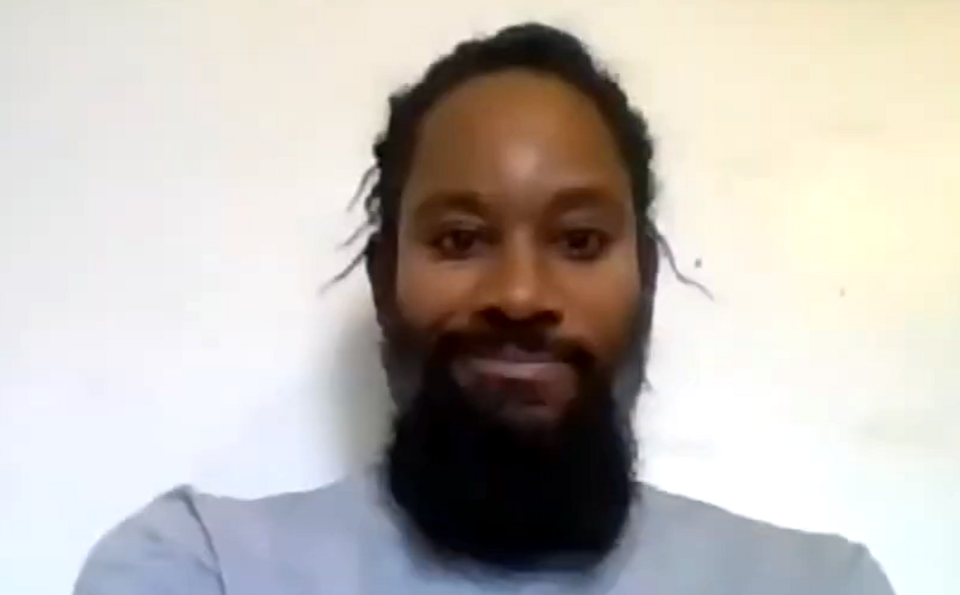
By Joe Langabeer
Over the weekend, it was reported that former Cambridge professor, Jason Arday, had been found dead in his home after a barrage of attacks from the press and institutions over plagiarism allegations.
The wholesale character assassination of Arday often had little to do with what he was being accused of doing. It was clearly a hit job on a Black man who had threatened the status quo of academia, and an attack, similar to those in the USA, on any institution that hires people from minority ethnic backgrounds.
It is one of those personal stories that has deeply affected me over the past couple of weeks. Having been in academia myself, and knowing the gruelling process of obtaining a PhD, I know Arday had far higher steps to climb because he was Black, and because the world of academia is still dominated by white men.
But with his rise, academics on the right attempting to discredit him at every chance they could get. Prior to the Telegraph article that smeared him and which fuelled the press fury against him, he had already been attacked over allegations of plagiarism a year earlier. There is an excellent interview on Owen Jones’s YouTube channel, with Kehinde Andrews, another Black professor and friend of Arday, who discusses the smear campaign in detail.
Wrongful accusations
According to Andrews, the plagiarism allegations began when a far-right academic, Nathan Cofnas, attempted attacked Arday, saying that his PhD thesis contained plagiarised passages from another PhD thesis submitted a few months before Arday’s.
When Arday was attacked by Cofnas, Arday’s university, Liverpool John Moores, reviewed his PhD and found that while his work contained “poor scholarship” — meaning there were some incorrect references and passages that he had clearly been reading and emulating in his own writing — there had been no attempt by Arday to pass someone else’s work off as his own, which is what would constitute plagiarism.
It should be noted that Cofnas himself is not a reliable academic, having produced research that is heavily biased and light on facts, as he seeks to pursue an agenda of “race realism”, where he argues that intelligence is based on different racial groups. It is a far-right trope that has been disproven by many academics and highly qualified scientists many times over.
A media onslaught: eleven articles a day, over 22 days
But, perhaps as the media seemed to be having a slow news period over the past few weeks, the Telegraph dredged this case back up, reporting on the accusation against Arday by Cofnas, and launching a renewed attack on him, despite the charge of plagiarism having already been proven wrong.
From that initial article came a barrage of attacks from all corners of the press, attempting to discredit him for the stupidest reasons: from whether he actually ran a marathon for charity, to whether his claims that he was non-verbal as a child were true.
In a report from the Good Law Project, with data collected from NewsCord, it found that the media published 249 articles over 22 days, discussing Arday and alleged plagiarism. That works out at roughly eleven articles a day from the press. The biggest offenders were right-wing newspapers like The Times and The Telegraph, but even supposedly “liberal” papers such as The Guardian joined in on the smear campaign in an attempt to discredit Arday.
One article from The Guardian, which I happened to read before Arday’s death, questioned his claim that he was non-verbal as a child. One claim came from a “YouTuber” called Jonathan Stewart, who suggested that Arday was chatty and loved making jokes.
I checked the YouTube channel that posted it, and it is a channel that had never spoken about Jason Arday or his academic work, only relationship advice. Stewart did release one video about Arday, claiming that he was not non-verbal, but that video has since been deleted.
The Guardian never thought to verify this YouTuber’s claims; it only had claims from another person that Arday was not non-verbal, and apparently thought that was enough to publish. Yet there were also verified accounts from other schoolmates of Arday’s confirming that he was non-verbal and struggled to communicate with his peers and teachers.
Two points arise from this abysmal reporting. First, we do not know if these people actually went to school with Arday and, in the case of Stewart, it seemed as though he made the video to attract attention to his channel. Secondly, why did The Guardian ever feel the need to report this in the first place, rather than sticking to the false allegations of plagiarism and doing some actual decent journalism on the right-wing mob attempting to discredit Arday?
But it seemed that The Guardian wanted to stick the knife in with Arday, with countless opinion pieces attacking him, and the response of the left, because we knew that a racist campaign had been mounted by the right. It is this type of reactionary centrism, seen in recent reporting on Gaza and the Corbyn antisemitism smears, that shows papers like The Guardian are not friends of the left, but defenders of the establishment. The only difference is that they do it with a smile.
Media scrutiny
Since Arday’s death, there has been an outpouring of support for him, alongside serious questions about the media’s role in his death. The media have responded to those accusations with cowardly defences, claiming that people should instead blame how institutions such as Cambridge handled his mental health support.
An editorial piece in The Guardian about his death calls for “reflection” and argues that it was right to scrutinise his position, but even The Guardian itself did very little “investigative reporting”, although that was its apparent justification for publication. Only in this piece does it address the fact that the plagiarism accusations were not upheld by the university, and that the man who made those accusations was a racist attempting to discredit Arday based on his own racial prejudices.
What The Guardian did was not investigative reporting; it was tabloid reporting, the very thing institutions like The Guardian claim to be above.
And, according to Andrews, in his interview with Owen Jones, that is what hurt Arday the most, in the days leading up to his death. He expected the right wing to go after him. Earlier this year, he gave a speech to the British Sociological Association conference, showing how the press and right-wing academics attempt to smear Black academics by accusing them of plagiarism. In that speech, Arday referenced Claudine Gay, the first Black woman to become president of Harvard, who had been hounded out of her position due to allegations of plagiarism.
But he did not expect attacks from supposed liberal newspapers. Even supposedly left-wing media outlets, like Novara Media, did some reporting on this, apparently taking the line from the establishment press. Since Arday’s passing, they have only reflected on it, while still sticking to their guns that what they reported was justified.
The speech Arday gave at that conference unfortunately turned out to be prophetic. He would be attacked with the same smears, and those attacks would ultimately contribute to his death. The media should be ashamed of how they treated him. And as the Good Law Project has demanded a public inquiry into the role of the media in his death, we should also seek to change how the media operates, making sure it serves the public by reporting what actually matters.
This can only be done through democratically-owned public media spaces. It is time to regulate the right-wing press, most of which is currently owned by billionaire tax-dodgers. We should bolster outlets like the BBC, while making sure that the public has a say in what is reported — not appointed and board members, heavily skewed to Oxbridge graduated white men. That is how we can stop a tragic event like the case of Jason Arday from ever happening again.
[Feature picture shows Jason Arday when he was a professor at Cambridge University. It can be found on Wikimedia commons, here]












I saw this morning, as you vaguely referenced, an actual apology from Aaron Bastani that was on Threads. I believe that it was a genuine attempt at an apology. However, I expect the rationalising to be done before you write any article. An apology based upon guilt after you have been part of a right wing witch hunt (I think I referenced it as a lynching on Facebook!) is for me performative regardless of the sincerity.
Equally as bad, was Alex Thomson fronting Channel 4 News on this story on Saturday, trying to redirect blame away from the media and towards Cambridge University. I usually consider Thomson to be an excellent journalist, but on this occasion he allowed himself to be put out front to try and mitigate any blame on the media. If you chose to watch this back I wonder if it would make you cringe as much as I did !!
Vile performances all round and supposed acts of self awareness after the event just dont cut it, a man died because of their contributions.
Thanx Joe for the best piece on this subject I have read.