By John Pickard
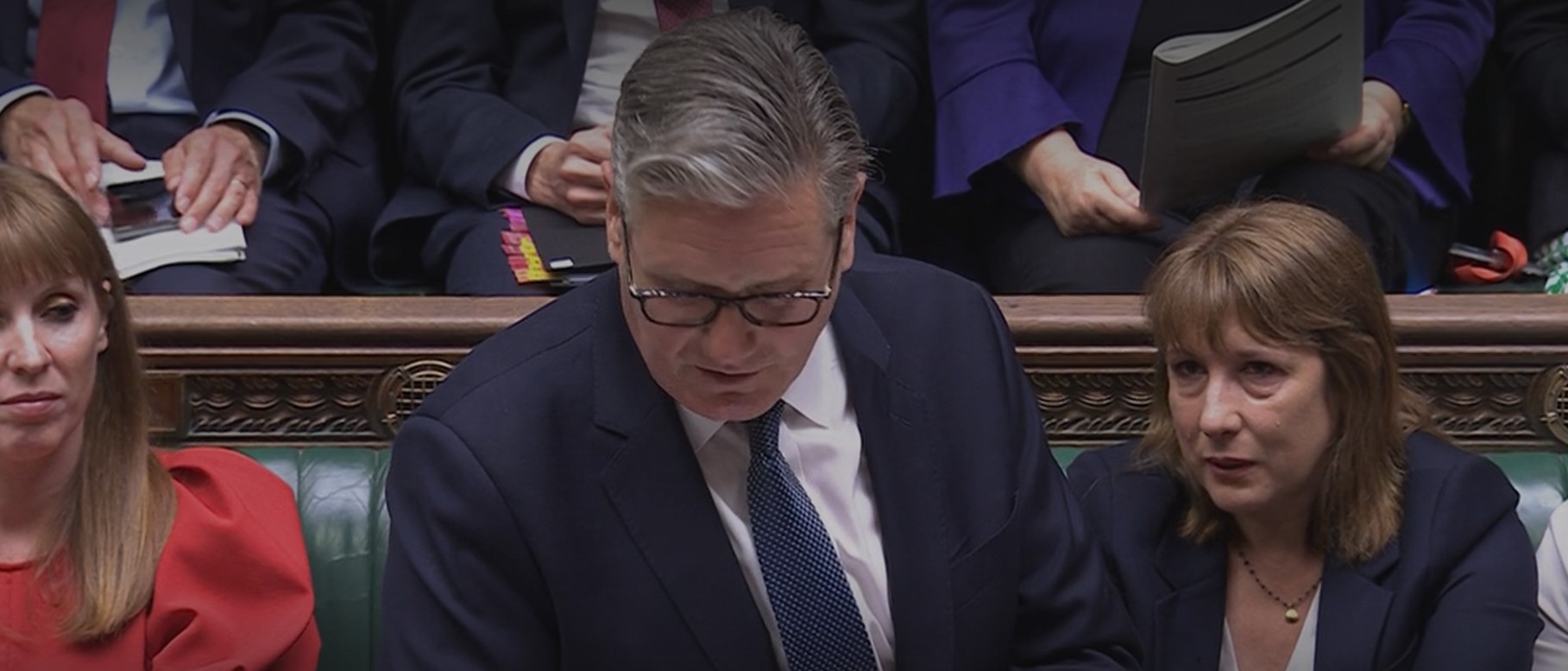
Nothing exemplifies Keir Starmer’s cack-handedness more than the sight of him blithely whittering away during Prime Minister’s Questions, oblivious to the fact that his ‘Iron’ Chancellor was in tears behind his left elbow. Although Rachel Reeves’ distress was allegedly for ‘personal’ reasons, the scene left the indelible impression that the architect of Starmer’s economic policies had been brought to heel by the outrage at her spending restraints and welare cuts.
So here we are, one year in, and and we’ve had the worst year of any ‘Labour’ government in the history of the Party. It is not a matter of Starmer’s personality, however. The more fundamental issues are the direction of his leadership and his economic outlook, and it is these things which will be his undoing.
We have a leadership team around Starmer which is wholly committed to managing the market system ‘better’ than the Tories, which means that the promises of meaningful change in the interests of working people have largely turned to dust, barring a few minor reforms, such as improved free school meals.
To keep the trade union leaders on board, Starmer promised significant improvements in rights at work and he and deputy Angela Rayner repeatedly promises these “in the first hundred days”. But nothing has yet materialised. The bill in question is now drastically watered down and is unlikely to see the light of day for another year or two.
Rachel Reeves set the tone for the government’s economic policy of the government last autumn by discovering an apparent £22bn “black hole” left by the Tories in the government’s finances. This immediately meant no abolition of the two-child limit on benefits, which is the main cause of child poverty.
Worse, one of the government’s first acts was to cancel the winter fuel allowance for ten million pensioners. Around the same time Reeves was doing this, it was revealed that she, Keir Starmer and deputy leader Angela Rayner, had been given tens of thousands of pounds-worth of “freebies” in the form of clothes, by some smarmy donor. Unlike his predecessor, Corbyn, who was clearly “different” from run-of-the-mill careerist politicians, Starmer showed in his first few weeks that he was a part of an entitled and privileged establishment, and he was going to enjoy the ride.
That decision on winter fuel payments, although subsequently reversed, became thesignature for this government and a millstone around Labour’s neck. Reform UK, which had already won four million votes in the general election, has since overtaken Labour in the polls and took hundreds of council seats from the Party in May.
Starmer got fewer votes than in either of Corbyn’s elections
Despite Labour’s right wing crowing about the huge majority won by Starmer last July, he got fewer votes than Corbyn in either of his two elections, picking up 33% of the total – a record low for any winning majority, let alone a ‘landslide’.
Starmer was always viewed suspiciously by workers, not least because of his fraudulent election as leader, putting forward ‘ten pledges’ that he immediately ditched. It comes as no surpise, therefore, that Starmer’s personal ratings have plummeted faster and further than for any modern-day Prime Minister.
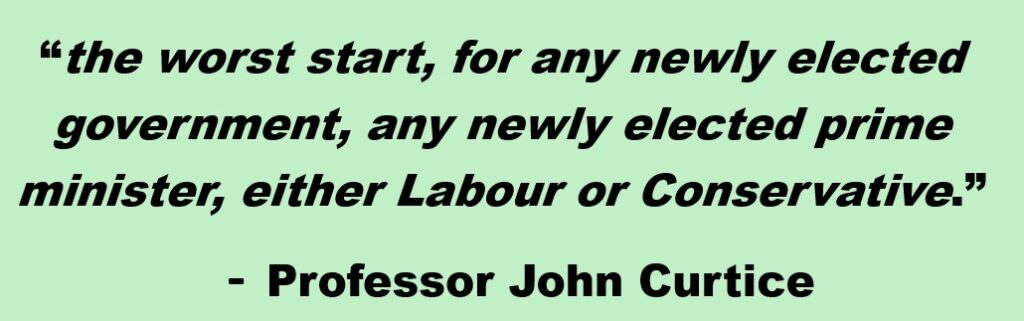
John Curtice, the well-known polling expert, suggested bluntly that Keir Starmer has had “the worst start, for any newly-elected governmen, any newly-elected prime minister, either Labour or Conservative.”
But if Keir Starmer is the worst-ever leader, the Parliamentary Labour Party is the worst in its history too, with a very small left wing, but mostly packed with hand-picked careerists, place-seekers and carpet-baggers, almost all on the right of the party, shoe-horned into seats against the wishes of the local membership. Now, many of these are beginning to fear that under Starmer’s direction, their political careers might only last five years, if that, and on current trends they look like being replaced by a Reform MP.
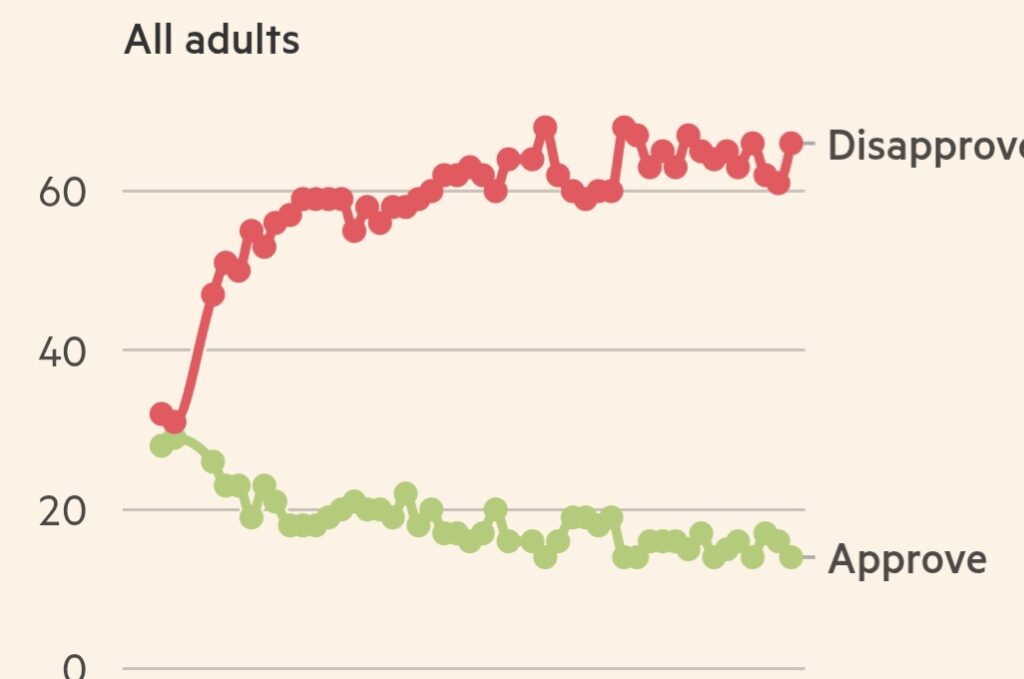
Over the last year there have been few gains for working people: a long list can be wheeled out, but they are all relatively minor gains. On the other hand, public perceptions mean everything and it would be difficult to point to any major policy decision that has made the lives of working people better. As a result, there has been a gradual decay of support for the government.
For most workers austerity has been seen to roll on: public services continue to be cut and working households face the same uncertainty and insecurity. While grandiose promises are made about increased spending on defence, money that is desperately needed for schools, hospitals and local authorities is given grudgingly, and usually it is barely enough (or not enough) to keep pace with inflation. Public sector workers’ wages are still squeezed and they are no nearer returning to their real spending power of fifteen years ago.
Capitalism will dictate to the government
When Labour was elected last July, our editorial said, “it will not be the government that dictates to business; it will ultimately be capitalism that dictates to the government. Keir Starmer’s honeymoon period in office will be very short-lived, assuming there is one at all”. That has proved to be true, except for one thing: Starmer and Reeves do not need to be “dictated to”. They, and the whole Labour cabinet, are enthusiastic supporters of the whole principle of capitalism and free markets.
That is why they inevitably follow the logic of a system which is in crisis, which means loading the burdens onto those services on which workers depend, ‘economising’ on public sector wages, and cutting benefits to those least able to fight back.
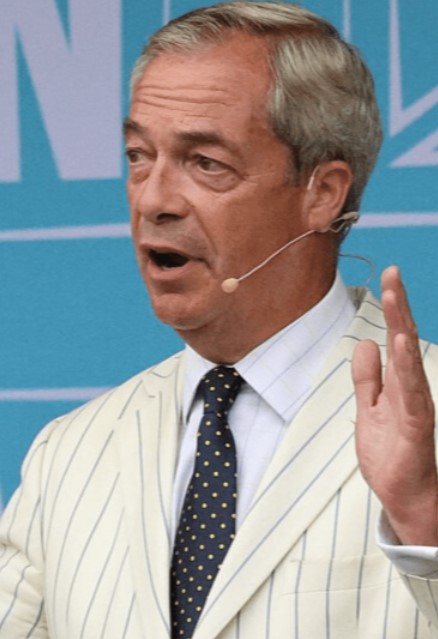
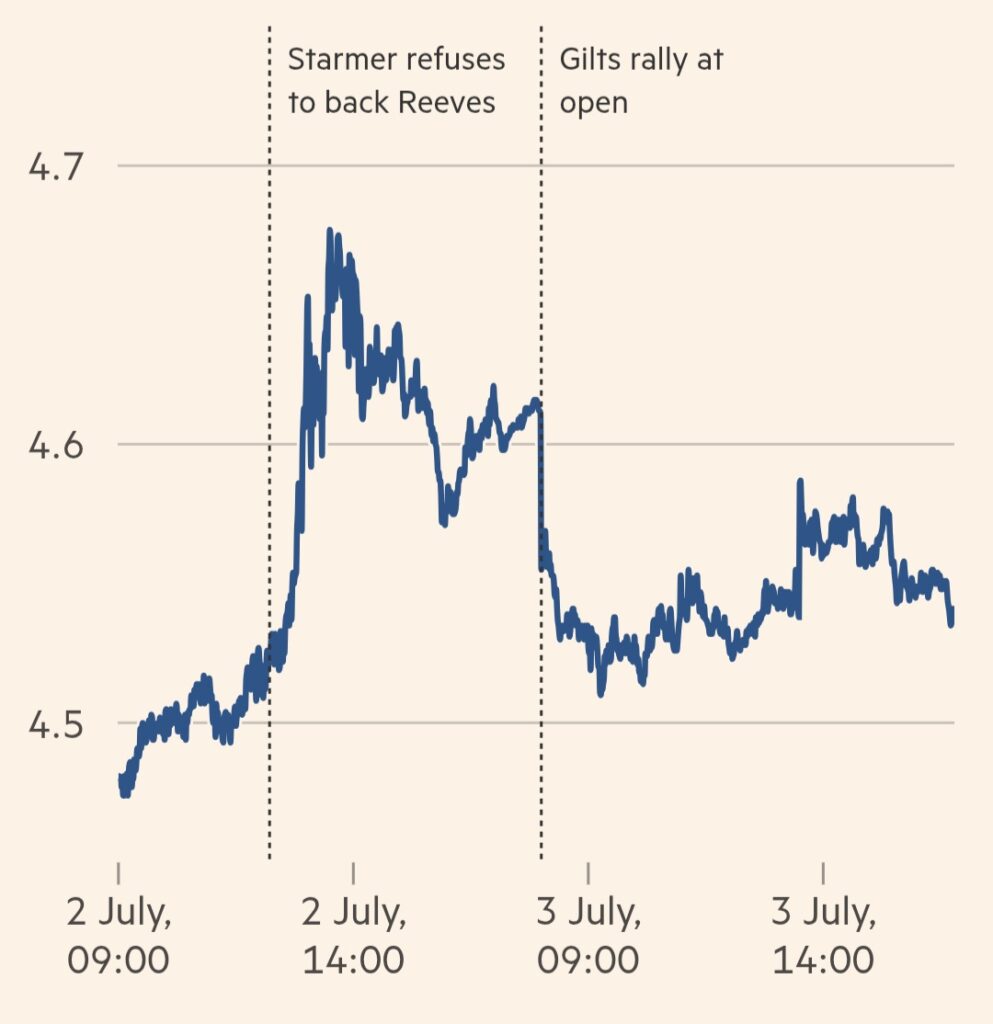
Even on their own terms – running capitalism more “efficiently” than the Tories – Starmer and Reeves are failing. A Financial Times review of the year suggested that far from driving economic productivity up, investment is stagnating. “…a year on, business optimism is muted and the economy shrank in April at its fastest pace since 2023, setting the stage for the slowdown economists expect to follow the 0.7 per cent expansion recorded in the first quarter”.
Keir Starmer promised to build one and a half million homes in the five year parliament. What has happened? The Financial Times explains: “…approvals of planning applications in England having fallen to their lowest in 13 years”. Meanwhile, “High borrowing costs and rent inflation continue to weigh on household finances. Productivity growth — essential to sustainable improvement in living standards — remains elusive”.
Labour is on track to fail in its promise to deliver new homes, and the reasons are clear. Housebuilding is dominated by a handful of greedy builders and developers who need a housing shortage to keep profits up. Leaving housing to the ‘market’ will doom the whole idea of a million and a half new homes in five years.
What would a real Labour government do to tackle the housing crisis? It would give low-interest loans to local authorities to build for rent. During the financial crisis of 2008 and the Covid pandemic, tens of billions of pounds were dished out by the Bank of England to keep the system running. A real Labour government would use the same mechanisms, it would nationalise the banks and finance houses to release funds for housing and for other social benefits like the NHS, local authorities and investment in public transport and infrastructure. Clinging to capitalism and the market, Labour’s economic policy is fated to be ‘Austerity Mark II’.
On the other hand, as the government enters its second year in office, it is becoming clear that the membership and grass roots of the party want policies more to the left. This is despite party democracy being strangled and so many good members leaving or having been kicked out for one spurious reason or another.
A Survation poll, the results of which were published in Labour List, showed the sympathies of party members. It asked members to which direction the party should move to win the next election. Given four options, “move to the left, move to the right, move further and faster on the current agenda, and don’t know”, the most popular answer by a long way was to move left, the choice of 64% of members.
Different tides and currents in the unions
It is reasonable to ask, given these sentiments, why there has been no generalised revolt in the party against Keir Starmer. The short answer is that it is coming. Inside the party itself, discussion and debate is so stifled and the life of the party so stunted that this is not yet the arena where opposition will be allowed to develop. But in the trade unions, there are different currents and tides altogether and the Labour bureaucracy holds less sway.
The right-wing leaders of most of the big affiliated unions enabled Starmer’s agenda, content to accept the promised improvement in trade union rights at work as a quid pro quo. But the ‘new deal’ for workers has been diluted to be near meaninglessness and, in any case, the key elements of the new deal are nowhere near being implemented.
The revolt of so many Labour MPs over cuts in benefits to the disabled is the first of many. Starmer was so out of touch with his own MPs that many – including scores on the right of the party – were genuinely opposed to cuts for disabled people. But, more importantly, it was also an indication of the pressure the MPs felt from within the working class and the grass roots of the Party, against those cuts.
Trade union members, particularly those in the public sector, see no improvement in wages and conditions, in comparison to the years of Tory austerity. It is only a matter of time before the affiliated unions call time on the whole thrust of the Reeves/Starmer project, not because the union leaders want to rock the boat, but because their members are pushing them.
It should be noted that this possibility has also occurred to some of the more ‘thoughtful’ representatives of capitalism, like Robert Shrimsley, a regular columnist in the Financial Times. He commented in an opinion piece that “This administration has started to unravel at a frightening pace and there are still four years till the next election”.
Why does Shrimsley sees the unravelling as “frightening”?Because “Starmer is no longer strong enough to control a party pulling leftward…” What Shrimsley thinks is a “leftward” pull is at this stage no more than a push back against cuts in welfare benefits for the disabled. But he is right in his intuition.
As Starmer becomes increasingly discredited among Labour Party and trade union members, there will eventually be moves to replace him. That will be more true if it looks like Labour is going to lose hundreds more council seats next May. There will be no great demand for Starmer to be replaced by another right-winger, like Wes Streeting, known to be tied to private health. Members, particularly in the unions, will demand a different, more radical alternative.
For socialists still left in the Labour Party, a change at the top cannot come quickly enough. That is not so much for whatever new leader might come to the fore, but because the change will initiate a process that will ‘thaw out’ the life of the party, freeing up open discussion and resurrecting demands for the democratic selection of candidates.
The first year has been a disaster for Labour, thanks to a leadership that shows all the hallmarks of being no better than Tory-lite. It has been a slow-motion car crash, which has, unfortunately, brought a government by Reform UK nearer than ever.
But in the coming year, there is hope of seeing see a decisive shift. Anything that ‘opens up’ the labour movement to genuine and open debate again can only be good. We are confident that in the atmosphere of proper, democratic debate, real socialist policies will find an echo among members, particularly new members, desperate for change.