By John Pickard
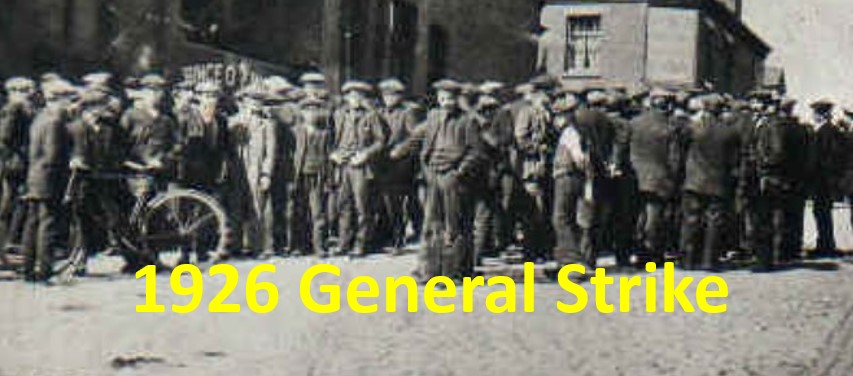
Continuing the theme of the centenary of the 1926 General Strike, here we look at a snapshot of the strike in southern Scotland and the Carlisle area. See general article on the General Strike, here.
…………………………………………………
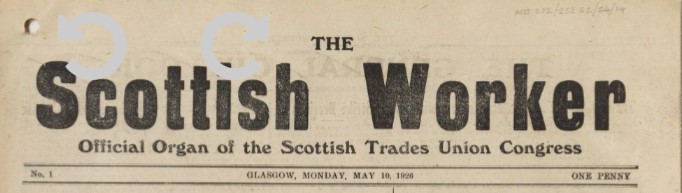
The Scottish TUC published from Glasgow an information bulletin, The Scottish Worker, during the General Strike and it carried a report that on May 9, around 12,000 working class people demonstrated through Carlisle in support of the ongoing UK-wide general strike.
Thousands of strikers and their supporters met up at Lord Street before marching together to the Victoria Park area of Bitts Park. In a letter to the Trades Union Congress later that day, the Carlisle Trades Council and Labour Party wrote that city was “as solid as ever” and that the position was “better if that could be possible.”
Only one single operator was scrapping on the strike between Carlisle and Newcastle, and the roads were empty of traffic. No trams were running except one, which operated with the permission of the local strike committee transporting disabled children to school.
Some buses were operating, although 37 non-union bus workers did join the union and join the strike. Several major factories were operating on short time, including Carr’s biscuits and Morton’s fabrics.
The following summary was also included in The Scottish Worker, May 10 1926, issue under the heading, “Way Down South”, reporting on the strike in the far north west of England, from Carlisle, north to the Clyde.
“A delegate who made a trade union mission from Glasgow to Carlisle and back (Saturday and Sunday) writes the following report of what he saw and heard:
OLD CUMNOCK – All solid. One train only passed through since strike commenced, consisting of the car and van driven by two men with hard hats. Not back yet.
NEW CUMNOCK – Solid. Two meetings this week covering an area of thirty-four miles. Every man on strike present.
SANQUHAR – Same train reported going through as above. This seems to have been the only movement all along the line.
DUMFRIES – NUR approx 630 men out; RCA 50; ASLEF 44; Typo. Assoc 129; Vehicle Builders 70. Sixty-two engines standing idle. Arrol Johnstone Motor Works shut down.
ANNAN – Splendid! Only one blackleg out of 66 NUR members. No trains. No buses, except ten owner-drivers. Public opinion on side of organised Labour.
CARLISLE — Never has Carlisle seen such solidarity — from 500 to 600 engines standing idle; only two shunting engines working out of Caledonian, and only one train has passed through Appleby with eight passengers. This is the supposed train that was “broadcasted” as having eight hundred passengers. A mass meeting of strikers held on Sunday, when ten thousand people marched through the city.
No trams running, except one under permission of Strike Committee for conveying crippled school children, ’Buses were disorganised, but 37 non-union men joined union and came out on strike. Carrs (biscuits), Mortons (fabrics), R.R. Bucks (shirts manufacturers), all on short time. Stead & McAlpine paid off fifty men. Only one signalman working between Carlisle and Newcastle. Complete absence of transport all along road. Only one train passed…
BOTHKENNER – Reports that coal is being lifted from Howkerse Colliery by all forms of vehicular traffic and price of coal raise by three shillings per ton.
LINLITHGOW – Information received shows that forty non-unionists are plying buses.
SLAMANNAN – All quiet and all solid.
LARBET – NUR reports that enthusiasm of members continues at a high pitch. Fully determined in face of developments to stand together. RCA position unchanged; highly favourable; all acting in complete agreement.
WIGTON
On May 7 1926, during the nationwide general strike, a letter was sent from Wigton Strike Committee to their counterparts in Carlisle confirming receipt of strike bulletins sent by despatch riders.
The letter also explained that the situation in Wigton remained “just the same as reported Wednesday (5 May). All members solid.”
They also reported that a seven-person strike committee had been appointed with representation from the Miners’ Federation, Transport & General Workers’ Union, the National Union of Railwaymen, and the Railway Clerks’ Association.
The committee had also secured a room for striking workers to sign on and where future bulletins could be sent to.
[Feature picture from Wikimedia Commons, here]