Republished from Facebook
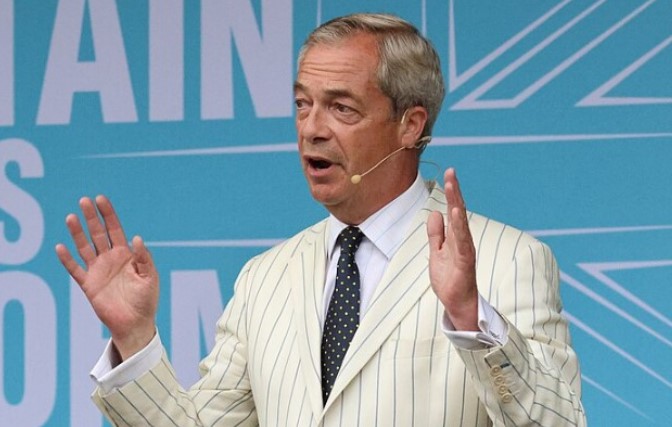
In addition to pointing out how this by-election is really not about Clacton and all about Farage. We need to also keep asking the questions “Why are Reform so interested in Montenegro which is over 1,500 miles from Clacton?” And ….
Could Montenegro lead to the end of Nigel Farage’s political career?
Everything in the following post is based on fact, matters of public record, reporting by the BBC, the Financial Times, openDemocracy, UnHerd, Protos and other established news organisations.
Where allegations are disputed, I have made this clear.
Count Binface and Nigel Farage both have links to faraway places. Count Binface claims to come from Sigma 9 in outer space. Nigel Farage’s connections are rather more earthly—and an extraordinary number of them appear to lead to the small Balkan nation of Montenegro.
At first glance, each connection seems unrelated.
George Cottrell. Christopher Harborne. Gawain Towler. Ex-UKIP officials, Tether. Crypto businesses. An address in a small town, A private casino. And a seized cryptocurrency ATM.
But as journalists have followed these separate stories, an increasingly striking pattern has emerged.
High on the organised crime index
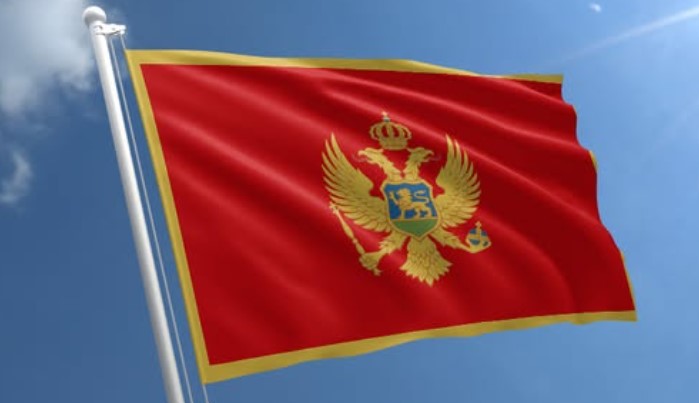
Montenegro is a beautiful country, but it also has a long-standing international reputation for organised crime, cigarette smuggling, money laundering and corruption. The Global Organised Crime Index continues to identify it as a significant European organised crime hotspot. Against that background, it is reasonable to ask why so many people from Nigel Farage’s political and financial circle have established business or political interests there.
OpenDemocracy reported that companies connected to several prominent Farage and Reform-linked figures were registered at the same office address in the coastal town of Tivat. Those linked to the address include Reform’s largest financial backer Christopher Harborne, Reform UK board member Gawain Towler, former Reform treasurer Mehrtash A’zami and digital campaigner Samee Bhatti. The address itself was reportedly registered to Nino Pantović, whose father had previously acted as George Cottrell’s lawyer.
None of this proves wrongdoing. Businesses often share registration addresses. Nevertheless, the concentration of Reform-linked companies in such a small town is unusual.
George Cottrell is no distant acquaintance of Nigel Farage. He worked for UKIP, travelled extensively with him and has remained one of his closest associates. Farage has reportedly described him as being “like a son to me” and Cottrell reportedly refers to Farage as ‘Daddy’.
Following his conviction in the United States for wire fraud, for which he served eight months in prison, Cottrell established himself in Montenegro, where published reports link him to a network of companies, cryptocurrency ventures and political relationships. One of the more curious stories concerns Salon Privé, a private members’ club and casino in Tivat.
In 2023, Montenegrin authorities seized a cryptocurrency ATM from the premises because such machines were not permitted under the country’s regulatory framework at the time. Montenegro’s then finance minister publicly linked the ATM to George Cottrell. Cottrell’s lawyers have categorically denied that he owned the ATM or had any financial interest in it.
Working to get UK OUT of the EU, but get Montenegro IN
Perhaps the greatest irony concerns Brexit. Gawain Towler was Nigel Farage’s chief communications strategist during the UKIP and Brexit Party years and today serves on Reform UK’s board. Towler has publicly acknowledged advising Montenegro’s governing Europe Now! party and producing campaign material on its behalf. Europe Now!’s principal political objective is to lead Montenegro into the European Union!!!
So a man who helped persuade Britain to leave the EU later helped a political party seeking to take another country into it.
Towler has openly explained the work he undertook. Whether readers see this as simple consultancy or a remarkable political contradiction is for them to decide but remember he is still officially linked to Reform.
Another important strand concerns Christopher Harborne, the billionaire who gave Nigel Farage an undeclared ‘personal gift’ of £5 million and is Reform UK’s largest financial supporter.
Harborne has extensive interests connected with Tether, the world’s largest stablecoin, and has also registered a company at the same Tivat address identified by Open Democracy.
Increasingly prominent advocate of cryptocurrency
Farage has become an increasingly prominent advocate of cryptocurrency, opposing the Bank of England’s proposed digital pound while supporting policies favourable to the crypto sector. He also met Bank of England Governor Andrew Bailey to discuss cryptocurrency regulation. Bailey later said he would probably have postponed that meeting had he known the £5 million gift was under investigation. Farage has denied any conflict of interest.
None of these individual facts proves wrongdoing by Nigel Farage. But investigations rarely begin with conclusions.
They begin by identifying patterns. Why did so many people closely connected to Farage establish themselves in the same small Montenegrin town? Why have several of them developed interests in cryptocurrency? Why was a senior Montenegrin minister publicly linking George Cottrell to a seized crypto ATM, even though Cottrell firmly denies any connection? Why did one of the leading architects of Brexit later help a pro-European political party campaigning to join the European Union? And why do so many apparently separate investigations into political funding, cryptocurrency, George Cottrell and Reform UK keep leading journalists back to Montenegro?
Perhaps every one of these connections has an entirely innocent explanation. Perhaps some are no more than coincidence. Time and ongoing investigations will provide the answers. For now, however, one fact is difficult to ignore.
Independent journalists following entirely different stories have repeatedly found themselves arriving at the same small country.
Count Binface’s connections to distant worlds are obviously fictional, absurd and entirely harmless. Nigel Farage’s connections to Montenegro are real, documented and still the subject of continuing journalistic scrutiny. In many ways he has more links to Montenegro than Clacton!
Whether the connections ultimately prove to be entirely benign or something considerably more significant is a question that only future investigations can answer.
This is the text of a Facebook post and it is republished here with the permission of the author, who wishes to remain anonymous.