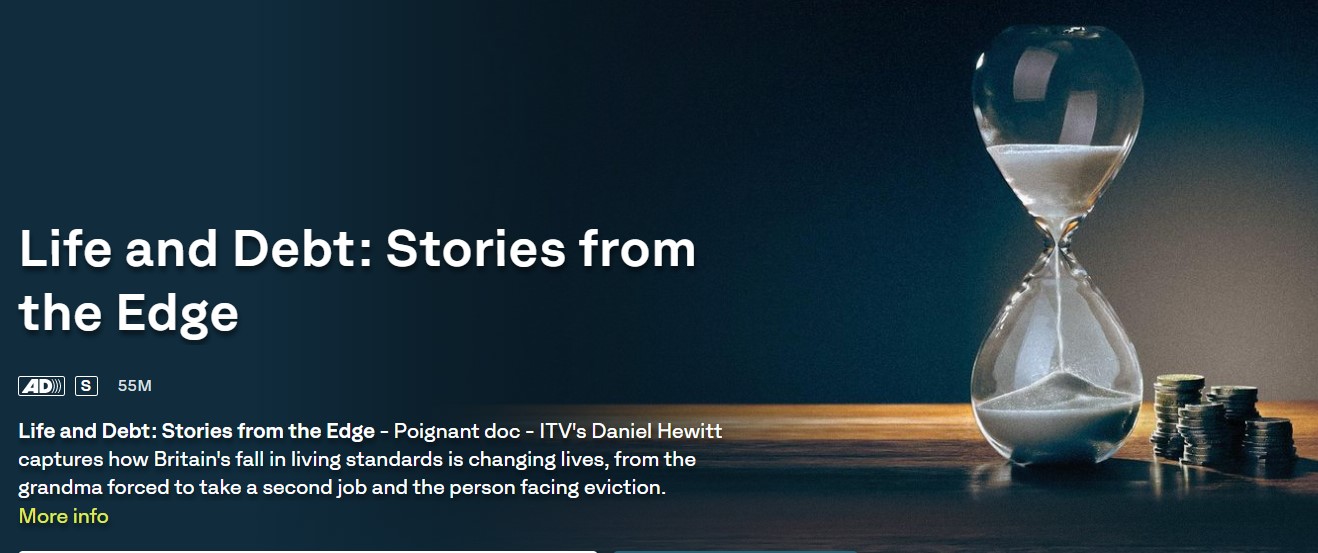
Mark Langabeer (Hastings and Rye Labour member) watched the recent ITVX documentary (see it here).
Daniel Hewitt, an ITV news reporter, spent a year travelling around England discussing the effects of rising inflation, which, he says, represents the biggest fall in living standards in 70 years. He described it as unlike previous recessions because it was doing long term damage to individuals and their communities.
Hewitt travelled to North Shields, near Newcastle and interviewed a guy who owned a butcher’s business. It was started by his grandmother during the 1950’s. Rising costs had forced his once thriving business to close. Shop closures are up by 50% since 2021.
He interviewed a 55-year-old woman who lived with her daughter. They were struggling to make ends meet because of rising bills. She said that it cost £400 a month more than a year ago. This was before food costs were taken into account. Household income was around £36,000 after tax and close to the national average. She decided to get a second job at a nearby McDonald’s. It has been estimated that around 5 million people have taken up a second job since the beginning of the crisis. Working over 50 hours a week has meant seeing less of her grandchildren.
Hewitt returned to South London where he met with a women who had received notice of a huge increase in rent – from £500 to £900 a month. An attempt to negotiate a 7% increase was rejected by the landlord, who then served a notice of eviction. However, this was successfully challenged. With the help of a council housing officer she was able to secure a reduced rent increase. She noted the lack of power that renters held.
Bills tripled
The programme makers returned north to meet a single mum with three children. Those that were living on benefits were vulnerable before the crisis. Her bills had tripled and she was deeply in debt with energy providers. People like her are forced onto pre-payment meters, the most expensive method of payment.
The benefit levels are lower than at any time in the last 50 years. The number of food banks have doubled over the last five years and nearly 4 million children are attending schools with insufficient nutritious food. Some schools have a hardship fund which helps parents pay bills. Finally, there are around 5 million unpaid carers who support ill and sick relatives. Hewitt interviewed a lady that had left her well paid job in order to care for her mother. The cost-of-living crisis had wiped out her savings and feared that they may have sell her mother’s home.
The Tories claim that they have provided a generous package of assistance – one worth £96 billion, plus £5 billion in cold weather payments. What they fail to understand is the effects of the crisis and when it will end. The programme offered no solutions either.
Many of the contributors pointed out that Britain was a rich country. Why was this happening? This goes to the nub of the problem. The wealth in Britain is largely owned and controlled by a tiny handful of people (including the Royal Family). Labour must offer an alternative to the growing poverty in our ‘rich’ nation.