
Asher Goudy
In classic form, the capitalist press have latched on to the altogether reasonable comments made by the Greens’ Gorton and Denton MP, Hannah Spencer recently in an interview with PoliticsJOE’s Sophy Ridge, on the culture of drink and alcohol in Westminster, while they deliberately ignored her call-out against bought-out ministers.
The Sun echoed a tweet by Nigel Farage – “Green MP slams Westminster drinking culture despite party support for legalising heroin and crack” – while The Daily Mail accused Spencer of “moaning” about the smell of alcohol during votes… “despite wanting to legalise drugs”. The former paper is owned by Rupert Murdoch, worth an estimated £17.4 billion, and the latter by Jonathan Harmsworth, 4th Viscount Rothermere, worth an estimated £1 billion. Predictably, they honed their attack on this portion of Spencer’s critique of Westminster: a classic case of misdirection.
This intoxicated culture in Westminster, alongside heavily subsidised restaurant grade food, deserves our attention. Likewise, research used by campaigns towards the decriminalisation and legalisation of drugs, proposed last year by Green’s leader Zack Polanski is also a worthwhile discussion. Polanski was seeking to promote an approach “led by public health experts, not politicians”, and he argued, as a necessary transitional step, to save lives by treating drug use less as a criminal issue and more as one of public health. Yet the capitalist rags in the media preferred to use this issue as the reason for some throw away comment in an attempt to discredit what Spencer was saying.
Despite the Telegraph’s goading headline from Eliot Wilson, a former parliamentary clerk (2005-2016), “Hannah Spencer doesn’t have a clue about why MPs drink”, the article actually went on to concede that she is almost “certainly right” but quickly followed up with a totally oblivious comment that being a member of parliament, historically and currently one of the top earning roles in the country, paying an annual salary of £91,346, was “poorly paid” and is not in a “meaningful sense, a job”. By any stretch of the imagination, how does one begin to regard as acceptable MPs justifying drinking on the job at the expense of taxpayers, voting on policy that has broken and destroyed livelihoods and communities by the stroke of a figurative pen.
The Spectator’s Rod Liddle joined in, declaring that the Green party is, “Tim Stanley’s Stalin with a nose ring’. [It] gives a nod to the witless middle-class skankery of the party’s members and supporters but posits that there might be, underneath, a darker undercurrent”. However, In terms of darker undercurrent, the call seems to be coming from within the house. Liddle is infamous for his 2012 article with the line, “the one thing stopping me from being a teacher was that I could not remotely conceive of not trying to shag the kids”. How can he even begin to consider himself in a comparable league that entitles him to pass judgement on the Green Party?
MP’s drunken tirade
Labour MP for Bermondsey and Old Southwark, Neil Coyle, who was previously suspended from the Commons for five days for a drunken disorderly tirade and racist abuse of two people in a Commons bar in 2023, was quick to defend the taxpayer-subsidised establishments. Parliament has approximately nineteen restaurants and nine bars – all serving increasingly subsidised alcohol and food for those in the House of Commons and the Lords – for MPs, Lords, staff, visitors, anyone with parliamentary passes.
As a baseline, drinking on the job, let alone on taxpayers time, is a sackable offense, in most, if not all circumstances. The key takeaway points from Spencer’s comments were that drinking alcohol should be outside of work, not subsidised by the taxpayer, and not to the point of drunken disorderly conduct.
In 2025, a watch-dog report from the Independent Complaints and Grievances Scheme revealed that alcohol continues to be a significant factor (in 1 in 5 cases) of sexual harassment, bullying and misconduct in Parliament (ICGS, 2025). Spencer is right to expose the atmosphere and drinking culture. She went on to concede she enjoys a drink herself – just not at worktime.
The feigned outrage of the capitalist press towards Spencer’s comments is all but deliberately equated to an attack on British culture and British identity itself, pushing these elements of a culture war to the forefront – to obscure the economic and political implications at the heart of her full comments. Yet, 76% of the public agree it’s unacceptable for MPs to drink alcohol before voting on legislation.
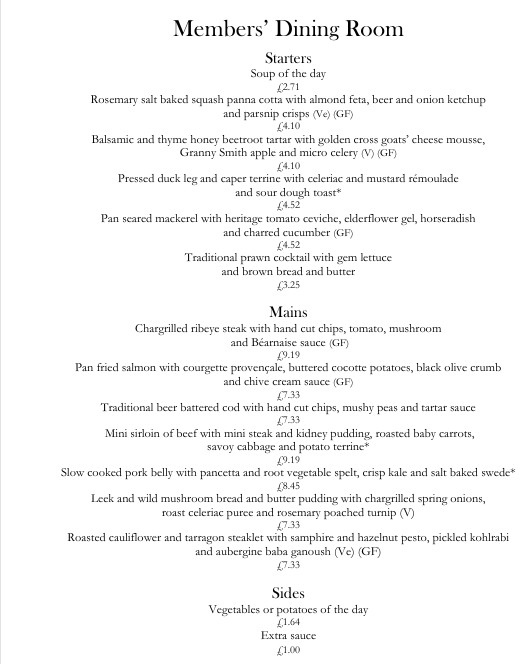
[image from Parliament]
Taxpayers, that is ordinary people and families, are literally funding these haute cuisine privileges while many of them are seriously struggling, in the cost-of-living crisis, to heat their homes or to feed their own families. Canteens for workers, found in other work spaces, are one thing – but restaurant quality food and alcohol is way beyond reasonable. Taxpayers should be given full transparency on the costs of such dining (see one menu from parliament and its prices here), and the implications it has for the overall Parliamentary culture – including the total amount of subsidies received by MPs, particularly if we are concerned about sexual violence.
Scrutiny
Likewise, if welfare recipients can have their bank accounts preyed upon by the Department for Work and Pensions (DWP) through the recent Public Authorities Act, why shouldn’t our MPs be subject to similar scrutiny?
Although these issues need to be discussed and change is absolutely needed, and the capitalist press culture war framing of drinking as “British identity” needs to be challenged, Spencer’s further comments in the last three minutes of the interview have been strategically ignored by the mainstream press. She talked about bought-out politicians. And speaking in her own constituency, she called out what is essentially gentrification of Greater Manchester, unbalanced property development and an atmosphere of paid-for ministers.
When asked about Manchester being “run over by developments” by commissions for “huge conglomerates to build on behalf of the taxpayer”, Spencer expressed her anger and described ongoing impoverishment experienced by working class people in her constituency, calling out current Labour leaders for working “too closely with property developers”. She pinpointed the fact that the system in what is called one of the “fastest growing economies” in Manchester is not operating to the benefit of most people – working class people – but rather for the richest and as she states, “at the expense of people living [here]”.
This was all but covered in an op-ed from Spencer in the Guardian, in early April, titled, “What I learned from my first few weeks as a Green MP – Most politicians have no clue how tough things are out there”. The op-ed received little media coverage beyond its original publication. What a surprise! This is at a time when a Health Foundation analysis published a new study that showed healthy life expectancy in the UK has fallen by more than two years over the last decade – with deepening inequalities between the affluent and the most deprived areas, and specifically worsening for women.
Impact of austerity on people’s health and lives
It turns out that 40 years of neoliberalism, including 14 years of Tory-led austerity, and two years into a Labour government that has failed to move the mark, has collectively impacted on what is supposed to be the better years of ordinary people’s health and lives. Even now, years into a cost of living crisis, a mention from Labour’s Rachel Reeves in the Treasury suggesting that supermarkets cap food prices on essential items like milk, eggs and bread, to support the most impoverished families, has the profit-heavy supermarkets coming out swinging.
Unite the Union’s (2023) report exposed food profiteering from the Covid-19 pandemic in the giant supermarkets, backed by a recent study, Profit over Purpose, from FoodRise – a non-profit food and climate justice campaigning charity, exposing the ‘greedflation’ of these giants, who control over “95% of all UK retail food sales”. They made combined profits (2019-2021) of over £3.2 billion – in a market that is currently valued at £195.3 billion and is forecast to grow to £214 billion by 2028.
These supermarkets are coincidentally also led by millionaire bosses that have yet to skimp on their own pay and bonuses, while figures from 2024, show that more than 7.2 million adults living in the UK, and 2.7 million children, are experiencing food insecurity. The idea that these things are unrelated and not consequences of capitalism, and that it is simply the responsibility of the parents to sort out themselves and their children while stuck in a cyclical impoverishing economy that requires destitution for profit, is fallacious, as is erroneous “lift up by your bootstraps” propaganda – where values of compassion and community go to die.
Spencer’s remarks highlight the current government party leadership that is out of touch with its membership base and the wider public. Last year, Steve Reed, MP for Streatham and Croydon North and Starmer’s Housing Secretary attended a “curry night” with folks paying upwards of £2,000, plus VAT, for exclusive “corporate tables”. This was another convenient omission by almost all the capitalist press, and as Spencer mentioned, Reed was seen hobnobbing with major housing developers, construction firms and trade representatives. Covered only by Vicky Spratt at INews and InsideCroydon, photos show Reed in a construction hat, mid-sentence with developers – two of whom had “live planning appeals under review at the time” (Spratt, 2026).
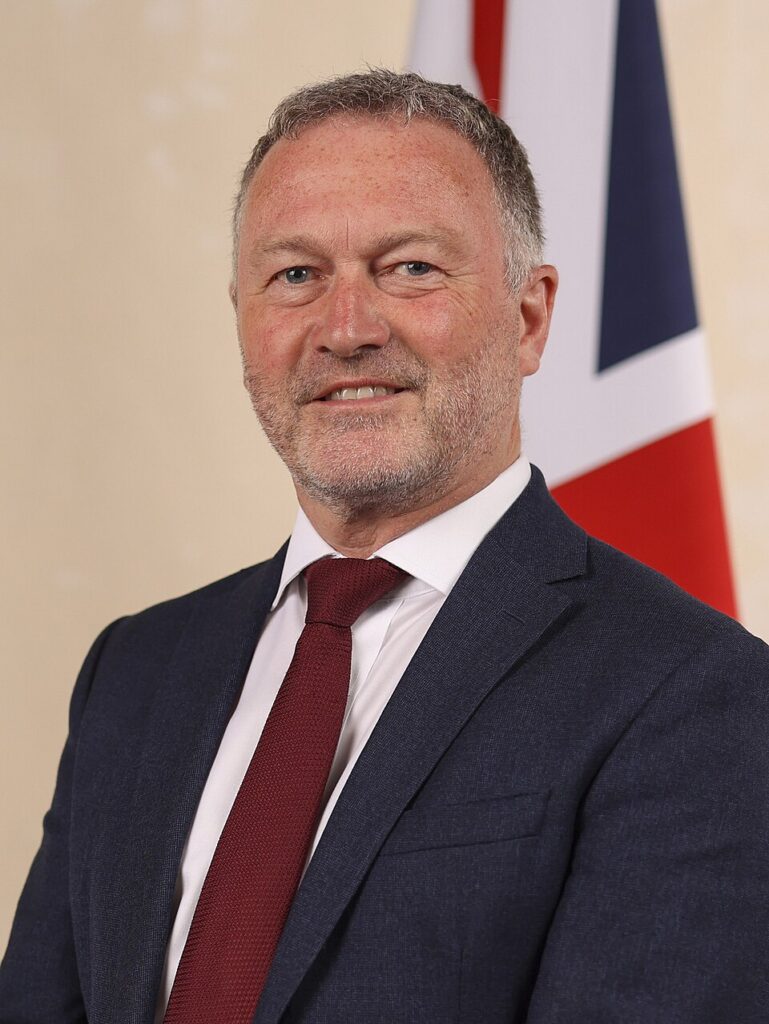
[photo – Laura Hurley – wiki commons]
In November 2025, Reed used his ministerial powers to introduce planning reforms to the National Planning Policy Framework, enabling the government to directly intervene in, and approve, large housing developments – despite councils objections and warnings that such reforms would weaken the voices of local communities, and raising the prospect of “speculative and unsuitable” development in rural areas. Reed has continued to pledge, almost to the point of pleading on his part, that Labour will go “further than ever before” to hit the government’s 1.5 million homes pledge by 2029 – currently regarded by industry experts as “too optimistic” and wildly, off-track.
Disconnected from the realities of material costs, the lapse in education pipeline and trade skills, as well as other requirements and amenities to service these homes: well paid jobs, GPs, dentists, community centres, and other social pull factors, the leadership continues to confuse repeated pronouncements for legitimate progress.
Thatcher’s gruesome legacy
These grandiose plans do not even consider the ongoing crisis that is “Right to Buy”, Thatcher’s gruesome legacy that gave away billions of pounds of public money, and transferred vast amount of council housing to the private rented sector. There is a dire need for a massive strategic plan, implementing the restoration of the stock of council homes.
This is the same Reed, previous environment secretary, who quoted the renationalisation cost of water companies at £100bn, scaremongering that the government would have to “raid the NHS budget to fund it”. These companies are currently costing taxpayers millions in rising costs, with subsidies paid to firms that are poisoning our waterways. The figure Reed quoted has been utterly debunked and was from a 2018 report by the ‘Social Market Foundation’, commissioned by four major water companies (WeOwnIt, 2025). It’s fairly evident where his alliances and loyalties stand – and it is not with working class people.
The conclusion that these Labour leaders are only out of touch with their working class membership base and voters would be too generous – not to mention politically naïve, at this point. Rather, they should be recognised as a leadership purposely determined to prioritise and appease big business and capital. They put rewarding backdoor political donations and favours over the wellbeing of working class families who build the wealth and hold community together by threadbare fibres after all these years of asset-stripping and exploitation.
This is Labour Together’s vision in action and is reflected in the loss of the working class vote in the Gorton and Denton by-election that saw the Greens and Spencer elected. Labour came third after Reform, and white working class voters, as well as others, collectively turned their backs in what had previously been regarded as safe Labour territory.
At some point, after so many “wake up calls”, it begins to beg the question whether these Labour leaders would rather see a Reform win – over the Greens? Starmer’s right wing Labour are trying to “out-Reform Reform” with their attacks on migrant communities. Rather than mount a legitimate critique of Green Party policy, Labour prefer attacks on the Greens based on distortions and trivia – such as resurrecting “hypno-boob” questions for Green Party leader, Zack Polanski (cue Ed Balls most recent crash-out).
It’s evident that the Greens have struck a chord with many who are desperate for change, and have consequently raised the hackles of the capitalist cohort and its political allies. All the more reason for Labour to change its path, and quickly. Either way, following the disastrous local election results for Labour, I, like many others, am not holding my breath and suspect the lesson of pandering to capital and big business will be a hard-learned one – over and over.
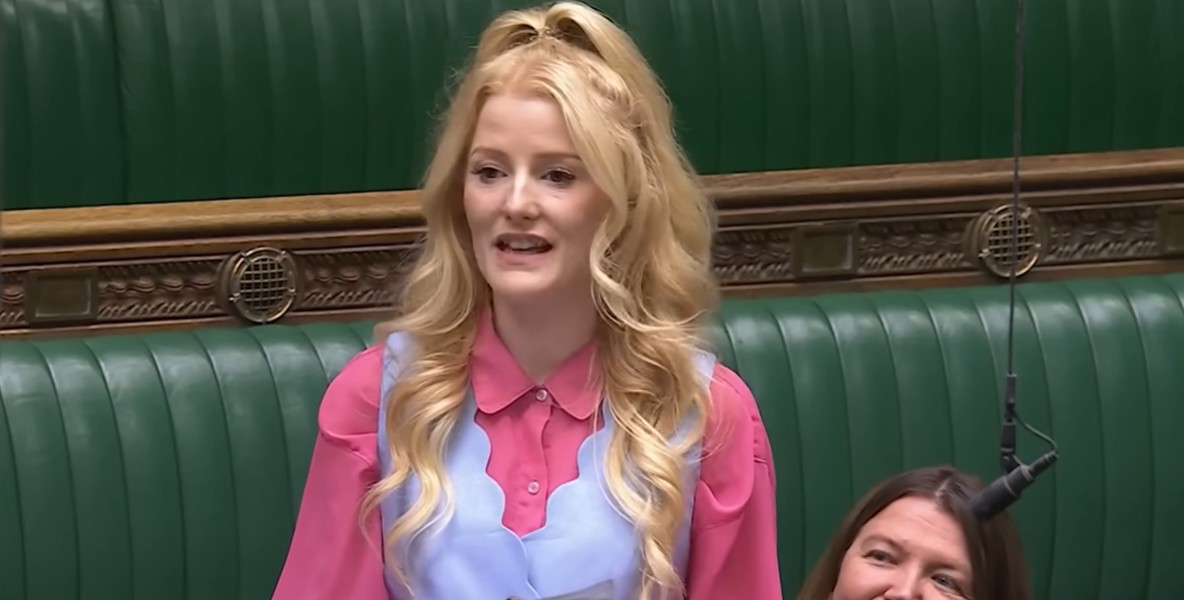
[Featured image – Hannah Spencer giving her first “maiden” speech in Parliament. from the BBC Parliament Channel]